Innovation — 245 insights
Shanghai unveils quantum computing hub as China races for tech supremacy
Innovation

Shanghai unveils quantum computing hub as China races for tech supremacy

The zone is set to provide up to 100 million yuan to fund research and development of the technology The Shanghai Quantum Computing Future Industry Incubation Zone, launched on Tuesday in the city’s Xuhui district, has attracted an initial cohort of 26 quantum firms. The zone would offer resources, talent and subsidies to expedite a shift from laboratory research towards a full-fledged industrial ecosystem for quantum computing, according to a report by the state-backed Jiefang Daily. The incubation zone would also provide up to 100 million yuan (US$14.73 million) to fund foundational research, technology innovation and platforms. Up to 20 million yuan would be available for companies developing their first products, alongside computing resource subsidies to help “bring down companies’ computing and validation costs”, the Jiefang Daily report said. The Xuhui district in Shanghai, which already houses the city’s top AI labs including StepFun AI, the Shanghai Artificial Intelligence Laboratory and Hong Kong-listed MiniMax, is seen as a key base for enabling this convergence.

Alibaba Cloud launches data centres in France amid Europe’s data sovereignty push
Innovation

Alibaba Cloud launches data centres in France amid Europe’s data sovereignty push

Opening of Paris hub is a response to increased demand, says the China tech giant as it looks to roll out agentic AI services across Europe Alibaba Cloud announced on Wednesday that it has launched its first data centres in France, as it continues to expand its footprint in Europe amid growing calls on the continent for data sovereignty. The move came as a response to increasing demand from customers in the region, the cloud computing services unit of Alibaba Group Holding said in a statement. “The expansion of our cloud infrastructure into France reinforces our ongoing commitment to empowering European businesses with sovereign, secure, and intelligent solutions,” said Feifei Li, Alibaba Cloud’s chief technology officer and president of international business. The European Commission published its tech sovereignty package on June 3 in a bid to make the bloc “a global leader” in artificial intelligence and protect its “digital independence”. The bloc’s Cloud and AI Development Act identified “limited data centre capacity” as a significant threat to its ability to benefit from the digital transformation.

Chinese chip-equipment maker CFMEE targets US$410 million in Hong Kong IPO
Innovation

Chinese chip-equipment maker CFMEE targets US$410 million in Hong Kong IPO

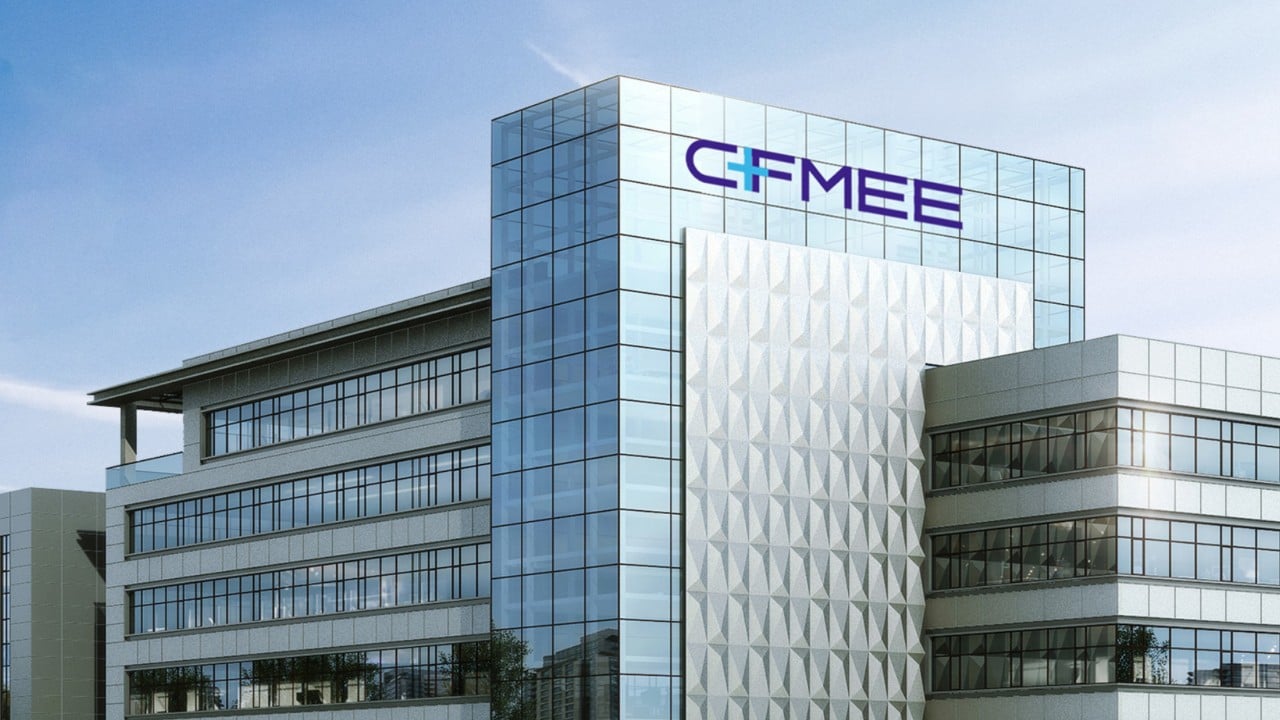
The Hefei-based firm has attracted 17 cornerstone investors and plans to use proceeds for R&D, acquisitions and expansion Chinese lithography and integrated circuit manufacturer Circuit Fabology Microelectronics Equipment (CFMEE) is set to launch a Hong Kong listing next week, as China continues its drive for semiconductor self-sufficiency amid US sanctions. The company, based in Hefei, Anhui province, said on Wednesday that it would offer more than 12.8 million H shares globally at a price range of HK$240.09 to HK$252.73 apiece, raising up to HK$3.2 billion (US$410 million). The offer period will run until next Tuesday, with trading expected to begin on the Hong Kong stock exchange on June 26. The IPO in Hong Kong has attracted 17 cornerstone investors, which have subscribed for at least 43 per cent of the offer. They include entities affiliated with the Hefei municipal government, JPMorgan Asset Management (Asia-Pacific), and HHLR Advisors under Hillhouse Investment. CMFEE, which listed on Shanghai’s Star Market in 2021, saw its A shares close 2.6 per cent higher at 475.77 yuan on Wednesday after rising as much as 493 yuan in intraday trading.

Saudi Arabia signs construction, smart-city deals with Chinese firms as cooperation grows
Innovation

Saudi Arabia signs construction, smart-city deals with Chinese firms as cooperation grows

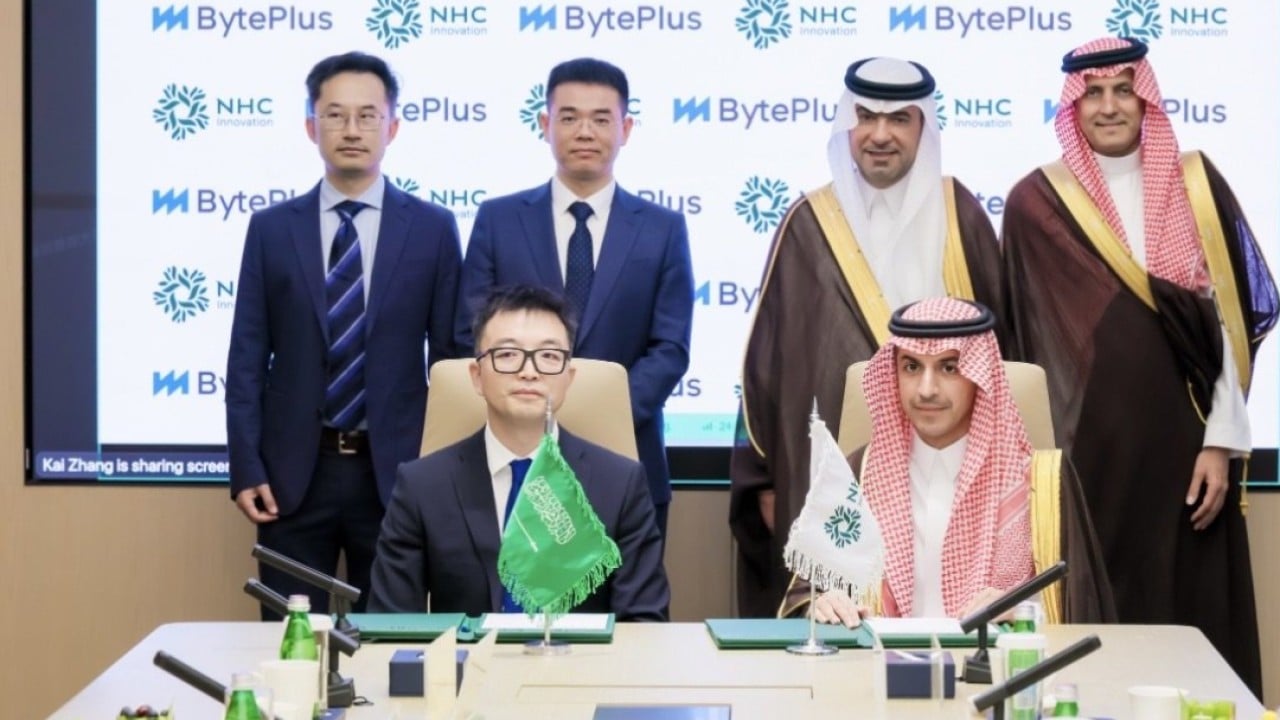
Urban development deals with partners including Huawei and ByteDance underscore growing cooperation between Riyadh and Beijing Saudi Arabia signed housing and construction agreements worth 1.9 billion riyals (US$507 million) with Chinese partners including China State Construction Engineering during a visit to China by its housing minister, as Riyadh deepens cooperation with Beijing on urban development projects. Speaking at a signing ceremony on Monday evening in Shenzhen, Minister of Municipalities and Housing Majid Al-Hogail said Saudi Arabia was accelerating housing and urban-development projects under its Vision 2030 strategy. He added that the kingdom expected cooperation with Chinese companies to support the comprehensive economic transformation plan, which was designed to reduce oil dependence and build new growth sectors. Beyond traditional construction, Saudi officials are increasingly looking to Chinese tech firms to support the planning, operation and management of their future cities.

Can Chinese silicon replace Nvidia? Here are 5 AI models trained on local chips
Innovation

Can Chinese silicon replace Nvidia? Here are 5 AI models trained on local chips

A growing number of Chinese AI labs are experimenting with shifting earlier model training phases onto domestic chips Chinese artificial intelligence models have become increasingly competitive with their US peers, but the country’s AI hardware still lags significantly behind. While domestic chips are now widely adopted for model inference, none of China’s top models are known to have been pre-trained on homegrown silicon. To understand this gap, it helps to look at the three stages of AI model development. First is pre-training, the most computationally demanding phase, where a model feeds on massive data sets to learn basic patterns. Next is post-training, a less intense process that fine-tunes the model to follow specific human instructions. Finally comes inference, the everyday act of running the finished AI to answer user queries and instructions. Driven by Washington’s escalating export controls and Beijing’s push for technological self-sufficiency, a growing number of Chinese AI labs are now experimenting with shifting these earlier training phases onto domestic hardware.

China’s AI outpaces global rivals but trails in trust, survey shows
Innovation

China’s AI outpaces global rivals but trails in trust, survey shows

Poll by London-based consultancy shows that more than 90% of respondents believe AI will transform the world – but fears persist Many people believe Chinese artificial intelligence models are leading the global tech race – even in countries considered key US allies – according to a new poll by the London-based consultancy Public First. However, the poll also revealed that China lags in trust regarding its AI models. The survey, which covered over 18,000 people across 15 countries, found that respondents from 11 nations acknowledged China’s AI leadership. These included Canada, Britain and France, where at least 40 per cent of those polled deemed China to be outpacing the US in AI capability and innovation. Germany was the least convinced of US leadership in AI, with only 23 per cent of respondents saying the US was ahead. Public First, which has no connection with Anthropic-backed Public First Action, did not conduct its poll in China. Among the Americans surveyed, nearly a quarter – or 24 per cent – said that China was ahead of the US, while 51 per cent stated the opposite. Nevertheless, the poll showed that AI models from the US were considered more trustworthy than those developed in China.

Smart-driving chips: the weapon of choice in China’s EV tech war
Innovation

Smart-driving chips: the weapon of choice in China’s EV tech war

Carmakers strive for more control over computing hardware to reduce reliance on Nvidia and Horizon Robotics A new front has opened in China’s electric-vehicle tech war as carmakers design their own smart-driving chips, turning custom silicon into the industry’s weapon of choice in the world’s largest auto market. The latest salvo came on Monday after Li Auto unveiled the Mach M100, a 5-nanometre artificial-intelligence chip tailored for autonomous driving. The announcement followed a string of breakthroughs by its rivals. Higher TOPS allow a vehicle’s computers to make split-second driving decisions by simultaneously crunching feeds from various sources such as radar and lidar sensors.

Motorsport new battleground for Chinese carmakers as Geely and BYD rev up global drive
Innovation

Motorsport new battleground for Chinese carmakers as Geely and BYD rev up global drive

Billionaire Li Shufu, owner and chairman of Geely Auto, China’s second-largest carmaker, plans to bring the Superbike World Championship (WSBK) to the country, banking on the success of a home-grown motorcycle brand in competition. The move marked Geely’s latest step to sharpen its image as an international marque with advanced technologies and new models, according to analysts. Li and Zhang Xue, owner of ZXMOTO, agreed to jointly promote China’s hosting of the WSBK during their appearance on...

‘Ni hao, Ah Bao’: China’s Alipay gets AI-agent overhaul to challenge big tech rivals
Innovation

‘Ni hao, Ah Bao’: China’s Alipay gets AI-agent overhaul to challenge big tech rivals

Fintech giant is seen leveraging its billion-user base to launch a conversational interface that coordinates 10,000 services, with safeguards Ant Group has unveiled the biggest overhaul of Alipay in two decades, transforming its ubiquitous mobile-payment app into a native AI platform with autonomous agents, as it strives to dominate China’s next-generation internet gateway. A trial version of the flagship app now features an interactive assistant named “Ah Bao”, marking a strategic pivot from a traditional digital wallet into an AI-driven ecosystem. Accessible via a right swipe on the homepage, the new interface allows users to access more than 10,000 everyday services – from ride-hailing to food delivery – through conversations with the Ah Bao bot. The feature is currently available on an invite-only basis, with plans for a gradual roll-out to all users, according to Alipay. To address potential security concerns inherent to autonomous artificial intelligence, Alipay said Ah Bao acts strictly as a process operator. All final payments and other financial actions were said to require explicit confirmation from users to prevent unauthorised transactions.

AI for less: price war in China deepens amid ‘intense’ competition
Innovation

AI for less: price war in China deepens amid ‘intense’ competition

Narrowing capability gaps between models and falling costs of service set stage for price reductions to continue, analysts say TikTok parent ByteDance and Shenzhen-based video gaming giant Tencent Holdings are the latest to launch AI price offensives. “China’s AI model landscape is vibrant and intensely competitive, with limited capability gaps across incumbents,” said analysts from investment consultancy Bank of America Securities in a research note on Monday. ByteDance on Monday introduced Seedance 2.0 Mini, a video-generation model, with a price of 23 yuan (US$3.40) for 1 million tokens – half the price of the standard version of the popular model. The move followed a promotional campaign that offered rebates to users of its Coze AI agent platform. With its lower pricing, ByteDance joined AI rivals including Chinese frontier lab DeepSeek and smartphone-to-vehicle giant Xiaomi. Both cut prices in late May, with Xiaomi making its MiMo V2.5 model 99 per cent cheaper, triggering other frontier labs to follow. Tencent last week cut prices for certain existing models on its TokenHub platform, slashing the cost of its own Hy-MT2-Pro by nearly 70 per cent.

Alibaba eyes physical world with its first suite of AI models for robots
Innovation

Alibaba eyes physical world with its first suite of AI models for robots

Alibaba unveils Qwen robot models to push AI beyond chatbots, as embodied intelligence becomes the next frontier in global AI Alibaba Group Holding has launched its first suite of artificial intelligence models for robots, joining a global race to move AI out of chatbot windows and into the physical world. The Hangzhou-based tech giant on Tuesday introduced the Qwen Robot Suite, marking its latest foray into “embodied AI” – machines that can perceive, reason and interact with physical environments. Developed by Alibaba’s AI research unit, Tongyi Lab, the suite has already entered pilot testing with selected Alibaba Cloud enterprise clients, according to the company. The suite splits robot intelligence into three interconnected layers. Qwen-RobotNav, a vision-language navigation model, is designed to help machines understand and move through physical spaces. It works in tandem with Qwen-RobotWorld, a video “world model” that lets robots predict and simulate how physical scenes will evolve before they take action. Then the physical execution is handled by Qwen-RobotManip, a generalist vision-language-action (VLA) model built on the Qwen3.5-4B architecture.

AI’s next frontier, world models, and why China is ahead of the pack
Innovation

AI’s next frontier, world models, and why China is ahead of the pack

They’ve been described as the “next frontier” of artificial intelligence (AI) – world models that go beyond large language models (LLMs) by simulating the physical environment. And in this emerging field, China has an edge over the United States. World models that understand the physical laws of the universe are already being used to train AI systems with embodied intelligence such as robots and self-driving vehicles. China has deployed such systems far more widely than the US – and this month,...