Innovation — 251 insights
Alibaba, Tencent present a tale of two strategies for AI spending
Innovation

Alibaba, Tencent present a tale of two strategies for AI spending

Alibaba will focus its AI capex on cloud services, while Tencent is prioritising internal demand with its spending Alibaba Group Holding and Tencent Holdings are doubling down on a massive artificial intelligence spending spree, betting that a new wave of Chinese-made chips will break the supply bottlenecks stifling their ambitions. While both Chinese tech giants saw revenues trail expectations this past quarter, they pledged an aggressive acceleration in capital expenditure, as home-grown silicon from Huawei Technologies and Alibaba’s in-house labs begins to reach scale. Meanwhile, Tencent reported a sharper surge, with first-quarter capex reaching 31.9 billion yuan – up 63 per cent from the previous quarter. The surge comes as both companies are grappling with a global shortage of AI chips. “I can tell you that today there isn’t a single card on our service that is idle,” Alibaba’s Wu said on Wednesday.
Loongson’s flagship chip hits 1 million units, boosting China’s tech self-reliance
Innovation

Loongson’s flagship chip hits 1 million units, boosting China’s tech self-reliance

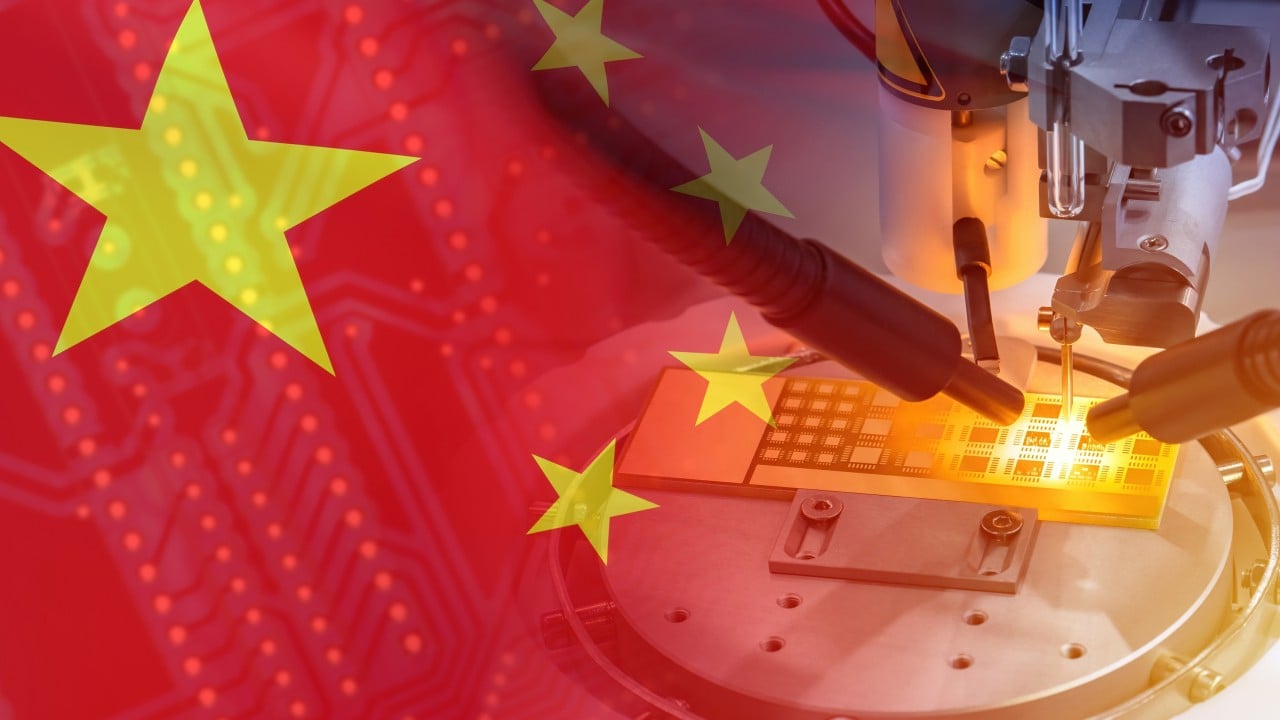
Since its launch in November 2023, the 3A6000 has been adopted in a Chinese government-backed IT replacement programme called ‘XinChuang’ Chinese chip designer Loongson Technology has shipped more than 1 million units of its flagship desktop processor, marking a milestone for China’s efforts to build a self-sufficient semiconductor industry and move domestic central processing units (CPUs) beyond basic usability towards broader commercial adoption. The 3A6000 processor, designed for desktop computers, was built on Loongson’s self-developed LoongArch instruction set architecture, proprietary IP cores, and domestic manufacturing supply chain. The company has said the chip’s performance is broadly comparable to Intel desktop processors released around 2020. Founded in 2001 as a research project under the Chinese Academy of Sciences before being spun off in 2010, Loongson became the first CPU-focused company listed on Shanghai’s Star market in 2022. It remains one of China’s most prominent efforts to build a domestic alternative to Intel and AMD.

AI engine: China’s booming tech exports give Beijing ‘wind in its sails’ for Trump summit
Innovation

AI engine: China’s booming tech exports give Beijing ‘wind in its sails’ for Trump summit

The role of tech products in April’s trade data reflects how computing-related goods are a ‘new and important growth driver’ for exports Driven by global appetite for artificial intelligence, China’s computing hardware exports have emerged as a pivotal new engine for growth, providing Beijing with strategic leverage as US tech titans accompany President Donald Trump on a high-stakes visit to the Chinese capital this week, according to analysts. Chinese trade received another significant boost from the technology sector in April, as integrated circuit (IC) export value doubled year on year to US$31.09 billion, according to data released last week by the General Administration of Customs. Volume rose 3.7 per cent to 32.04 billion units. Meanwhile, exports of automated data processing machines and parts – which include computers, laptops and servers – jumped 47.6 per cent year on year to US$23.81 billion. The two sectors alone accounted for roughly half of China’s total export growth last month, according to a Monday note by Bank of America (BofA).

China clears Tencent’s Ximalaya acquisition with strict bans on exclusive deals, fee hikes
Innovation

China clears Tencent’s Ximalaya acquisition with strict bans on exclusive deals, fee hikes

The State Administration for Market Regulation cleared the deal on Tuesday, but imposed five conditions Tencent Holdings has secured conditional approval to acquire online audio platform Ximalaya after a nearly year-long review by China’s antitrust watchdog, a move set to expand the Shenzhen-based tech giant’s footprint in China’s digital content ecosystem. The State Administration for Market Regulation (SAMR) cleared the deal on Tuesday, but imposed five conditions covering pricing and exclusivity to “effectively mitigate the potential negative impacts” of the acquisition, according to an announcement by the regulator. The SAMR mandated that Tencent and Ximalaya must not raise service fees for the online audio platform and must maintain the current portion of free content. They are also prohibited from entering into exclusive copyright deals or bundling audio and music services for carmakers. Additionally, the parties are barred from restricting creators from joining rival platforms. Tencent announced its plan to acquire Ximalaya, which runs China’s most popular long-form audiobook and podcast platform, last June through its subsidiary Tencent Music Entertainment Group.

JD.com swings back to profitability in first quarter though profits tumble 53%
Innovation

JD.com swings back to profitability in first quarter though profits tumble 53%

The subdued results came after the firm reported its first quarterly loss in the fourth quarter last year amid an ongoing price war Chinese online shopping giant JD.com reported a 53.2 per cent year-on-year decline in first-quarter profit to 5.1 billion yuan (US$750.2 million) due to protracted competition on the e-commerce and food delivery fronts. The company was able to swing back to profitability after posting a loss in the previous quarter. Under non-generally accepted accounting principles which excludes one-off costs and non-cash items, JD.com posted a net income of 7.4 billion yuan in the March quarter, compared with 12.8 billion yuan a year ago. Net revenue rose 4.9 per cent year on year to 315.7 billion yuan in the period, according to the company’s earnings result released on Tuesday. That was higher than the 1.5 per cent increase seen in the previous quarter. The subdued results came after the Beijing-based firm reported its first quarterly loss in the fourth quarter last year amid an ongoing price war in food and on-demand delivery that throttled revenue across the sector and coincided with dampened consumer demand after Beijing scaled back a national subsidy programme.

Real-life Transformers: China’s Unitree debuts ‘mecha’ robot that shifts from 2 legs to 4
Innovation

Real-life Transformers: China’s Unitree debuts ‘mecha’ robot that shifts from 2 legs to 4

The GD01 expands the Hangzhou-based company’s portfolio at a time when Chinese manufacturers are significantly outstripping their US rivals Bridging the gap between science fiction and reality, a Chinese robotics firm on Tuesday unveiled a manned “mecha” capable of transitioning between bipedal walking and four-legged mode. Developed by Unitree Robotics, the GD01 – resembling an Autobot from a Transformers movie – is a high-strength alloy machine designed for civilian transport. It weighs 500kg with a pilot on board – roughly the weight of a grand piano – and carries a starting price of 3.9 million yuan (US$573,674), according to the company. A demonstration video shows the GD01 – carrying a pilot in its torso-mounted cockpit – walking like a humanoid robot and knocking over a brick wall with its hand. The machine then reconfigures its chassis, shifting into a four-legged crawl. Unitree described the robot as the world’s first mass-produced “transformable mecha”. The GD01 expands the Hangzhou-based company’s portfolio at a time when Chinese manufacturers are significantly outstripping their US rivals, helped by lower production costs and faster manufacturing scale-up.

Kuaishou shares soar as Kling AI eyes US$20 billion valuation in potential spin-off
Innovation

Kuaishou shares soar as Kling AI eyes US$20 billion valuation in potential spin-off

The Chinese short-video platform’s shares jumped as much as 10 per cent amid US$20 billion valuation of spin-off, Tencent investor talks Kuaishou Technology’s shares jumped as much as 10 per cent on Tuesday morning after reports that the Chinese short-video platform was raising new funding for its Kling AI unit at a valuation of US$20 billion. In response to the financing and listing reports, Kuaishou said on Tuesday that the company is “assessing a proposal to restructure” Kling AI that could involve external funding. However, the proposal is still in the preliminary stage, according to an announcement filed to the Hong Kong stock exchange. Kling AI’s monetisation has been gathering pace as its ARR reached US$300 million in January, and the company expected the service’s revenue to “more than double” in 2026, according to Kuaishou co-founder and CEO Cheng Yixiao in an earnings call in March.

Alibaba taps into China’s ‘chat to buy’ trend via Qwen AI and Taobao integration
Innovation

Alibaba taps into China’s ‘chat to buy’ trend via Qwen AI and Taobao integration

Move underscores strategy by China’s technology firms to revamp their flagship e-commerce platforms via an accelerating AI push. Taobao has also launched a Qwen-powered shopping assistant, which was trained on the platform’s extensive product listings, and a massive database of customer reviews that can provide instant answers to shopping-related queries. The Qwen assistant also features virtual try-ons and a price-comparison tool that was designed to help users secure better deals and make more informed buying decisions, according to the statement. The move underscores Alibaba’s accelerating AI push, as it seeks to revamp its flagship platforms with new technology. Taobao, China’s largest e-commerce app and the firm’s crown jewel, boasted more than 950 million monthly active users as of February, according to analytics firm QuestMobile. In a test done by an SCMP reporter, the Qwen app was able to follow on an initial general inquiry for a laptop, and then narrow down the selection according to budget, performance, specs, and type of brand to provide a direct recommendation that could be ordered from the AI chatbot.

China ranks third in global index for AI competitiveness in life sciences
Innovation

China ranks third in global index for AI competitiveness in life sciences

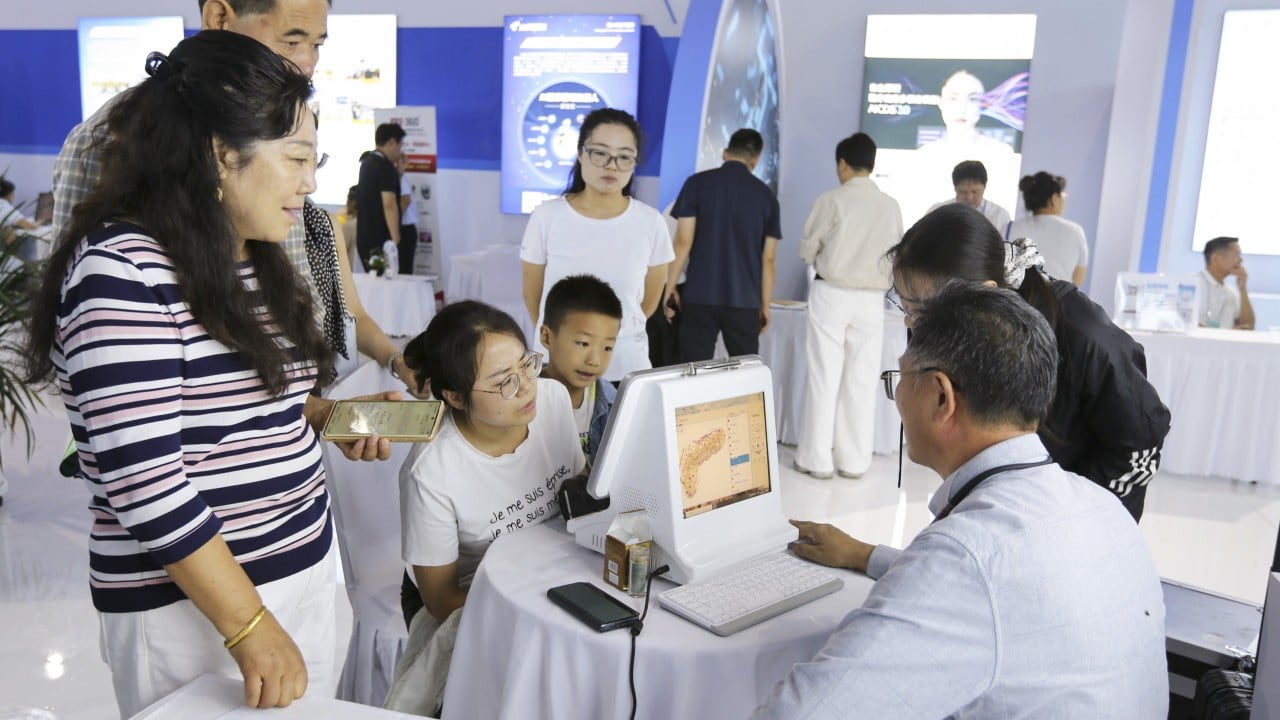
China listed behind only the US and UK, reflecting the country’s ‘major scale’ in AI, biotechnology and talent, says data consortium The latest edition of the Global AI Competitiveness Index, released on Monday by Deep Knowledge Group, a consortium focused on deep-tech research, analytics and investment, ranked China behind only the US and UK in its country-level listing with a score of 85.3, which reflects “major scale in AI, biotechnology and talent”, followed by Switzerland and Germany. Under the plan, China will push for AI-assisted diagnosis and treatment in its primary-level institutions – hospitals and clinics distributed across localities that mainly provide primary care – by 2030, a goal that would effectively make AI-enabled healthcare available nationwide. Meanwhile, Hong Kong placed third among 20 city-level innovation hubs, behind Boston and San Francisco but ahead of London and New York City. The report said the city’s strengths lie in capital-market access, institutional credibility, governed deployment conditions and its strengthening interface with the Greater Bay Area.

Shadow APIs: how Chinese developers bypass restrictions to access Claude and Gemini
Innovation

Shadow APIs: how Chinese developers bypass restrictions to access Claude and Gemini

One high-volume seller on Xianyu advertises ‘low-latency, no-VPN’ access to the full Claude 3.5 suite In China, a grey market of API relay platforms is thriving, allowing local developers to bypass restrictions to access top-tier overseas AI models such as Anthropic’s Claude and Google’s Gemini, which are not officially supported in China, despite an escalating crackdown by the foreign providers. Such relay stations, which route access to overseas AI models through proxy servers hosted outside mainland China, are becoming a go-to place for developers wanting to use US AI models for tasks such as coding, debugging and image generation. On Chinese online marketplaces Taobao and Xianyu, relay providers are advertising native Claude Opus access, unlimited Claude Code subscriptions and 1:1 official models without capability reduction. Most sellers promote support for one-million-token context windows, domestic network access without VPNs, and compatibility with tools such as Cursor, VSCode and OpenClaw. One high-volume seller on Xianyu, who has fulfilled more than 2,200 orders, advertised “low-latency, no-VPN” access to the full Claude 3.5 suite.

China scrambles to close AI security gap as Anthropic, OpenAI pull ahead with new models
Innovation

China scrambles to close AI security gap as Anthropic, OpenAI pull ahead with new models

IDC projects that China’s AI cybersecurity industry will be valued at US$8.7 billion by 2030, a more than 37-fold increase from 2025 While leading US artificial intelligence developers such as Anthropic and OpenAI unveil new models with enhanced cybersecurity capabilities, China is also aggressively scaling up its own AI-driven cyber defence market. “Our assessment is that China’s own Mythos will definitely emerge, though currently the overall capabilities of its cybersecurity models are far from those of Mythos,” said Austin Zhao, senior research manager at IDC China. “But the overall trend is inevitable because the capabilities of China’s models are also rapidly increasing.” IDC projected that China’s AI cybersecurity industry would be valued at 59.35 billion yuan (US$8.7 billion) by 2030, a more than 37-fold increase from 1.58 billion yuan in 2025. The growth would be driven by domestic cybersecurity vendors’ adoption of AI in their product offerings, which was already having a “significant impact” on the industry, Zhao said.

Beijing pushes AI data centres to adopt green energy under action plan
Innovation

Beijing pushes AI data centres to adopt green energy under action plan

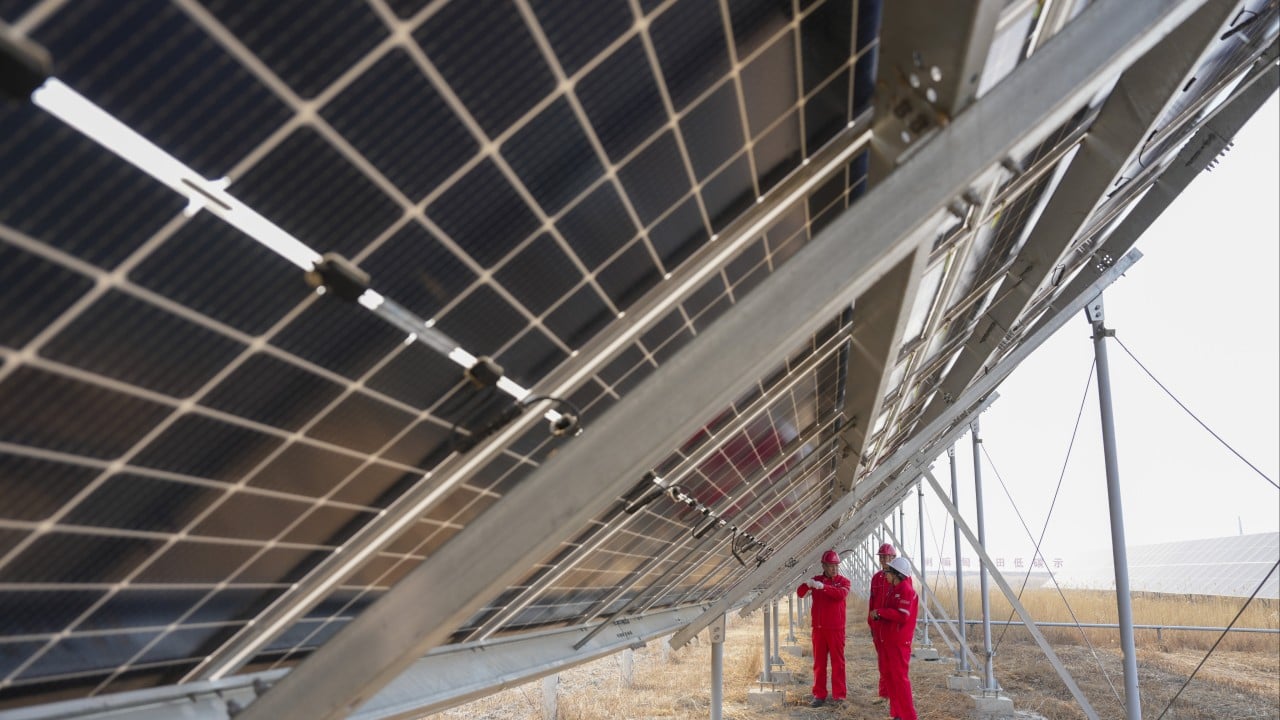
The document proposes a total of 29 measures to improve the integration of green power and AI Beijing is moving to make green electricity usage a key metric in the operation of new data centre projects, as part of a major push to align the rapid expansion of artificial intelligence with national carbon goals, according to an action plan released Friday. The policy document, jointly released by four bodies – the National Energy Administration, National Development and Reform Commission, Ministry of Industry and Information Technology and National Data Administration – encouraged operators to continuously raise the share of green electricity in computing facilities through so-called “green certificate” and “green power trading markets”, while also promoting cleaner backup power systems to replace diesel generators. The document, which proposes a total of 29 measures to improve the integration of green power and AI, also aims to promote the adoption of home-grown AI software and hardware in the energy sector, including the optimisation of domestic AI chips for applications in the sector. The goal was to “build a new development pattern of mutual empowerment and deep integration between AI and energy” by 2030, the regulators said.