Innovation — 260 insights
Hong Kong, Macau central to China’s commercial space expansion, GalaxySpace says
Innovation

Hong Kong, Macau central to China’s commercial space expansion, GalaxySpace says

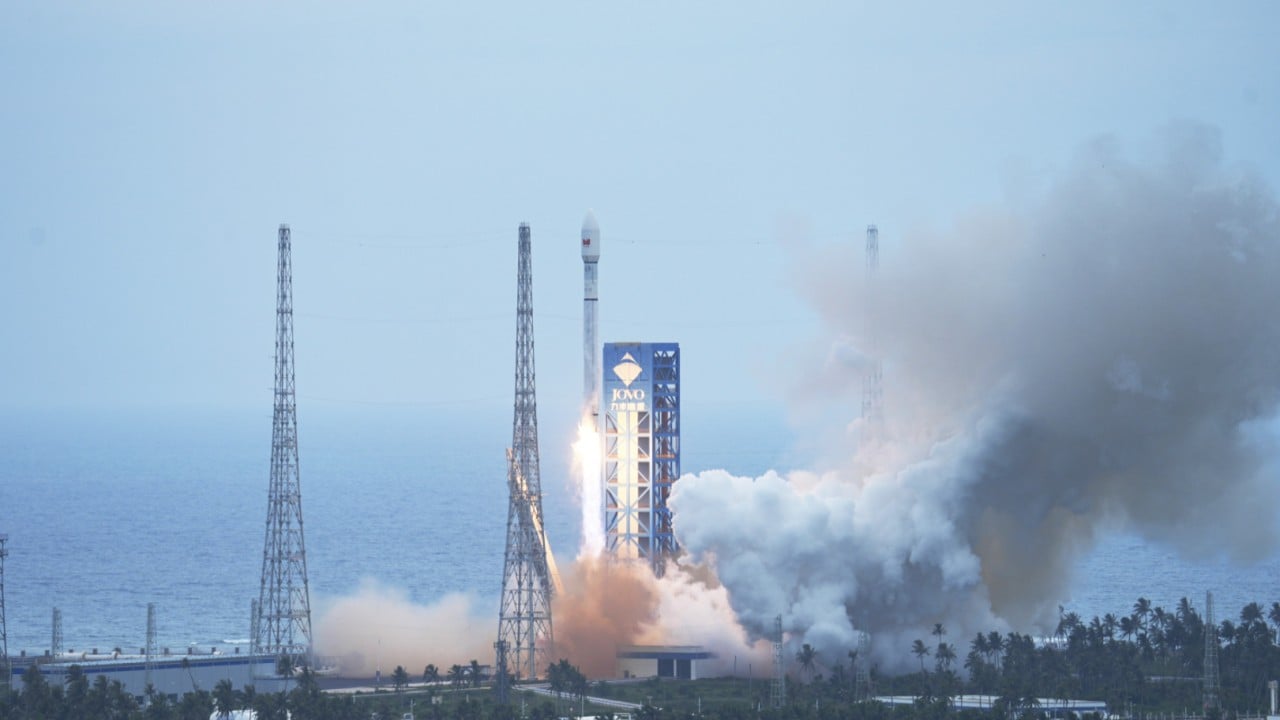
The company is pushing for more collaboration between the two cities and Beijing in the commercial space sector “We have come to realise in recent years that Hong Kong and Macau hold irreplaceable strategic positions and industrial value in the development of China’s commercial space sector,” Xin Yichun, general manager of government and corporate partnership at GalaxySpace, told reporters during a media tour on Wednesday in Beijing. While Beijing, the Chinese capital, serves as the country’s hub for satellite research, development and manufacturing, Hong Kong and Macau complement those strengths with international business networks and global connectivity, positioning them as an indispensable gateway for China’s commercial space sector to expand globally, Xin said. The company was pushing for more collaboration between the three cities in the commercial space sector, believing that Hong Kong and Macau would serve as “an important platform for Chinese commercial technology and services to expand overseas”, Xin added.

‘Token economy’ emerging as AI use soars in China, experts tell conference
Innovation

‘Token economy’ emerging as AI use soars in China, experts tell conference

Daily AI token consumption has surged more than 1,000-fold in just over two years and exceeded 140 trillion tokens a day in March Chinese tech industry experts say the rapidly increasing use of AI tokens is giving rise to a token-based economy, with the tiny units underpinning artificial intelligence services evolving beyond a technical metric and into the basis for delivering and pricing AI services. Tokens are the fundamental units that AI models use to process and generate information. They are also the building blocks that underpin tasks ranging from chatbot conversations to image and film-quality video production. Yin said tokens were more than just a technical metric, and had become a new production factor that connected AI model capability, computing resources and commercial value. AI token usage has risen rapidly in China, with daily AI token consumption surging more than 1,000-fold in just over two years, rising from around 100 billion tokens a day at the start of 2024 to 100 trillion by the end of last year, according to the National Bureau of Statistics. Daily usage exceeded 140 trillion tokens in March, equivalent to roughly 100,000 tokens per person based on the country’s population of about 1.4 billion.

Chinese AI labs pursue custom chips to lower costs but heavy upfront investment a risk
Innovation

Chinese AI labs pursue custom chips to lower costs but heavy upfront investment a risk

Custom silicon allows for hardware optimisation tailored to specific architectures, such as the DeepSeek-R1 model Chinese AI labs are increasingly pursuing proprietary chips, mirroring a global trend towards software-hardware integration, but industry insiders and analysts warn that the strategy carries risk due to the massive upfront investments required. “The core motivation for choosing in-house chips lies in pursuing [greater] hardware-software synergy and lowering long-term operating costs,” said Arisa Liu, chief director and research fellow at Taiwan Industry Economics Services. Paul Triolo, a partner and technology policy lead at DGA-Albright Stonebridge Group, said in his personal newsletter AIStackDecrypted that the proprietary efforts underscored how China’s leading model developers increasingly viewed silicon as a strategic extension of the model stack rather than simply another infrastructure input. DeepSeek has been quietly hiring chip-design talent without posting public job openings, according to two people familiar with the situation, who declined to be named as the matter was private.

Physical AI ‘space race’: can Europe compete with China and the US in humanoid robotics?
Innovation

Physical AI ‘space race’: can Europe compete with China and the US in humanoid robotics?

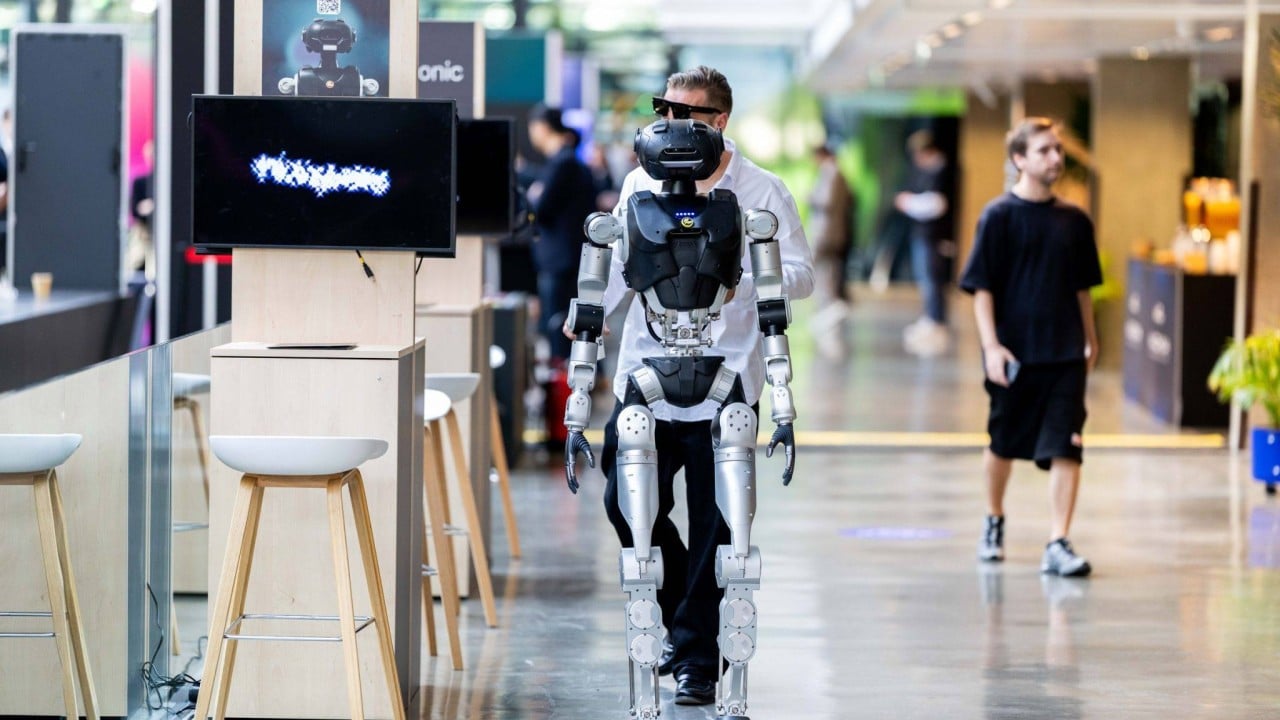
At the 2026 Machina Summit, European executives identify severe data training bottlenecks as a major obstacle – and urge policymakers to act “You see China and the US … because of AI … typically they are considered the leaders, but do not count out Europe,” said David Kehr, president of Humanoid Robotics, a division of German firm Schaeffler Technologies. Traditionally focused on automotive and industrial components, the Bavaria-based company entered the sector in January through a partnership with UK start-up Humanoid. Under the deal, Schaeffler supplies the actuators – mechanical joints and motors that power a robot’s movement – and plans to deploy the British firm’s AI models across its own factories. Speaking on the main stage at Machina – an inaugural one-day summit held in Paris on Tuesday that positions itself as the continent’s leading event dedicated to the industry – Kehr identified safety standards and faster training speeds as the industry’s primary hurdles. Europe could lead on global safety standards, he said, but cautioned that lawmakers must strike a careful balance. Regulation must not become so heavy that it “stifles” the continental humanoid and physical AI market, he warned.

China weighs open-weight AI’s security risks against national tech innovation strategy: researchers
Innovation

China weighs open-weight AI’s security risks against national tech innovation strategy: researchers

As cutting-edge models like Zhipu AI’s GLM-5.2 rapidly close the performance gap with frontier models, policy analysts warn a regulatory shift may be imminent Traditionally, open-weight models – which allow anyone to download code for free and run it on local hardware – have lagged months behind proprietary frontier models. But recent releases from Chinese labs have significantly narrowed that gap. But as these AI models advance rapidly, analysts warned that a regulatory response could be on the horizon. “As open-weight models approach the kind of cyber and biosecurity risks of Mythos and other leading-edge models, China may make the same calculation as the US and find them to be too dangerous to be released, especially in open form,” said Mark Witzke, a non-resident scholar at the University of California San Diego who researches US-China tech policy.

World working together ‘as one ecosystem’ on RISC-V chip research: executive
Innovation

World working together ‘as one ecosystem’ on RISC-V chip research: executive

Alibaba vice-president Qi Xiaoning says global tech firms continue to build a unified, open-standard ecosystem amid rising geopolitical barriers “When we use a single architecture, people from different continents, different cultural backgrounds, we get together, we work together and make friends,” Qi, a semiconductor veteran, told the audience. “And also like trade, [we] promote friendship between different countries.” “Collaboration [in RISC-V] is already the reality; it’s happening.” RISC-V, which stands for fifth-generation reduced instruction set computer, is an open-standard instruction set architecture and a highly accessible blueprint that enables users to design central processing units (CPUs).

Glass crashes slashed? Ant Group embodied AI unit claims breakthrough in robot sensing
Innovation

Glass crashes slashed? Ant Group embodied AI unit claims breakthrough in robot sensing

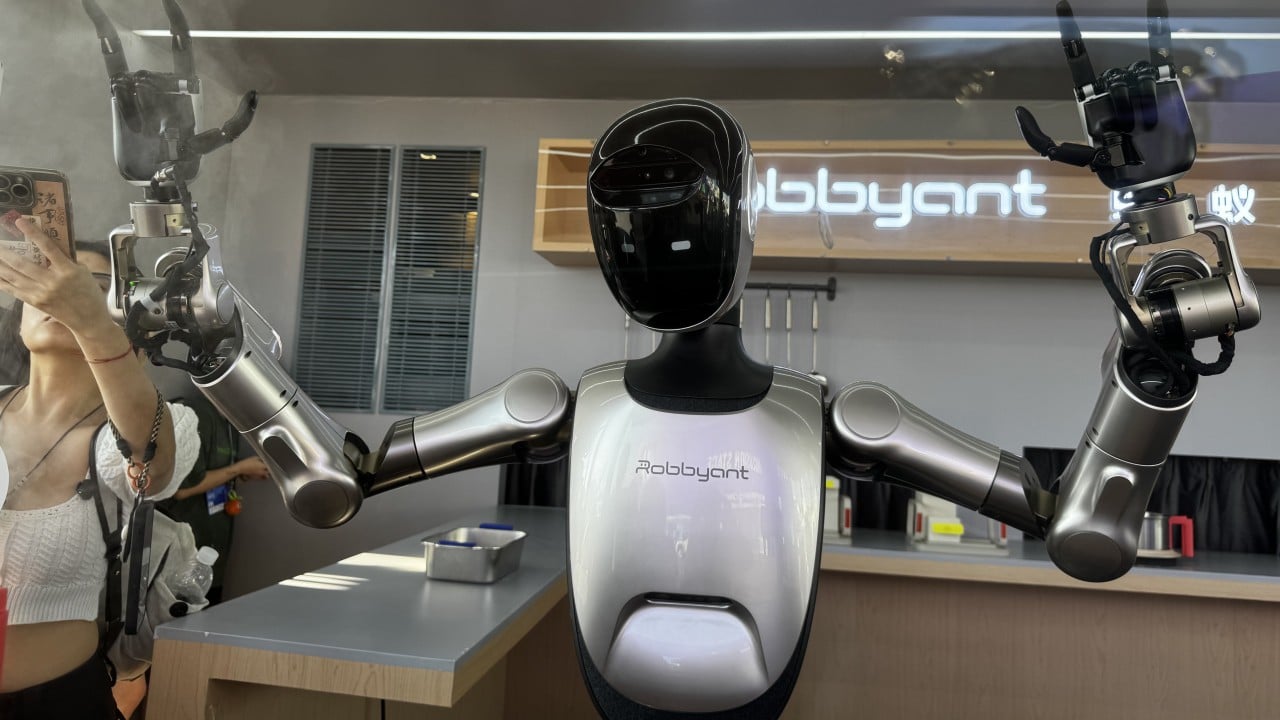
New perception model for embodied AI surpasses dominant rival from Meta Platforms at smaller scale with less training, firm claims It was the first model of its kind trained specifically to recognise the edges of objects, the firm said. This allowed the AI to pinpoint boundaries with high precision – down to a fraction of a single pixel – giving robots a sharper understanding of the 3D spaces around them, it added. According to a research paper published by the Robbyant team, LingBot-Vision surpassed the 7-billion-parameter DINOv3 across multiple metrics on the NYUv2 depth-estimation benchmark. It achieved this using one-seventh as many parameters and less than a third of the training data, according to the benchmark. The new vision model serves as the critical engine driving LingBot-Depth 2.0.

Huawei’s new computing cluster, world’s first AI agent phone to debut at China AI summit
Innovation

Huawei’s new computing cluster, world’s first AI agent phone to debut at China AI summit

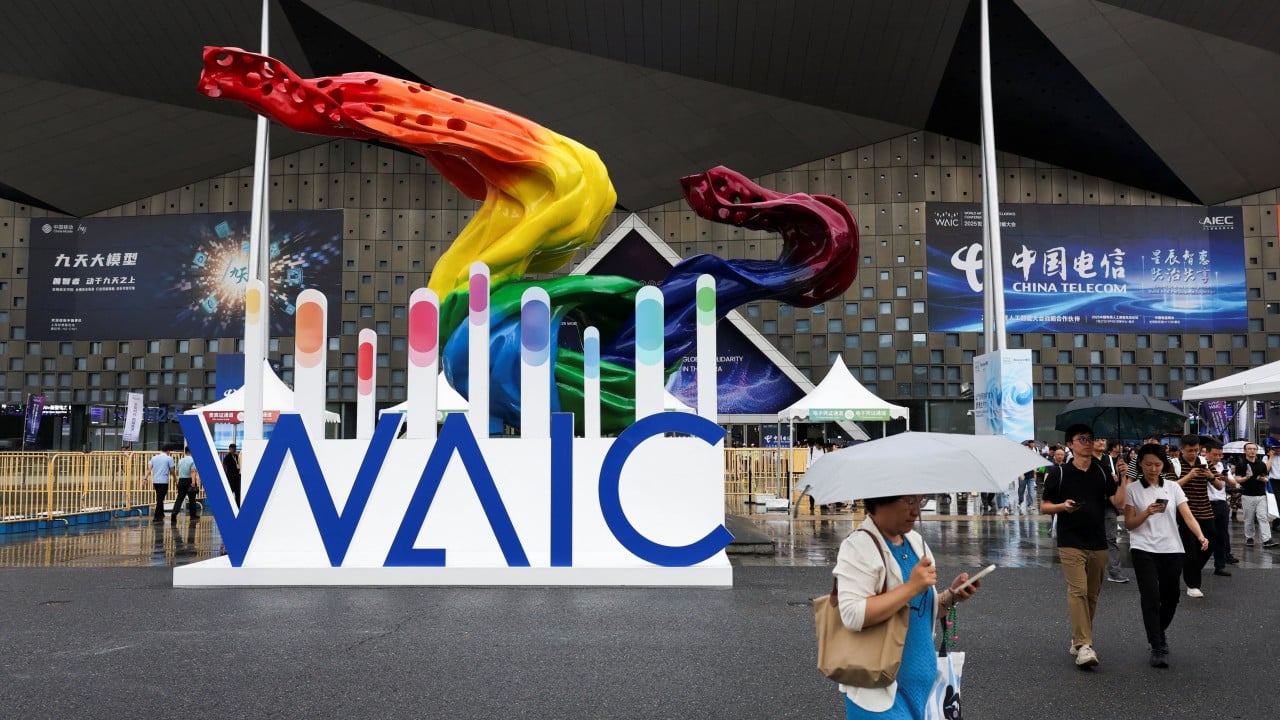
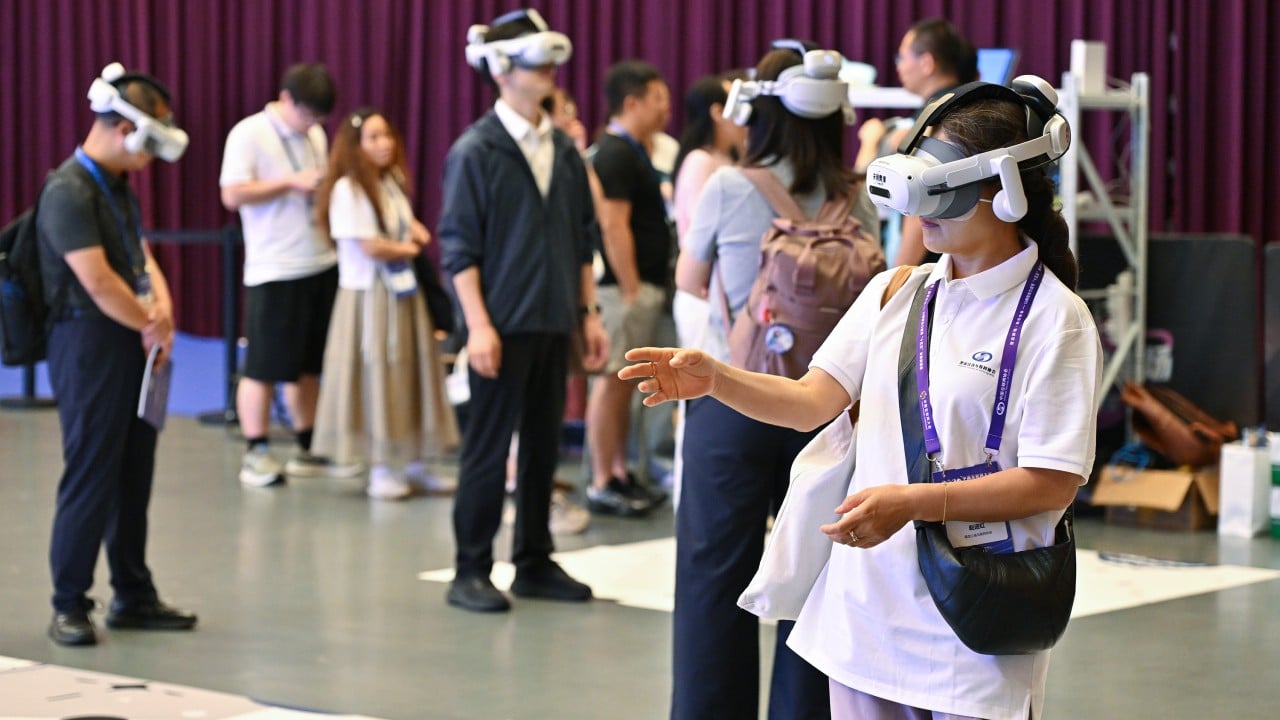
China’s shipments of AI phones and computers are expected to overtake non-AI gadgets this year The coming World Artificial Intelligence Conference (WAIC) is set to feature major new product releases, such as Huawei Technologies’ next-generation computing cluster, as China doubles down on AI in the global technology race. This year’s WAIC, the ninth since 2018 and running from July 17 to 20 in Shanghai, would include the first physical display of Huawei’s Atlas 950 SuperPoD, Tang Wenkan, director of the Shanghai Municipal Commission of Economy and Informatisation, said at a press briefing on Tuesday. Huawei initially unveiled the computing cluster, powered by 8,192 Ascend neural processing unit (NPU) cards, last year. The product is optimised for AI neural networks and machine learning tasks and applications. Debuting at the conference would also be what Tang described as “the world’s first AI agent phone”, without naming the developer. Other highlights would include MiniMax’s M3 multimodal model, an agent operating system from StepFun, and a near-memory computing 3D chip from Dongfang Suanxin, as well as new humanoid robots and dexterous robotic hands.

China’s chip equipment rally faces earnings test as memory boom fuels bets on local tools
Innovation

China’s chip equipment rally faces earnings test as memory boom fuels bets on local tools

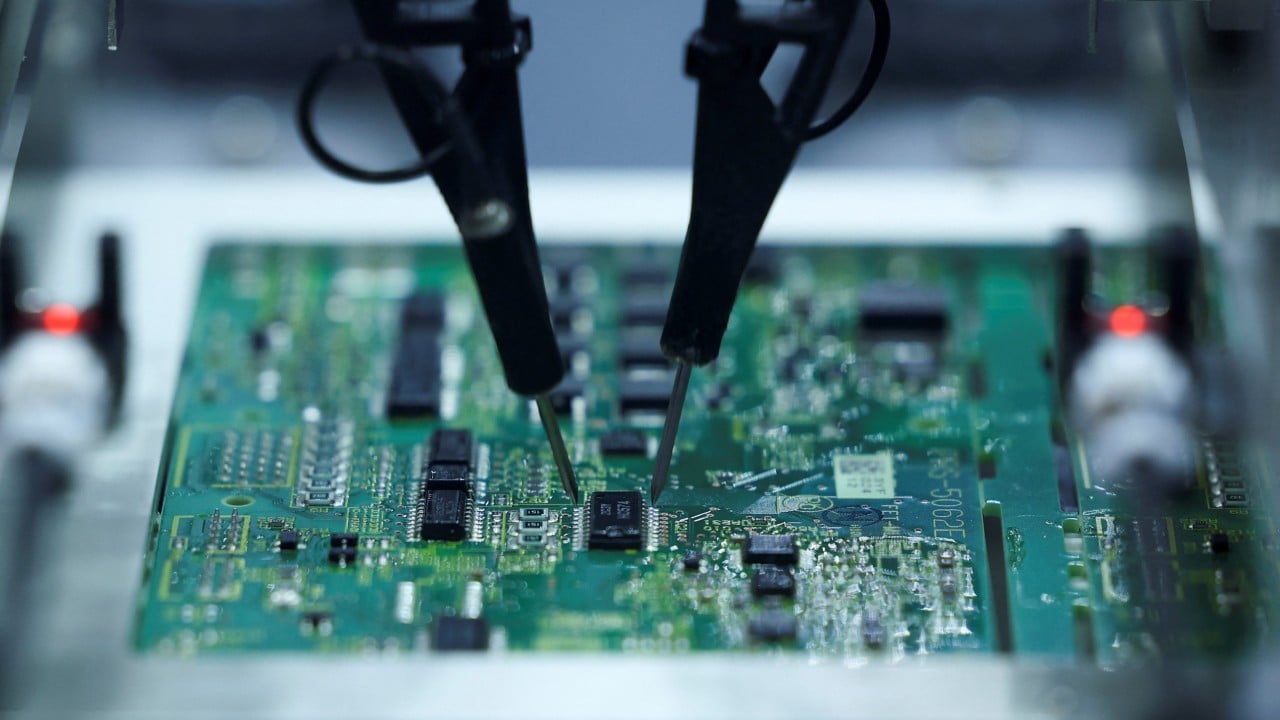
With first-half earnings season looming, the question for the semiconductor industry is whether results can justify stock rally China’s semiconductor equipment industry is heading into the first-half earnings season under intense scrutiny, as a broad stock rally turns one of the tech sector’s least visible niches into a crowded investor trade. The rally has swept across makers of etching, thin-film deposition, cleaning and testing machines, among others, reflecting bets that China’s next round of chip spending will benefit a wider group of domestic suppliers. Other listed suppliers, including Kingsemi, Hangzhou Changchuan Technology, Accotest, Skyverse Technology and Wuhan Jingce Electronic Group, have also been swept up in the enthusiasm. The question now on observers’ minds is whether earnings results can justify the sharp re-ratings. Investors are awaiting proof that memory-chip expansion, the shift to advanced packaging and Beijing’s self-reliance push are translating into hard orders, driving revenue growth and sustainable margins. A group of 14 major Chinese chip equipment firms tracked by Soochow Securities recorded combined revenues of 90 billion yuan (US$13.1 billion) in 2025, up 35 per cent year on year.

Patient Communication AI in a Hong Kong Hospital: A Privacy-First Architecture on AWS
Innovation

Patient Communication AI in a Hong Kong Hospital: A Privacy-First Architecture on AWS

[The content of this article has been produced by our advertising partner.] The Radiology Department fields a steady flow of enquiries from many patients at the same time, arriving at all hours of the day and night, often stretching over days or months as patients consider their options or return after consulting their referring doctor. Each time a conversation resumes, staff have to pick up where it left off. The underlying work is complex too: 1,000+ distinct examination items, each with pricing logic that depends on modality, contrast, anatomy, and applicable packages, and referral letters that arrive as photos with handwritten notes and mixed-language text. Doing all of this accurately, quickly, and around the clock is genuinely demanding, and simply hiring more staff is not a sustainable solution. Yet the patient experience is straightforward. A patient sends a referral letter via a dedicated WhatsApp channel to the Department. Within minutes, they receive a reply in their own language. The correct examination is identified. A quotation is matched to the Department's pricing. The same experience runs at any hour, in either Chinese or English.

Alibaba wins reprieve on US lobbying after Pentagon blacklisted companies
Innovation

Alibaba wins reprieve on US lobbying after Pentagon blacklisted companies

Ruling gives Chinese firm temporary relief in closely watched legal battle that could decide whether Pentagon blacklist is legitimate A judge in the Northern District of California on Sunday ordered the Department of Defence not to enforce a lobbying prohibition against Alibaba while the court considered the firm’s constitutional challenge to the statute, according to the latest US court filings. The order was not a final response to Alibaba’s lawsuit challenging its inclusion on the blacklist but would provide temporary relief from the lobbying restriction, and marked a twist in the firm’s legal battle with the Pentagon – a dispute closely watched as part of the broader US-China technological rivalry. “We are pleased that, for purposes of the lobbyist-contracting ban, Alibaba will not be treated as a Chinese military company and will have proper channels to communicate our views and address concerns,” an Alibaba spokesperson said on Monday. The initial lobbying blackout stemmed from the Pentagon’s designation made under the National Defence Authorisation Act, which barred the Department of Defence from entering into contracts with any firm employing lobbyists who also represented companies on the blacklist.

Global robotaxi market set to hit US$1t by 2040 as China tech costs plummet: Morgan Stanley
Innovation

Global robotaxi market set to hit US$1t by 2040 as China tech costs plummet: Morgan Stanley

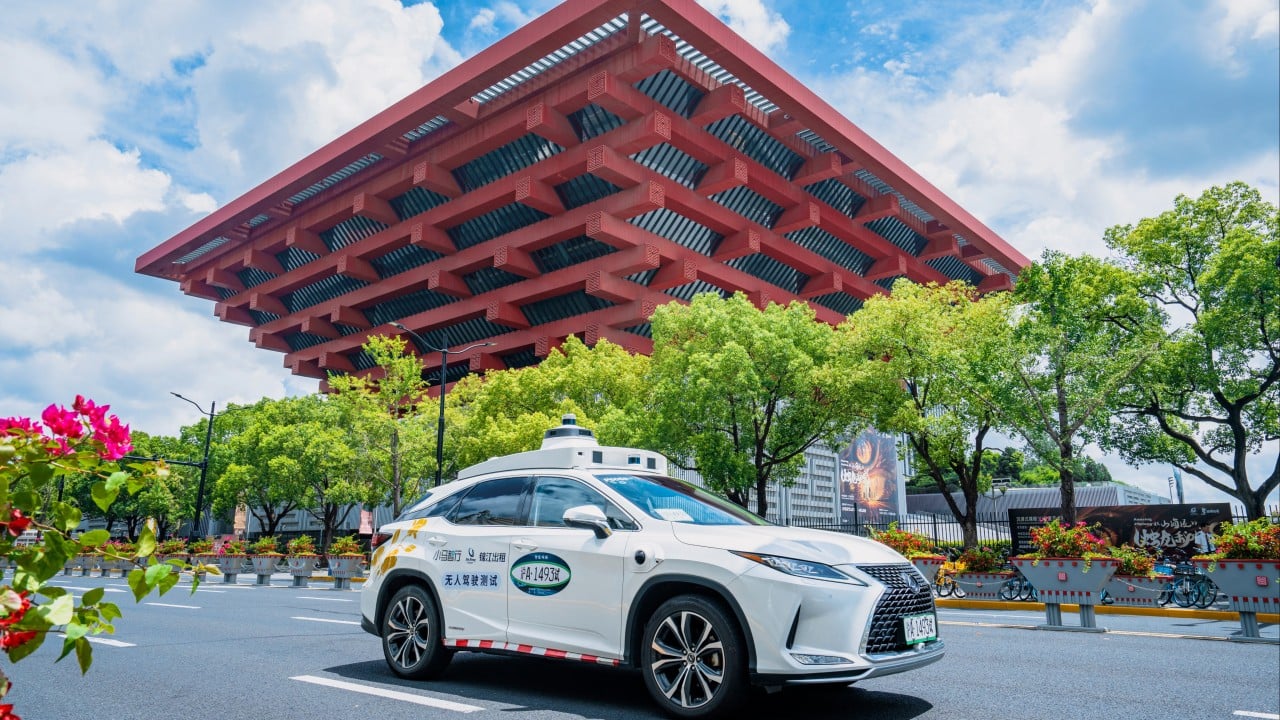
The cost of parts per vehicle for Chinese-made robotaxis was expected to drop to between US$35,000 and US$40,000 in 2027 The global robotaxi sector is on track to become a US$1 trillion market by 2040, according to Morgan Stanley, with Chinese players like Baidu, Xpeng and WeRide primed to be regional front-runners alongside global leaders Tesla and Waymo. In a research note on Friday, the US investment bank forecast that falling manufacturing costs in China would act as a “major underappreciated accelerant” for the industry. Driven by cheaper supply chains, the cost of parts per vehicle for Chinese-made robotaxi solutions was expected to drop to between US$35,000 and US$40,000 in 2027, significantly lowering the barrier to mass adoption. Backed by lower hardware costs, rapid advances in artificial intelligence and clearer regulations, the bank expected robotaxi services to be able to cover the operating costs of vehicles by 2028, setting the stage for scaled commercial operations by 2030. While the US and China dominate the current landscape, Morgan Stanley noted that “Europe and broader Asia may emerge with increasing importance by mid-decade”.