Innovation — 261 insights
Hong Kong steps up to US crypto fund challenge with tokenised fund approval
Innovation

Hong Kong steps up to US crypto fund challenge with tokenised fund approval

As the city looks to challenge the US as a global crypto hub, Baillie Gifford says the SFC has approved its blockchain-based tokenised fund The British fund manager said on Wednesday it had received approval from the Securities and Futures Commission to launch the Baillie Gifford Enhanced Yield Fund (BAGEY) – an actively managed portfolio of short-duration government and corporate bonds. However, the SFC told the South China Morning Post that it would not offer comment on individual cases. Tokenisation turns traditional investment products into blockchain-based digital tokens that represent their ownership. Proponents of the technology tout its benefits including 24/7 instant settlement and wider investor access through fractional ownership. Most tokenised funds currently use a so-called “digital twin” model, which records legal ownership in a traditional ledger and mirrors the holdings on a blockchain. This means the tokens do not provide investors with direct exposure to the underlying assets. In contrast, “digitally native” tokenised funds such as BAGEY use the public blockchain as the official record of ownership, giving token holders full legal rights to the underlying assets.

China memory giant CXMT valued at US$85 billion in record Shanghai IPO
Innovation

China memory giant CXMT valued at US$85 billion in record Shanghai IPO

Chinese DRAM maker is set to raise 57.9 billion yuan (US$8.5 billion), nearly twice the amount earmarked for its investment projects China’s leading memory chipmaker, ChangXin Memory Technologies (CXMT), has priced its Shanghai initial public offering at 8.66 yuan (US$1.28) apiece, positioning the company for the largest listing by a Chinese semiconductor company on a mainland bourse. The firm, based in Hefei, Anhui province, is expected to raise gross proceeds of 57.9 billion yuan (US$8.5 billion) from the sale of nearly 6.7 billion shares, according to an offering announcement released on Tuesday. The shares represent 10 per cent of the company’s enlarged capital, giving CXMT an implied valuation of 579 billion yuan (US$85.2 billion) upon listing on Shanghai’s Star Market. If a 15 per cent overallotment option is fully exercised, the offering could expand to 7.7 billion shares and raise up to 66.6 billion yuan (US$9.83 billion). Online and offline subscriptions will take place on Thursday, but CXMT has not yet announced a trading debut date.

China’s StepFun claims it has unveiled the world’s first AI smartphone
Innovation

China’s StepFun claims it has unveiled the world’s first AI smartphone

Tencent-backed firm launches the AI-native StepX Neo smartphone, challenging US tech giants amid Apple-OpenAI legal clashes Unlike traditional smartphones that required users to manually open individual apps, the device was built around AI agents, according to StepFun. The device could interpret user requests, coordinate across multiple services, and execute complex tasks autonomously, the company added. The smartphone features Amoo, a new personal AI assistant native to Step AOS. The launch highlights a growing global push by AI firms to control the entire product stack, spanning foundation models, operating systems and hardware.

Alibaba to team up with Honor in race to build AI agentic devices
Innovation

Alibaba to team up with Honor in race to build AI agentic devices

Huawei spin-off Honor has been developing what it calls a ‘next-generation terminal operating system’, known as Agentic OS Alibaba Group Holding and Honor are set to deepen their tie-up over an operating system for AI-powered devices, as competition in the nascent “AI phone” genre gains momentum in China. Shenzhen-based Honor, spun off from Huawei Technologies in 2020, will host a sub-forum at WAIC on Saturday titled “From digital screens to embodied intelligence”, CEO Li Jian said in a post on social media platform Weibo on Tuesday. High-profile speakers will include Xu Zhuhong, head of multimodal interaction at Alibaba’s Token Foundry unit; Kevin Kelly, founder of Wired; Xu Hao, head of research and development for Qualcomm China; and Liu Jingkang, founder of action-camera maker Insta360. Alibaba and Honor did not immediately respond to requests for comment on Tuesday. Alibaba owns the South China Morning Post.

Global AI boom sees China’s chip exports nearly double in first half of year
Innovation

Global AI boom sees China’s chip exports nearly double in first half of year

Exports of automatic data processing machines and parts jumped more than 41 per cent to top US$138 billion China’s chip exports nearly doubled in the first half of the year, customs data shows, as a global AI boom cemented computing hardware’s place as a key economic growth engine. In the first six months of 2026, China exported 179.44 billion integrated circuits (ICs) worth a total of US$177.28 billion – up more than 96 per cent year on year – according to data released by the General Administration of Customs on Tuesday. The surge in IC exports was one of the key drivers behind China’s double-digit export growth in the first half of the year, alongside robust overseas demand for industrial robots and other hi-tech products, underscoring the country’s shift towards technology-led export growth despite an increasingly challenging global trade environment. “The export growth was fundamentally driven by precisely matching ‘Made in China’ [products] with diverse global demand,” Wang Jun, a vice-minister of customs, said at a news briefing on Tuesday.

Chinese AI giants, start-ups ready for the agentic web era
Innovation

Chinese AI giants, start-ups ready for the agentic web era

The agentic web era has arrived, and Chinese companies are going all in. Humans were overtaken last month by artificial intelligence (AI) agents and AI bots as the majority users of the internet, data from global network company Cloudflare shows. By early July, agents and bots accounted for more than 60 per cent of web traffic. Even Cloudflare CEO Matthew Prince expressed surprise in a post on X, having initially forecast AI agent-driven web use would pass the 50 per cent mark only in late 2027....

Chinese AI labs to challenge Thinking Machines Lab with new industry focus
Innovation

Chinese AI labs to challenge Thinking Machines Lab with new industry focus

AI labs Yoolee and InfiX.ai say they aim to rival US start-up with industry-specific AI solutions, reduced costs and enhanced privacy Two former Chinese AI lab leaders said they aim to challenge Thinking Machines Lab, a US start-up founded by ex-OpenAI executive Mira Murati, and focus on building industry-specific artificial intelligence solutions and models following their exit from the fierce frontier AI race. Yoolee AI, established last year with backing from venture capital firms including Lanchi Ventures, aimed to help companies build self-evolving AI agents capable of performing tasks that were currently too costly for human workers to do, according to Zhang. Such AI agents, ranging from personal healthcare specialists to travel planners, could drive new revenue streams for businesses in these sectors, he said. Zhang, who joined Beijing-based Zhipu as chief operating officer in 2023 before departing last year, described his new start-up as a combination of Thinking Machines Lab and Palantir, the latter a US data software giant that helps governments and large enterprises manage their AI systems.

Nvidia’s future challenger? Chinese start-up reveals aggressive AI chip road map
Innovation

Nvidia’s future challenger? Chinese start-up reveals aggressive AI chip road map

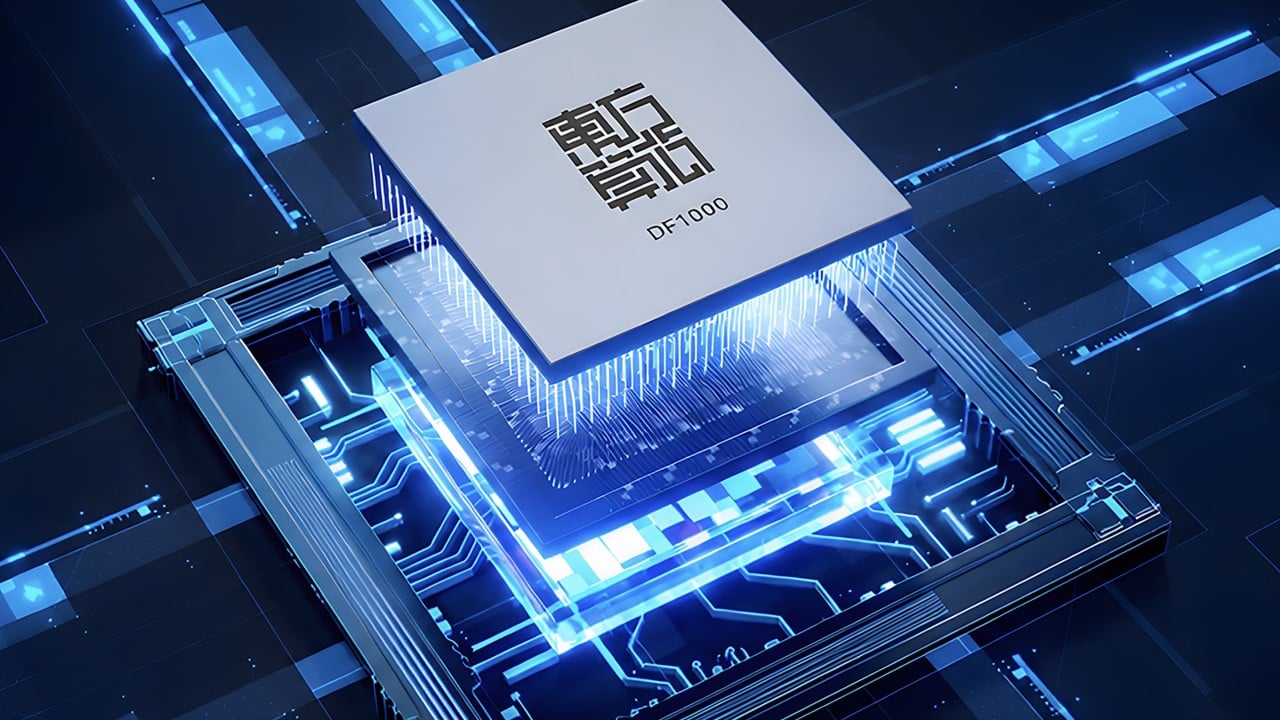
As US sanctions block access to advanced lithography, a Shanghai-based firm is betting on chip redesign and 3D memory stacking to break through bottlenecks The Shanghai-based firm announced on Monday that its strategy was built on software-defined computing and 3D-stacked near-memory architecture, which it said could reduce reliance on the advanced manufacturing processes and cutting-edge memory currently restricted by Washington. “We have to forge a path of our own,” founder Wei Shaojun said at the launch event. “That path cannot be about passively catching up within a framework set by others. We need independent architecture, original technology, a self-sustaining ecosystem and a secure, controllable supply chain.” To that end, Dongfang Suanxin – or Shanghai Oriental Computing Technology – aims to circumvent traditional hardware constraints by changing how chips process data. Software-defined computing reconfigures a chip’s computing and data-flow resources on the fly, tailoring the hardware to different workloads.

China’s Zhipu AI, developer of GLM-5.2, defies slump as it pursues AGI over quick profits
Innovation

China’s Zhipu AI, developer of GLM-5.2, defies slump as it pursues AGI over quick profits

Monday’s losses were seen across chip designers, semiconductor-equipment makers and materials suppliers Chinese artificial intelligence giant Zhipu AI bucked a broad plunge of AI-related stocks across Hong Kong and the Chinese mainland on Monday, which saw arch-rival MiniMax slumping almost 20 per cent. Zhipu, trading as Knowledge Atlas Technology in Hong Kong, closed almost flat at HK$1,645 on Monday after its shares gained more than 1 per cent by midday. The company, whose stock has skyrocketed 12-fold since its January debut, over the weekend pledged to prioritise advancing towards artificial general intelligence (AGI) over near-term commercialisation. Nevertheless, Zhipu AI has declined from its peak late last month, when its market capitalisation briefly surpassed HK$1 trillion (US$128 billion) following investor enthusiasm over its release of the GLM-5.2 model. Its market cap has dropped to HK$730 billion. The company said it would spend the next two years investing in frontier AI research, according to an internal letter issued on Saturday by Tang Jie, a company co-founder and renowned Chinese computer scientist at Tsinghua University.

In China’s electronics hub, a memory chip crisis is hitting consumers hard
Innovation

In China’s electronics hub, a memory chip crisis is hitting consumers hard

Computer vendors in Shenzhen are raising their prices, as the AI boom drives a fivefold jump in the cost of key memory products For Cai, a trader in Shenzhen’s vast Huaqiangbei electronics hub, the business of assembling computers for gamers and corporate clients has suddenly become dramatically more expensive. “Right now, memory and SSDs are the biggest cost drivers in a personal computer build,” Cai said, referring to solid-state drives – devices that can store data on a computer at high speed. The memory supply squeeze is forcing vendors in Huaqiangbei to introduce significant price increases, which are putting off buyers, according to Cai. Only customers with an urgent need for a computer are currently willing to pay the premium, he said. To make matters worse, Cai said he expected prices to climb even higher over the coming months. Other traders echoed that view. Inside SEG Plaza, the skyscraper at the heart of Huaqiangbei, a vendor surnamed Ye said memory prices had in some cases risen fivefold in the past 12 months. “The prices just kept rising since last year, and will continue to climb,” Ye said. “Those who stockpiled last year were able to make a big fortune.”

Beyond Claude Code: the Chinese AI tools poised to benefit after back-door alert
Innovation

Beyond Claude Code: the Chinese AI tools poised to benefit after back-door alert

As Beijing flags a security risk in Anthropic software, domestic tech firms are rapidly embracing local alternatives such as ByteDance’s Trae and Alibaba’s Qoder China’s National Vulnerability Database (NVDB), overseen by the Ministry of Industry and Information Technology, issued an alert this week claiming multiple versions of Anthropic’s flagship Claude Code tool contained a security “back door”. According to the agency, the software could send user locations and identities to remote servers without consent. The NVDB urged local organisations to uninstall the affected versions immediately or upgrade to patched releases. Cai Peng, a Beijing-based cybersecurity partner at Zhong Lun Law Firm, said he expected more Chinese companies to abandon foreign AI tools, driven by mounting security concerns and the country’s “strategic imperative” for tech self-reliance.

Chinese chip start-up aims to build 5-nanometre equivalent chips without using EUV by 2029
Innovation

Chinese chip start-up aims to build 5-nanometre equivalent chips without using EUV by 2029

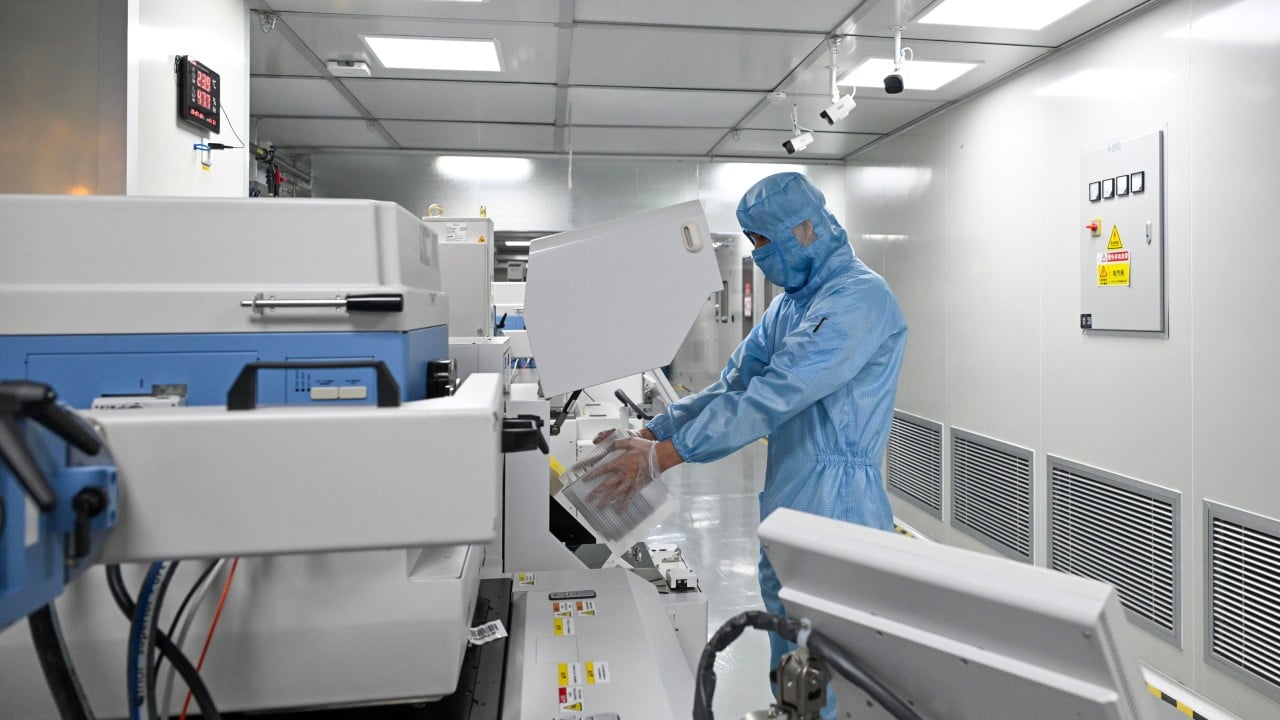
The company says the production line launch marks a critical step towards China’s drive for tech self-sufficiency A Chinese chip start-up has launched what it claims to be the world’s first 8-inch production line for two-dimensional (2D) semiconductors, marking the country’s latest push to develop alternative chip technologies amid US curbs on its access to advanced chipmaking equipment. Shanghai-based Yuanjiwei on Thursday unveiled the pilot production line, saying it supports tape-out – or final stage of chip design – and covers the entire manufacturing process from 2D material preparation to chip integration, according to a statement published to its WeChat public account. Yuanjiwei would expect to use the line to develop 5-nanometre equivalent chips without using extreme ultraviolet (EUV) lithography machines by 2029, a company executive said. China has been increasing efforts to boost its alternative chipmaking technologies amid US export controls. Meanwhile the global semiconductor industry at large has also been searching for new ways to make advanced chips, as traditional silicon-based three-dimensional (3D) chips have been approaching physical limits.