Markets — 355 insights
How China’s resources deals have literally turned into a gold mine
Markets

How China’s resources deals have literally turned into a gold mine

Chinese gold producers, after a buying spree for mines abroad, are cashing in as the metal’s price goes sky-high Chinese gold producers have embarked on a wave of overseas acquisitions in recent years, snapping up mines in countries ranging from Kenya to Colombia. Now, they are reaping the rewards as sky-high gold prices lift their earnings. The market swings have been a windfall for China’s mining firms, with several companies reporting triple-digit increases in profits. Zijin Gold International, a unit of the country’s largest mining firm by market capitalisation, estimated its net profits attributable to shareholders surged 169 per cent to around US$1.4 billion in the first half of the year, according to a filing with the Hong Kong stock exchange last week. Established in 2007, the company owns gold mines across several continents, with deals in countries such as Tajikistan, Kyrgyzstan, Australia, Guyana, Colombia, Suriname, Ghana and Papua New Guinea. In the past year, it has acquired another two mines – one each in Ghana and Kazakhstan – both of which have already turned profitable, the filing said.

China and UAE cross-border QR payment link to boost the global yuan
Markets

China and UAE cross-border QR payment link to boost the global yuan

Beijing linking its retail payment networks with Dubai is another step toward yuan internationalisation and reducing US dollar reliance “The partnership would help expand the scope of cross-border renminbi application, contributing strongly to yuan internationalisation,” Dong Junfeng, chairman of China UnionPay, told domestic media outlets on July 15. For Beijing, building an alternative financial infrastructure is a strategic priority as it seeks to reduce reliance on the US dollar and shield its trade from potential geopolitical shocks. Beyond the new retail QR link, BOC will act as the exclusive clearing bank for Jaywan, the UAE’s national debit card, handling all yuan-denominated transactions, foreign exchange, and clearing services. The push comes as the yuan’s global footprint faces near-term headwinds. In May, the renminbi’s share of global payments fell to around 2.75 per cent, ranking sixth globally, according to data compiled by Swift - the main messaging network used by the global banking system.

Chinese memory giant CXMT oversubscribed 212 times in mega Shanghai IPO
Markets

Chinese memory giant CXMT oversubscribed 212 times in mega Shanghai IPO

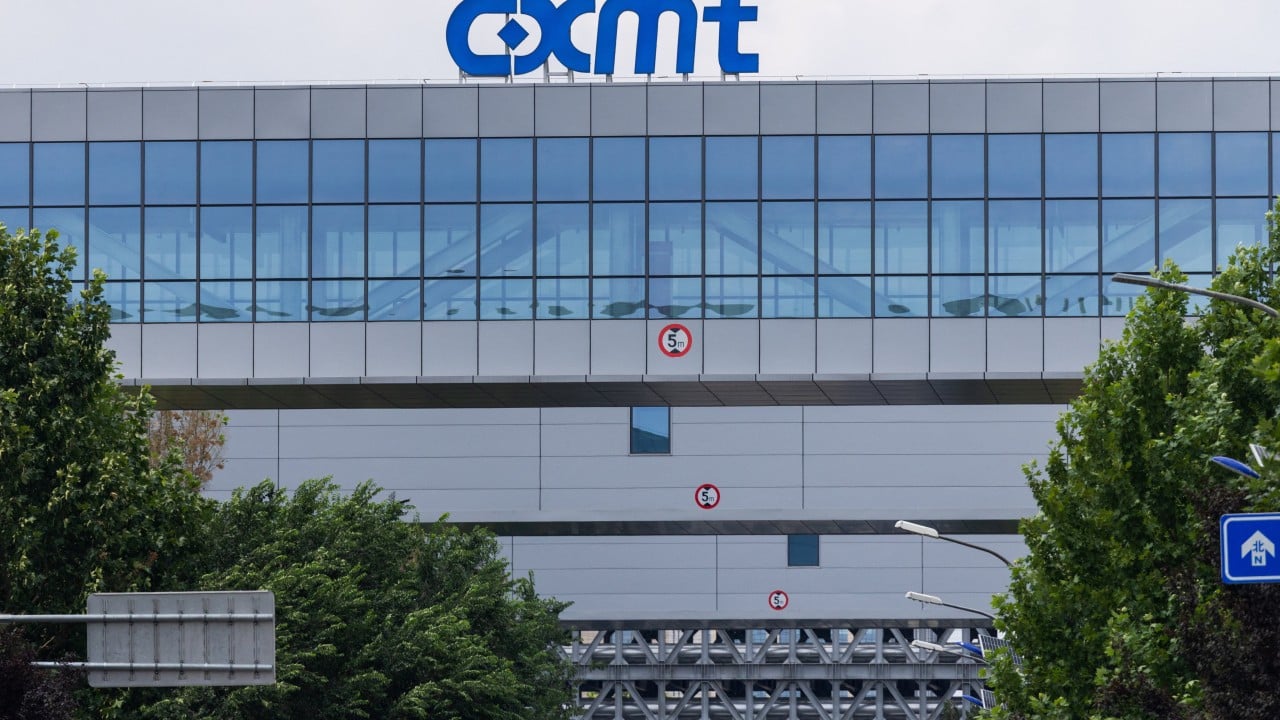
Nearly 10 million investor accounts apply for a rare listed proxy on Beijing’s semiconductor self-reliance drive Investors submitted valid applications for nearly 817 billion shares on Thursday, according to an official announcement published Thursday night. The response highlights the intense appetite for China’s leading producer of dynamic random-access memory, or DRAM, as investors seek exposure to Beijing’s effort to build domestic alternatives to foreign chip suppliers. The overwhelming demand for the Shanghai listing triggered a clawback mechanism that shifted about 502 million shares from the institutional tranche to retail investors. Even after the online offering was expanded to about 3.85 billion shares, the final allotment rate was only 0.47 per cent. China’s online IPO system does not require investors to provide cash when submitting applications. Instead, applicants receive lottery entries based on the value of their existing Shanghai-listed shareholdings; they pay only if they win allocations. Each successful entry for CXMT entitles an investor to buy 500 shares for 4,330 yuan (US$637). Professional investors also showed strong interest.

South Korea’s turbulence seen as boon for Hong Kong stocks as capital migration under way
Markets

South Korea’s turbulence seen as boon for Hong Kong stocks as capital migration under way

Foreign investors have pulled US$110 billion from Seoul this year, rotating into undervalued Chinese giants as momentum seen slowing for expensive tech stocks Chinese technology stocks trading in Hong Kong are emerging as beneficiaries of tumult in the South Korean market, analysts say, pointing to investors rotating out of crowded bets and into undervalued assets, positioning for a rebound. The Hang Seng Tech Index, which tracks Alibaba and other key Hong Kong-listed Chinese tech companies, has risen about 10 per cent from a June 26 low. Meanwhile, the Korea Composite Stock Price Index (Kospi) has technically slid into a bear market after a 20 per cent decline in the span, as increased scrutiny of margin trading left individual investors scrambling to exit their leveraged positions. “The recent rebound in Hong Kong stocks is a reflection of the rebalancing of global capital,” said Chen Gang, an analyst at Soochow Securities. “The lagging assets are now absorbing the capital that is seeking diversification.” The Hang Seng Tech Index is trailing global peers this year with a 15 per cent decline, as key constituents, including Alibaba, JD.com and Meituan, are more reliant on e-commerce revenue than on AI monetisation.

AI, chip boom is lifting Hong Kong’s ETP market to new heights: HKEX director
Markets

AI, chip boom is lifting Hong Kong’s ETP market to new heights: HKEX director

Hong Kong is already the world’s fourth-largest market for exchange-traded products, and the rapid growth in trading is set to continue, director says Investor appetite for artificial intelligence and semiconductor plays will continue to drive fast growth in Hong Kong’s exchange-traded products (ETP) market in the second half of the year, strengthening the city’s wealth management industry, according to a director of Hong Kong Exchanges and Clearing (HKEX). “Hong Kong has already risen to become the fourth largest ETP market worldwide, after reporting a record of rapid development over the past decade,” said Ding Chen, an independent director of HKEX, at a financial summit on Thursday. Trading in the more than 200 ETPs listed on the stock exchange accounted for 17 per cent of total turnover in the first half of the year, up from 6.2 per cent a decade ago, according to Ding, who is also CEO of CSOP Asset Management, the largest ETP issuer in Hong Kong with a 39 per cent market share.

Citic Capital CEO on making China a financial powerhouse
Markets

Citic Capital CEO on making China a financial powerhouse

Zhang Yichen is chairman and CEO of Citic Capital Holdings, one of the leading players in China’s capital market, and the chairman of Trustar Capital. He heads several companies, including the McDonald’s master franchise business in mainland China and Hong Kong as well as Harbin Pharmaceutical Group. He also sits on the board of Hong Kong Exchanges and Clearing (HKEX) as an independent non-executive director. In this interview, conducted during the “two sessions” – the annual meetings of China’s...

Hong Kong exchange returns IPO application sponsored by top Chinese investment bank
Markets

Hong Kong exchange returns IPO application sponsored by top Chinese investment bank

Inner Mongolia Xingye Silver & Tin Mining says it plans to resubmit application before end of September The Hong Kong stock exchange has returned an IPO application sponsored by China’s leading investment bank, sending a strong signal of increased scrutiny. It was the first initial public offering application to be returned in Hong Kong in seven months, according to public records, and came amid increasing regulatory pressure as the city’s exchange experiences an IPO boom. Since 2014, if HKEX has deemed a listing application incomplete, it has returned the filing and publicly disclosed the sponsor’s name on its website. Twenty-six applications have been returned: 16 for the exchange’s main board and 10 for its GEM board.

Giant models grab headlines, but some Chinese start-ups bet on smaller phone-ready AI
Markets

Giant models grab headlines, but some Chinese start-ups bet on smaller phone-ready AI

A growing number of tech firms are pivoting to lightweight models designed to run entirely on smartphones and laptops Proponents said this localised approach would be a game-changer, promising faster processing, enhanced data privacy and lower operating costs. Investors are buying in. Beijing-based ModelBest, a prominent player in on-device AI, raised more than 5 billion yuan (US$738 million) this year, according to a WeChat post by investor Shanghai Mejoy Capital. ModelBest’s latest C+ Series funding round, completed earlier this week, propelled the firm’s valuation to 20 billion yuan, according to the post. The start-up did not disclose the size of its latest funding round and did not immediately respond to a request for comment on Thursday. The funding milestone comes amid a flurry of activity in China’s so-called local AI or edge AI sector.

China’s OnePlus bows out of Western markets as memory crisis hammers smartphone industry
Markets

China’s OnePlus bows out of Western markets as memory crisis hammers smartphone industry

The industry is staggering under a chip shortage that has dragged down shipments, forcing handset makers to recalibrate strategies OnePlus said it would continue to support existing devices with software updates, security patches and after-sales service, without providing a detailed timeline for a complete shutdown of operations. Oppo said in a statement on Thursday that “OnePlus’ product road map in China remains unchanged”. However, Oppo’s other budget smartphone subsidiary, Realme, would “no longer launch new products in China” and instead focus on overseas markets, according to the statement. The moves were made to “further consolidate resources and enhance global product strategy synergy”.

CXMT’s mega IPO draws frenzy from retail investors to DeepSeek founder’s fund
Markets

CXMT’s mega IPO draws frenzy from retail investors to DeepSeek founder’s fund

Investors are hoping for a relatively generous allotment rate and sharp gains when the memory-chip maker debuts on Shanghai’s Star Market The 60-year-old stock investor from southwestern Sichuan province was encouraged by her securities account manager, who told her that CXMT’s unusually large share sale could produce a higher allotment rate than most Chinese mainland IPOs. This represents a 1.4 per cent yield on the original price of 8.66 yuan per share, as both professional and amateur stock investors bet on the country’s memory chip champion amid the artificial intelligence boom. CXMT is issuing about 6.69 billion shares, expecting to raise gross proceeds of 57.9 billion yuan (US$8.56 billion). If the 15 per cent overallotment option is fully exercised, proceeds could rise to 66.6 billion yuan. Some brokerage valuation scenarios have put the company’s market cap at as much as 3 trillion yuan after listing, which means that the gain would be about 36 yuan per share, or more than fourfold. “For A-share IPOs in China, winning an allocation [usually] means making money,” said Kevin Chen, a 35-year-old employee at a state-owned enterprise in Shanghai, who also subscribed for shares.

China memory-chip maker CXMT set for mega IPO
Markets

China memory-chip maker CXMT set for mega IPO

Subscriptions began on Thursday for shares in memory-chip maker ChangXin Memory Technologies (CXMT) ahead of its listing on Shanghai’s Star Market in what could be mainland China’s second biggest initial public offering. With pricing set at 8.66 yuan (US$1.28) per share, the IPO of nearly 6.7 billion shares will raise gross proceeds of 57.9 billion yuan (US$8.5 billion). If a 15 per cent overallotment option is fully exercised, the offering could expand to 7.7 billion shares and raise 66.6...

BYD aims to build 3,000 ‘flash-charging’ stations across Europe within months
Markets

BYD aims to build 3,000 ‘flash-charging’ stations across Europe within months

The facilities will support BYD’s latest flash-charging technology, which can reportedly recharge a car’s battery in just 10 minutes Chinese electric car giant BYD is building a network of 6,000 charging stations in overseas markets including Europe, as it looks to turbocharge its deliveries with the roll-out of cutting-edge flash-charging technology. The world’s largest electric vehicle (EV) maker aims to have 3,000 charging stations that support its flash-charging technology in operation across Europe by the end of March 2027, the company told the South China Morning Post in a statement. It also plans to add 2,000 of the facilities in the Americas and 1,000 in the Asia-Pacific region over the same period. BYD’s newest charging stations can give some of the company’s pure electric models a driving range of more than 900 kilometres (559 miles) after less than 10 minutes of charging. The massive buildout of charging infrastructure comes as global demand for electric cars surges due to the energy shock sparked by the US-Israel war on Iran, handing China’s EV makers a strategic opportunity, according to Qian Kang, the owner of a factory supplying vehicle circuit boards in east China’s Zhejiang province.