Markets — 348 insights
Tourism appeal adds to Australia’s edge in drawing mainland Chinese, Hong Kong homebuyers
Markets

Tourism appeal adds to Australia’s edge in drawing mainland Chinese, Hong Kong homebuyers

Moderating prices and a relaxed lifestyle are among factors reinforcing Australia’s safe-haven appeal for foreign investors, agents say Education had long been a major draw for many mainland and Hong Kong buyers, but the country’s tourist attractions, relaxed lifestyle and moderating property prices in major cities such as Sydney and Melbourne were burnishing its appeal as a top investment destination, agents said. “Who wouldn’t like to look out from their window onto a view of the Sydney Harbour Bridge and Opera House?” said Kashif Ansari, co-founder and group CEO of proptech firm Juwai IQI. In 2025, more than 1 million mainland Chinese tourists visited Australia, up 17 per cent from 2024, according to data compiled by Tourism Australia, the government agency tasked with promoting the country as a premier destination. Between July 2025 and March 2026, mainland Chinese buyers were the largest group of foreign investors in the Australian housing market, snapping up 638 residential units worth A$800 million (US$559 million), according to data from the country’s Treasury Department.

Fierce competition and shifting tastes squeeze China’s yoga apparel market
Markets

Fierce competition and shifting tastes squeeze China’s yoga apparel market

Growth has slowed in the market for yoga workout gear as Chinese consumers pivot to other brands and activities China’s yoga apparel market is grappling with fierce competition and slowing growth amid sluggish domestic consumption, as middle-class shoppers diversify their activities, according to analysts. Lululemon’s same-store sales growth at sampled Chinese shopping malls dropped 4 per cent year on year in May, compared with a 3 per cent decline in April and a 6 per cent fall in the first quarter, according to data from Shanghai-based consulting firm Meritco Services. “Competition in the yoga apparel segment has intensified,” said Sammi Xu, Deutsche Bank’s head of China consumer discretionary research.

Airbus sells 55 aircraft – including 15 widebody A350s – to 2 Chinese airlines
Markets

Airbus sells 55 aircraft – including 15 widebody A350s – to 2 Chinese airlines

Air China says it will purchase 15 widebody A350-900 jets, while subsidiary Shenzhen Airlines will buy 40 narrowbody A320neo aircraft The new-generation A350-900 and A320neo aircraft can help the two airlines optimise their fleets and route networks while lowering costs as they burn less fuel and cost less to operate than previous models. The purchase also supported the company’s carbon peaking and carbon neutrality targets amid the broader push towards decarbonisation in Chinese aviation, according to the statement. The catalogue price for the 55 aircraft is US$12.4 billion but Airbus would grant both airlines “significant discounts,” making the actual price lower than the list price, according to the Air China statement. Sizeable discounts are common for big orders in the industry. The deal was pending approval from the airline’s shareholders and the relevant state authorities, Air China said. The A350 aircraft would be delivered to Air China between 2030 and 2032, while the A320neo was scheduled to be delivered to Shenzhen Airlines between 2029 and 2032.

Hong Kong’s office market: Central booms, but noncore areas struggle
Markets

Hong Kong’s office market: Central booms, but noncore areas struggle

Demand in Central and Admiralty is picking up, but vacancies of up to 30 per cent and tight bank lending continue to weigh on noncore areas The reluctance of banks to finance commercial-property purchases has reinforced the split, allowing cash-rich owner-occupiers to acquire discounted offices in traditional commercial districts while the vacancy rates in some secondary locations remain as high as 30 per cent, according to Centaline Commercial. Office transactions picked up in the first half of the year, with about 503 deals completed, the highest half-year level since the second half of 2021, the property agency added. Grade A offices led the recovery, with transactions surging 78 per cent year on year to 119 deals. The recovery has been most visible in top prime offices in the core-business district. Centaline Commercial said the number of transactions for top-tier offices jumped 78 per cent from a year earlier to 119 in the first half, with lower-priced deals at Lippo Centre in Admiralty and The Centre in Central suggesting that valuations have begun to stabilise after falling roughly 70 per cent from their peaks.

Shein passes hearing for Hong Kong listing as valuation halves to below US$50b, sources say
Markets

Shein passes hearing for Hong Kong listing as valuation halves to below US$50b, sources say

Regulatory headwinds, alongside prolonged IPO delays, have severely dented the unicorn’s valuation The Singapore-headquartered company, founded in China, attended its listing hearing with Hong Kong Exchanges and Clearing (HKEX) on Thursday, sources said. Zhongji Innolight, a leading Chinese optical module manufacturer with a market capitalisation of over 1 trillion yuan (US$147.7 billion), announced on Friday that it had passed its Hong Kong listing hearing. The company was expected to start bookbuilding as early as this month, aiming to become the largest Hong Kong IPO of the year, according to people familiar with the matter. Goldman Sachs, CICC, Morgan Stanley and GF Securities are acting as the joint sponsors. HKEX declined to comment on individual listings, while Shein and Innolight did not immediately respond to requests for comment on Friday.

How China’s resources deals have literally turned into a gold mine
Markets

How China’s resources deals have literally turned into a gold mine

Chinese gold producers, after a buying spree for mines abroad, are cashing in as the metal’s price goes sky-high Chinese gold producers have embarked on a wave of overseas acquisitions in recent years, snapping up mines in countries ranging from Kenya to Colombia. Now, they are reaping the rewards as sky-high gold prices lift their earnings. The market swings have been a windfall for China’s mining firms, with several companies reporting triple-digit increases in profits. Zijin Gold International, a unit of the country’s largest mining firm by market capitalisation, estimated its net profits attributable to shareholders surged 169 per cent to around US$1.4 billion in the first half of the year, according to a filing with the Hong Kong stock exchange last week. Established in 2007, the company owns gold mines across several continents, with deals in countries such as Tajikistan, Kyrgyzstan, Australia, Guyana, Colombia, Suriname, Ghana and Papua New Guinea. In the past year, it has acquired another two mines – one each in Ghana and Kazakhstan – both of which have already turned profitable, the filing said.

China and UAE cross-border QR payment link to boost the global yuan
Markets

China and UAE cross-border QR payment link to boost the global yuan

Beijing linking its retail payment networks with Dubai is another step toward yuan internationalisation and reducing US dollar reliance “The partnership would help expand the scope of cross-border renminbi application, contributing strongly to yuan internationalisation,” Dong Junfeng, chairman of China UnionPay, told domestic media outlets on July 15. For Beijing, building an alternative financial infrastructure is a strategic priority as it seeks to reduce reliance on the US dollar and shield its trade from potential geopolitical shocks. Beyond the new retail QR link, BOC will act as the exclusive clearing bank for Jaywan, the UAE’s national debit card, handling all yuan-denominated transactions, foreign exchange, and clearing services. The push comes as the yuan’s global footprint faces near-term headwinds. In May, the renminbi’s share of global payments fell to around 2.75 per cent, ranking sixth globally, according to data compiled by Swift - the main messaging network used by the global banking system.

Chinese memory giant CXMT oversubscribed 212 times in mega Shanghai IPO
Markets

Chinese memory giant CXMT oversubscribed 212 times in mega Shanghai IPO

Nearly 10 million investor accounts apply for a rare listed proxy on Beijing’s semiconductor self-reliance drive Investors submitted valid applications for nearly 817 billion shares on Thursday, according to an official announcement published Thursday night. The response highlights the intense appetite for China’s leading producer of dynamic random-access memory, or DRAM, as investors seek exposure to Beijing’s effort to build domestic alternatives to foreign chip suppliers. The overwhelming demand for the Shanghai listing triggered a clawback mechanism that shifted about 502 million shares from the institutional tranche to retail investors. Even after the online offering was expanded to about 3.85 billion shares, the final allotment rate was only 0.47 per cent. China’s online IPO system does not require investors to provide cash when submitting applications. Instead, applicants receive lottery entries based on the value of their existing Shanghai-listed shareholdings; they pay only if they win allocations. Each successful entry for CXMT entitles an investor to buy 500 shares for 4,330 yuan (US$637). Professional investors also showed strong interest.

South Korea’s turbulence seen as boon for Hong Kong stocks as capital migration under way
Markets

South Korea’s turbulence seen as boon for Hong Kong stocks as capital migration under way

Foreign investors have pulled US$110 billion from Seoul this year, rotating into undervalued Chinese giants as momentum seen slowing for expensive tech stocks Chinese technology stocks trading in Hong Kong are emerging as beneficiaries of tumult in the South Korean market, analysts say, pointing to investors rotating out of crowded bets and into undervalued assets, positioning for a rebound. The Hang Seng Tech Index, which tracks Alibaba and other key Hong Kong-listed Chinese tech companies, has risen about 10 per cent from a June 26 low. Meanwhile, the Korea Composite Stock Price Index (Kospi) has technically slid into a bear market after a 20 per cent decline in the span, as increased scrutiny of margin trading left individual investors scrambling to exit their leveraged positions. “The recent rebound in Hong Kong stocks is a reflection of the rebalancing of global capital,” said Chen Gang, an analyst at Soochow Securities. “The lagging assets are now absorbing the capital that is seeking diversification.” The Hang Seng Tech Index is trailing global peers this year with a 15 per cent decline, as key constituents, including Alibaba, JD.com and Meituan, are more reliant on e-commerce revenue than on AI monetisation.

AI, chip boom is lifting Hong Kong’s ETP market to new heights: HKEX director
Markets

AI, chip boom is lifting Hong Kong’s ETP market to new heights: HKEX director

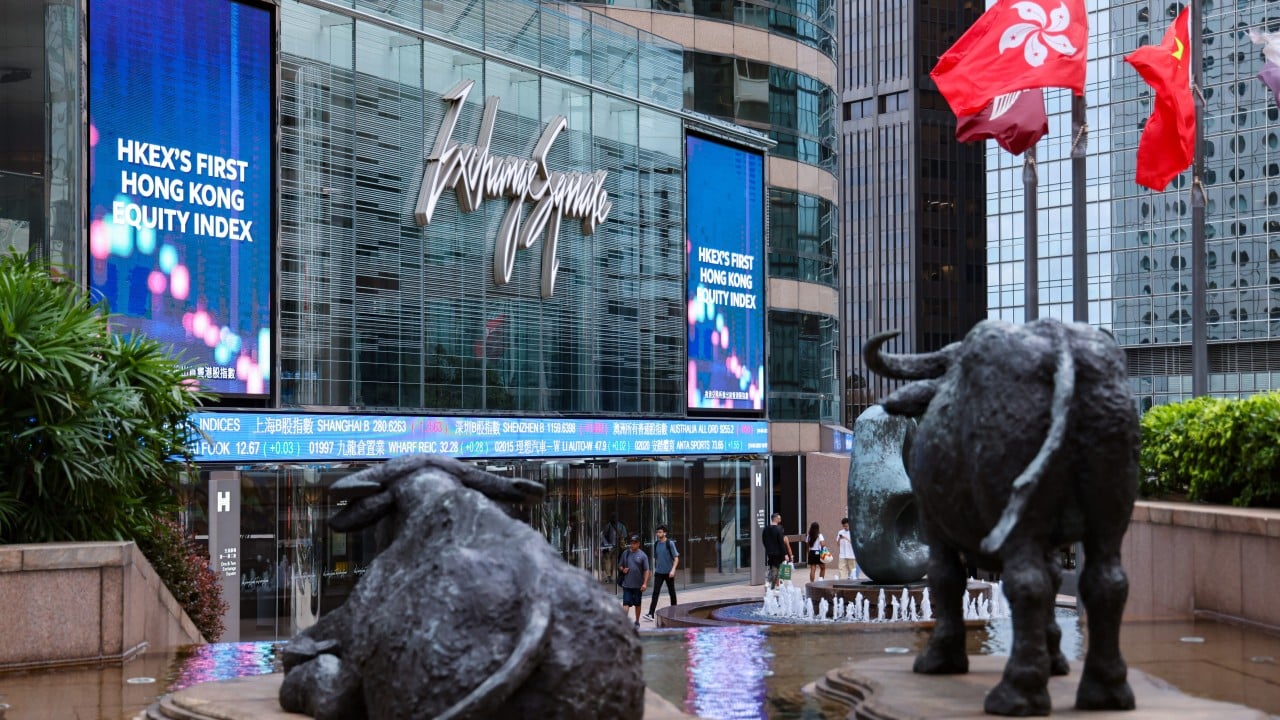
Hong Kong is already the world’s fourth-largest market for exchange-traded products, and the rapid growth in trading is set to continue, director says Investor appetite for artificial intelligence and semiconductor plays will continue to drive fast growth in Hong Kong’s exchange-traded products (ETP) market in the second half of the year, strengthening the city’s wealth management industry, according to a director of Hong Kong Exchanges and Clearing (HKEX). “Hong Kong has already risen to become the fourth largest ETP market worldwide, after reporting a record of rapid development over the past decade,” said Ding Chen, an independent director of HKEX, at a financial summit on Thursday. Trading in the more than 200 ETPs listed on the stock exchange accounted for 17 per cent of total turnover in the first half of the year, up from 6.2 per cent a decade ago, according to Ding, who is also CEO of CSOP Asset Management, the largest ETP issuer in Hong Kong with a 39 per cent market share.

Citic Capital CEO on making China a financial powerhouse
Markets

Citic Capital CEO on making China a financial powerhouse

Zhang Yichen is chairman and CEO of Citic Capital Holdings, one of the leading players in China’s capital market, and the chairman of Trustar Capital. He heads several companies, including the McDonald’s master franchise business in mainland China and Hong Kong as well as Harbin Pharmaceutical Group. He also sits on the board of Hong Kong Exchanges and Clearing (HKEX) as an independent non-executive director. In this interview, conducted during the “two sessions” – the annual meetings of China’s...

Hong Kong exchange returns IPO application sponsored by top Chinese investment bank
Markets

Hong Kong exchange returns IPO application sponsored by top Chinese investment bank

Inner Mongolia Xingye Silver & Tin Mining says it plans to resubmit application before end of September The Hong Kong stock exchange has returned an IPO application sponsored by China’s leading investment bank, sending a strong signal of increased scrutiny. It was the first initial public offering application to be returned in Hong Kong in seven months, according to public records, and came amid increasing regulatory pressure as the city’s exchange experiences an IPO boom. Since 2014, if HKEX has deemed a listing application incomplete, it has returned the filing and publicly disclosed the sponsor’s name on its website. Twenty-six applications have been returned: 16 for the exchange’s main board and 10 for its GEM board.