Markets — 747 insights
Will China’s US$54b capital injection be enough to ease financial strains?
Markets

Will China’s US$54b capital injection be enough to ease financial strains?

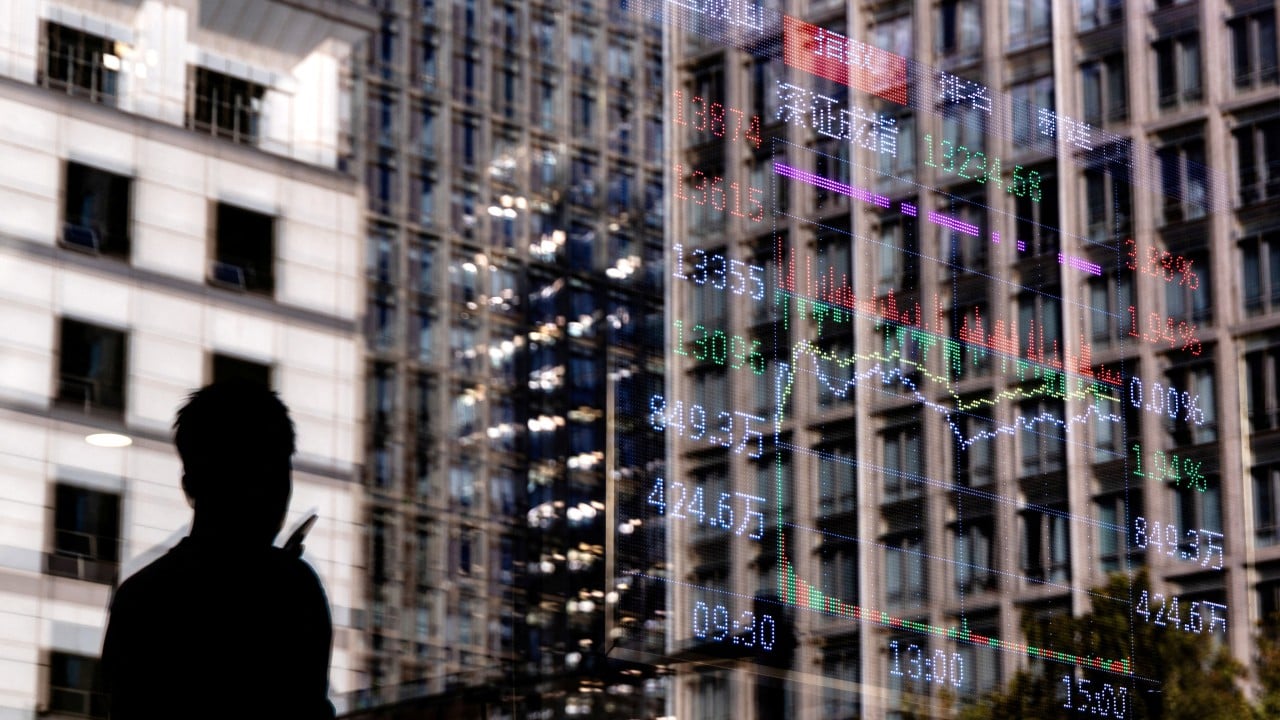
Capital boost strengthens buffers of financial institutions, but stronger fiscal support is needed to reignite credit demand, observers say Raymond Yeung, chief Greater China economist at ANZ Bank, said the low-interest-rate environment was “weighing on both insurers and banks” by reducing insurers’ investment returns and narrowing banks’ net interest margins. Analysts led by Xiong Yuan, chief economist at Guosheng Securities, said in a note on Monday that the move was mainly aimed at strengthening financial institutions’ capital as low interest rates had slowed their ability to build capital, making it harder for them to maintain sufficient capital buffers. Their comments came after eight major state-owned banks and insurers – including Agricultural Bank of China (ABC), Industrial and Commercial Bank of China (ICBC) and China Life Insurance Company – announced plans on Sunday to raise a combined 360 billion yuan in capital, with 300 billion yuan from the Ministry of Finance and an additional 60 billion yuan from the tobacco sector.
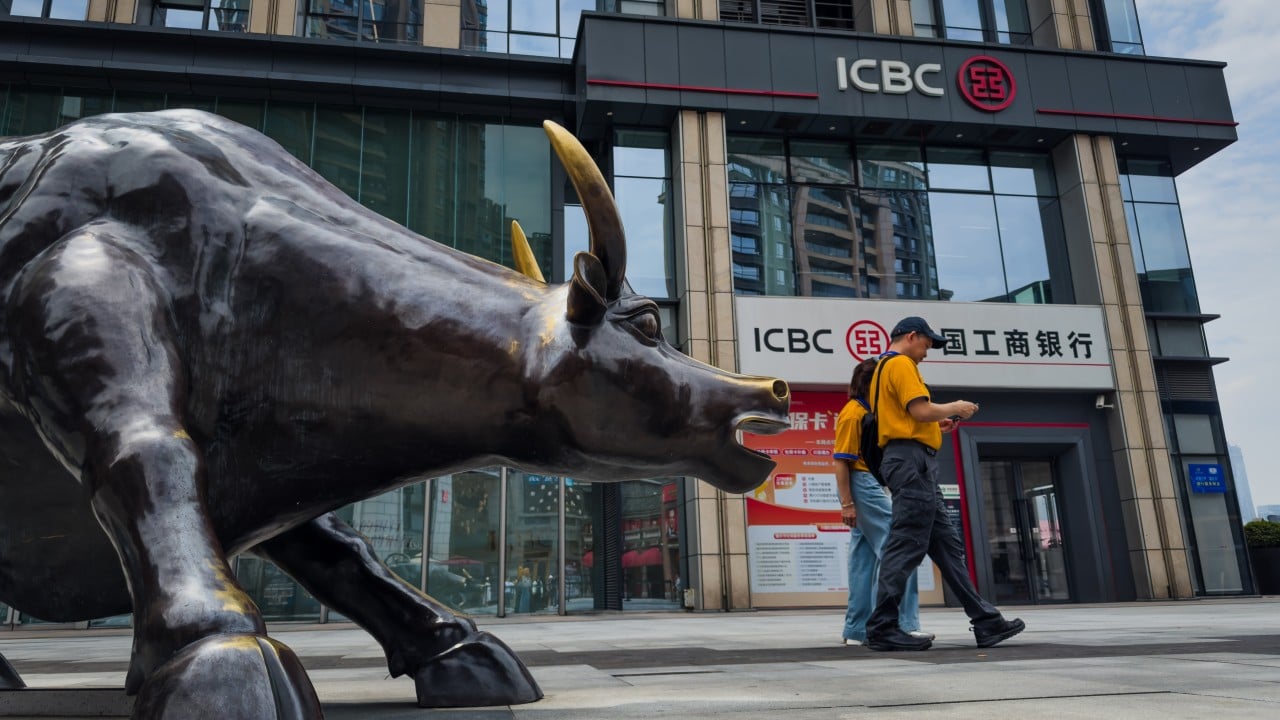
China’s capital injection steels banks, insurers for rough road ahead
Markets

China’s capital injection steels banks, insurers for rough road ahead

China announced a capital injection of around 360 billion yuan (US$54 billion) for eight of the largest state-owned banks and insurers amid government efforts to shore up the country’s financial system and boost economic growth. Three state banks said on Sunday they would receive a combined 290 billion yuan. Agricultural Bank of China (ABC) and Industrial and Commercial Bank of China (ICBC) will raise 160 billion yuan and 100 billion yuan respectively through private placements of new A-shares...

Chinese firms’ green-tech expansion hinges on Hong Kong, senior bankers say
Markets

Chinese firms’ green-tech expansion hinges on Hong Kong, senior bankers say

Offshore yuan liquidity makes city a ‘superconnector’, but finding projects with strong returns is now the challenge, senior bankers say Hong Kong is poised to play a bigger role in financing Chinese green-technology companies’ expansion into emerging markets, as geopolitical fragmentation and high funding costs reshape how capital is deployed in the global energy transition, according to senior banking executives. The city’s deep sustainable-finance market and offshore yuan liquidity could help channel capital into green and climate-resilience projects across developing economies, executives from Bank of China (Hong Kong), DBS, HSBC and Standard Chartered said during a panel discussion at a forum on Monday. The annual forum organised by the Hong Kong Green Finance Association and the Greater Bay Area Green Finance Alliance brought together policymakers, financiers and industry leaders to discuss sustainable investment amid rising geopolitical, trade and economic uncertainty.

China’s brokers expected to continue robust performance with blockbuster IPO offerings
Markets

China’s brokers expected to continue robust performance with blockbuster IPO offerings

Active A-share market trading boosts investment firms’ top line by 50%, as mega IPOs predicted to fuel underwriting and sponsorship growth The industry also recorded a robust first-half performance, with 150 brokers posting an average of 23.5 per cent year-on-year increase in net profit, driven by a 31 per cent surge in operating revenue, according to the Securities Association of China (SAC). Investment advisory services also emerged as a stand-out, with net revenue soaring 57.24 per cent – the fastest growth among all business segments – reflecting rising demand for research reports and wealth management advice. Wall Street investment bank Citibank was positive towards the sector’s outlook. In a research note last week, the bank forecast that covered Chinese brokers would achieve a return on equity of about 11 per cent in 2026, supporting a price-to-book ratio above 1x. This implies an average of 36 per cent upside for H-share brokerage stocks.

China’s leading EV battery makers’ profits nearly double that of industry’s carmakers
Markets

China’s leading EV battery makers’ profits nearly double that of industry’s carmakers

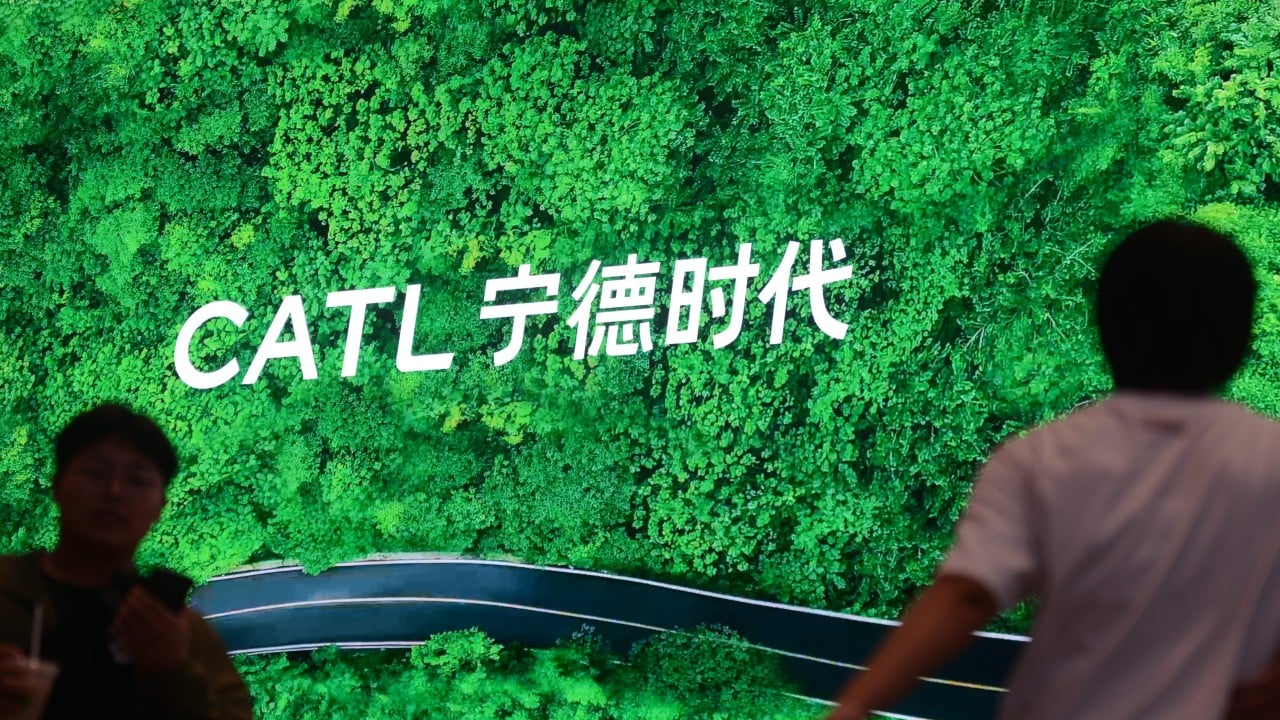
Leading electric vehicle battery makers’ profits by far outpace the industry’s carmakers in first half China’s electric vehicle (EV) battery makers saw their combined net profit in the first half of the year nearly double that of the country’s major carmakers, widening the profitability gap amid weakening domestic demand for EVs. Seven major battery manufacturers, including Contemporary Amperex Technology Limited (CATL), recorded a net profit of over 50 billion yuan (US$7.4 billion) during the January-June period, up 49 per cent year on year, according to the companies’ exchange filings. However, China’s 11 major EV makers, from BYD to Great Wall Motor, saw their combined interim net profit shrink by 19 per cent over the same period to 28.8 billion yuan. The combined net profit of the seven battery makers was 75 per cent higher than that of the 11 listed EV makers in the first half, compared to a minor lag of 4.56 per cent for the same period one year ago. “Profits have diverged sharply between upstream and downstream sectors,” said Cui Dongshu, secretary general of the CPCA, in his social media post on Friday.

Can gold hit US$5,000? Wall Street turns bullish despite US job growth fuelling rate fears
Markets

Can gold hit US$5,000? Wall Street turns bullish despite US job growth fuelling rate fears

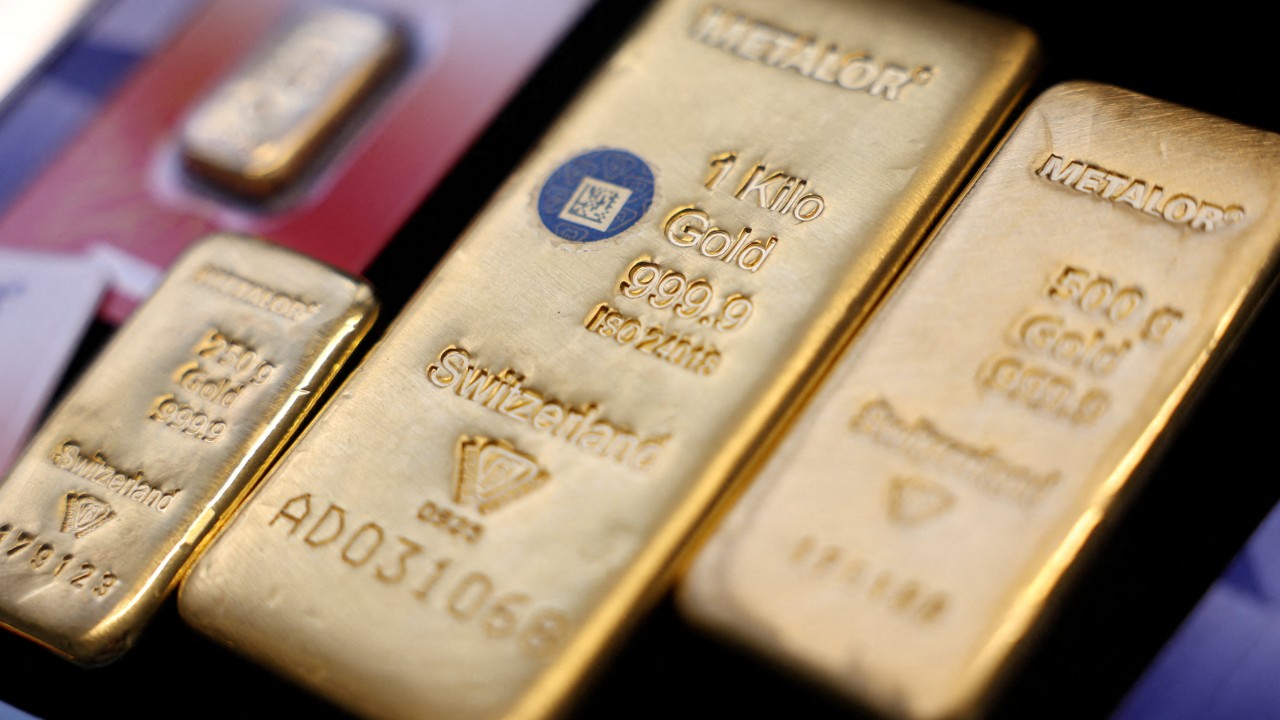
Record buying spree by central banks offsets Fed tightening fears, pushing gold towards US$5,000 by year-end, investment banks forecast Gold will probably test US$5,000 an ounce by the end of 2026, as demand from central banks diversifying their foreign reserves remains strong, countering fears of US monetary tightening after strong labour data and a hawkish tone from the Federal Reserve, according to investment banks. RBC Capital Markets is the latest to join the bullish camp, forecasting US$4,929 by year-end and US$5,296 in 2027. That aligned with Goldman Sachs and State Street Investment Management, which predicted that gold would climb to US$4,900 and US$5,000, respectively. The projections implied at least a 10 per cent gain from current levels. The inverse correlation between the yellow metal and borrowing costs is breaking down amid concerns over fiscal discipline and relentless bond sales by the Trump administration, fuelling the so-called debasement trade. “In this case, it does not appear to be above-trend GDP [gross domestic product] growth or corporate margins driving higher long-term interest rates,” said Aakash Doshi, a strategist at State Street.

HSBC-backed platform drives green transition capital to emerging markets amid global risks
Markets

HSBC-backed platform drives green transition capital to emerging markets amid global risks

World may need up to US$20 trillion over five to eight years to build or upgrade renewable energy facilities, HSBC executive says The Green Accelerator Programme, rolled out on Monday with backing from HSBC, the Asian Infrastructure Investment Bank, the Silk Road Fund and others, will channel private capital into feasibility studies and due diligence for emerging-market companies and governments adopting green technology. “Geopolitical disruptions such as those in the Strait of Hormuz have accelerated demand for resilient, alternative energy sources,” said Julian Wentzel, chief sustainability officer at HSBC, in an interview with the South China Morning Post. This included global corporate transition spending, currently estimated at US$2.3 trillion per year and expected to increase to US$3.6 trillion per year by 2030.

How generative AI helps SenseTime turn a profit even as Chinese peers struggle
Markets

How generative AI helps SenseTime turn a profit even as Chinese peers struggle

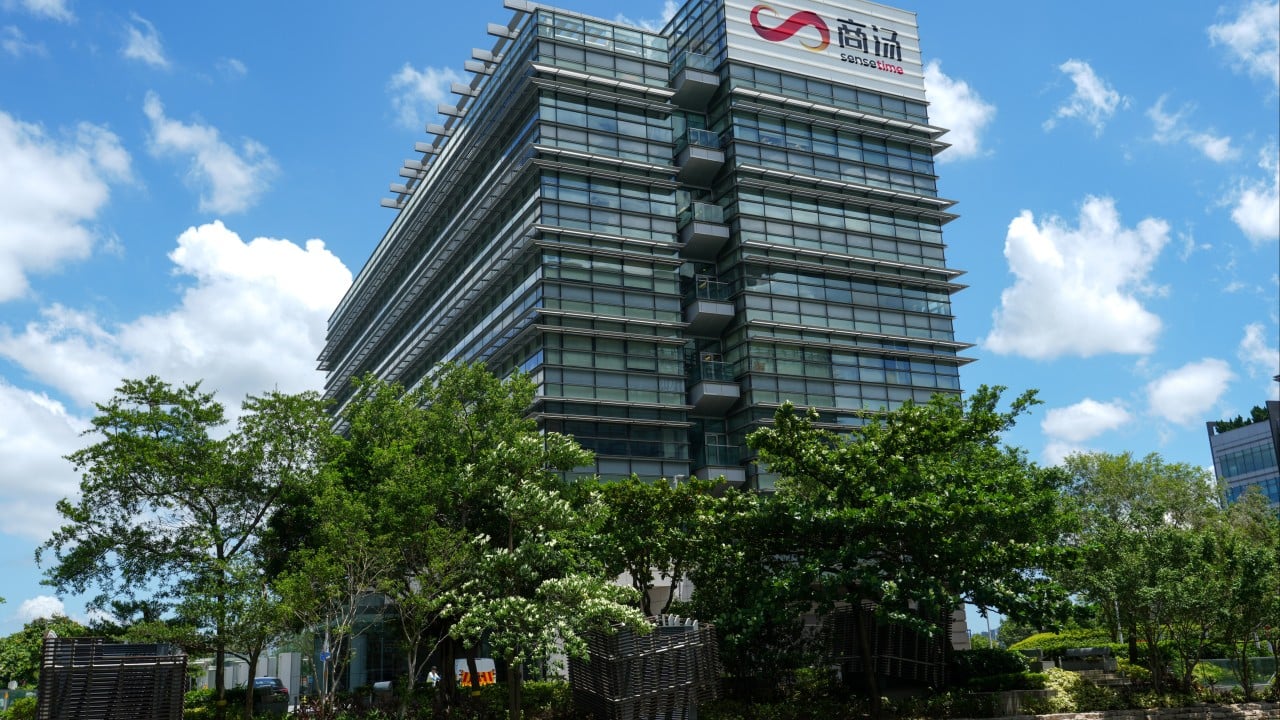
The AI firm has managed to become profitable by carving out a niche involving one-person firms and productivity tools, company executives say Chinese artificial intelligence pioneer SenseTime is carving a unique path to profitability by steering away from a blind chase for model size, focusing instead on helping clients complete enterprise tasks, executives from the firm told the South China Morning Post. Speaking after the firm reported a net profit of 617.3 million yuan (US$92.0 million) for the first half of 2026 last week, executives including CEO Xu Li and chief financial officer Wang Zheng outlined how a pivot towards AI productivity tools and solo entrepreneurs had helped SenseTime create a sustainable business model. The performance – SenseTime’s first-ever first-half profit under International Financial Reporting Standards since its 2021 Hong Kong listing – marks a stark turning point for the company. Revenue rose 23.4 per cent year on year to 2.91 billion yuan. It also stands in sharp contrast to high-flying domestic peers.

Standard Chartered ‘doubling down’ on China wealth opportunities despite tax pivot
Markets

Standard Chartered ‘doubling down’ on China wealth opportunities despite tax pivot

Lender says it plans to add more luxury wealth centres, hire more talent and invest in technology platforms in Hong Kong, mainland China and Taiwan Standard Chartered plans to increase its investment in wealth centres and hiring in Hong Kong, mainland China and Taiwan to gain more affluent clients, a senior executive said, adding that it doubts Beijing’s stricter enforcement of taxes on cross-border investment will hurt the wealth-management sector. “We are doubling down on Greater China wealth opportunity,” Judy Hsu Chung-wei, its CEO for wealth and retail banking, told a media briefing last week. “Greater China – Hong Kong, mainland China and Taiwan – is one of the world’s most important wealth corridors,” she said, explaining that this was why the London-headquartered lender aimed to set up more luxury wealth centres, hire more talent, and invest in technology platforms in the three markets to capture growth opportunities. Hus said Hong Kong, Standard Chartered’s largest single market – contributing a third of its first-half pre-tax profit – was playing a key role in its expansion plan. Standard Chartered recently opened its seventh Hong Kong wealth centre in Causeway Bay, meaning a third of its wealth centres are in the city.

Hong Kong broadens sustainable finance taxonomy framework to boost transition capital
Markets

Hong Kong broadens sustainable finance taxonomy framework to boost transition capital

As Green Week kicks off, the HKMA expands its finance taxonomy to channel capital into projects that build climate resilience The Hong Kong Monetary Authority (HKMA) launched a public consultation on the Phase 2B prototype of its Hong Kong Taxonomy for Sustainable Finance, adding 10 activities across transportation, manufacturing and waste management. Together with the reclassification of existing categories, the climate-mitigation framework now covers 39 activities, up from 25. It also covers electric buses, minibuses and taxis, sustainable aviation fuel and green marine fuels such as methanol and ammonia.

A Prevention Prescription for Hong Kong
Markets

A Prevention Prescription for Hong Kong

Roche Diagnostics Hong Kong general manager Ronald Lo is pushing the city beyond reactive medicine towards a prevention-led system powered by automation, AI and empowered patients. Roche Diagnostics Hong Kong general manager Ronald Lo is pushing the city beyond reactive medicine towards a prevention-led system powered by automation, AI and empowered patients. Time gained through early detection. Time saved by avoiding unnecessary treatment. Time extended for patients who might otherwise run out of options. Since becoming general manager of Roche Diagnostics Hong Kong in 2022, Lo has pursued what he calls his “dream” for the city: shifting healthcare away from a treatment-focused model towards one that prioritises prevention. After more than 25 years in the diagnostics industry, he believes Hong Kong now has both the urgency and the tools to make that transition real. “We wish to support Hong Kong to move out from an extreme-acute-treatment-based healthcare system to a prevention-led healthcare ecosystem,” he says. “That is always my wish, every day.” In Lo’s view, diagnostics is no longer a backstage laboratory function.

China rolls out massive US$54b package for insurers, banks in financial powerhouse push
Markets

China rolls out massive US$54b package for insurers, banks in financial powerhouse push

The rare capital boost of such magnitude seeks to shore up insurers and banks as solvency pressures mount and regulatory demands loom The Ministry of Finance, which led the move, had rarely injected capital into financial institutions at such magnitude, according to analysts. China Life Insurance Company said it would receive 35 billion yuan to help strengthen its “ability to withstand risk”, according to its website. Among banks, the Agricultural Bank of China planned to raise up to 160 billion yuan through a private placement of new A shares to the finance ministry, China National Tobacco Corporation and related subsidiaries, an exchange filing showed. Industrial and Commercial Bank of China (ICBC) was targeting up to 100 billion yuan from the same group of investors, according to an exchange filing. The Export-Import Bank of China, a policy lender known as Eximbank, was set to receive 30 billion yuan to “significantly enhance its capacity to support the real economy and opening up, while reinforcing its resilience in risk prevention”, according to state news agency Xinhua.