Markets — 358 insights
Alibaba unit says 5-in-1 AI gives robots unified brain, body and limbs
Markets

Alibaba unit says 5-in-1 AI gives robots unified brain, body and limbs

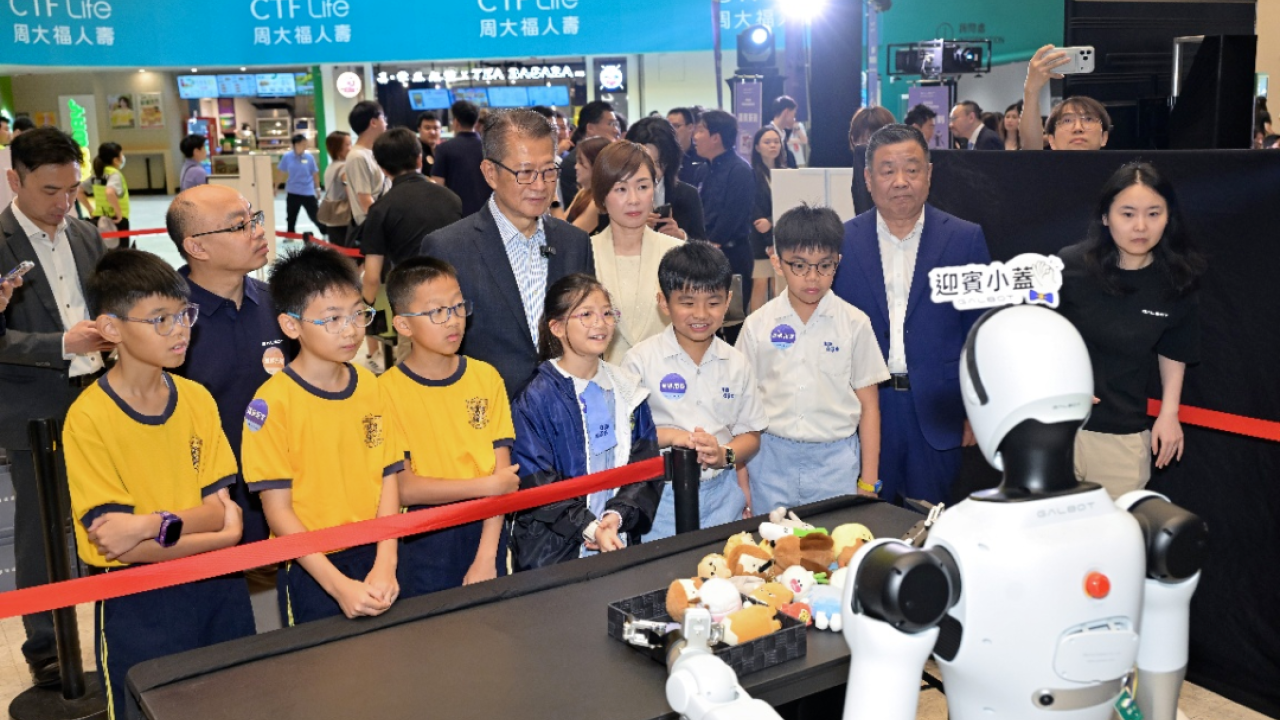
ABot framework addresses industry’s lack of a complete, self-evolving system to improve robot capabilities, according to Amap Alibaba Group Holding’s mapping unit has unveiled an upgrade to what it calls the world’s first technology framework that unites a robot’s “feet, hands, brains, central nerves and motor nerves” into a single system. With five new specialised foundation AI models working together, ABot aimed to address a systemic problem in the industry, according to Amap: the lack of a complete, self-evolving system. “The industry has long focused on breakthroughs in single models – better navigation models, more powerful operation models and smarter reasoning models – but these models operate independently without shared data and experience,” it said in a social media post on Wednesday. With its five models – ABot-N1, ABot-M0.5, ABot-ER, ABot-AgentOS, and ABot-C0 – working in concert, the Amap system sought to shatter those silos, according to the firm.

Chinese funds cut Hong Kong stock holdings to 2-year low despite strong southbound flow
Markets

Chinese funds cut Hong Kong stock holdings to 2-year low despite strong southbound flow

Chinese mutual funds shifted focus amid market volatility, cutting their share of Hong Kong stocks to 23.3 per cent in the second quarter Chinese mutual funds have reduced their Hong Kong stock holdings via the southbound Stock Connect to a more than two-year low in the second quarter, despite a lot of money moving southward over the same period. The share of Hong Kong stocks in their portfolios fell to 23.3 per cent in the second quarter of this year, which was lower than the 23.9 per cent posted two years earlier, according to a report published by investment bank China International Capital Corporation on Thursday. It also marked a sharp fall from 34.7 per cent in the first quarter. The investment bank revealed its findings by tracking 5,163 mainland mutual funds, which collectively managed 4.4 trillion yuan (US$649.98 billion) in assets. It did not include investments by Qualified Domestic Institutional Investor (QDII) funds. Mainland mutual funds held Hong Kong-listed shares worth 649.1 billion yuan by the end of June, down about 23 per cent from three months earlier.

China’s star fund manager dumps long-held consumer bets in pivot to AI trade
Markets

China’s star fund manager dumps long-held consumer bets in pivot to AI trade

Zhang Kun cuts US$3.1 billion fund’s holdings in baijiu and e-commerce as ‘downside pressure on the economy has exceeded expectations’ “Judging from the data on retail sales and employment, the downside pressure on the economy has exceeded expectations,” Zhang said in his fund’s report this week. “Households are turning more cautious about future expectations. Excessive household savings have kept rising to cope with the uncertainty arising from employment.” In the April-to-June period, Zhang cut holdings of Kweichow Moutai to 968,500 shares, a decrease of 47 per cent from the preceding three-month period, while paring positions in Wuliangye by 71 per cent to 7.53 million shares and in Luzhou Laojiao by 52 per cent to 12.18 million shares, according to the report. Zhang held 5.78 million Hong Kong-traded shares in Alibaba as of the end of June, compared with 23.5 million in the first quarter.

Asia’s affluent families rethink legacy planning as complexity shifts focus to execution
Markets

Asia’s affluent families rethink legacy planning as complexity shifts focus to execution

Ensuring intentions will be carried out, not just documented, is becoming the new priority in an era of increasingly complex wealth transfer [The content of this article has been produced by our advertising partner.] Over the next 20 to 30 years, Asia is expected to experience significant intergenerational wealth transfers, with substantial assets changing hands. For the families involved, the scale is unprecedented – as is the level of complexity. Modern portfolios often extend beyond listed equities and fixed incomes, spanning private businesses, alternative assets and global real estate holdings in multiple jurisdictions and currencies. Managing this breadth of assets now requires far more than careful allocation. It demands structures that can withstand time, uncertainty and change. As a result, many affluent families are confronting a more fundamental question – one that goes beyond wealth accumulation and preservation: will their plans ultimately be carried out as intended? Traditionally, legacy planning has focused on defining outcomes – clarifying “who gets what” under specified conditions.

China’s power grid no longer keeping pace with green energy capacity, study says
Markets

China’s power grid no longer keeping pace with green energy capacity, study says

Bottlenecks in wind and solar power may drag out the country’s reliance on coal China is building more wind and solar capacity than the rest of the world combined, but transmission bottlenecks risk prolonging its reliance on coal, according to a report published on Tuesday by Global Energy Monitor (GEM). More than 500 gigawatts (GW) of China’s planned 1,360GW of utility-scale wind and solar projects were under construction, enough to put the country on track to meet its 2030 target to have wind and solar account for more than half of its installed power capacity by the end of this year, well ahead of schedule, the report said. But the grid is not keeping pace. Much of the wind and solar power generated in the northwest and north cannot reach demand centres in the east. GEM estimated around 315GW of megabase capacity would rely on outbound transmission by 2030, requiring about 27 dedicated ultra-high voltage direct current (UHVDC) lines, which send electricity over long distances with lower losses. China’s latest five-year plan, however, outlines future capacity equivalent to only about 10 lines, some carrying hydropower rather than wind and solar. And the strain is already visible.

Why the spectre of ‘climate black swan’ events is haunting global investors
Markets

Why the spectre of ‘climate black swan’ events is haunting global investors

As the threat of a super El Nino disrupts Asia’s food market, global banks warn investors to prepare for sudden, unexpected climate shifts As a potentially record-setting El Nino threatens to push up global food prices – with an impact as great as the Iran war – some global investment banks have warned investors to pay more attention to the risk of “climate black swan” events: sudden, unexpected shifts in the climate with the power to upend markets. The warning comes as the threat of a super El Nino disrupts the global rice market, as major Asian importers stockpile grain in anticipation of potential shortages. The trend could be creating the conditions for a renewed food-price shock, HSBC warned in a report published on Monday. “Geopolitical and weather risks are colliding in Asia’s rice market,” HSBC economists Ines Lam and Frederic Neumann wrote. The US National Oceanic and Atmospheric Administration has said there is an 81 per cent probability of a “very strong” El Nino developing between October and December, an event that could rank among the largest since records began in 1950. It also sees a 97 per cent chance that El Nino conditions will persist into early spring 2027.

Investors ‘bulk buying’ flats remains key in Hong Kong amid red-hot rental market
Markets

Investors ‘bulk buying’ flats remains key in Hong Kong amid red-hot rental market

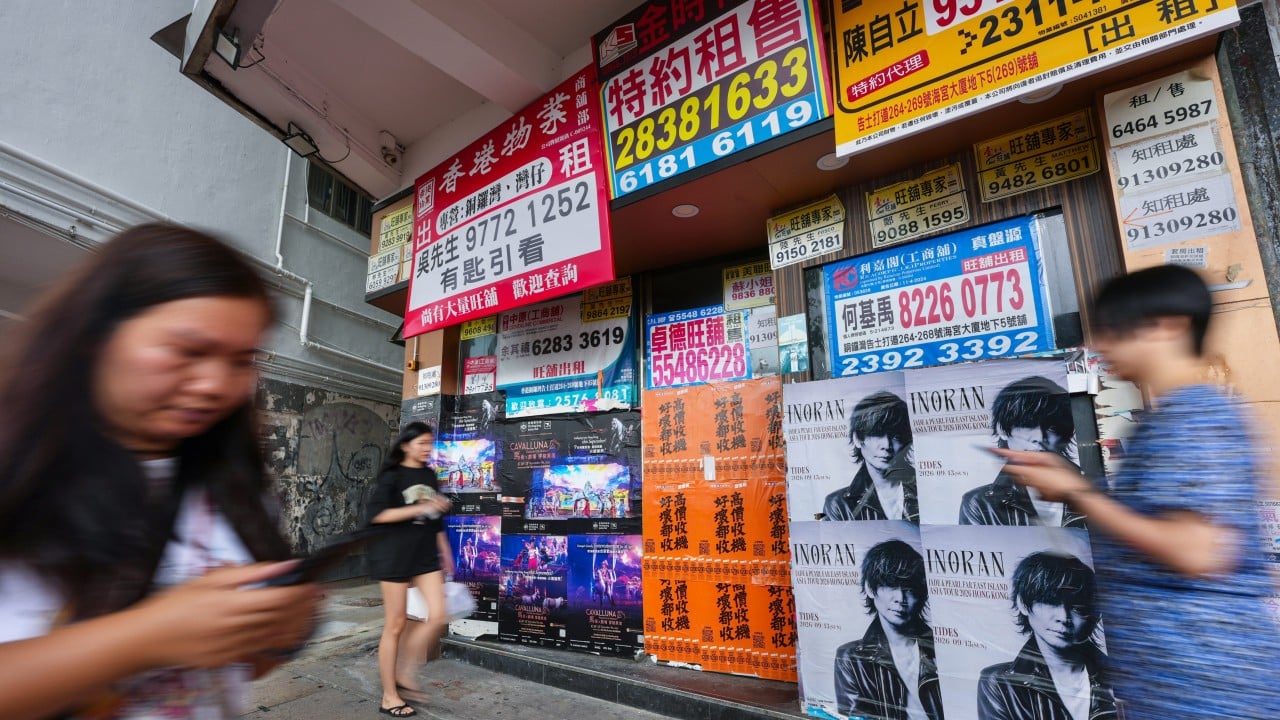
A record 654 buyers snapped up two or more new properties in the first half of the year, as investors look to cash in on Hong Kong’s rental market Hong Kong’s bulk homebuyers are expected to remain a major force in the city’s new-home market in the second half of the year, after investor purchases hit record levels in the first six months on strong rental demand. A total of 654 buyers purchased two or more units in the primary market between January and June, acquiring 1,794 flats worth HK$17.4 billion (US$2.2 billion), according to Centaline Property. The figures more than doubled from a year earlier and marked record highs in terms of the number of buyers, units purchased and total transaction value. Bulk buyers accounted for about 14 per cent of all primary-home transactions during the period, meaning roughly one in every seven new flats was bought by someone purchasing at least two units. “Investors had become an increasingly important source of demand in the primary market since Hong Kong scrapped all residential cooling measures two years ago,” said Louis Chan Wing-kit, Centaline’s vice-chairman for Asia-Pacific and president of its residential division.

What would 200% US tariffs on generic drugs mean for China’s pharmaceutical industry?
Markets

What would 200% US tariffs on generic drugs mean for China’s pharmaceutical industry?

Analysts say that China’s pivot from generics to innovative drugs means the industry is less exposed to US levies Despite Washington’s move to tighten policy on pharmaceutical trade with a fresh threat of 100 per cent tariffs on generic drug imports, analysts say China’s pharmaceutical rise is now tariff-proof, making its ascent in the global supply chain look irreversible. US President Donald Trump announced plans on Tuesday to impose escalating tariffs on all generic drugs shipped to the country beginning in August 2028. Under the proposed schedule, tariffs would rise to 100 per cent within the first year and climb to 200 per cent thereafter. Trump said on social media that the tariff escalation was intended to “reshore generic pharmaceutical production into America”, adding that the measure would build on his administration’s “so successful” policy on patented, branded, or innovative drugs, which were already subject to tariffs as of earlier this year. However, analysts and industry experts said the proposed tariffs carried little weight for China as the plan was both economically impractical and targeted a segment where Beijing’s direct exposure is limited.

Despite regulatory crackdown, Chinese investors look to Hong Kong, US to diversify
Markets

Despite regulatory crackdown, Chinese investors look to Hong Kong, US to diversify

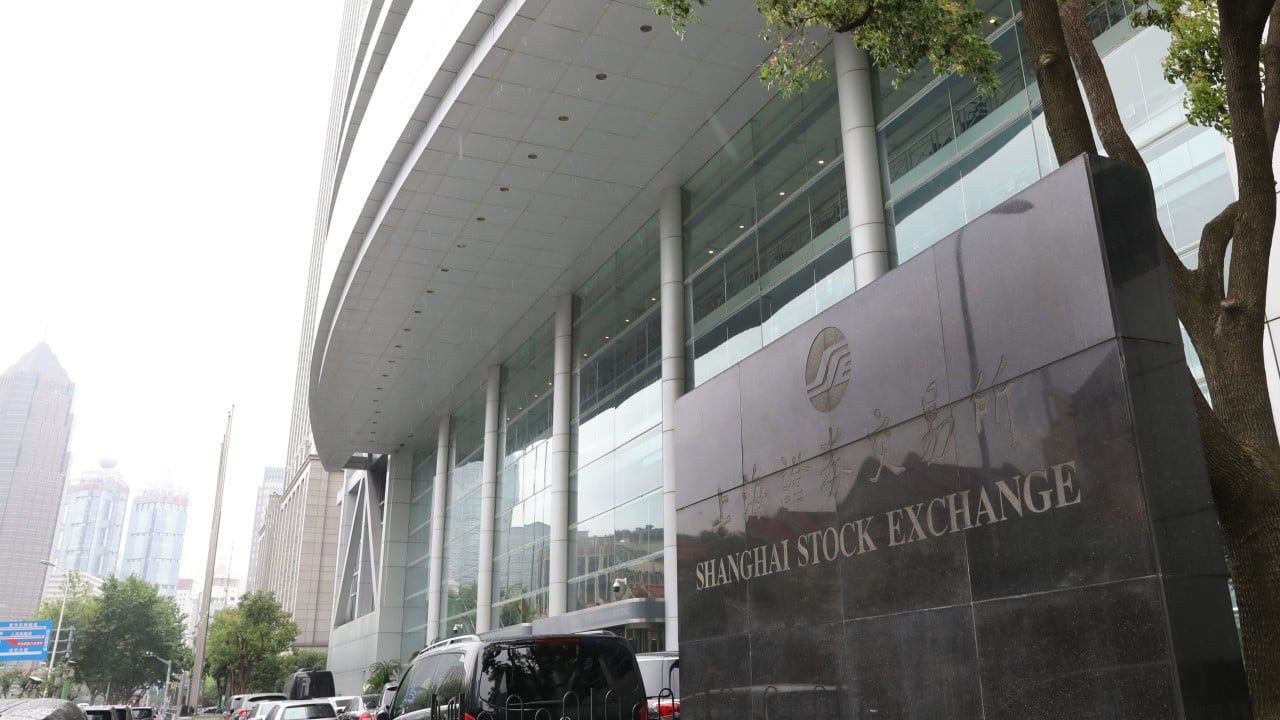
Stocks in mainland markets have underperformed this year, with the Shanghai Composite Index down 3.9 per cent year to date as of Wednesday Around half of Chinese investors with assets over 1 million yuan (US$147,703) plan to increase their investments in Hong Kong and the United States over the next 12 months to diversify their portfolios, despite Beijing’s crackdown on cross-border brokerages, according to a new survey. The findings come after the DBS Treasures Affluent Investor Survey polled 1,617 individuals in Hong Kong and mainland China with at least HK$1 million (US$127,525) or 1 million yuan in assets in their respective markets, between June and July. According to the survey, Hong Kong and the US remained the top investment destinations for mainland investors, with 51 per cent and 41 per cent of respondents planning to increase their allocations in the respective markets in the next 12 months. Mainland China was chosen by 40 per cent of local investors as their preferred investment market. DBS did not see “any material impact” of the tighter controls on its business, as it fully complied with the regulations, said Amy Kwan Ka-man, head of business planning, customer segment and ecosystem in the Hong Kong unit.

China targets panda bond reform, mandates global credit mapping to lure foreign capital
Markets

China targets panda bond reform, mandates global credit mapping to lure foreign capital

Body overseeing interbank market, where most panda bonds are traded, sets August 1 deadline for rating agencies to comply Chinese regulators moved on Tuesday to improve the quality of credit ratings for panda bonds – a yuan-denominated asset class that has seen a surge in interest from foreign sovereign and institutional investors this year as a key tool to bolster Beijing’s yuan-internationalisation push. Credit-rating agencies must adhere to the principles of independence, objectivity and prudence, according to a circular posted to the website of the National Association of Financial Market Institutional Investors. The self-regulatory body, under the central bank, oversees the interbank market, where most panda bonds are traded. Under the new rules, rating agencies must disclose their rating definitions and provide a mapping of their grades against internationally recognised credit-rating scales. Rating reports from agencies that fail to publish the required mapping will no longer be accepted for panda bond registration from August 1, the online notice said.

US levels AI sanctions threat as China models gain
Markets

US levels AI sanctions threat as China models gain

US Treasury Secretary Scott Bessent signalled potential action against open source artificial intelligence (AI) models amid accusations that Chinese developers are creating low-cost systems using stolen US intellectual property. “This administration supports open source models, but what we do not support is IP theft,” Bessent said on Fox Business on Tuesday. “If we see, especially, that overseas models are stealing from our great companies, we have the ability to sanction them.” Watermarks from...

EQT Impact Challenge 2026 will help deep-tech start-ups think globally
Markets

EQT Impact Challenge 2026 will help deep-tech start-ups think globally

Five finalists selected from over 200 entries offering innovative solutions to ‘climate and nature’ and ‘health and well-being’ challenges Hong Kong’s ecosystem of start-ups reached a record high of 5,221 last year – up from 4,694 in 2024, according to InvestHK, the government department tasked with attracting foreign direct investment to the city. Famed for its entrepreneurial culture, Hong Kong is also increasingly known for the strength of its universities and research institutions, deep talent pool, easy access to financial advice and investment capital, and an efficient transport network within Asia and with the rest of the world. “When combining all that, you have a place where early-stage companies can start locally, but think much more globally,” said Jean Eric Salata, chair of EQT Group, one of the world’s largest global private markets firms. “The overall ecosystem can still improve, though, by helping more companies make the jump from research or prototype to becoming a real commercial business.