Markets — 348 insights
How Hong Kong developers are adapting to the ‘new normal’ in the Greater Bay Area
Markets

How Hong Kong developers are adapting to the ‘new normal’ in the Greater Bay Area

Hong Kong developers are rethinking their strategies for projects in the Greater Bay Area, as the mainland’s property crisis has changed everything Hong Kong developers operating in the Greater Bay Area are having to adapt to the ongoing debt crisis in mainland China’s property sector, which has led to deep and lasting changes in the nature and motivations of their buyers, according to agencies dealing in mainland real estate. Hong Kong buyers are now the “primary customer base” only for mainland projects in areas close to the Hong Kong border, such as Hengqin in Zhuhai and Ma’an Island in Zhongshan, according to Chung. “Buyers for Hong Kong developers’ projects in inland urban areas like Guangzhou and Foshan remain predominantly local mainlanders purchasing for owner-occupation,” he added. In Zhuhai’s Hengqin and Shizimen areas, Hong Kong buyers account for 40 per cent to 60 per cent of transactions at projects from Hong Kong developers Sun Hung Kai Properties, Henderson Land, and Wharf Holdings, according to data from Midland Realty.

Meet Yu Donglai, founder of China’s viral supermarket chain and guest of Premier Li Qiang
Markets

Meet Yu Donglai, founder of China’s viral supermarket chain and guest of Premier Li Qiang

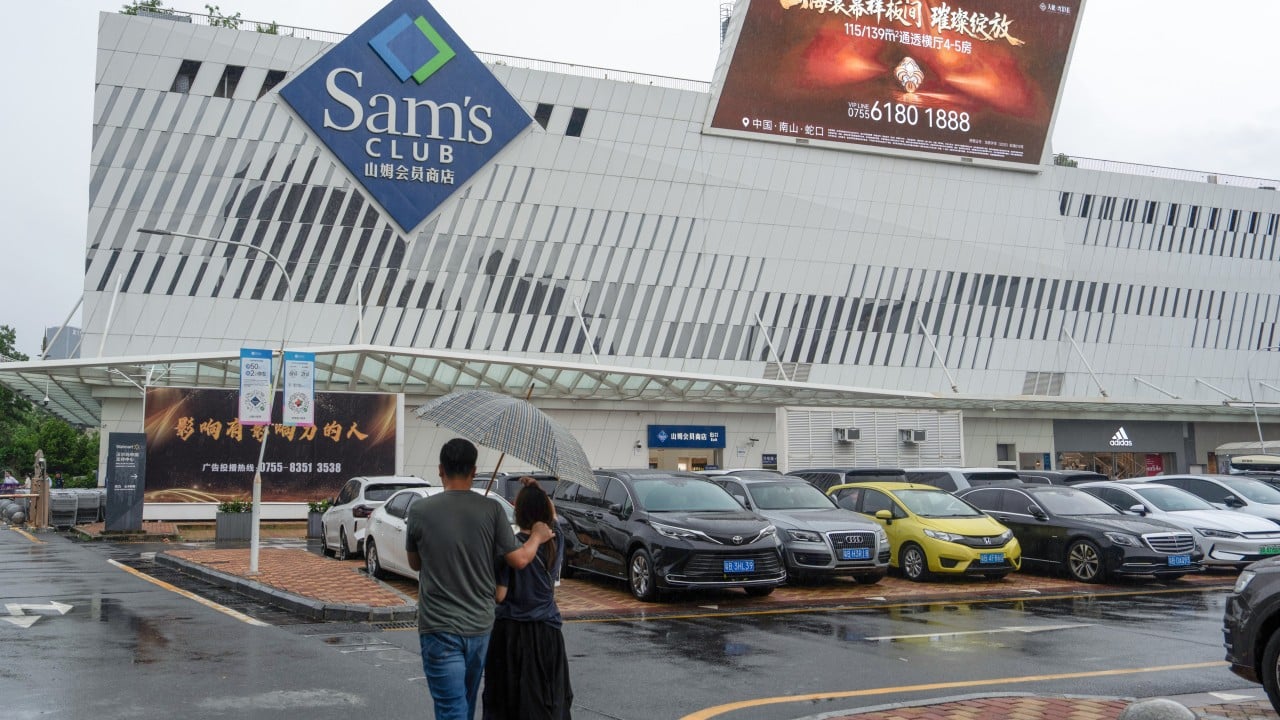
Yu’s company has caught the public’s attention for its business practices and high-quality goods Pangdonglai is often hailed as China’s answer to Sam’s Club, a US warehouse retailer owned by Walmart, due to its high-quality goods, in particular fresh produce. Unlike Sam’s membership-only model, Pangdonglai offers single-item purchasing and does not charge membership fees. At the July 13 forum, the 60-year-old Yu represented the retail and consumer sectors and delivered remarks. Other participants included the president of Sinopec, the head of Sugon, a state-backed server maker, the president of Shandong Heavy Industry Group and a panel of economists. “Very few commercial firms participated in the forum to offer suggestions. This reflects the government’s focus on boosting consumption and domestic demand,” said Tang Dajie, a senior researcher at the China Enterprise Institute, a Beijing-based think tank. Tang said Pangdonglai represents an innovative governance model for private enterprises, though its reach is restrained by geographical limits. He added the firm emphasizes humane and flexible management, unlike traditional companies prioritising branding, profits and logistics.

China hits Trip.com with US$765 million antitrust penalty after six-month investigation
Markets

China hits Trip.com with US$765 million antitrust penalty after six-month investigation

The country’s biggest online travel services provider is accused of abusing its ‘dominant market position’ The market regulator confiscated 1.658 billion yuan in illegal gains and levied a fine of 3.521 billion yuan, the latter equivalent to 7.5 per cent of the company’s domestic sales of 46.958 billion yuan in 2025. According to the announcement, Trip.com had engaged in anticompetitive practices since 2020 by leveraging its traffic-allocation algorithms, platform rules and technology. These tactics included forcing certain hotel partners into exclusive deals and demanding some of them offer their lowest online rates on the platform. The company’s Hong Kong-listed shares slipped 0.8 per cent to HK$342.60 (US$43.69) on Friday ahead of the verdict. The stock has plunged from a peak of over HK$600 at the start of the year.

China places former deputy of top financial regulator under investigation
Markets

China places former deputy of top financial regulator under investigation

Fang Xinghai, former vice-chairman of China Securities Regulatory Commission, is latest financial official to be probed by anti-corruption body China has placed one of its top former financial regulatory officials under investigation, the nation’s main anti-corruption body announced on Friday. Fang Xinghai, former vice-chairman of the China Securities Regulatory Commission (CSRC), is suspected of “serious legal and disciplinary violations” – a euphemism for corruption and abuse of power – and is currently being investigated, China’s Central Commission for Discipline Inspection (CCDI) said in a statement. The 62-year-old, who held the regulatory position from October 2015 to July 2024, is the latest in a string of senior financial cadres to be targeted by China’s disciplinary authorities. The announcement comes as China strives to stabilise its stock market, with state agencies launching a coordinated effort to buy up stocks to arrest a decline in the market earlier this week. Fang, who graduated with a doctorate in economics from Stanford University, worked as an economist for the World Bank early in his career. He was one of several senior financial cadres who returned to China in the late 1990s.

Chinese GPU maker confidentially files for Hong Kong IPO amid fundraising wave: sources
Markets

Chinese GPU maker confidentially files for Hong Kong IPO amid fundraising wave: sources

Firm’s year-end listing plan underscores China’s chip self-reliance and follows Biren, Iluvatar and Moore Threads in the fundraising rush The Shanghai-based company was targeting an initial public offering (IPO) by the end of this year, according to the sources, who asked not to be identified because the information was confidential. The company did not immediately respond to a request for comment on Friday. The wave has been driven by Beijing’s semiconductor self-reliance initiative amid US export controls.

Hong Kong exchange’s biggest reform in 8 years opens gates to more IPOs
Markets

Hong Kong exchange’s biggest reform in 8 years opens gates to more IPOs

HKEX will allow universal confidential listings and reduce market-capitalisation thresholds for IPOs by start-ups and international firms Stock exchange operator Hong Kong Exchanges and Clearing (HKEX) will allow all listing applications to remain confidential and will reduce market-capitalisation requirements for listings by start-ups and international firms immediately, it announced on Friday. The exchange will also reduce the market-cap requirements for weighted voting right (WVR) companies to HK$20 billion (US$2.6 billion), from HK$40 billion currently. It will also lower the thresholds for a company using the revenue test to HK$6 billion in market capitalisation and HK$600 million in revenue in the most recent financial year, compared with HK$10 billion in market cap and HK$1 billion in revenue now. While some respondents in a consultation process requested lower thresholds, HKEX said most respondents agreed with the chosen reductions, and the proposal in March was in line with the levels in Shanghai and Shenzhen. The exchange received 73 responses during the consultation from March to May.

Hong Kong insurers ride affluent demand to record sales as longevity and legacy needs grow
Markets

Hong Kong insurers ride affluent demand to record sales as longevity and legacy needs grow

Mainland China and overseas wealth, alongside family offices, is driving insurance demand in the city to new highs The industry wrote HK$141.1 billion (US$18 billion) in new life policies in the first quarter, compared with HK$93.4 billion a year earlier, according to data from the Insurance Authority released on Friday. It marked the third year that first-quarter sales hit a record high since the authority was established in 2016. In December, Manulife’s Hong Kong unit became the first major global insurer to redomicile from Bermuda to the city to capture growing opportunities.

Wall Street funds back China’s WuXi AppTec as weight-loss drug orders soar
Markets

Wall Street funds back China’s WuXi AppTec as weight-loss drug orders soar

Pharmaceutical contractor’s GLP-1 programmes and surging stock gains have made it a magnet for global investors “WuXi Apptec is heavily owned given its high expectations” for the first half, Shu said. JPMorgan Chase remained one of its largest shareholders after raising its stake to 11.39 per cent on July 20, up from 10.98 per cent, according to the Hong Kong stock exchange website. Swiss banking giant UBS Group and BlackRock are also substantial shareholders, which refer to any investor holding an interest of 5 per cent or more in the voting shares of a listed company. UBS bought 255,500 shares at an average price of HK$121.51, lifting its stake to 8.02 per cent on June 11. BlackRock purchased 1.52 million shares at an average price of HK$153, increasing its stake to 5.21 per cent on May 14. WuXi AppTec was expected to release its half-year earnings results on August 3, according to the company. Its Hong Kong-traded stock jumped about 37 per cent over the period, bucking the broad decline in the Hang Seng Index.

Securities watchdog to channel more medium- and long-term capital into China markets
Markets

Securities watchdog to channel more medium- and long-term capital into China markets

Following sharp sell-off, China Securities Regulatory Commission announces raft of measures aimed at maintaining smooth market operations At a meeting on Thursday, the China Securities Regulatory Commission announced a raft of measures aimed at maintaining smooth market operations and reinforcing the capital market’s resilience. The regulator said it would “more precisely and effectively implement counter-cycle adjustments”, pushing to steadily increase the scale and proportion of medium- and long-term capital entering the equity market. “We must strengthen policy reserves to deal with global market volatility and cross-border risk transmission, building a solid breakwater and sea wall to guard against external risk shocks,” the CSRC said in a statement issued after the meeting. The regulatory push comes on the heels of a sharp sell-off earlier in the month. State-owned conglomerates including investment holding companies China Reform Holdings and China Chengtong Holdings Group recently deployed tens of billions of yuan to purchase A-shares, helping to put a floor under the market slide.

Rare 6-month office flip suggests Hong Kong’s prime market is stabilising
Markets

Rare 6-month office flip suggests Hong Kong’s prime market is stabilising

Such moves could soon become more common, analysts say, with buyers hunting for discounted prime office space as market sentiment improves A buyer who bought an office in a top-tier location in Hong Kong has sold it for an apparent 19 per cent gain just over six months later, a rare transaction that suggests improving conditions in the city’s prime office market are beginning to reshape investment decisions. The 5,400 sq ft office on the 37th floor of Far East Finance Centre in Admiralty changed hands for HK$108 million (US$13.8 million), or about HK$20,000 per square foot, in early July, according to market sources. The same space had been acquired for HK$90.72 million via a company in December, Land Registry records show. Sources said the owner was a mainland consortium that had intended to use the property for its own operations, but instead opted to sell after transaction activity accelerated and prices in the city’s core business districts began to recover. The buyer – a long-established local family – acquired the office as a long-term investment, attracted by its location and unobstructed harbour views, the sources added.

Path opened for Malaysian firms to pursue secondary share listings in Hong Kong
Markets

Path opened for Malaysian firms to pursue secondary share listings in Hong Kong

Malaysia’s Capital A Berhad, which runs travel app AirAsia Move and food brand Santan, is eyeing a dual listing in the city, government says Hong Kong is reaping rewards from a charm offensive with Malaysia as it works to enhance its attractiveness to global fundraising activities, with deals reached on Thursday during a visit to the Southeast Asian country by the city’s financial services secretary. Bursa Malaysia will become the 21st stock exchange recognised by the city’s bourse operator Hong Kong Exchanges and Clearing (HKEX), clearing the way for Malaysia-listed companies to pursue secondary listings in Hong Kong, according to separate statements from the government and HKEX. Malaysia’s bourse will be the fourth recognised in Asia, after the stock exchanges of Indonesia, Singapore and Thailand. “HKEX has streamlined the listing requirements for overseas issuers, introduced a set of core shareholder protection standards for all issuers and issued additional guidance to assist overseas companies seeking to list in Hong Kong,” said Secretary for Financial Services and the Treasury Christopher Hui Ching-yu.

HSBC summit turns future trends into wealth strategies
Markets

HSBC summit turns future trends into wealth strategies

Premier Elite customers gain access to wealth solutions spanning unit trusts, structured products, bonds, securities, ETFs, and margin trading [The content of this article has been produced by our advertising partner.] As AI breaks out of chatbots and into what is now called Physical AI, investors need to rethink how portfolios should be built, protected and put to work. Growth opportunities are being created across tech, mobility, consumer electronics and connected living, while market volatility, geopolitical risk and changing rate expectations continue to test investment decisions. It is against this growing complexity and convergence of technology, markets and investor needs that HSBC sees a need for a comprehensive range of solutions that can help affluent clients capture long-term opportunities, without becoming overexposed to a single sector, market or theme. HSBC Premier Elite customers can use a range of investment vehicles and tools, including unit trusts and structured products to bonds, securities, margin trading and ETFs, to diversify, generate income, manage volatility and respond to potential market opportunities across different risk-return profiles.