Markets — 338 insights
Despite regulatory crackdown, Chinese investors look to Hong Kong, US to diversify
Markets

Despite regulatory crackdown, Chinese investors look to Hong Kong, US to diversify

Stocks in mainland markets have underperformed this year, with the Shanghai Composite Index down 3.9 per cent year to date as of Wednesday Around half of Chinese investors with assets over 1 million yuan (US$147,703) plan to increase their investments in Hong Kong and the United States over the next 12 months to diversify their portfolios, despite Beijing’s crackdown on cross-border brokerages, according to a new survey. The findings come after the DBS Treasures Affluent Investor Survey polled 1,617 individuals in Hong Kong and mainland China with at least HK$1 million (US$127,525) or 1 million yuan in assets in their respective markets, between June and July. According to the survey, Hong Kong and the US remained the top investment destinations for mainland investors, with 51 per cent and 41 per cent of respondents planning to increase their allocations in the respective markets in the next 12 months. Mainland China was chosen by 40 per cent of local investors as their preferred investment market. DBS did not see “any material impact” of the tighter controls on its business, as it fully complied with the regulations, said Amy Kwan Ka-man, head of business planning, customer segment and ecosystem in the Hong Kong unit.

China targets panda bond reform, mandates global credit mapping to lure foreign capital
Markets

China targets panda bond reform, mandates global credit mapping to lure foreign capital

Body overseeing interbank market, where most panda bonds are traded, sets August 1 deadline for rating agencies to comply Chinese regulators moved on Tuesday to improve the quality of credit ratings for panda bonds – a yuan-denominated asset class that has seen a surge in interest from foreign sovereign and institutional investors this year as a key tool to bolster Beijing’s yuan-internationalisation push. Credit-rating agencies must adhere to the principles of independence, objectivity and prudence, according to a circular posted to the website of the National Association of Financial Market Institutional Investors. The self-regulatory body, under the central bank, oversees the interbank market, where most panda bonds are traded. Under the new rules, rating agencies must disclose their rating definitions and provide a mapping of their grades against internationally recognised credit-rating scales. Rating reports from agencies that fail to publish the required mapping will no longer be accepted for panda bond registration from August 1, the online notice said.

US levels AI sanctions threat as China models gain
Markets

US levels AI sanctions threat as China models gain

US Treasury Secretary Scott Bessent signalled potential action against open source artificial intelligence (AI) models amid accusations that Chinese developers are creating low-cost systems using stolen US intellectual property. “This administration supports open source models, but what we do not support is IP theft,” Bessent said on Fox Business on Tuesday. “If we see, especially, that overseas models are stealing from our great companies, we have the ability to sanction them.” Watermarks from...

EQT Impact Challenge 2026 will help deep-tech start-ups think globally
Markets

EQT Impact Challenge 2026 will help deep-tech start-ups think globally

Five finalists selected from over 200 entries offering innovative solutions to ‘climate and nature’ and ‘health and well-being’ challenges Hong Kong’s ecosystem of start-ups reached a record high of 5,221 last year – up from 4,694 in 2024, according to InvestHK, the government department tasked with attracting foreign direct investment to the city. Famed for its entrepreneurial culture, Hong Kong is also increasingly known for the strength of its universities and research institutions, deep talent pool, easy access to financial advice and investment capital, and an efficient transport network within Asia and with the rest of the world. “When combining all that, you have a place where early-stage companies can start locally, but think much more globally,” said Jean Eric Salata, chair of EQT Group, one of the world’s largest global private markets firms. “The overall ecosystem can still improve, though, by helping more companies make the jump from research or prototype to becoming a real commercial business.

BYD’s challenge to Porsche; why Chinese cars are struggling locally: 7 EV reads
Markets

BYD’s challenge to Porsche; why Chinese cars are struggling locally: 7 EV reads

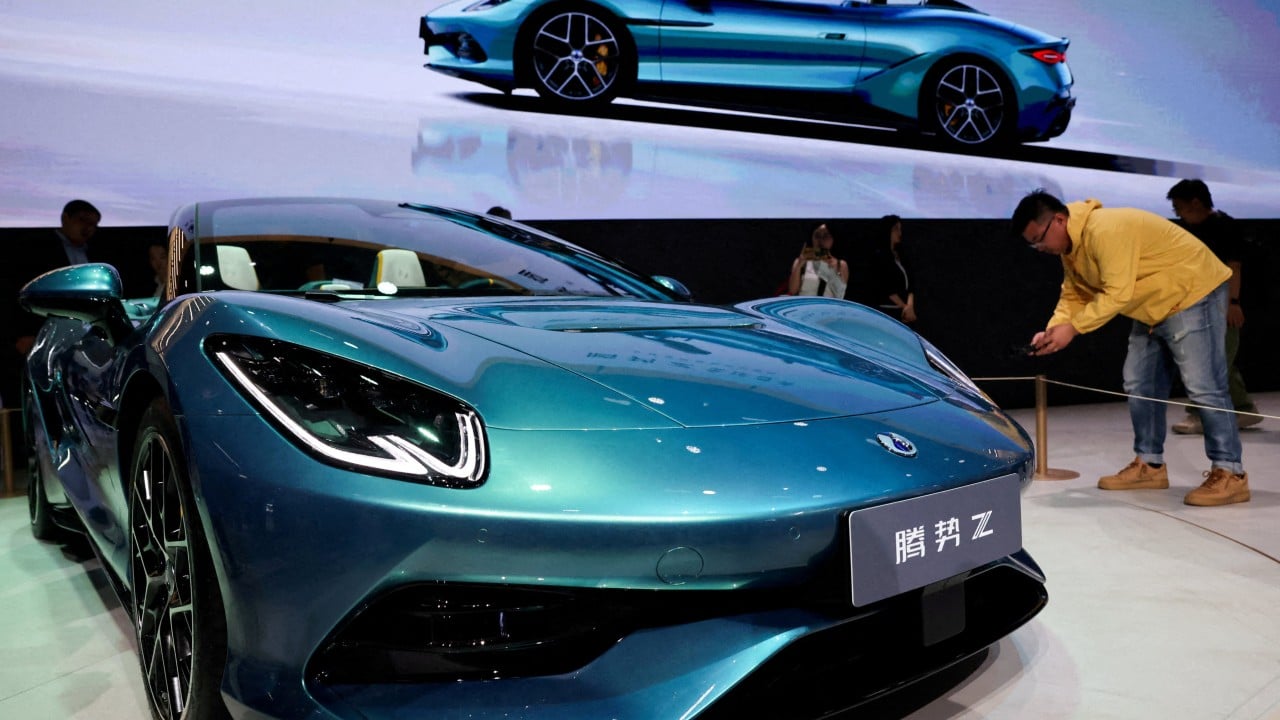
We have put together stories from our coverage on electric and new energy vehicles from the past two weeks to help you stay informed. If you would like to see more of our reporting, please consider subscribing. 1. BYD’s EV tech in the spotlight as it challenges Porsche’s 911 Chinese electric vehicle (EV) assembler BYD has set its sights on Porsche’s supercars with plans to sell its Denza-branded new models in developed markets, the latest sign of its increasing heft in designing and...

Investors shift focus to China’s July Politburo meeting for stock-stimulus clues
Markets

Investors shift focus to China’s July Politburo meeting for stock-stimulus clues

‘We may see an acceleration of policy implementation in the near term to support consumer and technology industries,’ an analyst says Investors are looking ahead to an economic policy gathering convened by China’s top leaders for clues on the direction of the stock market, after state intervention tentatively stabilised sentiment. The Communist Party is expected to kick off its July Politburo meeting next week, in which President Xi Jinping and his colleagues in the prime decision-making body will set the policy tone for the second half. Calls have been growing among investors for more policy support for economic growth after the latest data showed an uneven recovery. “The July Politburo meeting may strike a positive tone on policies,” said Deng Lijun, an analyst at Huajin Securities. “We may see an acceleration of policy implementation in the near term to support consumer and technology industries.” The Politburo meeting was likely to prioritise technological innovation over consumption, with state resources set to tilt towards artificial intelligence, quantum computing and advanced manufacturing amid the heightened China-US tech race, Morgan Stanley said in a report last week.

China-dominated central bank digital currency platform touts largest transactions to date
Markets

China-dominated central bank digital currency platform touts largest transactions to date

Bank of China uses mBridge for two cross-border transfers worth more than US$1.7 billion each, as CBDC platform gathers momentum A leading Chinese bank has processed the largest cross-border transactions yet via mBridge, a multilateral central bank digital currency (CBDC) platform, marking a major milestone for the emerging payment network as well as Beijing’s global yuan ambitions. Two transactions, worth more than US$1.7 billion each, were carried out by the Bank of China’s Shenzhen and Fujian branches in June and July, respectively. They showed mBridge’s ability to support high-value cross-border settlements across different currencies and business scenarios, the lender said on Tuesday. In June, an outbound transfer of 11.3 billion yuan (US$1.7 billion) delivered same-day, full-value funds to a corporate client via the network – which comprises central banks from mainland China, Hong Kong, Macau, Saudi Arabia, United Arab Emirates (UAE) and Thailand. The following month, an inbound transaction in Hong Kong dollars moved from an overseas sender to an onshore corporate account in under 60 minutes.

Foreign carmakers lose more traction in China as luxury stronghold erodes
Markets

Foreign carmakers lose more traction in China as luxury stronghold erodes

International luxury car brands from Mercedes-Benz to Land Rover took a further beating in China last month as wealthy consumers continued to shun expensive petrol-powered vehicles. Struggling against competition from China’s rising electric vehicle (EV) powerhouses, international marques would find it more difficult to retain their market share and maintain profitability in the world’s largest automotive market, analysts said. According to data from the China Passenger Car Association (CPCA),...

Hong Kong tipped to approve hedge fund tax breaks, attracting investment, talent
Markets

Hong Kong tipped to approve hedge fund tax breaks, attracting investment, talent

The bill, expected to pass this year, will exempt private equity and venture capital funds from paying tax on performance-linked income Speaking at a media briefing on Tuesday, Sandy Fung, KPMG China’s partner of tax and alternative investments, said the bill would be passed “soon” by the Legislative Council (LegCo), the city’s lawmaking body. “The bill could attract lots of funds and related talent to settle in Hong Kong, further cementing the city’s status as a global asset management centre,” Fung said. The drafted law, titled the Inland Revenue (Amendment) (Preferential Tax Regimes for Funds, Family-owned Investment Holding Vehicles and Carried Interest) Bill 2026, was gazetted in mid-June and was moved to the second reading in the LegCo on June 24. It would make Hong Kong the first global city to offer accurate and detailed rules for tax break on carried interests and performance-linked income to funds and their managers, which KPMG’s Fung described as “an unprecedented and revolutionary improvement”.

Hong Kong’s red-hot rental market forces students to flat-hunt as early as April
Markets

Hong Kong’s red-hot rental market forces students to flat-hunt as early as April

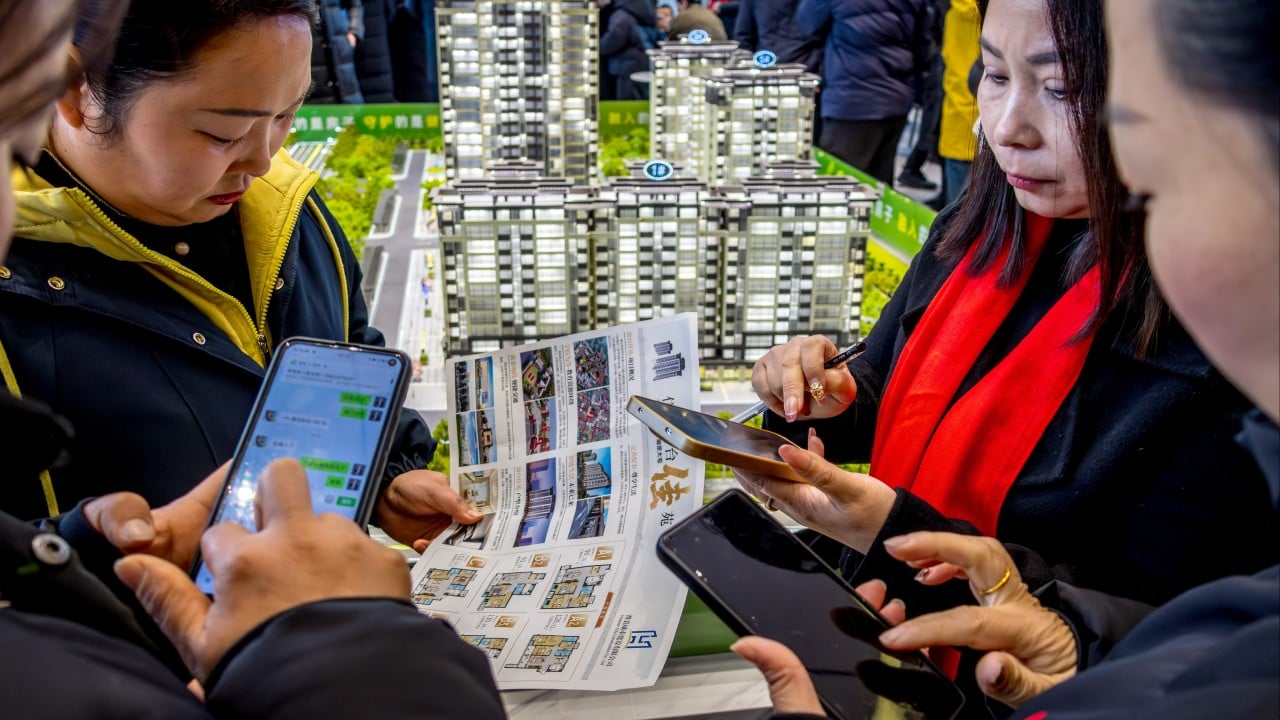
Competition for student accommodation is intensifying in Hong Kong, with mainland students starting their flat search months earlier than previously Competition for student housing is intensifying in Hong Kong even as more accommodation comes onto the market, with mainland Chinese students beginning their search for a home months earlier than in previous years and landlords leaving flats vacant to capture the annual influx. Kenny Zhang, an agent at Youhouse Property who specialises in student rentals, said inquiries from mainland students began arriving from as early as late April this year, compared with late July or August three years ago. “The earlier leasing cycle has prompted some landlords to leave flats vacant for several months so they can lease them to students before the September semester, attracted by upfront annual rent payments and predictable tenancy periods,” Zhang said. The demand has helped keep the rental market firm. Centaline Property’s rental index rose 1.01 per cent in June from May, extending gains for a seventh consecutive month and marking a fifth straight record high. The agency expects rents to continue rising in the third quarter as students and imported workers compete for limited housing.

From Crisis to Cross-Border Growth: Bangchak’s Energy Reinvention
Markets

From Crisis to Cross-Border Growth: Bangchak’s Energy Reinvention

Under Chaiwat Kovavisarach’s leadership, Bangchak Corporation has evolved from a struggling Thai refinery into a diversified energy leader. By prioritising operational efficiency, financial discipline, and a strategic shift toward renewables, Chaiwat has transformed the organisation into a sustainable, regional player poised for long-term success in an uncertain energy market. When Chaiwat Kovavisarach first stepped into Bangchak Corporation Plc in the early 2000s, the Thai oil refiner was fighting for survival. The aftershocks of the 1997 Asian financial crisis were still reverberating through Thailand’s economy. Bangchak, then a small, state-linked refinery under the Ministry of Finance, was burdened with debt and on the verge of shutting down. Several global banks had attempted to stabilise it without success. Chaiwat, then an investment banker running his own advisory firm, was brought in to attempt what others could not: restructure the company and restore market confidence. His solution was unconventional. Rather than relying solely on debt guarantees, he introduced Thailand’s first depository receipt structure, allowing investors to convert government backing into an equity-based mechanism.

Zhongji Innolight already has 30 cornerstone investors for US$8b IPO: sources
Markets

Zhongji Innolight already has 30 cornerstone investors for US$8b IPO: sources

The Chinese firm is aiming to raise US$8 billion in its Hong Kong listing on July 30, making it the city’s biggest share sale in seven years Zhongji Innolight has attracted more than 30 cornerstone investors for its blockbuster initial public offering in Hong Kong, which could become the city’s biggest listing in seven years, according to people familiar with the matter. The company is aiming to raise US$8 billion in the listing on July 30, which would make it Hong Kong’s largest share sale since Alibaba Group Holding’ US$12.9 billion offering in 2019. The company is going to start book building and launch its IPO roadshow on Wednesday, selling shares at a top indicative price of HK$1,010 (US$129) per share. That would represent a 23 per cent discount on the closing price of the company’s Shenzhen-listed stock on Tuesday. Goldman Sachs, China International Capital Corporation (CICC), Morgan Stanley and GF Securities are acting as joint sponsors. Zhongji is a supplier to tech giants including Nvidia, Alphabet and Meta Platforms, mainly producing optical modules for AI data centres.