Markets — 346 insights
Citi upgrades China to ‘overweight’ amid AI volatility, geopolitical friction
Markets

Citi upgrades China to ‘overweight’ amid AI volatility, geopolitical friction

Wall Street giant adjusts emerging market asset allocation recommendation, identifying China as benefiting from a broadening market rally Wall Street giant Citigroup has adjusted its emerging market asset allocation recommendation, upgrading China to “overweight”, saying that investors should increase their exposure to assets that could benefit from a broadening market rally. The bank acknowledged that while China’s relative earnings-per-share momentum remained a weak spot following a cautious start to the year, the market now screens as a prime candidate for capital rotation. Strategists highlighted light investor positioning, lower oil prices, and an improving global growth backdrop as key support measures, while watching for signs of an earnings inflection. The shift comes as global investors actively debate whether stock performances will expand beyond a narrow group of dominant tech leaders into a wider range of sectors in the second half of 2026.

For retired businessman and lifelong sailor, trust anchors the process of building wealth
Markets

For retired businessman and lifelong sailor, trust anchors the process of building wealth

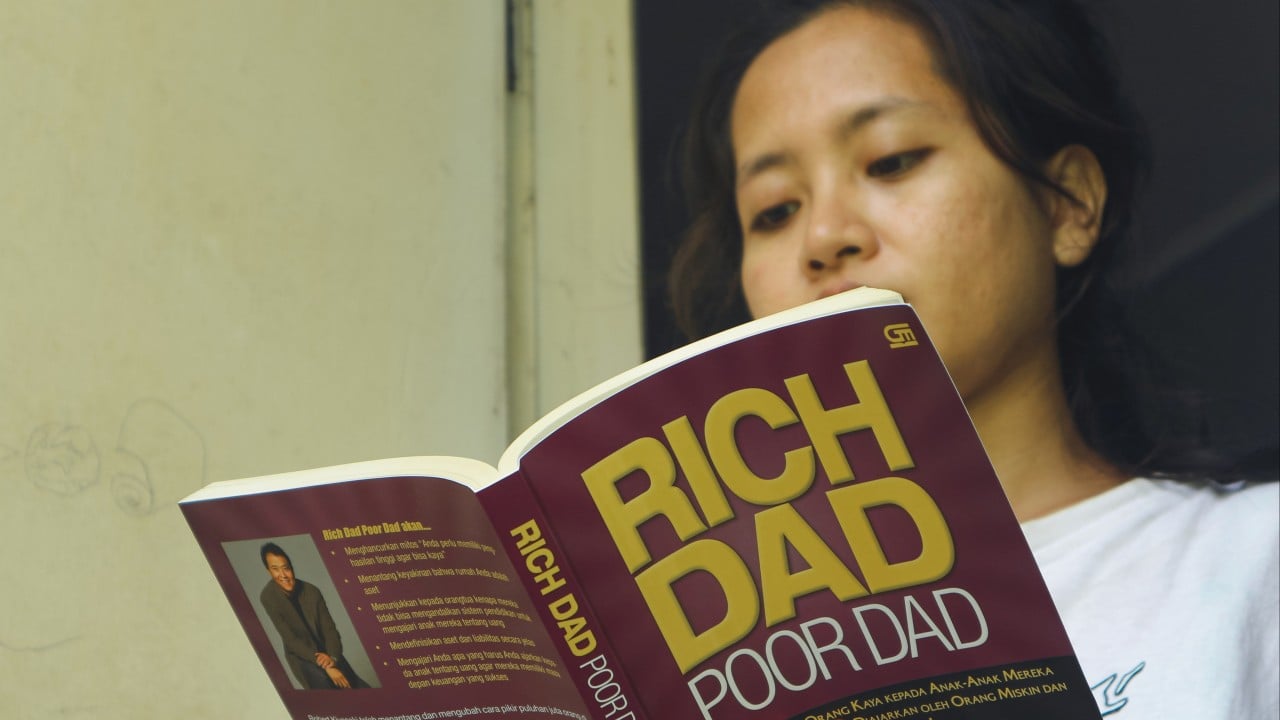
Duke Ha applies the lessons he learned on boats to creating a retirement portfolio that can serve him across borders and seas For Duke Ha, trust has factored into every aspect of his life, spanning professional and personal successes across borders. It is measured by actions rather than words, and reflected by steadfast reliance on a process. The retired construction businessman and avid sailor hails from Vietnam, where he grew up with five siblings. Ha currently splits his time between Vietnam and Singapore, where he still maintains a side business in hospitality. He is also spending a significant proportion of his time sailing. It is a passion that Ha first developed at age 16, when he bought his first small boat and quickly realised that navigating open waters requires much more than just a vessel. “I love the sea. I love the smell of the sea, the sun and the wind,” Ha says. “But facing the vast ocean alone taught me a big lesson: stay humble.” He adds: “I realised that to do something well, you have to learn and gain experience. If you want to be a sailor, you have to get in the sea.

Beijing steps in to stem China’s stock market decline with US$8.9b in state purchases
Markets

Beijing steps in to stem China’s stock market decline with US$8.9b in state purchases

The CSRC is set to convene on Monday as state-backed firms buy 60 billion yuan of stocks amid market turbulence Two state-backed firms bought Chinese stocks for about 60 billion yuan (US$8.86 billion) to stem a decline in equities, in a clear sign of government intervention amid market turbulence. China Reform Holdings spent more than 50 billion yuan buying mainland-listed stocks, it said in a statement on Sunday night, adding that it would continue to increase holdings of companies owned by the central government. Meanwhile, China Chengtong Holdings Group said in a separate statement that it bought nearly 10 billion yuan of stocks recently, through two units, and would continue to buy both stocks and exchange-traded funds tied to central government-owned enterprises and technology companies. Separately, a flurry of state-backed shareholders also announced plans to either increase their stake in their listed subsidiaries or buy back their shares, which included the listed units China Railway Rolling Stock Corporation and Aluminum Corporation of China, according to separate exchange statements.

Rule change urged for Hong Kong pension fund to allow wider ETF choice for 4.8m members
Markets

Rule change urged for Hong Kong pension fund to allow wider ETF choice for 4.8m members

Relaxing rules to widen ETF access will deliver stable returns at low cost while boosting local markets, chamber says Chan is also chairman of digital lender WeLab Bank and Hong Kong’s former secretary for Financial Services and the Treasury. The chamber cited market estimates showing that of the HK$1.5 trillion (US$191 billion) in MPF assets as of March, about 10 to 15 per cent were invested in ETFs, but most were listed overseas. Only about 2 to 5 per cent were invested in Hong Kong-listed ETFs.

To survive China’s cost-conscious market, global brands embrace AI and robots
Markets

To survive China’s cost-conscious market, global brands embrace AI and robots

From L’Oréal to Coca-Cola, major multinationals are embedding cutting-edge technologies into operations to compete with local rivals Multinational companies have expanded their use of AI and robotics in China to survive “life or die” competition in the world’s second-largest consumer goods market, where local rivals have sharpened their edge and shoppers often switch between brands for better value, analysts said. The French multinational opened the second phase of its UPX smart manufacturing workshop in the city last month. The highly automated facility integrates AI-powered quality inspection into its core production lines, nine of which are now fully automated. “China’s AI and robotics ecosystem is moving very quickly, and we want to grow and invest at the pace of local technology innovators,” said Marc-Antoine Poulle, senior vice-president of operations for North Asia and China at L’Oréal, during a ceremony marking the 30th anniversary of the company’s Suzhou plant on June 11. Swire Group has also integrated AI into customer service, logistics and aviation operations. At Beijing Taikoo Place, the company introduced TK Mates, an AI shopping assistant.

Why buyout funds, not IPOs, may define China’s next capital market cycle: Zhang Yichen
Markets

Why buyout funds, not IPOs, may define China’s next capital market cycle: Zhang Yichen

Zhang Yichen is chairman and CEO of Citic Capital Holdings, one of the leading players in China’s capital market, and the chairman of Trustar Capital. He heads several companies, including the McDonald’s master franchise business in mainland China and Hong Kong, as well as Harbin Pharmaceutical Group. He also sits on the board of the Hong Kong Exchanges and Clearing (HKEX) as an independent non-executive director. In this interview, conducted during the “two sessions” – the annual meetings of...

Musk son’s viral tiger-head bag shines light on China’s US$14.8b heritage e-commerce
Markets

Musk son’s viral tiger-head bag shines light on China’s US$14.8b heritage e-commerce

China’s intangible heritage crafts have evolved from handmade nostalgia into a surging online industry driven by young artisans and buyers More than 7,000 pieces of the bag, priced at 398 yuan each, had been sold so far, according to its producer, inspiring others to try to cash in on China’s cultural icons. “This success introduced our brand to more consumers, showing that traditional cultural elements can be youthful, cute and fit for daily life,” said He Jiliang, partner at Yestee (Ya Xiaoqi) Handmade. “Sales for hats, mobile phone bags and other accessories have also been lifted.” The firm, based in Guilin city, in China’s southern Guangxi Zhuang autonomous region, produces the viral bag using complex techniques and heavy handwork – each piece takes a week to make. Yestee has operated an online store for 19 years on Taobao. “We hope to turn traditional cultural icons like lion dances, dragon dances, tiger heads and Peking Opera into products favoured by young people for daily use and sharing,” He said.

Why China must end the lucrative marriage between property and banks
Markets

Why China must end the lucrative marriage between property and banks

Authorities are rewiring financial architecture to address the systemic risk, breaking the deep structural ties between property and banking While Zhongbang Bank’s distress stems from its conglomerate founders being squeezed by slowing industrial supply chains and real estate-adjacent debt, both episodes ring the same systemic alarm. And they mark the beginning of a cold, structural divorce, a dismantling of the highly lucrative marriage between private corporate capital and domestic banking. For 20 years, a tripartite growth engine drove China’s unprecedented urbanisation. Property developers relied on bank credit to expand their assets. Banks relied on property collateral to grow their balance sheets. Local governments relied on land sales to fund infrastructure. To understand the severity of the entanglement, one must look at why private developers aggressively acquired stakes in commercial banks in the first place. Convenient explanations such as corporate hubris or a thirst for easy credit ignore the stark institutional realities.

Hong Kong’s secondary property market braces for shift after strong first half
Markets

Hong Kong’s secondary property market braces for shift after strong first half

Secondary residential market faces uncertainty following a strong first half, as Beijing’s capital outflow crackdown cools sentiment According to data from Centaline Property, the secondary residential market recorded 26,813 transactions totalling HK$212.24 billion (US$27.07 billion) in the first half of this year. The volume and total transaction value reached a five-year high, increasing by 25.5 per cent and 34.1 per cent respectively compared with the second half of last year. The Centa-City Leading Index (CCL) – a frequently used benchmark showing general price trends in the secondary residential market provided by Centaline Property – rose by 15 points to 160.77 in the first half of the year, reflecting a marked warming of the secondary market. However, real property agents across various districts in Hong Kong pointed out a sudden slowdown in secondary market transactions at the start of the second half of the year. One buyer, surnamed Fok, recently set her sights on a 1,431 sq ft unit at Provident Centre in North Point. The owner was keen to sell and had set an asking price of HK$19.5 million. However, Fok took a cautious approach and insisted that she could offer no more than HK$18.5 million.

Wealthy European clients eye Hong Kong for family offices, says BNP Paribas
Markets

Wealthy European clients eye Hong Kong for family offices, says BNP Paribas

France’s largest bank reports a surge in two-way wealth flows through Hong Kong, as affluent mainland investors also leverage the city to acquire European assets BNP Paribas, France’s largest lender and the second-largest in Europe, has found that an increasing number of wealthy European clients are seeking to establish family offices in Hong Kong to capitalise on growing opportunities in the region, according to a banker from the lender. “The two-way capital flow between Europe and mainland China is expected to continue in the coming years, while Hong Kong is playing an important role as a connector in the process,” Lee said in an interview with the South China Morning Post. “For these European investors who want to invest in technology start-ups or other businesses in Asia and mainland China, Hong Kong is the best location for them to set up family offices to do due diligence or negotiate deals,” Lee added. A family office is a corporation set up by wealthy individuals to conduct investment activities, manage succession planning or oversee non-financial assets like art collections or philanthropic foundations. To capture this market, the Hong Kong government has introduced tax incentives and other measures since 2023.

Tourism appeal adds to Australia’s edge in drawing mainland Chinese, Hong Kong homebuyers
Markets

Tourism appeal adds to Australia’s edge in drawing mainland Chinese, Hong Kong homebuyers

Moderating prices and a relaxed lifestyle are among factors reinforcing Australia’s safe-haven appeal for foreign investors, agents say Education had long been a major draw for many mainland and Hong Kong buyers, but the country’s tourist attractions, relaxed lifestyle and moderating property prices in major cities such as Sydney and Melbourne were burnishing its appeal as a top investment destination, agents said. “Who wouldn’t like to look out from their window onto a view of the Sydney Harbour Bridge and Opera House?” said Kashif Ansari, co-founder and group CEO of proptech firm Juwai IQI. In 2025, more than 1 million mainland Chinese tourists visited Australia, up 17 per cent from 2024, according to data compiled by Tourism Australia, the government agency tasked with promoting the country as a premier destination. Between July 2025 and March 2026, mainland Chinese buyers were the largest group of foreign investors in the Australian housing market, snapping up 638 residential units worth A$800 million (US$559 million), according to data from the country’s Treasury Department.

Fierce competition and shifting tastes squeeze China’s yoga apparel market
Markets

Fierce competition and shifting tastes squeeze China’s yoga apparel market

Growth has slowed in the market for yoga workout gear as Chinese consumers pivot to other brands and activities China’s yoga apparel market is grappling with fierce competition and slowing growth amid sluggish domestic consumption, as middle-class shoppers diversify their activities, according to analysts. Lululemon’s same-store sales growth at sampled Chinese shopping malls dropped 4 per cent year on year in May, compared with a 3 per cent decline in April and a 6 per cent fall in the first quarter, according to data from Shanghai-based consulting firm Meritco Services. “Competition in the yoga apparel segment has intensified,” said Sammi Xu, Deutsche Bank’s head of China consumer discretionary research.