Markets — 335 insights
Why Forthright Securities is Anchoring Its Next-Gen AI Hub in the Heart of Hong Kong
Markets

Why Forthright Securities is Anchoring Its Next-Gen AI Hub in the Heart of Hong Kong

[The content of this article has been produced by our advertising partner.] As Hong Kong’s financial landscape matures and the line between virtual platforms and traditional wealth management blurs, digital-native brokerages opening physical branches has, almost paradoxically, become a mainstream strategic imperative. The latest firm to take this step is Forthright Securities, a subsidiary of JF SmartInvest Holdings Ltd (9636.HK). On 10 July, it is set to open what will be Hong Kong’s largest offline investment experience hub to date at Golden Centre in Sheung Wan while debuting its Forthright AI Investment Terminal. The Catalyst: Tangible Market Growth and Evolving Expectations This is a calculated expansion, and the numbers behind it explain why. According to the Securities and Futures Commission, Hong Kong delivered a standout year as a leading global wealth hub in 2025, with total assets under management (AUM) surged 20 per cent year-on-year to a record HK$42.2 trillion (US$‬‬‬5.4 trillion), while the private wealth management sector climbed 24 per cent to HK$12.9 trillion.‬‬‬‬‬‬‬‬‬‬‬‬‬ With wealth in the city reaching record highs, individual investors are expecting a lot more than standard mobile trading apps.

Xpeng, armed with road-tested tech, ready to take on Tesla overseas: executive
Markets

Xpeng, armed with road-tested tech, ready to take on Tesla overseas: executive

The Guangzhou-based company will expand its self-driving technology to international markets, challenging its US rival in Europe “We are very confident that we can be head-to-head competitors with Tesla,” said Brian Gu Hongdi, vice-chairman and president at Xpeng, in an interview with the South China Morning Post. Though admitting the US carmaker’s edge as an early entrant in some European markets, Gu noted that Xpeng could be supported by the leadership of China’s automobile industry. “The Chinese market is probably the most competitive and most innovative autonomous driving market in the world,” Gu said. “The confidence comes from the fact that we are trained in the most (intense) fit gym in the world.” Xpeng unveiled its Mona L03 model in Hong Kong on Friday, one week after its debut in mainland China. The compact sport-utility vehicle is scheduled to launch in Munich on Thursday.

AIA Alta’s Optimal Longevity Index shows health and wealth go hand in hand
Markets

AIA Alta’s Optimal Longevity Index shows health and wealth go hand in hand

Chief proposition and healthcare officer Alice Liang says high-net-worth families need to integrate healthcare into their succession plans Hong Kong’s 2024 census reveals a staggering life expectancy of 82.7 years for men and 88.2 years for women – figures that consistently rank amongst the world’s highest. However, while people in Hong Kong may be champions in longer lifespans, the inaugural AIA Alta High-Net-Worth Optimal Longevity Index – that was developed by Boston Consulting Group – suggests the city’s high-net-worth (HNW) and ultra high-net-worth (UHNW) families are surprisingly under-equipped to face the challenges of ageing. This new report looks at the readiness levels of HNW and UHNW individuals in Hong Kong and mainland China in their wealth and health plans, given that average life expectancy has increased. While longevity is often defined as living longer, the report suggests that for HNW and UHNW families, it should mean more than simply an extended lifespan. Instead, it calls for a shift in focus towards “longevity readiness”, where health and finance plans are integrated to account for a longer life journey.

Chinese hard tech giants see value surge in first half as global investors pour in capital
Markets

Chinese hard tech giants see value surge in first half as global investors pour in capital

Under the mainland-Hong Kong Connect programme, northbound holdings rise to record high of 3.13 trillion yuan by end of June Overseas capital has poured into China’s hard technology champions at an unprecedented pace, driving the market value of their mainland equity holdings to an all-time high by the end of the second quarter. Despite the long-term influx of foreign capital into the tech sector, Chinese equity markets faced a brutal sell-off on Monday, driven by a broader global tech slump and external geopolitical shocks. A spike in global oil prices revived fears of sticky inflation and sustained high interest rates, triggering a broad retreat from risk assets. On the mainland, the Shanghai Stock Exchange’s Star 50 Index, which tracks the exchange’s technology board, tumbled 3.42 per cent to close at 1,994.32, breaching the psychological 2,000-point threshold, while the ChiNext 50 gauge of Shenzhen-listed start-ups fell around 3 per cent. The broader CSI 300 Index also suffered, shedding 1.79 per cent. In Hong Kong, the benchmark Hang Seng Index edged up 0.16 per cent, largely supported by energy stocks tracking firmer crude prices. However, the Hang Seng Tech Index fell by roughly 1 per cent.

Meet CXMT’s Zhu Yiming: the engineer building China’s answer to global memory-chip giants
Markets

Meet CXMT’s Zhu Yiming: the engineer building China’s answer to global memory-chip giants

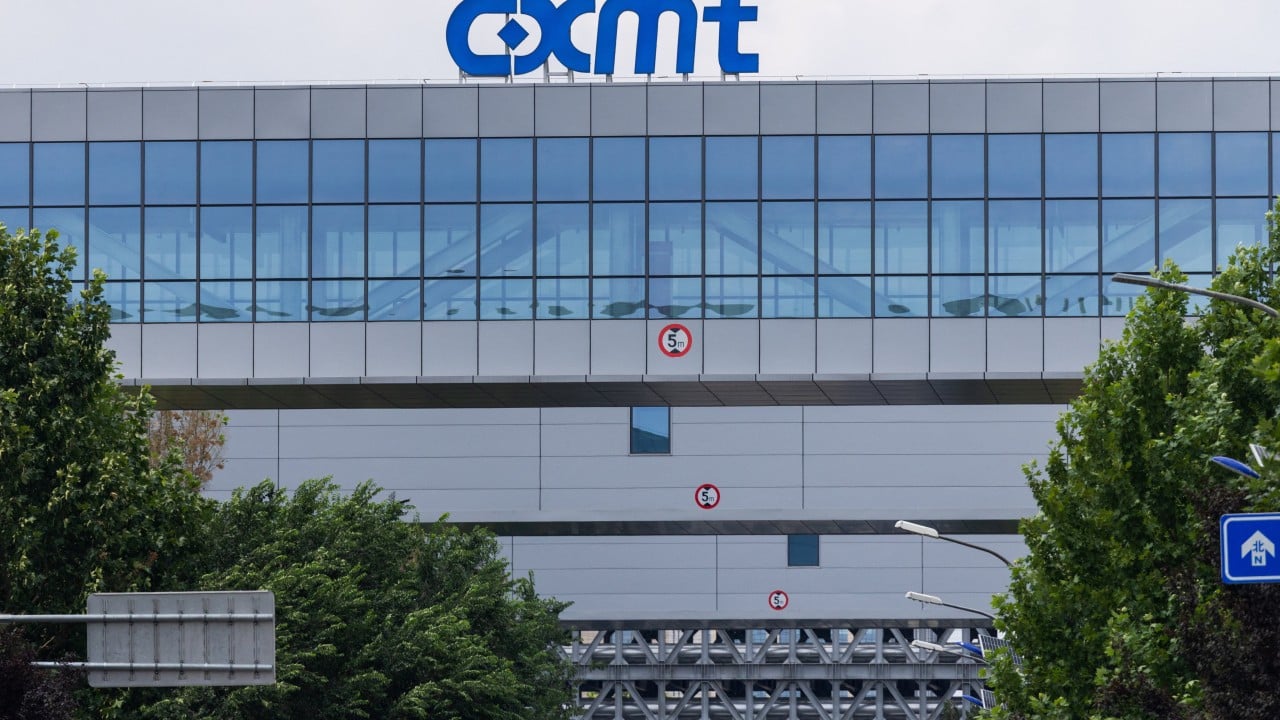
From a Silicon Valley garage to China’s largest DRAM maker and a US$4.4 billion IPO, Zhu reportedly refused pay until CXMT became profitable The Shanghai offering, set to start taking subscriptions on Thursday, aims to raise 29.5 billion yuan (US$4.4 billion). And some analysts predict that CXMT could eventually command a market value of 3 trillion yuan, placing it among China’s most valuable listed technology companies. The listing will be a milestone for Zhu, who reportedly pledged in 2018 not to draw a salary from CXMT until the memory-chip project became profitable – which it did last year. Yet Zhu’s wager on Chinese memory chips began long before CXMT. More than two decades ago, when he was a Silicon Valley engineer with a chip design but little money, Zhu predicted that the centre of the global memory industry would eventually shift towards mainland China. In emails retained by Li Jun, one of his earliest investors, and later reproduced in a Tsinghua University alumni publication, Zhu observed that the industry had migrated from the US to Japan, and then to South Korea. “It is time for China to play [a] role in this industry,” he wrote.

Markets, not politics, will make China’s yuan a global currency
Markets

Markets, not politics, will make China’s yuan a global currency

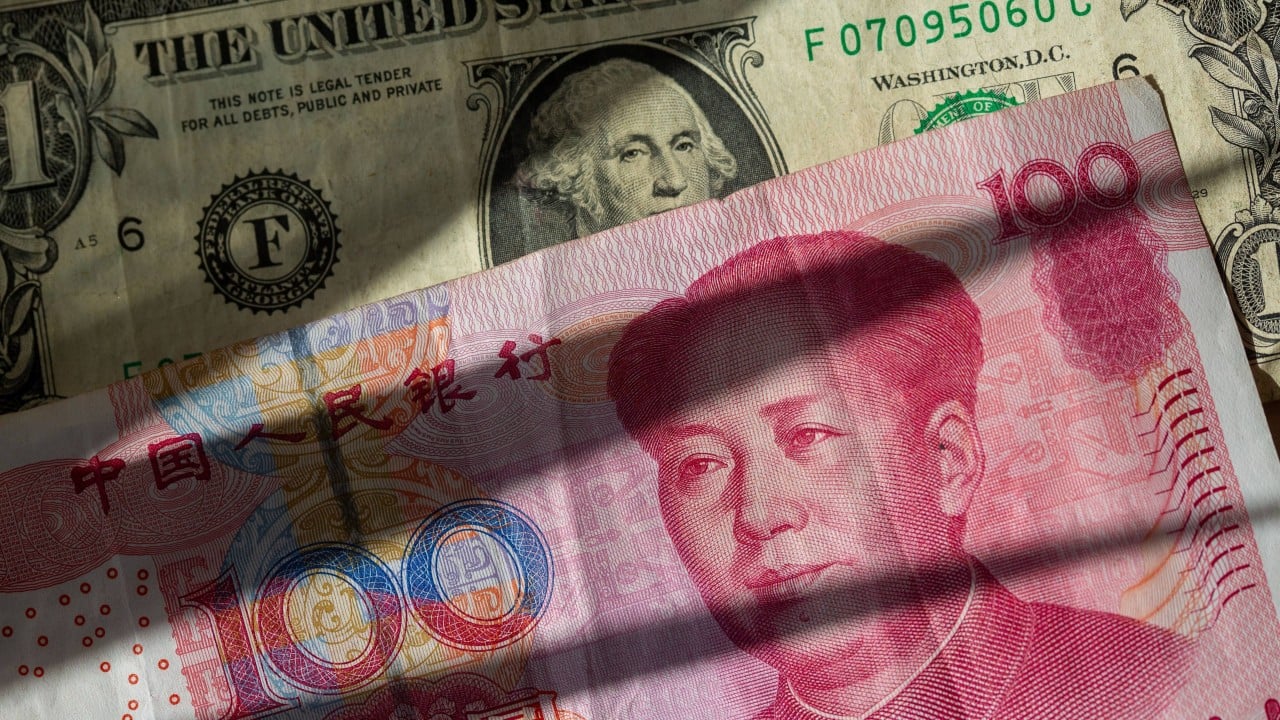
Until authorities can reduce costs and allay the market’s concerns, yuan internationalisation will be stronger on paper than balance sheets The progress is real, but so are the limits. Hong Kong’s yuan deposits reached 1.13 trillion yuan (US$166.3 billion) at the end of May, with monthly cross-border trade settlement remittances above 1.12 trillion yuan. In May, however, the yuan accounted for only 2.75 per cent of global payments by value on the Swift international payment system, while the US dollar took 50.73 per cent. Settlement is not currency power. A true international currency finances projects, backs collateral, anchors hedging markets and sits in reserves without unnerving investors. The yuan has entered the first category, but it is still fighting for the second. The problem begins with offshore liquidity. A company can receive yuan, but it must also borrow it, roll it over and hedge it when markets tighten. If offshore yuan funding becomes unstable or more expensive than US dollar funding, corporate loyalty disappears. Treasurers do not make geopolitical statements with working capital – they choose the cheapest reliable instrument.

Does Hong Kong’s housing market rebound need local owners to sustain it?
Markets

Does Hong Kong’s housing market rebound need local owners to sustain it?

Home prices in the city have risen 10 per cent this year, but analysts warn investor-driven recovery may need local buyers to sustain it Jeremy Wong, a financial professional in his 40s who recently married, had hoped this year would finally be the right time to buy a three-bedroom home with his wife after prices corrected from their peak. Instead, the rebound had pushed their plans back by two to three years, he said, as they saved for a larger down payment rather than rely on their parents’ retirement savings. “It shocked me,” Wong said. “I knew prices generally follow the stock market, but I didn’t expect them to rise so quickly ... the price now is too high to find a place.” Together, those buyers with stronger purchasing power have pushed prices higher much faster than many prospective homeowners expected.

Tech stocks capture China’s elderly retail investors amid faith in nation’s tech sector
Markets

Tech stocks capture China’s elderly retail investors amid faith in nation’s tech sector

State support in the sector and frustration over slow gains in blue chip stocks has elderly Chinese changing returns in technology “Foam is the best bit of a beer,” Fang Yan’an, a veteran investor in his late 70s, told the SCMP, referring to his tactic of chasing the rally of some technology companies. “Our government has ramped up support for technological development over the past few years, and so have many other nations,” Fang said. “Since technology is now crucial for global competition, I tend to believe in the AI industry, and I’m prepared to hold the shares through a long-haul journey.” Higher earnings could support the high price of technology stocks as more commercial products are developed from research, he added.

China’s developers eagerly line up to offer commercial-property Reits amid recovery signs
Markets

China’s developers eagerly line up to offer commercial-property Reits amid recovery signs

Exchanges receive 19 listing applications after enthusiastic investor reception for first four such trusts China’s first four exchange-traded real estate investment trusts (Reits) backed by commercial properties have opened the floodgates for fundraising by office developers, shopping centre builders and hotel owners amid investors’ heightened hopes for a market recovery. According to data provider Wind Information, as of June 24 the pipelines of the Shanghai and Shenzhen stock exchanges had 19 listing applications for investment trusts backed by commercial property assets, with six having already secured regulatory approvals. “Lucrative projects with potentially high returns will fuel the growth of Reits in China and eventually attract more investors,” said Ivy Lu, senior director of CBRE China Research. “Signs are encouraging that more developers will gain access to the financing platform.” Reits allow asset owners to raise cash from valuable but ­illiquid assets without losing control of them. The investment vehicles also give investors the opportunity to collect regular dividends with income generated by the underlying properties.

BYD showcases battery, charging technology in 15,000km journey from Rome to Hong Kong
Markets

BYD showcases battery, charging technology in 15,000km journey from Rome to Hong Kong

BYD, the world’s largest electric vehicle (EV) maker, has intensified efforts to promote its high-performance batteries and superfast charging technology around the world as it tests a car that it says boasts the world’s longest driving range in a journey from Rome to Hong Kong. A fleet of upgraded versions of the Z9GT, a car produced under BYD’s premium Denza brand, has been travelling across European countries including Italy, Croatia, Serbia and Turkey for nearly a month at the start of a...

Volkswagen China deliveries see 26% drop year on year to lowest point since 2010
Markets

Volkswagen China deliveries see 26% drop year on year to lowest point since 2010

Volkswagen Group’s deliveries in China slumped during the first half of 2026 to their lowest level in 16 years, as local electric vehicle (EV) brands further siphoned off buyers’ interest in petrol cars amid a slowing market. Through its three ventures with Chinese partners, the German car brand handed over a total of 971,000 units to customers in China between January and June, down 26.1 per cent year on year, it said in a statement. The delivery volume hit the lowest level since the first half...

Expanding AI and chip firms push up rents in Beijing’s hi-tech district
Markets

Expanding AI and chip firms push up rents in Beijing’s hi-tech district

Rents in Zhongguancun edge up slightly as capital’s office market shifts from passive adjustment to structural recovery, Knight Frank says Demand for Beijing’s grade-A office buildings increased in the first half of the year, with artificial intelligence and semiconductor companies making the Zhongguancun area a hot property at a time when office markets nationwide are still struggling. Home to the capital’s densest cluster of hi-tech firms, Zhongguancun was the only submarket to post rent growth in Beijing, China’s second-largest office market after Shanghai, according to a report from property consultancy Knight Frank on Thursday. The firm’s data showed that the average monthly rent of grade-A offices in Zhongguancun reached 251.40 yuan (US$37) per square metre in the second quarter, ticking up 0.3 per cent from the first quarter. The price level was the second-highest in Beijing after Financial Street. “This year marks the arrival of the AI super cycle, and it has only just begun,” said Virginia Huang, managing director for north and east China at Knight Frank.