Markets — 738 insights
China’s X Square Robot submits confidential filing for Hong Kong IPO, sources say
Markets

China’s X Square Robot submits confidential filing for Hong Kong IPO, sources say

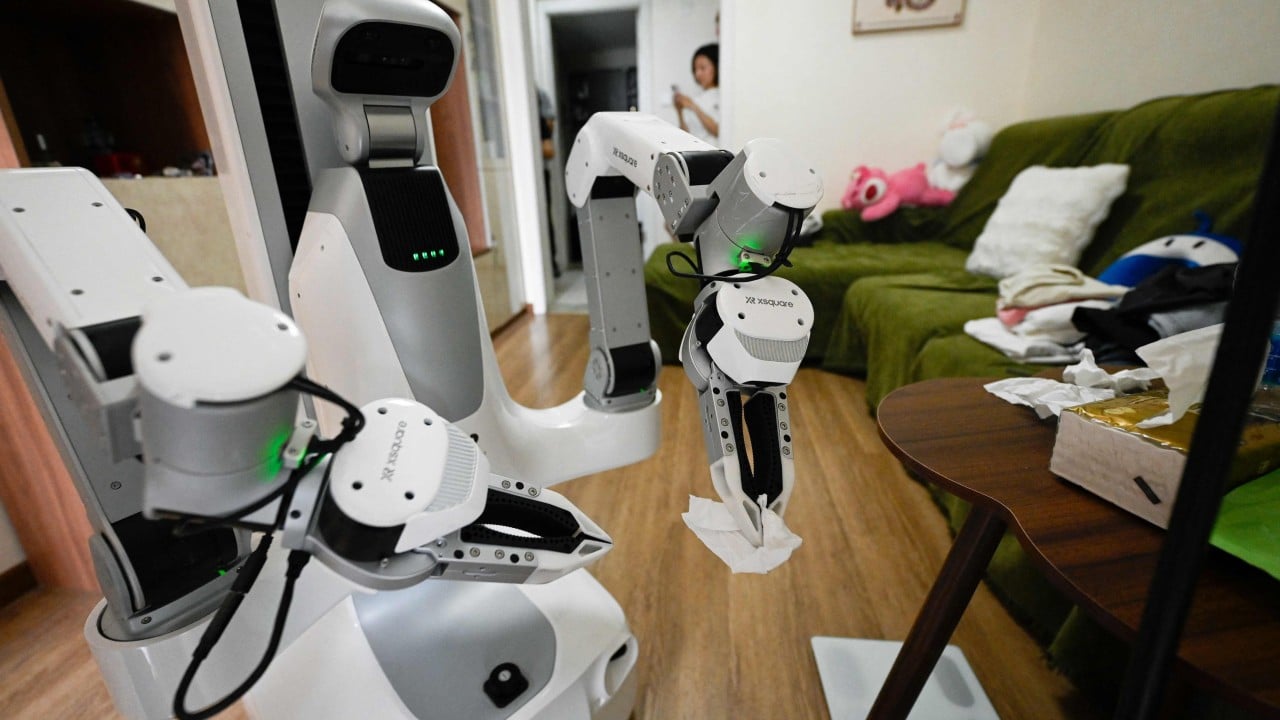
The start-up joins a growing list of domestic robot makers in China raising capital Chinese start-up X Square Robot has filed confidentially for an initial public offering (IPO) in Hong Kong, according to two sources familiar with the matter, joining a growing wave of domestic robot makers flocking to capital markets, despite new US trade restrictions. The Shenzhen-based firm has tapped Huatai Securities and Morgan Stanley as sponsors for the prospective float, one of the sources said. X Square and Morgan Stanley declined to comment, while the other companies and securities firms did not respond to requests for comment. The Hong Kong Exchanges and Clearing (HKEX) said it does not comment on individual companies. An expanding list of Chinese robotic makers is pursuing an IPO this year, spearheaded by Unitree Robotics, which began price consultations on Wednesday for a flotation on Shanghai’s Star Market. The Hangzhou-based company plans to sell 40.45 million shares, or 10 per cent of its enlarged share capital.

China’s foreign reserves hold steady as external earnings stay in private hands
Markets

China’s foreign reserves hold steady as external earnings stay in private hands

Hong Kong absorbed nearly two-thirds of mainland China’s portfolio outflows last year and now holds about half of the total external stock, IIF says China’s foreign exchange reserves barely budged last year despite a record US$1.18 trillion trade surplus, as the country’s massive external earnings increasingly wound up on the balance sheets of domestic households, commercial banks and corporations rather than in Beijing’s central coffers, a new report from the Institute of International Finance (IIF) shows. China has long been a major net creditor to the rest of the world. But in 2025, its non-reserve sector – banks, companies and investors operating outside the central bank’s reserve holdings – became a net creditor in its own right for the first time, according to the IIF report, published on Monday. “The institutional centre of surplus recycling has shifted,” wrote Gene Ma and Phoebe Feng of the global financial services trade group, adding activity had moved from the People’s Bank of China’s reserve portfolio and towards firms, investors and, above all, banks. The shift reflects a broader change in how China deploys its savings abroad.

BYD’s first humanoid robots; Brazil named biggest buyer of Chinese cars: 7 EV reads
Markets

BYD’s first humanoid robots; Brazil named biggest buyer of Chinese cars: 7 EV reads

We have put together stories from our coverage on electric and new energy vehicles from the past two weeks to help you stay informed. If you would like to see more of our reporting, please consider subscribing. 1. BYD to debut first humanoid robots in August as rivalry with Tesla intensifies Electric vehicle (EV) giant BYD plans to unveil its first humanoid robots within the next few weeks, as China’s electric car makers accelerate their push into the embodied artificial intelligence market. 2....

Amid AI tumult, more Chinese investors seek haven in undervalued Hang Seng Index
Markets

Amid AI tumult, more Chinese investors seek haven in undervalued Hang Seng Index

Mainland traders poured US$8 billion into Hong Kong equities in July, eyeing refuge from global tech sector volatility, in a market trading at just 12.2 times earnings Mainland Chinese investors bought more Hong Kong stocks than they sold for a second consecutive month in July, rotating into the undervalued market to take shelter from the tumult in artificial intelligence-linked shares. A faltering in the global AI trade pummelled the mainland’s yuan-denominated stocks, particularly technology companies, over the past month, prompting investors to seek alternative assets that could relatively withstand the turmoil. The Hang Seng Index is among the cheapest key equity benchmarks globally, partly because of its low exposure to the AI frenzy. The city’s benchmark rose 13 per cent in July, defying sell-offs that roiled most of the world’s major markets, while the mainland’s tech-heavy Star Market 50 Index tumbled 26 per cent – its biggest monthly decline on record. “While risk-aversion rose, global funds didn’t pull out of equities significantly. And instead, they were seeking rebalancing across markets and sectors,” said Melody Lai, an analyst at SPDB International in Hong Kong.

China’s stock market sees drop in new A-share, margin-trading accounts amid tech sell-off
Markets

China’s stock market sees drop in new A-share, margin-trading accounts amid tech sell-off

The number of new accounts opened on the Shanghai Stock Exchange was down 7 per cent month on month The Shanghai Stock Exchange opened 2.66 million new A-share accounts in July, down 7 per cent from June, according to exchange data. That brought the cumulative tally for the January-to-July period to 22.82 million new accounts. Margin trading activity painted a similar picture. China Securities Data, a unit of the central securities depository for mainland China’s stock exchanges, said 139,400 new margin-trading accounts were opened market-wide in July, down 22.12 per cent from June. The pullback coincided with a rout in mainland technology shares in July. The CSI 300 Index, which tracks the 300 largest and most liquid stocks listed on the Shanghai and Shenzhen exchanges, dropped about 13 per cent in July, while the Shanghai Composite Index fell about 5 per cent. Electronic chemicals, semiconductors and optical-module makers bore the brunt of the decline. Hong Kong-listed chipmakers have also seen volatility. In Hong Kong, stock prices of GigaDevice Semiconductor tumbled about 45 per cent, while Montage Technology dropped more than 26 per cent.

Innovation platform buys Hong Kong office tower as state-linked buyers seek bargains
Markets

Innovation platform buys Hong Kong office tower as state-linked buyers seek bargains

Analysts say purchase adds to signs that state-backed buyers from mainland are taking advantage of lower prices for commercial properties The acquisition of a Hong Kong office tower by an innovation platform backed by Ningbo’s city government has reinforced analysts’ expectations that mainland government-linked institutions could play a bigger role in the city’s commercial property market, where prices remain depressed. Land Registry records show Yonggang Science and Technology Innovation Centre reached an agreement with receivers on June 25 to buy the Konnect office building in Wan Chai for HK$800 million (US$102 million) – about 11 per cent below the original asking price. The innovation platform was launched in June to support cross-border technology collaboration between Hong Kong and Ningbo. It said in a statement issued at the time that it aimed to establish matching investment funds in Hong Kong and Ningbo to support technology ventures under an “offshore incubation, onshore acceleration” model. The platform is operated by Ning Shing (Holdings), a wholly state-owned enterprise established in Hong Kong by the city government of Ningbo, in Zhejiang province, according to the company’s website.

SpaceX report, share unlock may sway Hong Kong, mainland China stocks as AI trade recovers
Markets

SpaceX report, share unlock may sway Hong Kong, mainland China stocks as AI trade recovers

Elon Musk’s aerospace unit faces scrutiny as results and a share unlock loom, testing investor appetite for capital-intensive tech Another test will follow two days later, when the trading restrictions on part of SpaceX’s initial public offering (IPO) shares expire, setting the stage for one of the biggest stock unlocks in global capital markets. Capitalised at US$1.5 trillion, SpaceX ranks alongside the so-called US Magnificent Seven of tech stocks – Nvidia, Microsoft, Apple, Alphabet, Amazon.com, Meta Platforms and Tesla – and is big enough to sway sentiment in the AI sector. Any spillover would have repercussions for stocks in Hong Kong and mainland China, where investors look to the US for clues on trading strategies.

Could China’s new trust tax pull Pan Shiyi’s wealth into the capital flight spotlight?
Markets

Could China’s new trust tax pull Pan Shiyi’s wealth into the capital flight spotlight?

Soho China founder Pan Shiyi’s Cayman trust faces scrutiny as Beijing’s tax overhaul puts offshore wealth strategies in focus China’s ultra-rich are finding themselves under greater scrutiny as new tax rules on offshore trusts raise questions over their fortunes, with New York-based property tycoon Pan Shiyi’s Cayman structure cast back into the spotlight. “Prior legislation only mandated taxation for individuals holding offshore trusts, yet lacked detailed implementing rules. This new update fills the void,” said Sarah Wang, a Shanghai-based tax lawyer. “Tax liability kicks in the moment capital is transferred into an offshore trust, covering stocks, bonds, real estate and other assets.” Pan is one of China’s most closely followed entrepreneurs. He built his fortune from scratch and became synonymous with landmark buildings in tier-one mainland Chinese cities. He also gained notoriety for sidestepping the property crisis that engulfed rival developers from 2021.

Europe’s new EV power struggle sees Chinese giants seize record market share
Markets

Europe’s new EV power struggle sees Chinese giants seize record market share

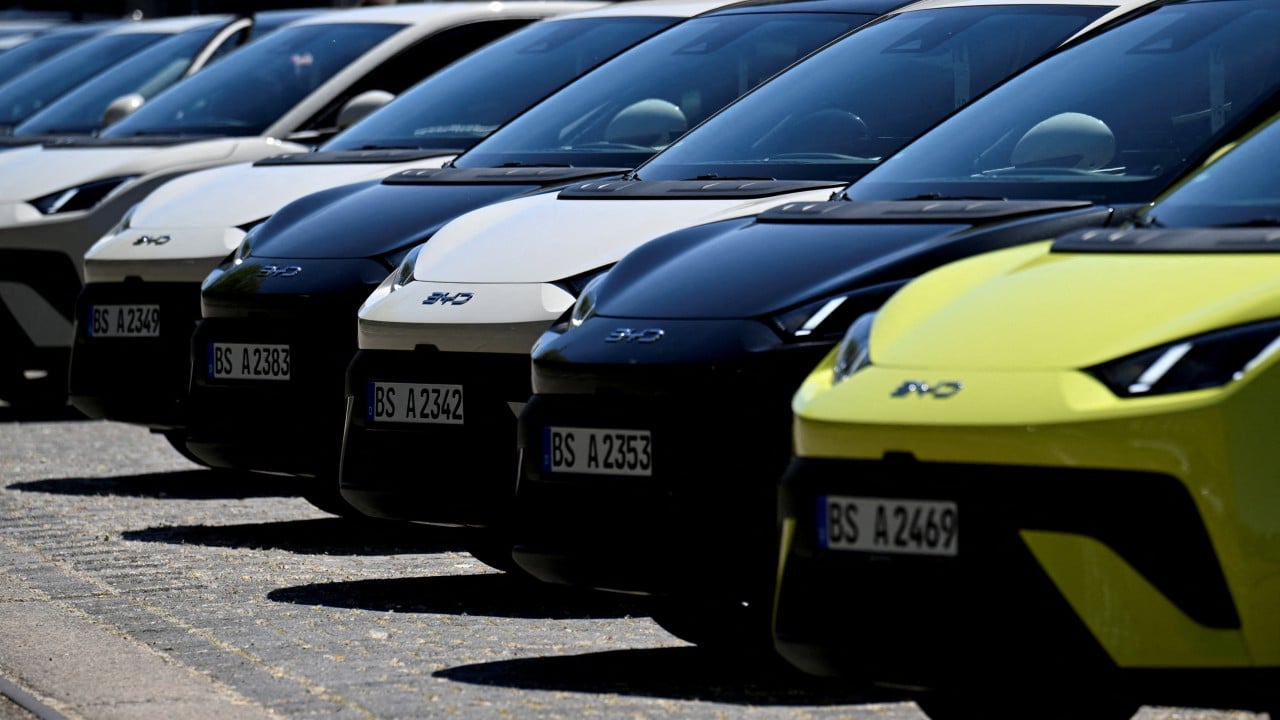
Leading Chinese carmakers and an aggressive Tesla together command more than 13% of western Europe’s surging EV market Chinese electric vehicle (EV) makers and Tesla are locked in a tug of war across western Europe, taking advantage of rising consumer demand for battery-powered vehicles as volatile oil prices drive buyers away from traditional models. “Tesla’s aggressive push from 2026, with prices falling to just above €30,000 (US$34,522) across many regional markets, has prevented a further fall for US brands,” analysts at Schmidt said in a report last week. Tesla’s price cuts coincide with a broader push by Chinese carmakers to expand overseas. Facing sluggish demand at home and trade barriers imposed by the United States, they have increasingly targeted Europe as a major growth market. BYD, China’s market leader, launched two luxury models in Europe in April and July under its Denza brand and aims to build 3,000 “flash-charging” stations across the region by March next year. It secured a market share of 2.8 per cent after delivering 91,500 units in the second quarter, surpassing Tesla and the historic British brand MG, which is now owned by China’s state-owned SAIC Motor, according to Schmidt.

HSBC share price drops following lower-than-expected US$1 billion buy-back
Markets

HSBC share price drops following lower-than-expected US$1 billion buy-back

The buy-back was announced after HSBC’s second-quarter pre-tax profit rose 60 per cent to US$10.15 billion, beating analysts’ estimate of US$9.5 billion The share price of HSBC Holdings fell 2.5 per cent on Tuesday afternoon following the lender’s announcement of a lower-than-expected share buy-back. HSBC – the top lender in Hong Kong – resumed its share repurchase programme for the first time since October on Tuesday, earmarking US$1 billion to buy back shares over the next three months, according to a stock exchange filing. The bank said in October it would have to pause share buy-backs for three quarters to conserve capital for its US$14 billion acquisition of subsidiary Hang Seng Bank. The market had widely expected HSBC to resume repurchases in the July-to-September quarter, with estimates ranging from US$1.5 billion to US$2 billion. The share buy-back, which fell short of expectations, led HSBC’s share price to fall 2.5 per cent to HK$164 in the early afternoon on Tuesday, following the announcement. It then recovered slightly, only to drop 1 per cent to HK$166.5. The stock has gained 36 per cent so far this year. The Hang Seng Index fell 0.6 per cent on Tuesday to 25852.92.

China’s outsize commodities footprint cushions global energy shocks: Goldman Sachs
Markets

China’s outsize commodities footprint cushions global energy shocks: Goldman Sachs

Analysts at investment bank say Beijing has become de facto ‘volatility arbiter’ for global commodity markets In a report published on Monday, commodities analysts Daan Struyven and Lia Thomas cast Beijing as the global commodity markets’ de facto “volatility arbiter”, arguing that Chinese policies pulled price volatility in opposite directions depending on whether it acted as a price-sensitive buyer or a dominant producer. “China policy tends to dampen price volatility in hydrocarbons and gold through price-sensitive import demand,” they wrote. “By contrast, it tends to amplify volatility in critical metals, where China can use supply chain dominance as leverage in its AI and geopolitical competition with the US.” That contrast had been visible in energy markets this year, the analysts said, with low Chinese crude imports one of the main reasons oil prices had not risen further despite the sharpest supply shock on record. Describing China as a “swing consumer”, the authors said Beijing had helped to stabilise markets since March by cutting net imports of seaborne crude oil and liquefied natural gas, while boosting net exports of organic chemicals and plastics.

China stock traders cut leveraged positions by 14% in July amid tech sell-off
Markets

China stock traders cut leveraged positions by 14% in July amid tech sell-off

Tech stocks plummeted in July as traders unwound leveraged positions, sparking a drop in margin financing and raising concerns in Beijing The outstanding value of the stock purchases financed by margin trading stood at 2.59 trillion yuan (US$383.4 billion) on Friday, a decrease of 14 per cent from the record high of 3.01 trillion yuan on June 25, according to Chinese financial data provider Wind. The unravelling of the trade was concentrated in the stocks trading on the Shanghai and Shenzhen exchanges under their respective tech boards. The deleveraging partly caused a 26 per cent slump in the tech-centric Star Market 50 Index in July, the worst monthly performance since its inception. “Investors’ exiting their leveraged positions largely explains the big decline in the market, particularly technology and AI stocks, though little has changed in the fundamentals,” said Wang Chen, a partner at Xufunds Investment Management in Shanghai. “AI stock swings overseas both provoked and accelerated the deleveraging here.”