Markets — 713 insights
Multinational giants defy China’s sluggish retail market with strong 2026 sales
Markets

Multinational giants defy China’s sluggish retail market with strong 2026 sales

The likes of Adidas and L’Oreal are thriving in the evolving market, showcasing strong growth driven by changing consumer demands Major consumer goods multinationals – including Coca-Cola and Unilever – have reported strong sales growth in China during the first half of the year, indicating continued opportunities in the world’s second-largest consumer market despite headwinds. In the first six months of the year, German sportswear maker Adidas saw sales rise by 16 per cent year on year in China, reflecting strong market share gains, the company said in its half-year earnings report on Thursday. The firm added that growth tied to the 2026 Fifa World Cup had also offered a boost. “Multinationals’ sales growth reflects profound structural segmentation in China and is primarily driven by consumption upgrading and demand divergence trends,” said Fu Yifu, a special research fellow at Su Merchants Bank in Nanjing, capital of the eastern province of Jiangsu. “Against a sluggish broader market, demand for quality-value products and self-reward spending gains traction. The key for companies lies in accurately identifying and catering to evolving consumer demands,” Fu added.
Hong Kong’s Chinese bond futures are a major step for the global yuan
Markets

Hong Kong’s Chinese bond futures are a major step for the global yuan

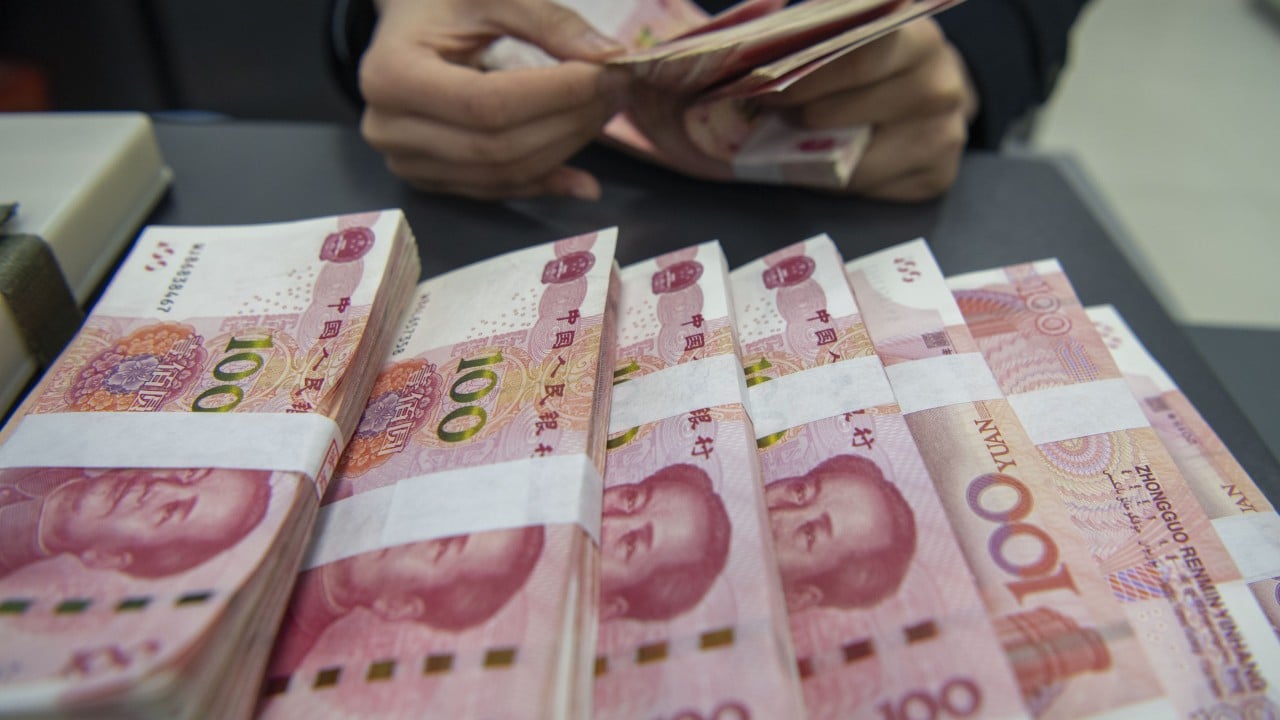
On August 3, five-year Chinese treasury bond futures began trading on the Hong Kong stock exchange. Market attention has focused on the new product, but its real significance emerges when set against the deep shifts under way in the international monetary system. History offers a clear lesson: no currency has graduated from a trade settlement currency to a genuine investment and reserve currency on the strength of trade flows alone. Behind every reserve currency stands a government bond market...

China’s tech giants race to put AI on delivery riders’ heads
Markets

China’s tech giants race to put AI on delivery riders’ heads

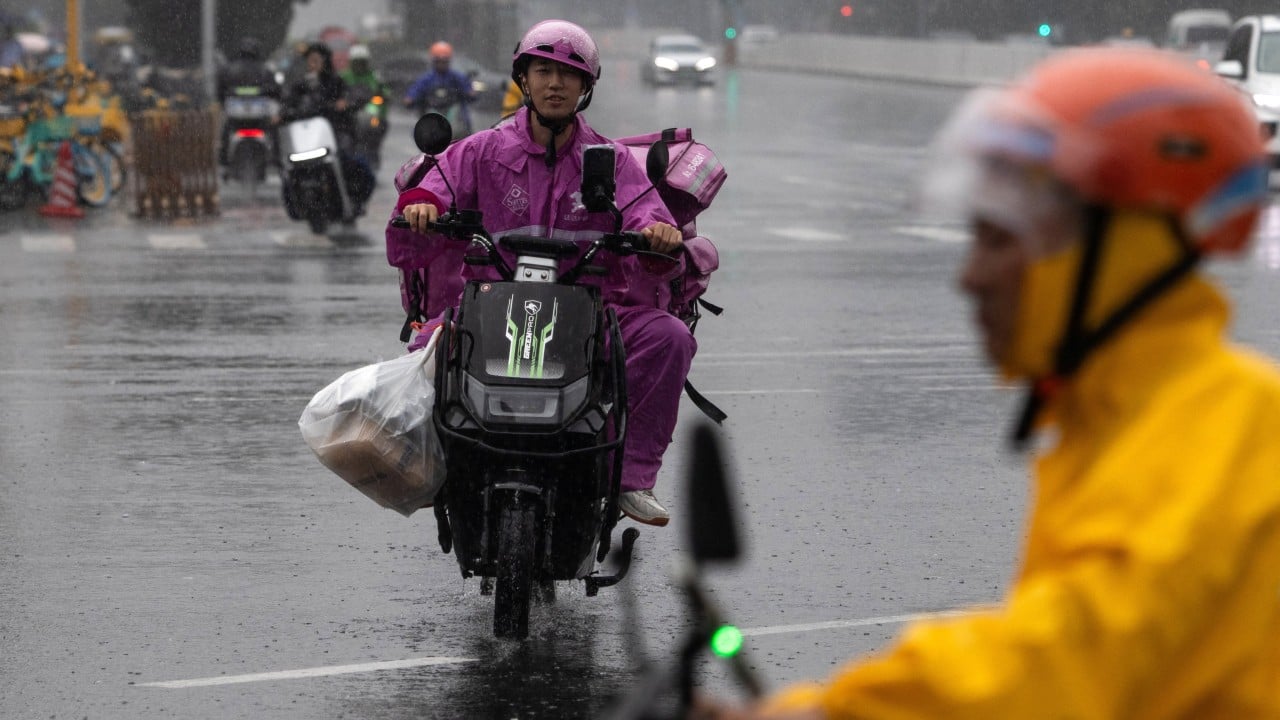
From safety features to hands-free voice tools, JD.com has become the latest platform to launch AI-integrated headwear Chinese e-commerce giant JD.com has launched a smart helmet for food couriers with features enabled by artificial intelligence technology, following similar roll-outs by rivals Alibaba Group Holding and Meituan as they seek to improve rider safety and boost delivery efficiency. The helmet integrates an AI-driven voice assistant with a camera that can “see” the surrounding environment, JD.com’s food delivery unit announced on Monday. The company said the device was designed to minimise distractions in poor weather, when delivery riders, who often travel by electric bike, struggle to use smartphones with wet hands or limited visibility. Instead of pulling over to tap a screen in heavy rain, couriers could use voice commands to manage new orders, communicate with customers and complete other essential tasks while driving, it said in the statement. Beyond relying on online maps, the system provides turn-by-turn voice prompts based on established routes used by experienced riders, helping newer workers navigate unfamiliar areas and avoid delays.

China’s social security fund boosts stakes in A-share firms in first 7 months, data shows
Markets

China’s social security fund boosts stakes in A-share firms in first 7 months, data shows

National Social Security Fund increases onshore stock stakes, targeting tech as state pension returns hit 5.76 per cent “[The fund] is investing in China’s tech sector to capture its faster growth rate,” said Gary Ng, senior economist for Asia Pacific at Natixis Corporate and Investment Bank. “It should be positive for those who are chosen by long-term capital.” The buying came as the CSI 300 Index, which tracks the 300 largest and most liquid stocks listed on the Shanghai and Shenzhen exchanges, slipped 0.98 per cent on Monday, bringing its year-to-date decline to 3.7 per cent. Global sell-offs in artificial intelligence stocks have spilled over into A shares. China’s National Social Security Fund concentrated its holdings in semiconductors, electronics and components, which accounted for 58.96 per cent of its total portfolio value, the data showed. The fund backs the country’s social welfare system – including pension, medical and unemployment insurance. Its pension fund managed a total of 3.5 trillion yuan (US$518.4 billion) in assets in 2025, according to its report released on Saturday. The fund holds its largest stake in chipmaker Espressif Systems, followed by moulded-fibre packaging manufacturer Zhongxin Group.

Chinese EV demand cools
Markets

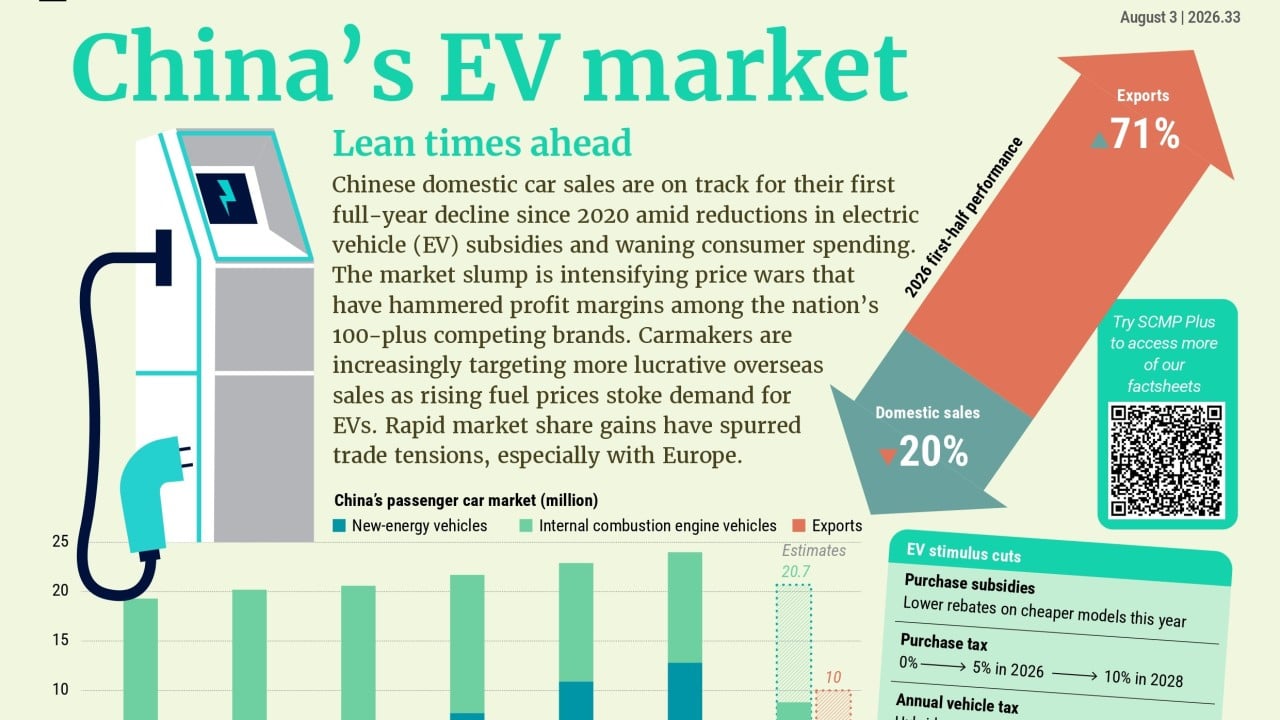
Chinese EV demand cools

Treasury bond futures ‘a milestone’ to boost Hong Kong’s bridgehead role: CSRC chairman
Markets

Treasury bond futures ‘a milestone’ to boost Hong Kong’s bridgehead role: CSRC chairman

First offshore China government bond futures rose more than one per cent at 10am on debut on Monday Beijing is encouraging mainland China’s financial firms to use the city to go global, as well as urging Hong Kong-listed companies to list on the mainland, the head of the country’s securities regulator said on Monday. “Mainland financial institutions have been using Hong Kong to go global. There are many mainland securities and futures firms setting in Hong Kong, while some of them do not have operation in Beijing but they have shops [here],” said Wu Qing, chairman of the China Securities Regulatory Commission at the launch ceremony of the five-year China government bond futures. “We would like to see more dual listings with mainland firms to raise funds in Hong Kong, and encourage Hong Kong firms to list in [mainland] China,” Wu added. Wu described the launch of the bond futures as “a milestone to boost Hong Kong’s bridgehead role”, adding that it also marked the latest opening of the mainland’s capital market for international investors.

The international hotel chains targeting China’s value-driven travellers
Markets

The international hotel chains targeting China’s value-driven travellers

Global hotel groups are expanding into China’s midscale segment as price-sensitive travellers seek value without sacrificing brand trust “I didn’t know Hilton could be this affordable,” said the 24-year-old, who had assumed international hotel brands were beyond his budget and had never considered booking one before. After the stay, Liu signed up for Hilton’s membership programme and said he would consider similar hotels in the future for their balance between affordability and quality. “I know it’s not the flagship brand, but it still carries the Hilton name, so the facilities and interior design are really nice.”

AIIB explores digital payments, eyes Hong Kong hub as it raises record funds
Markets

AIIB explores digital payments, eyes Hong Kong hub as it raises record funds

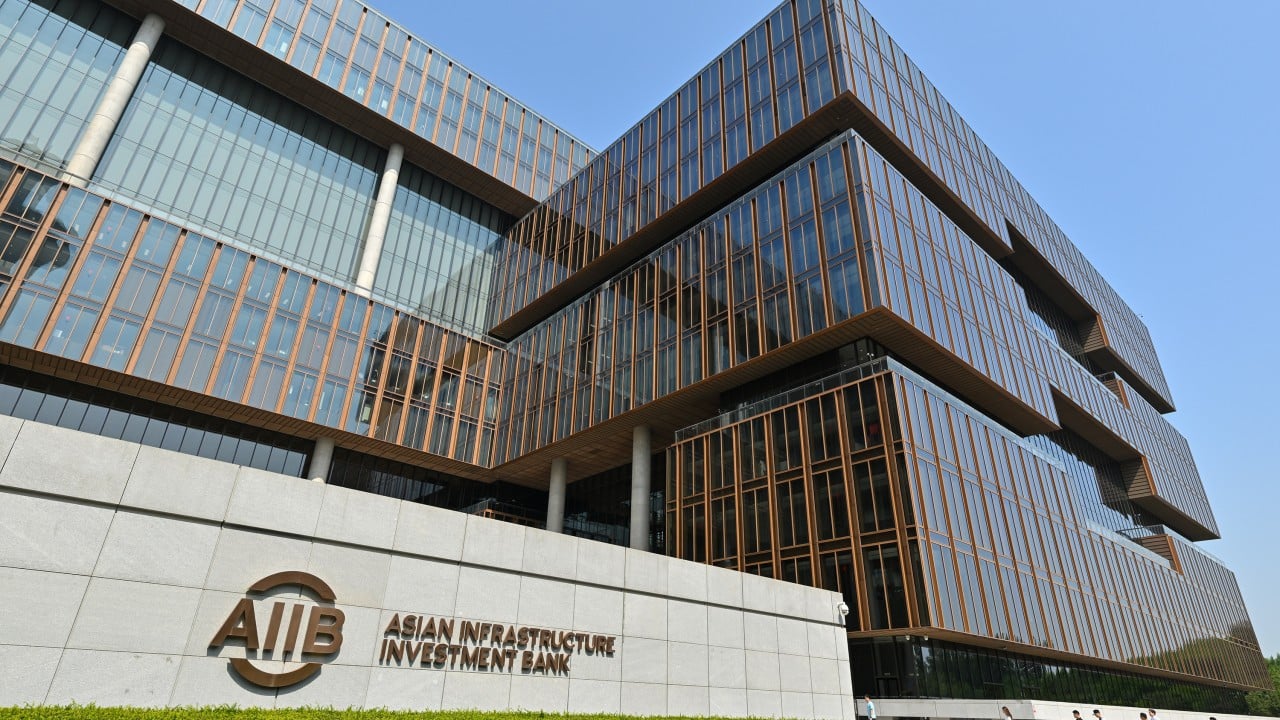
The development bank aims to raise a record US$11 billion this year, as it continues to broaden its operations, according to a senior official The Asian Infrastructure Investment Bank (AIIB) is setting its sights on tokenised payments and digital settlement systems, tapping into Hong Kong’s growing digital finance ecosystem as part of a broader push to modernise its capital market operations, according to a senior official at the bank. “That is a sector that we are exploring with interest,” Domenico Nardelli, the AIIB’s treasurer and acting chief financial officer, told the South China Morning Post in an interview last week, referencing emerging financial technologies such as digital payments and tokenised settlement. The Beijing-headquartered multilateral development bank wants “to understand if there are applications that are portable into the treasury space,” he added. The interest comes as the institution aggressively scales up its global fundraising capacity. After raising the equivalent of US$10 billion in each of the past two years, the AIIB is targeting a record US$11 billion this year.

China sees flurry of commercial property deals as investors sniff out bargains
Markets

China sees flurry of commercial property deals as investors sniff out bargains

Major Chinese cities including Shanghai are witnessing a significant uptick in commercial property transactions, as investors snap up space in prime locations in the expectation that the market may finally be on the road to recovery. The value of office buildings, hotels and shopping malls across China has slumped in recent years amid a prolonged real estate crisis. But with prices in some cities now starting to stabilise, investors are hunting for potential bargains, according to analysts. The...

First impressions count as Chinese buyers open their homes to UBTech’s consumer humanoids
Markets

First impressions count as Chinese buyers open their homes to UBTech’s consumer humanoids

Companion robots start arriving in September, offering emotional interaction and novelty, but chores remain off the table – at least for now “The happiest part is often the waiting,” Song said of his decision to buy the female version of the U1 Pro, made by Shenzhen-based UBTech Robotics. Unlike industrial robots built for repetitive tasks in controlled settings, household humanoids must navigate unpredictable spaces, interact naturally with people, and eventually deliver real companion value – or even domestic help. UBTech is among the first Chinese makers attempting the leap. The company said its U1 series had racked up 13,361 orders by June 30 – less than a month after opening pre-sales in early June – with initial deliveries scheduled to begin on September 16. The line-up spans three models – Lite, Pro and Ultra – ranging from partial-body units to full-sized humanoids, with prices running from 119,800 yuan to 990,000 yuan. Designed primarily for emotional companionship, the robots were capable of facial expressions, voice interaction and artificial intelligence-driven conversations, according to the company.

Cheung Kong Center II tests higher rents amid rebound in Central office market
Markets

Cheung Kong Center II tests higher rents amid rebound in Central office market

The high-profile tower initially struggled to lease out space, but is now testing HK$100 per square foot rents amid rising demand for Central offices Cheung Kong Center II is testing office rents above HK$100 (US$12.75) per square foot, as the once slow-leasing tower begins to close the gap with Central’s most in-demand office buildings, according to property agents. The increase marks a turnaround for one of Hong Kong’s most closely watched office projects. Completed in 2024 by CK Asset Holdings – the property company controlled by billionaire Li Ka-shing’s family – the 41-storey tower was designed as a flagship Central development, but struggled to gain traction after opening into one of the city’s weakest office markets in decades. At the start of this year, the building was only about 20 per cent occupied, according to Ada Fung, chief operating officer of advisory services at CBRE Hong Kong.

Turnover at the top: 17 people have held title of China’s richest person in past 27 years
Markets

Turnover at the top: 17 people have held title of China’s richest person in past 27 years

ByteDance founder Zhang Yiming tops rankings this year, but vibrant market makes them much more fluid than in US, Hurun says Seventeen Chinese entrepreneurs have held the title of the country’s richest billionaire in the past 27 years, over four times as many as in the United States, which wealth research firm Hurun Group attributed to the “dynamism” of the Chinese market. In the US, four billionaires have dominated the rankings for nearly three decades. Bill Gates, founder of global software giant Microsoft, was listed as the country’s richest man roughly 17 times from 1999 to 2017, according to data from Forbes and Hurun, while Elon Musk, the head of SpaceX and Tesla, has led the rankings since 2022. Jeff Bezos, founder of e-commerce and cloud giant Amazon, and Warren Buffett, former CEO of the Berkshire Hathaway conglomerate, claimed the top spot in the years between. “From the diverse backgrounds of the richest people in China, we can see the dynamism of the market of the world’s second-largest economy,” Hurun Group CEO and co-founder Sinclair Lyu said recently.