Markets — 747 insights
AIIB warns climate inaction could downgrade a third of sovereign borrowers by 2050
Markets

AIIB warns climate inaction could downgrade a third of sovereign borrowers by 2050

Delayed physical impacts to hit economies by 2050 without stronger climate policies, says Beijing-based multilateral lender More than a third of Asian Infrastructure Investment Bank’s (AIIB) sovereign borrowers could face credit rating downgrades by 2050 if global climate policy fails to strengthen, the Beijing-based multilateral lender said in a report. Under a current policy scenario – in which existing climate rules remain unchanged and global temperature rises by around 2.9 degrees Celsius above pre-industrial levels – nearly 34 per cent of the bank’s sovereign portfolio would suffer downgrades, according to the report published on Monday. “Rising CO2 [carbon dioxide] emissions without additional carbon pricing lead to more severe long-term economic impacts on sovereigns from climate-driven catastrophes,” the bank said. Developing economies that relied heavily on nature-dependent sectors remained particularly vulnerable to escalating physical risks, it added. The downgrades would not materialise immediately, the report said. Effects on sovereign ratings would only begin to manifest between 2035 and 2040, driven primarily by delayed physical climate impacts such as rising sea levels, extreme heatwaves and severe flooding.


Bruce Rockowitz on Why AI Is Reshaping Hong Kong’s Food Economy
Markets

Bruce Rockowitz on Why AI Is Reshaping Hong Kong’s Food Economy

[The content of this article has been produced by our advertising partner.] Artificial intelligence is moving quickly from experiment to operating tool, and Bruce Rockowitz believes it is becoming an important competitive advantage for Hong Kong’s catering businesses as the city’s food delivery economy enters a more demanding phase. Hong Kong’s online food delivery market has evolved from a pandemic-era convenience into one of the city’s most intensely contested consumer sectors. Operators now face a combination of rising labour costs, tighter margins and customer expectations that continue to climb. For Rockowitz, whose career has focused on transforming traditional businesses through innovation, branding and data, AI is not simply a technology trend. It is a practical way to improve decision-making, strengthen efficiency and deliver a better customer experience. That view is especially relevant for catering companies built around digital ordering and delivery. Each order generates useful information, from customer preferences and purchasing habits to delivery times and menu performance. AI allows businesses to turn that data into insights that can improve execution across multiple parts of the operation.

Musk’s headaches: meet China’s corporate matrix challenging his business empire
Markets

Musk’s headaches: meet China’s corporate matrix challenging his business empire

US entrepreneur Elon Musk has long been highly respected in China. His business ideas – from electric cars to rockets, humanoid robots and brain implants – have spawned Chinese followers, many of which now pose growing threats to Musk’s business empire. These Chinese competitors tend to follow a similar strategy: capitalise on the large domestic market to grow their business while taking advantage of the country’s integrated supply chains and expertise in fast-response manufacturing to hone...

Jim Rogers talks up the Chinese yuan amid fears of a US market crisis
Markets

Jim Rogers talks up the Chinese yuan amid fears of a US market crisis

Legendary investor lauds the yuan but says his cash holdings are still in US dollars because the Chinese currency lacks full convertibility But the currency he would hold might be the Chinese yuan rather than the US dollar, if the former were fully convertible, the veteran investor said in an interview at an investor event in Hong Kong on Saturday. The remarks came at a time when the 83-year-old billionaire was planning to sell some equities and buy up cash, as he worried about an “extremely bad” crash following a rare long rally across global markets. “The US dollar will get overvalued, and I have to figure out where to go next. In theory, it should be the renminbi,” he said, adding that restrictions on the Chinese currency remained an obstacle. Rogers also believed the Chinese yuan would be fully convertible in the future, as the size and scale of China’s economy left “huge pressures” on the country’s money flow. Before the Chinese yuan is fully convertible, Rogers said he would continue to purchase US dollars, despite repeatedly warning that the United States was now the world’s largest debtor nation, whose national debt had accumulated to nearly US$40 trillion. “[The US dollar] is not (a safe haven), but people think it is.

I gave Tencent’s WeChat AI agent control for 24 hours: where it excelled – and stumbled
Markets

I gave Tencent’s WeChat AI agent control for 24 hours: where it excelled – and stumbled

The new Xiaowei agent promises hands-free control across WeChat’s vast digital ecosystem. I set out to see whether it delivers In its latest earnings results announced on Wednesday, Tencent highlighted Xiaowei for the first time, touting its focus on user privacy and inference efficiency. After gaining early access to the trial feature, which appears as two green dots at the top of the main screen, I spent nearly 24 hours letting Xiaowei run my digital routine. The goal: see how much of my daily life an AI agent could actually take over. The verdict? It’s a fascinating, promising glimpse into the future of apps – and an occasional exercise in frustration. Unlike standard chatbots that simply answer questions, an AI agent is designed to take action. Where a chatbot recommends a hotpot restaurant, Xiaowei is meant to make a reservation and place your order, too.

Buy or rent? Hong Kong homebuyers face an age-old housing dilemma
Markets

Buy or rent? Hong Kong homebuyers face an age-old housing dilemma

Rising residential rents and the looming shadow of interest rate increases have the city’s homebuyers trying to balance out the risks The Centa-City Rental Index (CRI), which reflects the rent of second-hand private residential properties in Hong Kong, has been rising throughout the year to 136.34 in July from 129.57 at the beginning of 2026, a cumulative increase of 5.2 per cent. “The rent is too high,” said Jimmy Lau, who works in the IT industry and spent HK$4.68 million at the end of last month to buy a 474 sq ft low-floor unit in Telford Gardens in Kowloon Bay, with a price tag of HK$9,873 per square foot. “I had been renting before, and the lease was about to expire towards the end of the first half of the year,” he said. “But now that rents have risen a lot, my family suggested that it would be better to simply buy a home.” He paid 30 per cent of the down payment to purchase his current unit and borrowed a 70 per cent mortgage with a 30-year repayment period. The current monthly mortgage payment is about HK$14,300.

Home province of DeepSeek, Moonshot founders seeks to retain, attract future AI talent
Markets

Home province of DeepSeek, Moonshot founders seeks to retain, attract future AI talent

After losing top founders in artificial intelligence to rivals, the southern province aims to better attract, retain talent After graduating from Tsinghua and earning his PhD at Carnegie Mellon University, Yang returned to China and later launched Moonshot in Beijing in 2023. Meanwhile, Liang attended Zhejiang University in eastern China, spent time in Chengdu in the southwestern province of Sichuan and ultimately settled in Hangzhou in Zhejiang to launch both his quantitative hedge fund and DeepSeek. Industry metrics underscore Guangdong’s uphill battle. According to the Hurun Research Institute, Beijing leads the country with 19 of China’s top 50 AI companies, followed by Shanghai with 14. Guangzhou and Shenzhen, the two biggest cities in Guangdong, hold 10 combined. Meanwhile, second-tier cities are rapidly gaining ground. Hangzhou is thriving with star firms like DeepSeek and Unitree Robotics, while Hefei and Wuhan are building momentum around semiconductor giants ChangXin Memory Technologies and Yangtze Memory Technologies Corp. A core factor behind this disparity is the concentration of academic talent, according to experts.

China’s ‘Cat’, Honor of Kings great, reflects on his gaming career amid the esports explosion
Markets

China’s ‘Cat’, Honor of Kings great, reflects on his gaming career amid the esports explosion

Chen Zhengzheng, legendary competitor in Tencent’s top mobile game, looks back and forward as he transitions to coaching at 28 Hundreds of rapt fans sat in a convention hall in Paris recently, erupting into cheers after a competitor darted across the scene and left two opponents dead within seconds. The victims were only pixels on a screen, as the setting was a friendly esports match where leading players exhibited their skills in Honor of Kings, Tencent Holdings’ top mobile game. One of the most recognised stars on that stage was Chen Zhengzheng, better known as Cat. Holder of five international championships, the 28-year-old made his career by moving two thumbs on a phone screen. “When I first turned pro, I had no idea this many people would be watching,” Chen told the South China Morning Post earlier this month. “Later I found out that, wow, there are actually people buying tickets and travelling to different cities just to watch me play. That’s pretty amazing.” The distance between Chen’s hometown in the eastern province of Shandong and the French capital, site of this year’s Esports World Cup (EWC), provides one measuring stick for the stunning growth that competitive gaming has seen in China over the past decade.

Reclusive Chinese billionaire strikes US$33m deal to take over Shanghai hotel
Markets

Reclusive Chinese billionaire strikes US$33m deal to take over Shanghai hotel

Online gaming billionaire Chen Tianqiao acquired the Mia Hotel at a discount, as investors bet on a recovery in China’s prime real estate market China’s first online gaming billionaire has acquired the Mia Hotel in downtown Shanghai in a deal worth about 220 million yuan (US$32.6 million), becoming one of the latest investors to bet on a turnaround in the country’s long-suffering property market. Chen Tianqiao – a reclusive entrepreneur known for his global investment portfolio – bought the hotel from Singapore-headquartered investment firm GLP at a below-market price, with analysts describing the deal as a “sound investment”. Shanda Group – the investment firm Chen initially founded as an online games company – obtained full ownership of the hotel on March 18, buying the stake owned by a subsidiary of GLP, according to Qichacha, a Chinese corporate database. “This can be viewed as a sound investment,” said Yan Yuejin, vice-president of Shanghai-based property consultancy E-house China Research and Development Institute.

Reduce your exposure to US assets before they lose value, Pictet warns investors
Markets

Reduce your exposure to US assets before they lose value, Pictet warns investors

Swiss private bank says structurally high inflation and government deficits will erode value of US dollar and Treasuries over the next decade Investors should further reduce their exposure to US Treasuries and the US dollar over the next decade, as tech-driven inflation and high government deficits are likely to erode their value, a leading private bank has warned. Shifting to commodities and equities in emerging markets offers a greater chance of long-term returns, with global inflation expected to remain volatile and sticky for years due to factors including the artificial intelligence (AI) boom and decarbonisation efforts, according to Pictet Wealth Management. “Structurally higher inflation and government deficits reinforce the clear takeaway: buy assets that governments cannot print,” said Kelvin Tay, the Swiss bank’s chief investment officer in Asia. Frederik Ducrozet, Pictet’s head of strategy and macroeconomic research, added that some clients had wanted to discuss currency hedging recently – a topic that had rarely been raised in the past. “The summary is that you should be protected against something that the government should print and in a way devalue,” Ducrozet said during a briefing on Friday.

Zhipu launches flagship model GLM-5.3 as China seeks Mythos-level edge in cyber defence
Markets

Zhipu launches flagship model GLM-5.3 as China seeks Mythos-level edge in cyber defence

Company says GLM-5.3 outperformed leading US systems in cybersecurity tests, beating Anthropic’s Mythos 5 and OpenAI’s GPT-5.6 on CyberGym Chinese artificial intelligence firm Zhipu, also known as Z.ai, has unveiled its flagship GLM-5.3 model, saying it beat Anthropic’s frontier Mythos 5 model in a key cybersecurity test, as China races to counter Western advances in AI defence. Beijing-based Zhipu said GLM-5.3 achieved a success rate of 84.5 per cent on CyberGym, a benchmark that measures whether models can identify and validate security flaws from source code. That was above Anthropic’s Mythos at 83.8 per cent and OpenAI’s GPT-5.6 Sol at 83.6 per cent, according to Zhipu. However, the Chinese model did not match those foreign systems on ExploitBench, which gauges how far AI models climb the exploitation ladder. Its score of 54.4 per cent trailed Mythos’ 78 per cent and GPT-5.6 Sol’s 76.5 per cent. Zhipu said it had tested the model with security teams in China against real-world codebases, identifying 2,436 vulnerabilities across 269 projects after expert review. Of those, 1,097 were rated medium to high severity, according to the company.

Gene-editing therapies not yet ready for human trials, Stanford expert says
Markets

Gene-editing therapies not yet ready for human trials, Stanford expert says

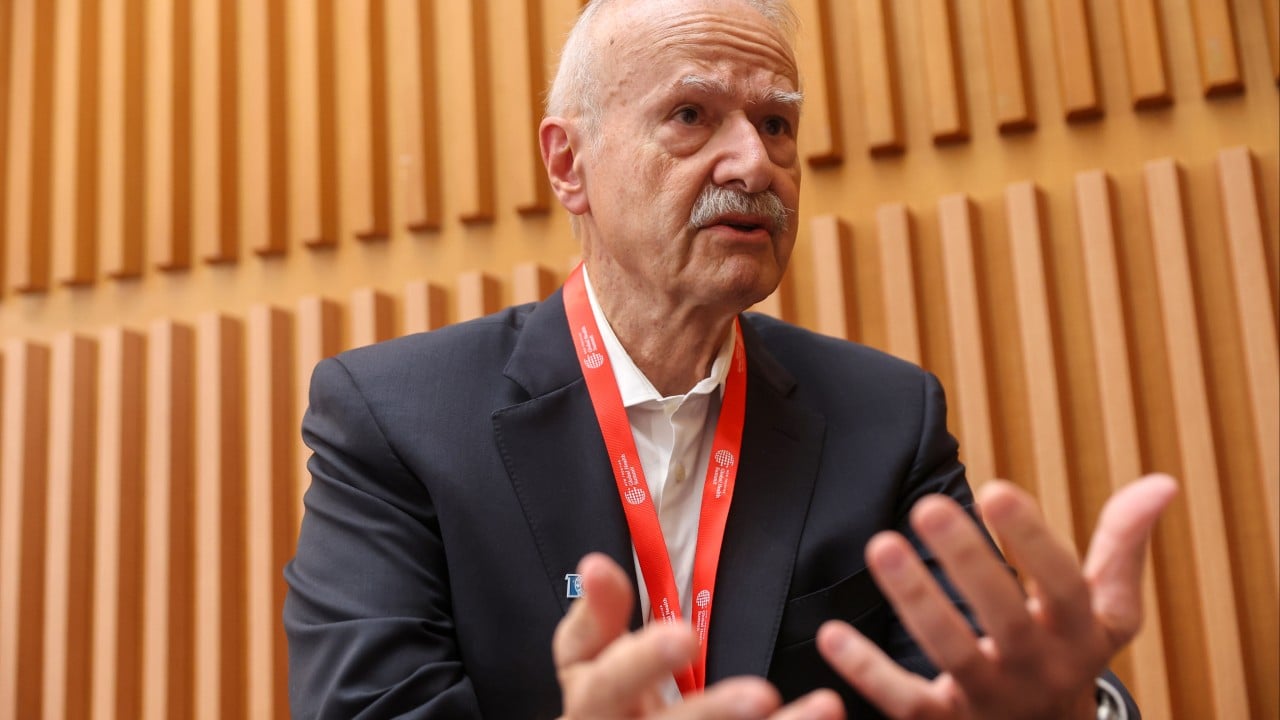
Human testing could take up to five years to ramp up, but AI approaches will yield results in time, Karoly Nikolich says Gene-editing therapies for the nervous system may need at least another round of studies before they are safe enough to enter human trials, according to one of the world’s most influential figures in the commercialisation of brain science. “The techniques are reasonably well established for animal experiments, but they really haven’t been as mature for human studies,” said Karoly Nikolich, an adjunct professor at Stanford University School of Medicine, in an exclusive interview with the South China Morning Post. He added that it could be up to five years for human studies to get going. The treatment for her rare genetic brain disorder – which caused delayed development in speech and motor skills – involved injecting viral particles into her spine to “rewrite the mutated gene in her neurons”, according to the report, co-published by the journal Science and the Retraction Watch blog. She died in March last year, days after the treatment triggered a severe immune reaction.