Markets — 747 insights
US billionaires reshuffle Chinese tech stock buys amid AI boom
Markets

US billionaires reshuffle Chinese tech stock buys amid AI boom

Investors David Tepper and Stanley Druckenmiller are among those switching up their bets, with Chinese giant Baidu gaining investment from both Some of Wall Street’s best-known billionaire investors are reshuffling their bets on Chinese technology stocks amid the artificial-intelligence boom, with Stanley Druckenmiller returning to the market for the first time in more than two years with a stake in Baidu. Druckenmiller, an investor known for his decades-long track record of outsized returns, bought 88,200 of Baidu’s American depositary receipts (ADRs) – US-traded securities that represent shares in the Chinese company – through his Duquesne Family Office firm in the second quarter, according to its latest 13F filing disclosed on Friday. The purchase, worth about US$10.1 million, marks the firm’s first investment in a US-listed Chinese company since it exited Alibaba Group Holding in the fourth quarter of 2023. Alibaba owns the South China Morning Post. Appaloosa Management, the US hedge fund founded by billionaire investor David Tepper, also increased its bet on Baidu, nearly doubling its stake in the Chinese search-engine operator to 1.3 million ADRs worth about US$148 million during the quarter, its latest 13F filing showed.


Even the rich in Hong Kong expect to work past retirement age, survey says
Markets

Even the rich in Hong Kong expect to work past retirement age, survey says

More people plan to work longer and ‘blend work, family responsibilities and personal aspirations’, Manulife Hong Kong CEO says Wealthy Hongkongers now invest in a way that shows they do not have a fixed retirement age in mind, as most of them expect to work longer than their parents, according to a survey. Some 58 per cent of high-net-worth individuals in Hong Kong expected to work beyond retirement age, with 32 per cent anticipating they would work five to 10 years past it and another 26 per cent assuming they would work as long as possible, said the survey, released by Manulife on Tuesday. Hong Kong has no official retirement age, although many companies require employees to retire at 60 or 65. “Hong Kong’s affluent are increasingly moving beyond the idea of a single, fixed retirement,” said Wilton Kee Wing-tao, CEO of Manulife Hong Kong and Macau. “Instead, many are preparing for multiphase lives that blend work, family responsibilities and personal aspirations.” Among the 11 Asia-Pacific markets surveyed, Hong Kong had a relatively high number of rich people who expected to work five to 10 years beyond normal retirement age.

China’s ‘national team’ ditches Kweichow Moutai in move that adds to valuation woes
Markets

China’s ‘national team’ ditches Kweichow Moutai in move that adds to valuation woes

Central Huijin Investment and China Securities Finance are not among Kweichow Moutai’s top 10 shareholders as of second quarter China’s state-backed funds are pulling out of Kweichow Moutai, adding to the woes of the nation’s biggest baijiu liquor maker whose stock has lost more than 40 per cent from its peak five years ago. By the end of the first quarter, Central Huijin held 10.4 million shares of Kweichow Moutai, making it the fifth largest shareholder, while China Securities Finance was the 10th largest with a holding of 4.03 million, first-quarter results showed. The two funds did not drop out of the top 10 because of stake increases by other investors, as a holding of 3.5 million shares was enough to rank among the company’s 10 biggest shareholders in the April-to-June period. Rather, the unwinding underscores how some of the nation’s most influential investors are turning cautious on Kweichow Moutai and the baijiu industry, once considered favourite bets for traders and emblematic of China’s consumer sector.

Banking on Connectivity in a Fragmented World
Markets

Banking on Connectivity in a Fragmented World

George Tung, CEO of UOB Hong Kong, is leveraging Hong Kong’s cross-border capital hub status by deepening ASEAN connectivity, integrating wholesale and private banking, and embedding disciplined risk management with AI-enabled oversight to navigate geopolitical shifts and rate volatility. George Tung, CEO of UOB Hong Kong, is positioning the bank to leverage the city’s role as a cross-border capital hub by strengthening ASEAN links, deepening client trust and embedding disciplined risk management. Capital rarely stands still in Asia. From mainland China to ASEAN and the Middle East, funds are constantly in motion, searching for stability, yield and trusted channels through which to flow. In an era shaped by geopolitical tension, trade realignment and volatile interest rates, the value of well-regulated financial hubs has only grown. For George Tung, CEO of UOB Hong Kong, the moment presents both opportunity and responsibility. “Whenever there is money, there is opportunity and business for the banks,” he says. Positioned between China and Southeast Asia – UOB’s home base – Hong Kong remains a “superconnector for capital”.

China’s pharma contractors rally as US supply chain pressures face industry resistance
Markets

China’s pharma contractors rally as US supply chain pressures face industry resistance

Genscript posted adjusted net profit of US$62.52 million for the six months ended June 30, a 203 per cent year-on-year surge China’s pharmaceutical contractors are showing financial resilience in the face of Washington’s push to curb reliance on Chinese supply chains. Genscript Biotech raised its full-year guidance for its life science service segment, covering DNA, RNA and peptide synthesis tools alongside protein production services, to a range of 25 to 30 per cent for the full year. The segment accounts for most of its revenue. AI-driven drug discovery orders were expected to “double in the second half” and would remain strong over the next several years, chief financial officer Phil Zhou said on an earnings call.

China’s first‑tier new home prices flat in July, ending 4‑month rebound
Markets

China’s first‑tier new home prices flat in July, ending 4‑month rebound

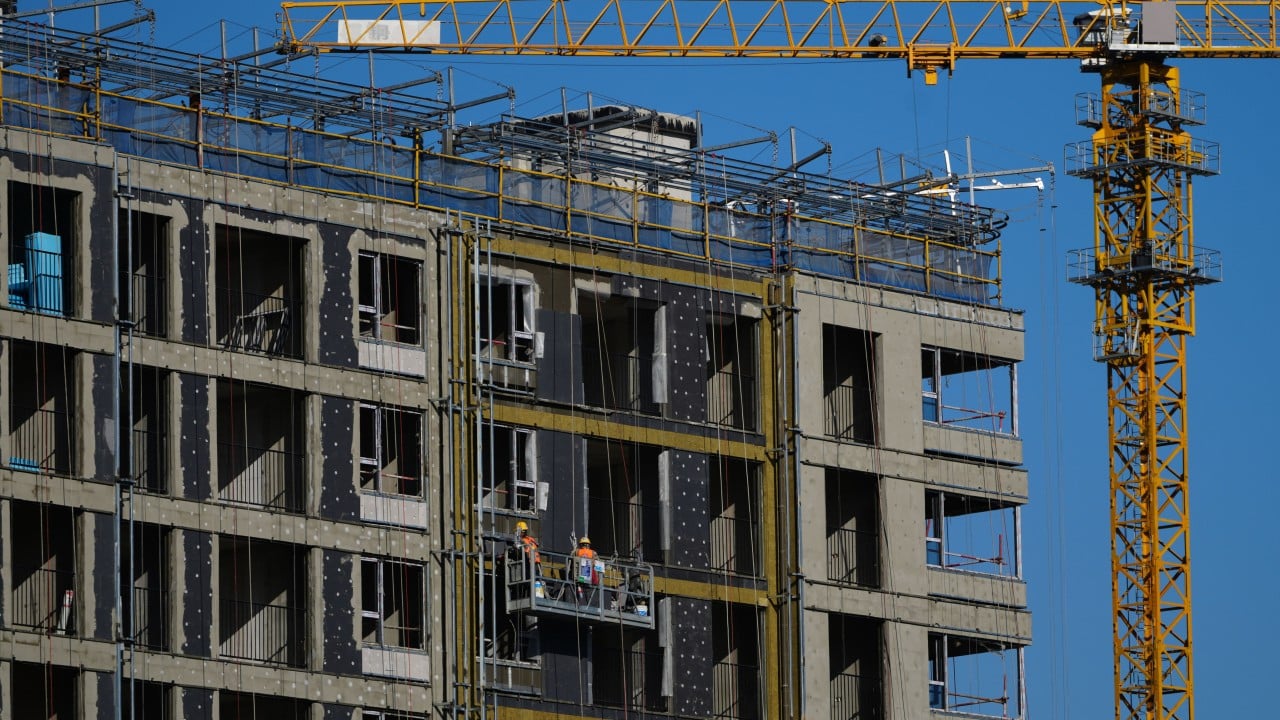
Top cities in China see flat readings last month, ending a streak of improvement in the struggling housing market New home prices in China’s four first-tier cities were flat on average in July from June, bringing an end to a four-month rebound, as analysts said month-on-month readings had weakened amid seasonal headwinds and an unusually rainy summer, further highlighting the urgency of stabilising the nation’s property market. Shanghai and Shenzhen saw new home prices edge up 0.2 per cent in July from June, while Guangzhou posted a 0.1 per cent gain, according to data released by the National Bureau of Statistics (NBS) on Monday. By contrast, they fell 0.3 per cent in Beijing. Among 70 large and medium-sized Chinese cities tracked nationwide, 23 saw month-on-month increases or flat performances in July, two more than in June, the bureau said. Meanwhile, new home prices in second-tier cities edged down 0.1 per cent month on month in July, reversing June’s flat reading, the NBS said.

Job losses mount in German automotive sector as challenge from China intensifies
Markets

Job losses mount in German automotive sector as challenge from China intensifies

Automotive industry shed more than 40,000 jobs – 5.8 per cent of its workforce – in first half of year, statistical office says Germany’s automotive industry shed 42,300 jobs in the year to the end of June, sending employment to its lowest level since 2005 as carmakers grappled with falling profits in China and mounting competition from Chinese brands in Europe, and industry groups warned that worse was yet to come. With job losses spreading across German industries, the automotive sector was hit the hardest, recording a 5.8 per cent decline in employment, according to data published by the country’s Federal Statistical Office on Friday. Manufacturing as a whole lost 2.7 per cent of its workforce, or 144,100 jobs, over the same period. The figures came as Volkswagen reported a roughly 30 per cent drop in first-half net profit and Mercedes-Benz cut its annual sales forecast, both citing weak demand in China as a factor. Volkswagen also flagged rising competition from Chinese rivals in Europe. “We had a very successful business model, focused on dominance in the premium sector, on intercontinental exports, on technological leadership,” said Thomas Puls, senior economist at the German Economic Institute.

China’s self-driving push gains ground in Europe as Momenta, Pony.ai expand
Markets

China’s self-driving push gains ground in Europe as Momenta, Pony.ai expand

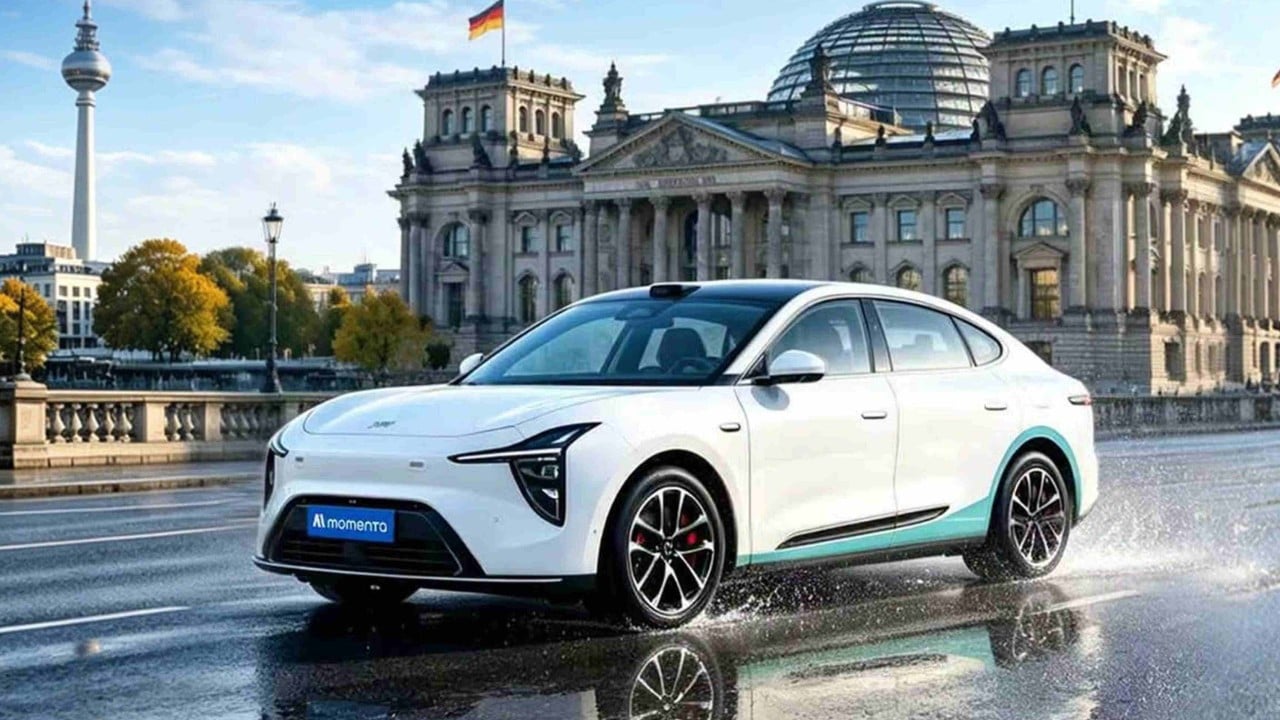
Deutsche Bank raises its price target for Momenta while Pony.ai widens partnership with Uber to accelerate autonomous-vehicle roll-out in European cities China’s autonomous-driving ambitions are winning growing recognition in Europe, with Deutsche Bank raising its target price for Momenta following a key regulatory breakthrough, and Pony.ai expanding its European robotaxi roll-out alongside Uber Technologies. In a research note released on Monday, Deutsche Bank analyst Bin Wang saw Momenta as the “No 1 independent autonomous-driving solution provider globally”, particularly in the urban “navigation on autopilot” (NOA) segment. “Momenta’s market share in the urban NOA segment is 64.5 per cent,” the analyst said. “It collaborates with nine of the top 10 global automakers and has strategic shareholders including Mercedes-Benz, Toyota and GM.” The German investment bank has initiated its coverage of the Chinese firm, which raised about HK$5.9 billion (US$752 million) in an initial public offering (IPO) in Hong Kong a month ago. It set a target price of HK$400 per share, compared with Monday’s closing price of HK$289.20, with a “Buy” rating.

Ingenic launches IPO, joining wave of mainland China chipmakers raising funds in Hong Kong
Markets

Ingenic launches IPO, joining wave of mainland China chipmakers raising funds in Hong Kong

The semiconductor maker is set to raise a share offering in the city and begin trading later this month Beijing-based Ingenic Semiconductor has launched a Hong Kong share offering to raise up to HK$3.22 billion (US$410.4 million), joining a growing wave of mainland Chinese chipmakers tapping the city’s capital markets to fund international expansion. The company, which has been listed on Shenzhen’s Nasdaq-like ChiNext board since 2011, is offering 31.29 million H shares priced at up to HK$102.80 each, according to a filing on Monday. The shares were expected to start trading on August 25 under the stock code 3223, with Guotai Junan International serving as the sole sponsor. Ingenic follows domestic peers, such as GigaDevice and Montage Technology, which have turned to Hong Kong to broaden their global investor base and support artificial intelligence- and automotive-driven growth. Ingenic planned to deploy half of the proceeds into innovation and product development across its core memory, computing and analogue chip lines. Around 25 per cent would be allocated for strategic investments and acquisitions, while 15 per cent would be earmarked to expand its sales network and to promote products.

Chinese hedge funds rotate out of Nvidia and US hyperscalers in evolving AI trade
Markets

Chinese hedge funds rotate out of Nvidia and US hyperscalers in evolving AI trade

China’s top-ranked hedge fund managers change tactics to ride the changing wave of overseas investments and market dynamics Perseverance Asset Management International slashed its position on Nvidia by 72 per cent last quarter, while significantly adding holdings of memory chipmaker Micron Technology and flash memory product maker SanDisk, according to its latest 13F filings to the US Securities and Exchange Commission. The reshuffles indicate that China’s top-ranked hedge fund managers were recalibrating portfolios to fit into the fast-changing narrative of the global AI trade, in which buying became more selective and stock picks turned more demanding, according to market observers. Investors were turning cautious about those hyperscalers splurging capital on AI infrastructure investments and chasing other winners standing to benefit from the buildout. “This is the point where the AI trade begins growing up,” said Stephen Innes, a managing partner at SPI Asset Management. “The first stage was about buying everything exposed to compute. The next stage will probably be about determining who actually earns economic rent from it. The market is already making that transition.”

Foreign capital is dipping its toes into China’s property sector. Is a rebound in store?
Markets

Foreign capital is dipping its toes into China’s property sector. Is a rebound in store?

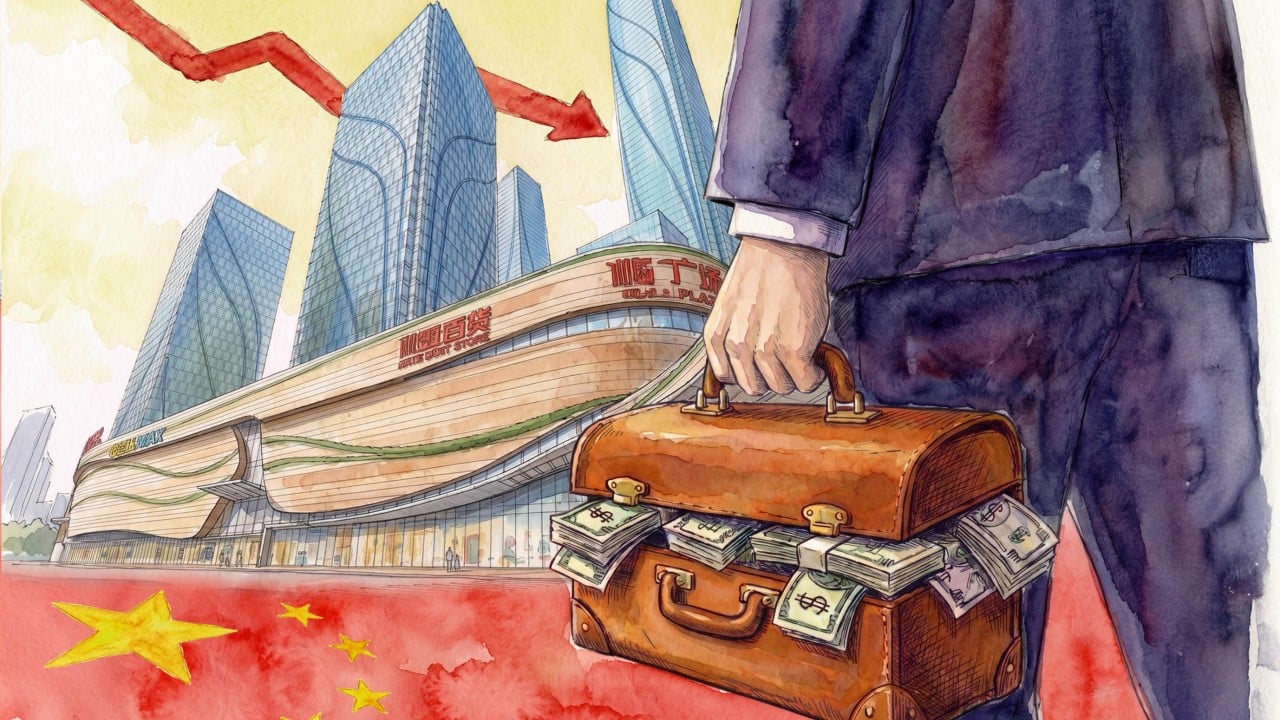
International capital is circling China’s property sector, testing valuations and chasing returns after years of strain Several Wanda Plazas – the sprawling mixed-use developments that were once the flagship assets of tycoon Wang Jianlin’s Dalian Wanda Group – received fresh capital injections from global asset manager PAG in June and July. The cash-strapped developer has been forced to offload properties to repay debt. Such deals, alongside a pickup in property transactions in mainland China’s top cities this year, have drawn growing market attention. “For global funds with a strategic allocation to China, the current market opens up opportunities to acquire high-quality assets at significantly more attractive pricing than in recent years,” said James Macdonald, head of research for China at property consultancy Savills. “Investors are not necessarily calling the bottom. Rather, many believe valuations have adjusted sufficiently to offer a more favourable risk-adjusted return profile.”

Hong Kong tax reforms for treasury centres will lure multinationals, mainland firms: PwC
Markets

Hong Kong tax reforms for treasury centres will lure multinationals, mainland firms: PwC

The proposed law will offer a five-year pre-approval for large companies with at least HK$100 million in annual revenue and six subsidiaries The Hong Kong government’s plan to increase tax incentives for corporate treasury centres will be attractive to multinational and mainland firms considering such activities in the city, according to tax experts at PwC. The government is soliciting public comment from late July until September 4 for a range of tax reforms, after which a bill will be submitted to the Legislative Council in the first half of 2027. “Enhancing the relevant tax incentives will not only help attract more enterprises to establish corporate treasury centres in Hong Kong, but it will also inject fresh momentum into Hong Kong’s financial ecosystem,” said Rex Ho, Asia-Pacific financial services tax leader at PwC Hong Kong, in a media briefing on Friday. A corporate treasury centre functions as an internal bank for a company with operations across multiple jurisdictions. It manages group cash flows, financing, investments and risk management, while helping centralise funding activities.