Markets — 699 insights
Hong Kong’s Insurance Authority aims to broaden regional clientele base: reappointed CEO
Markets

Hong Kong’s Insurance Authority aims to broaden regional clientele base: reappointed CEO

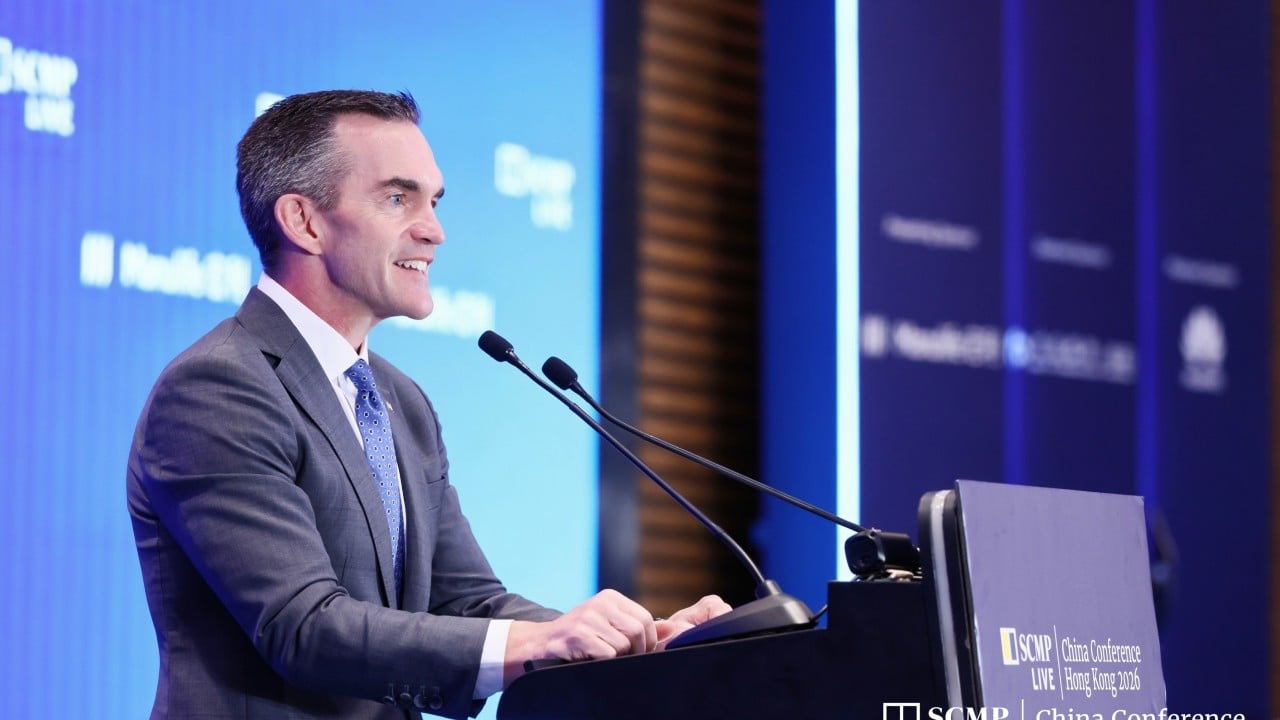
In response to changes to mainland tax enforcement, Clement Cheung says city has to make itself ‘less vulnerable and more competitive’ After Beijing’s plans to tighten up the taxation of overseas income sent shock waves through the city’s banks and insurers last week, Hong Kong’s insurance regulator will make broadening the sector’s clientele a priority, its reappointed chief said on Friday. “The priority of the Insurance Authority will be placed on broadening the regional clientele beyond Chinese mainland visitors, ensuring customers are treated fairly and can derive value from insurance products,” authority CEO Clement Cheung Wan-ching told the South China Morning Post after his reappointment. “We just have to make ourselves less vulnerable and more competitive.” He added that he would also like to see Hong Kong expand special types of insurance coverage and reinsurance to “support national development as well as the strategic transformation of Hong Kong”. The authority would also continue to review the medical insurance business and introduce measures to help Hong Kong insurers offer extended care services in the Greater Bay Area, he said.

Just like with the yen, America cannot save the AI bubble
Markets

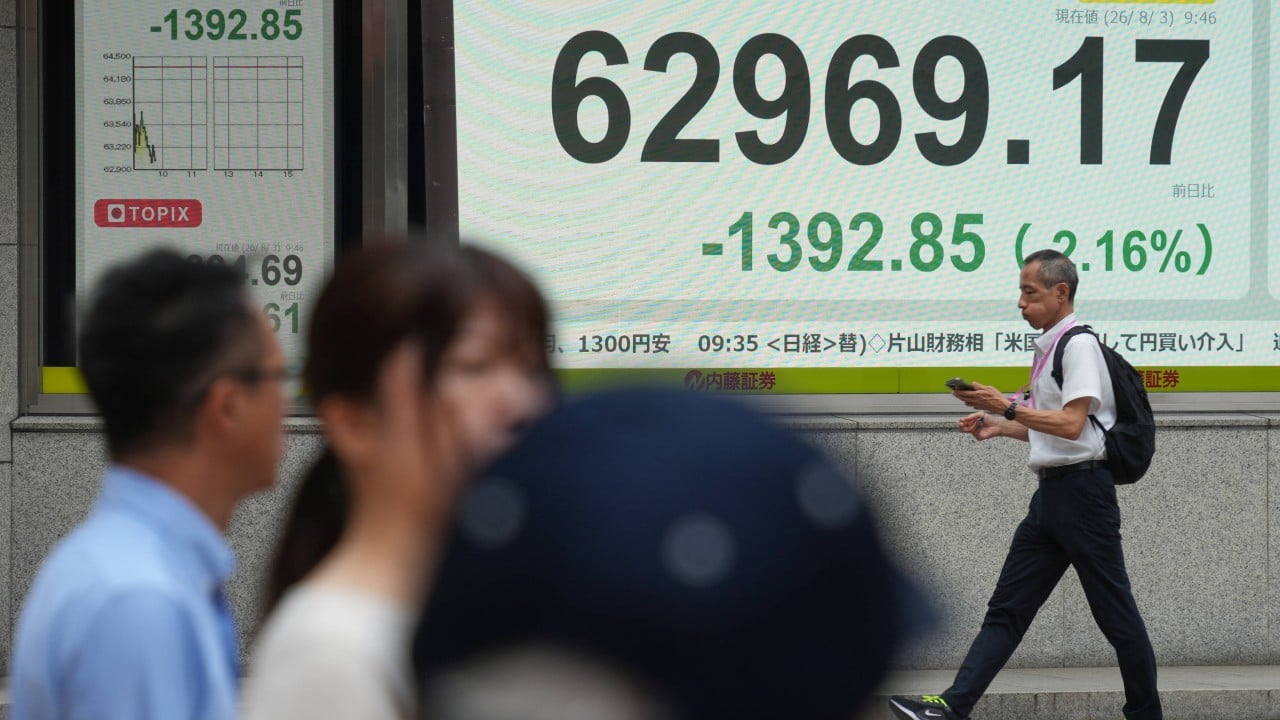
Just like with the yen, America cannot save the AI bubble

The Japanese currency and US tech stocks share the same fatal problem: momentum can’t survive broken fundamentals The car industry is Japan’s last economic stronghold but neither the government nor businesses are doing enough to pivot towards electric vehicles, and Chinese competition will only grow. Unless another export industry rises in replacement, the yen can only depreciate. Energy import costs are also rising rapidly in Japan, which depends on the Middle East for 90-95 per cent of its oil. The unexpectedly large trade deficit in June is an indicator of things to come.

From chasing robots to chasing profits: the numbers moving markets
Markets

From chasing robots to chasing profits: the numbers moving markets

Unitree Robotics, US inflation rates, gold prices, Hong Kong homes and CK Hutchison’s interim results were in the spotlight this week While Chinese investors faced down long odds for a stake in Unitree Robotics amid a broader frenzy for high-performing tech stocks, the market this week also focused on the implications of July’s US inflation rate, gold price trends and the interim results of CK Hutchison Holdings, one of the flagship companies owned by the family of Hong Kong billionaire Li Ka-shing. The slim subscription odds for the Hangzhou-based maker of embodied artificial intelligence hardware undercut those of other recent tech debuts, including the 0.47 per cent rate seen in July for memory chip maker ChangXin Memory Technologies. Unitree raised 6.1 billion yuan (US$904 million) at 150.80 yuan a share, giving the robotics pioneer a valuation of 60.99 billion yuan. Only 24 per cent of affluent residents with at least HK$1 million (US$127,449) in investible assets cited home ownership as a key life goal, placing it seventh.

EQT offers clients diversified wealth strategies to meet demand for new opportunities
Markets

EQT offers clients diversified wealth strategies to meet demand for new opportunities

Move by one of world’s leading private markets firms comes as Asia’s affluent investors look towards deep tech and climate science EQT – one of the world’s largest private markets firms – is taking steps to extend its expertise and institutional-quality access to a wider range of eligible clients. In practice, this means working with wealth industry partners to give sophisticated individual investors similar opportunities to those available to pension funds, endowments and sovereign wealth funds, with the same rules and standards applying for governance, underwriting, operational rigour and investment oversight. The move is a response to clear demand over the past years from high-net-worth individuals in Asia and elsewhere who want the chance to generate stable returns while also tapping into the exciting possibilities offered by advances in deep tech, biotechnology and climate science. For EQT – which has held the EQT Impact Challenge in Japan, South Korea, Singapore and Hong Kong – that demand is structural rather than cyclical as increasingly sophisticated private wealth investors are seeking access to private markets opportunities that were previously available mainly to institutions.

China’s Central Asia push
Markets

China’s Central Asia push

Shein is eyeing a valuation rivalling H&M. Will the market buy it?
Markets

Shein is eyeing a valuation rivalling H&M. Will the market buy it?

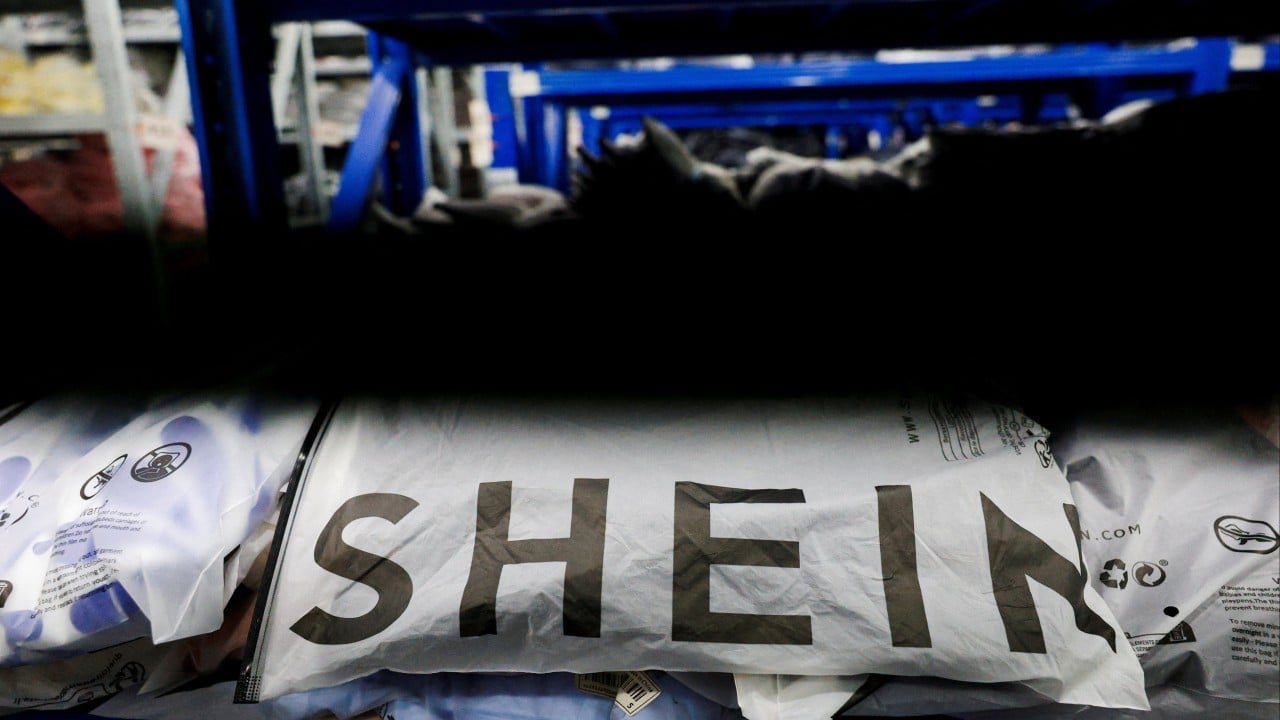
Ahead of its Hong Kong IPO, the e-commerce firm argues its supply chains and business model give it an edge over traditional rivals Online fast-fashion platform Shein believes it deserves a premium valuation comparable to that of industry peers like H&M, citing its business model and global customer base as major competitive advantages, according to internal documents provided to the South China Morning Post by investors. The documents cited analysts as saying the market should view the company as a global fashion giant similar to Zara’s parent company Inditex and H&M, rather than as a regional Chinese brand. They also stated that an unnamed investment bank in the United States had projected Shein’s net profit would grow at a compound annual rate of 12 per cent between financial years 2025 and 2028, beating Inditex’s 9 per cent and H&M’s 4 per cent. The company stressed its “LATR” model – in which it tests products in small batches before scaling up production through its smart supply chain – as a core advantage. The approach delivers inventory turnover cycles of just 36 days, which Shein said far outperformed Inditex’s 71 days and the 114 days taken by Uniqlo parent company Fast Retailing.

Hong Kong to list first Shanghai free-trade zone bond to defend yuan hub status
Markets

Hong Kong to list first Shanghai free-trade zone bond to defend yuan hub status

HKEX announces that a Shanghai Electric subsidiary is set to list a 1.5 billion yuan green bond later this month Hong Kong is set to welcome its first Shanghai free-trade zone offshore bond, using the landmark listing to defend its status as the world’s pre-eminent offshore yuan hub, amid mounting competition from its mainland rival. Hong Kong Exchanges and Clearing (HKEX) announced on Thursday that Shanghai Electric Global Capital – a financing arm of power and industrial equipment manufacturer Shanghai Electric – would list a 1.5 billion yuan (US$222.4 million) green free-trade zone bond on August 20. The three-year note, which carries a 1.8 per cent coupon, is set to be the first time a non-financial corporate free-trade zone offshore bond has been brought to market. Bank of China served as both global coordinator and lead manager, leveraging its Hong Kong and Shanghai units to arrange the cross-border issuance.

Chinese central bank’s 15th five-year plan
Markets

Chinese central bank’s 15th five-year plan

China’s central bank, the People’s Bank of China (PBOC), released its first stand-alone five-year plan in at least a decade on Monday, focusing on measures to build the country into a financial powerhouse. These are its key points: 1. Optimise monetary policy architecture Refine market-driven interest rate and exchange rate mechanisms Keep the yuan exchange rate basically stable Proactively mitigate financial risks in key sectors 2. Boost financial support for the real economy Target...

Insurance Will Propel Hong Kong’s AI Ambition
Markets

Insurance Will Propel Hong Kong’s AI Ambition

By Steve Finch, President and Chief Executive Officer, Manulife Asia [The content of this article has been produced by our advertising partner.] At the SCMP China Conference on July 7, Chief Executive John Lee identified AI as central to Hong Kong’s push to become a global international innovation and technology centre. In his keynote speech, Lee spoke about the city’s first five-year development plan, a blueprint aligned with China’s National 15th Five-Year Plan that will shape Hong Kong’s growth and deepen its integration with the mainland. The direction is clear. Hong Kong is well positioned to strengthen its role as an international financial centre while advancing AI adoption. Significant public investment is already under way, from new AI research infrastructure to funding schemes designed to attract talent and accelerate adoption. Hong Kong is one of the world’s most rapidly ageing societies. At the same time, the Greater Bay Area is becoming more integrated, with people and capital moving more freely across borders. For insurers, responding to these shifts will require faster decision-making, better use of data and more personalised services.

Hong Kong to reappoint insurance regulator as industry braces for tough period: sources
Markets

Hong Kong to reappoint insurance regulator as industry braces for tough period: sources

Insurance Authority CEO Clement Cheung will be reappointed on Friday to help industry navigate Beijing’s tax clampdown, sources said Hong Kong’s government is set to reappoint Clement Cheung Wan-ching as CEO of the Insurance Authority for another three-year term on Friday, according to two sources with knowledge of the matter. Cheung, who has led the insurance regulator since 2018, is due to complete his current three-year term on Friday. Life insurance sales in Hong Kong soared 51 per cent in the first quarter to another record high, with the industry writing HK$141.1 billion (US$18 billion) in new life policies in the three months under review, Insurance Authority data showed.

Chinese banks test repo-linked corporate loans to make pricing more market-based
Markets

Chinese banks test repo-linked corporate loans to make pricing more market-based

Lenders are shifting loan benchmarks to short-term market rates, which analysts say heightens volatility and tests risk controls The shift to the overnight or seven-day depository-institutions repo rate (DR) from the monthly-released loan prime rate (LPR) follows Beijing’s June decision to change lending benchmarks to better reflect market conditions. Bank of China, one of the nation’s biggest state-controlled lenders, has rolled out DR-linked corporate loans in Shanghai, Ningbo in eastern China’s Zhejiang province, and in the southeastern Fujian, northern Hebei and central Henan provinces, according to the lender’s online statement. “DR makes loan pricing more sensitive to short-term funding conditions, but it also exposes banks to greater interest-rate volatility,” said Zhang Lin, chief macro researcher at Beijing-headquartered Far East Credit Research Institute.

JD.com’s second-quarter profit climbs 15% as food-delivery losses narrow
Markets

JD.com’s second-quarter profit climbs 15% as food-delivery losses narrow

Net revenue dips, but still beats analysts’ estimate, as e-commerce giant contends with weak demand and fierce competition Net revenue for the three months ended June 30 fell 2.9 per cent to 346.4 billion yuan, according to a company announcement on Thursday, but still surpassed the 342.1 billion yuan consensus estimate from analysts polled by Bloomberg. “Despite near-term revenue headwinds, [JD.com] achieved strong bottom line growth, marking a clear inflection in our profit trajectory,” said Sandy Xu Ran, CEO of JD.com. Xu added that the second-quarter performance was driven by the core retail division’s profitability and narrowing losses in new initiatives such as food delivery – strengths the company planned to build on through the second half of the year. The results underscore the impact of JD.com’s expansion into food delivery, logistics and international operations over the past year – investments that weighed on overall profitability.