Markets — 695 insights
I gave Tencent’s WeChat AI agent control for 24 hours: where it excelled – and stumbled
Markets

I gave Tencent’s WeChat AI agent control for 24 hours: where it excelled – and stumbled

The new Xiaowei agent promises hands-free control across WeChat’s vast digital ecosystem. I set out to see whether it delivers In its latest earnings results announced on Wednesday, Tencent highlighted Xiaowei for the first time, touting its focus on user privacy and inference efficiency. After gaining early access to the trial feature, which appears as two green dots at the top of the main screen, I spent nearly 24 hours letting Xiaowei run my digital routine. The goal: see how much of my daily life an AI agent could actually take over. The verdict? It’s a fascinating, promising glimpse into the future of apps – and an occasional exercise in frustration. Unlike standard chatbots that simply answer questions, an AI agent is designed to take action. Where a chatbot recommends a hotpot restaurant, Xiaowei is meant to make a reservation and place your order, too.


Buy or rent? Hong Kong homebuyers face an age-old housing dilemma
Markets

Buy or rent? Hong Kong homebuyers face an age-old housing dilemma

Rising residential rents and the looming shadow of interest rate increases have the city’s homebuyers trying to balance out the risks The Centa-City Rental Index (CRI), which reflects the rent of second-hand private residential properties in Hong Kong, has been rising throughout the year to 136.34 in July from 129.57 at the beginning of 2026, a cumulative increase of 5.2 per cent. “The rent is too high,” said Jimmy Lau, who works in the IT industry and spent HK$4.68 million at the end of last month to buy a 474 sq ft low-floor unit in Telford Gardens in Kowloon Bay, with a price tag of HK$9,873 per square foot. “I had been renting before, and the lease was about to expire towards the end of the first half of the year,” he said. “But now that rents have risen a lot, my family suggested that it would be better to simply buy a home.” He paid 30 per cent of the down payment to purchase his current unit and borrowed a 70 per cent mortgage with a 30-year repayment period. The current monthly mortgage payment is about HK$14,300.

Home province of DeepSeek, Moonshot founders seeks to retain, attract future AI talent
Markets

Home province of DeepSeek, Moonshot founders seeks to retain, attract future AI talent

After losing top founders in artificial intelligence to rivals, the southern province aims to better attract, retain talent After graduating from Tsinghua and earning his PhD at Carnegie Mellon University, Yang returned to China and later launched Moonshot in Beijing in 2023. Meanwhile, Liang attended Zhejiang University in eastern China, spent time in Chengdu in the southwestern province of Sichuan and ultimately settled in Hangzhou in Zhejiang to launch both his quantitative hedge fund and DeepSeek. Industry metrics underscore Guangdong’s uphill battle. According to the Hurun Research Institute, Beijing leads the country with 19 of China’s top 50 AI companies, followed by Shanghai with 14. Guangzhou and Shenzhen, the two biggest cities in Guangdong, hold 10 combined. Meanwhile, second-tier cities are rapidly gaining ground. Hangzhou is thriving with star firms like DeepSeek and Unitree Robotics, while Hefei and Wuhan are building momentum around semiconductor giants ChangXin Memory Technologies and Yangtze Memory Technologies Corp. A core factor behind this disparity is the concentration of academic talent, according to experts.

China’s ‘Cat’, Honor of Kings great, reflects on his gaming career amid the esports explosion
Markets

China’s ‘Cat’, Honor of Kings great, reflects on his gaming career amid the esports explosion

Chen Zhengzheng, legendary competitor in Tencent’s top mobile game, looks back and forward as he transitions to coaching at 28 Hundreds of rapt fans sat in a convention hall in Paris recently, erupting into cheers after a competitor darted across the scene and left two opponents dead within seconds. The victims were only pixels on a screen, as the setting was a friendly esports match where leading players exhibited their skills in Honor of Kings, Tencent Holdings’ top mobile game. One of the most recognised stars on that stage was Chen Zhengzheng, better known as Cat. Holder of five international championships, the 28-year-old made his career by moving two thumbs on a phone screen. “When I first turned pro, I had no idea this many people would be watching,” Chen told the South China Morning Post earlier this month. “Later I found out that, wow, there are actually people buying tickets and travelling to different cities just to watch me play. That’s pretty amazing.” The distance between Chen’s hometown in the eastern province of Shandong and the French capital, site of this year’s Esports World Cup (EWC), provides one measuring stick for the stunning growth that competitive gaming has seen in China over the past decade.

Reclusive Chinese billionaire strikes US$33m deal to take over Shanghai hotel
Markets

Reclusive Chinese billionaire strikes US$33m deal to take over Shanghai hotel

Online gaming billionaire Chen Tianqiao acquired the Mia Hotel at a discount, as investors bet on a recovery in China’s prime real estate market China’s first online gaming billionaire has acquired the Mia Hotel in downtown Shanghai in a deal worth about 220 million yuan (US$32.6 million), becoming one of the latest investors to bet on a turnaround in the country’s long-suffering property market. Chen Tianqiao – a reclusive entrepreneur known for his global investment portfolio – bought the hotel from Singapore-headquartered investment firm GLP at a below-market price, with analysts describing the deal as a “sound investment”. Shanda Group – the investment firm Chen initially founded as an online games company – obtained full ownership of the hotel on March 18, buying the stake owned by a subsidiary of GLP, according to Qichacha, a Chinese corporate database. “This can be viewed as a sound investment,” said Yan Yuejin, vice-president of Shanghai-based property consultancy E-house China Research and Development Institute.

Reduce your exposure to US assets before they lose value, Pictet warns investors
Markets

Reduce your exposure to US assets before they lose value, Pictet warns investors

Swiss private bank says structurally high inflation and government deficits will erode value of US dollar and Treasuries over the next decade Investors should further reduce their exposure to US Treasuries and the US dollar over the next decade, as tech-driven inflation and high government deficits are likely to erode their value, a leading private bank has warned. Shifting to commodities and equities in emerging markets offers a greater chance of long-term returns, with global inflation expected to remain volatile and sticky for years due to factors including the artificial intelligence (AI) boom and decarbonisation efforts, according to Pictet Wealth Management. “Structurally higher inflation and government deficits reinforce the clear takeaway: buy assets that governments cannot print,” said Kelvin Tay, the Swiss bank’s chief investment officer in Asia. Frederik Ducrozet, Pictet’s head of strategy and macroeconomic research, added that some clients had wanted to discuss currency hedging recently – a topic that had rarely been raised in the past. “The summary is that you should be protected against something that the government should print and in a way devalue,” Ducrozet said during a briefing on Friday.

Zhipu launches flagship model GLM-5.3 as China seeks Mythos-level edge in cyber defence
Markets

Zhipu launches flagship model GLM-5.3 as China seeks Mythos-level edge in cyber defence

Company says GLM-5.3 outperformed leading US systems in cybersecurity tests, beating Anthropic’s Mythos 5 and OpenAI’s GPT-5.6 on CyberGym Chinese artificial intelligence firm Zhipu, also known as Z.ai, has unveiled its flagship GLM-5.3 model, saying it beat Anthropic’s frontier Mythos 5 model in a key cybersecurity test, as China races to counter Western advances in AI defence. Beijing-based Zhipu said GLM-5.3 achieved a success rate of 84.5 per cent on CyberGym, a benchmark that measures whether models can identify and validate security flaws from source code. That was above Anthropic’s Mythos at 83.8 per cent and OpenAI’s GPT-5.6 Sol at 83.6 per cent, according to Zhipu. However, the Chinese model did not match those foreign systems on ExploitBench, which gauges how far AI models climb the exploitation ladder. Its score of 54.4 per cent trailed Mythos’ 78 per cent and GPT-5.6 Sol’s 76.5 per cent. Zhipu said it had tested the model with security teams in China against real-world codebases, identifying 2,436 vulnerabilities across 269 projects after expert review. Of those, 1,097 were rated medium to high severity, according to the company.

Gene-editing therapies not yet ready for human trials, Stanford expert says
Markets

Gene-editing therapies not yet ready for human trials, Stanford expert says

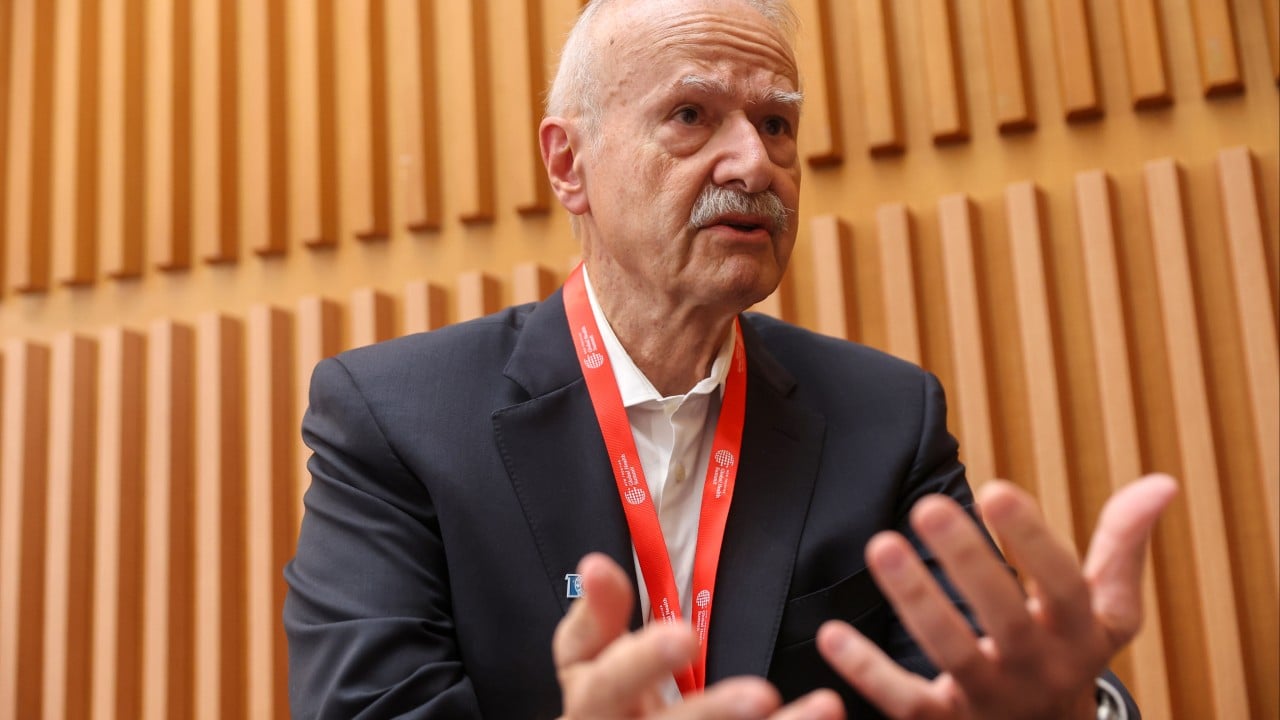
Human testing could take up to five years to ramp up, but AI approaches will yield results in time, Karoly Nikolich says Gene-editing therapies for the nervous system may need at least another round of studies before they are safe enough to enter human trials, according to one of the world’s most influential figures in the commercialisation of brain science. “The techniques are reasonably well established for animal experiments, but they really haven’t been as mature for human studies,” said Karoly Nikolich, an adjunct professor at Stanford University School of Medicine, in an exclusive interview with the South China Morning Post. He added that it could be up to five years for human studies to get going. The treatment for her rare genetic brain disorder – which caused delayed development in speech and motor skills – involved injecting viral particles into her spine to “rewrite the mutated gene in her neurons”, according to the report, co-published by the journal Science and the Retraction Watch blog. She died in March last year, days after the treatment triggered a severe immune reaction.

Hong Kong’s Insurance Authority aims to broaden regional clientele base: reappointed CEO
Markets

Hong Kong’s Insurance Authority aims to broaden regional clientele base: reappointed CEO

In response to changes to mainland tax enforcement, Clement Cheung says city has to make itself ‘less vulnerable and more competitive’ After Beijing’s plans to tighten up the taxation of overseas income sent shock waves through the city’s banks and insurers last week, Hong Kong’s insurance regulator will make broadening the sector’s clientele a priority, its reappointed chief said on Friday. “The priority of the Insurance Authority will be placed on broadening the regional clientele beyond Chinese mainland visitors, ensuring customers are treated fairly and can derive value from insurance products,” authority CEO Clement Cheung Wan-ching told the South China Morning Post after his reappointment. “We just have to make ourselves less vulnerable and more competitive.” He added that he would also like to see Hong Kong expand special types of insurance coverage and reinsurance to “support national development as well as the strategic transformation of Hong Kong”. The authority would also continue to review the medical insurance business and introduce measures to help Hong Kong insurers offer extended care services in the Greater Bay Area, he said.

Just like with the yen, America cannot save the AI bubble
Markets

Just like with the yen, America cannot save the AI bubble

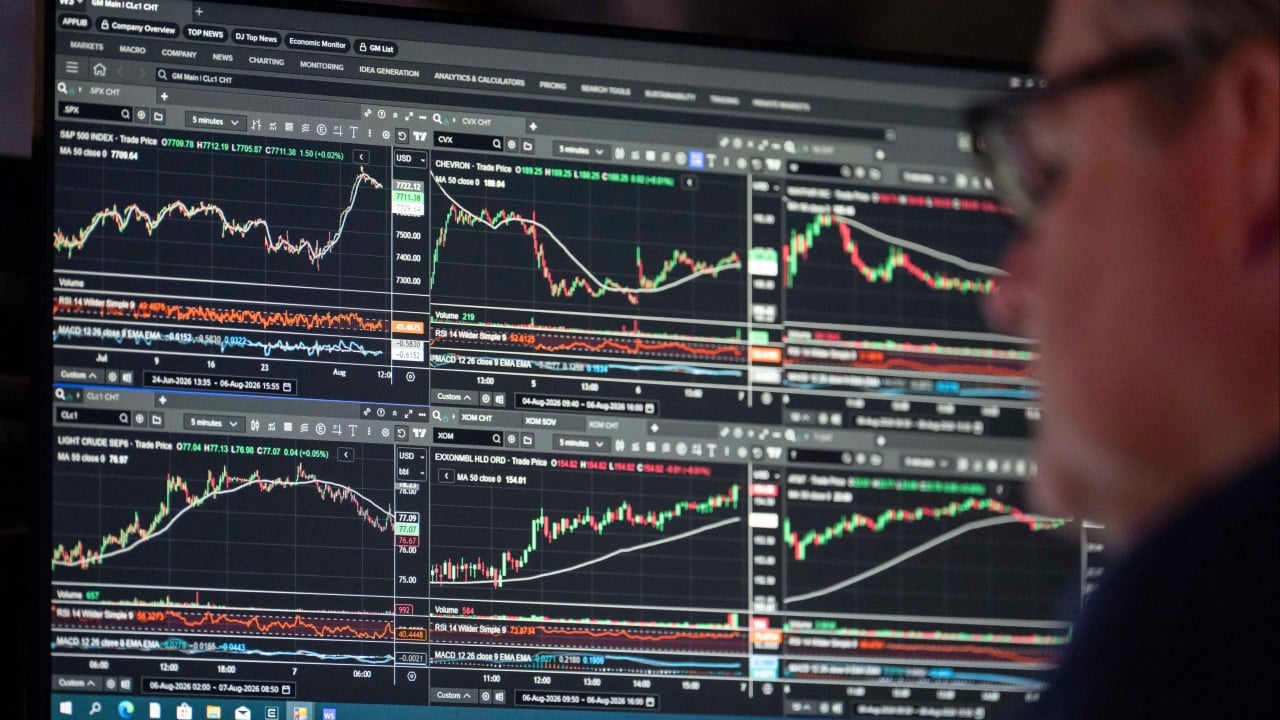
The Japanese currency and US tech stocks share the same fatal problem: momentum can’t survive broken fundamentals The car industry is Japan’s last economic stronghold but neither the government nor businesses are doing enough to pivot towards electric vehicles, and Chinese competition will only grow. Unless another export industry rises in replacement, the yen can only depreciate. Energy import costs are also rising rapidly in Japan, which depends on the Middle East for 90-95 per cent of its oil. The unexpectedly large trade deficit in June is an indicator of things to come.

From chasing robots to chasing profits: the numbers moving markets
Markets

From chasing robots to chasing profits: the numbers moving markets

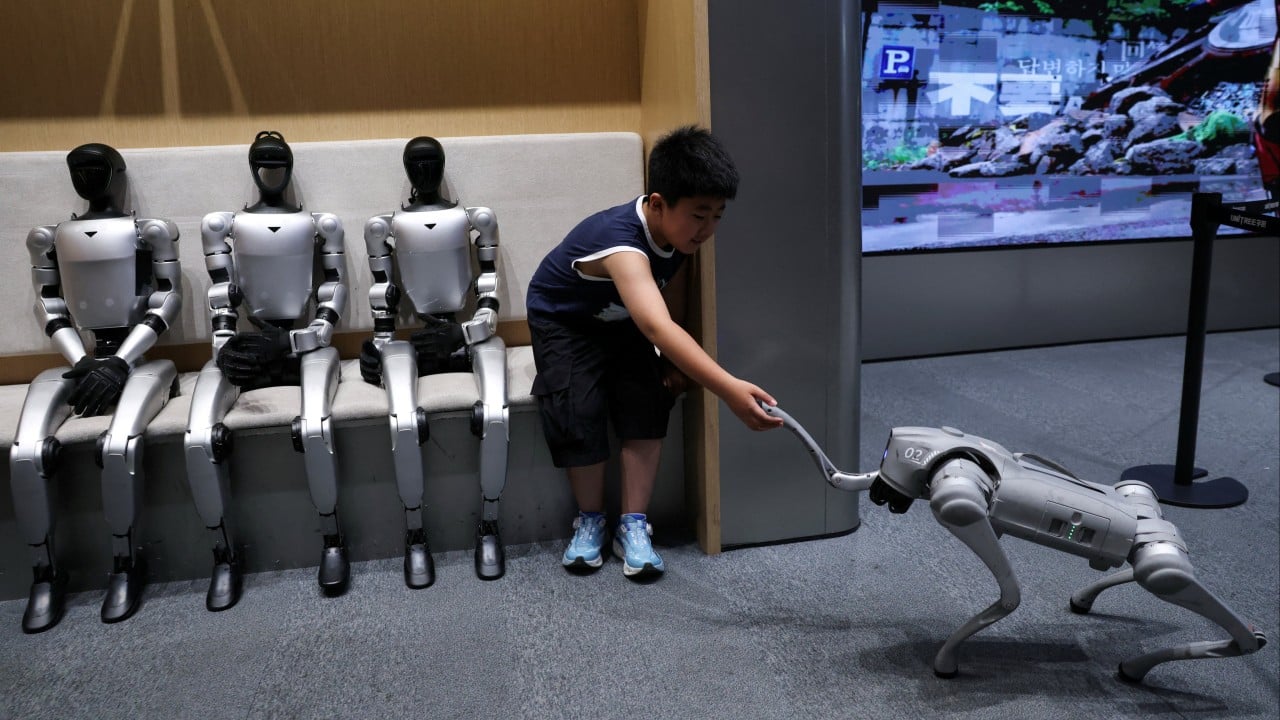
Unitree Robotics, US inflation rates, gold prices, Hong Kong homes and CK Hutchison’s interim results were in the spotlight this week While Chinese investors faced down long odds for a stake in Unitree Robotics amid a broader frenzy for high-performing tech stocks, the market this week also focused on the implications of July’s US inflation rate, gold price trends and the interim results of CK Hutchison Holdings, one of the flagship companies owned by the family of Hong Kong billionaire Li Ka-shing. The slim subscription odds for the Hangzhou-based maker of embodied artificial intelligence hardware undercut those of other recent tech debuts, including the 0.47 per cent rate seen in July for memory chip maker ChangXin Memory Technologies. Unitree raised 6.1 billion yuan (US$904 million) at 150.80 yuan a share, giving the robotics pioneer a valuation of 60.99 billion yuan. Only 24 per cent of affluent residents with at least HK$1 million (US$127,449) in investible assets cited home ownership as a key life goal, placing it seventh.

EQT offers clients diversified wealth strategies to meet demand for new opportunities
Markets

EQT offers clients diversified wealth strategies to meet demand for new opportunities

Move by one of world’s leading private markets firms comes as Asia’s affluent investors look towards deep tech and climate science EQT – one of the world’s largest private markets firms – is taking steps to extend its expertise and institutional-quality access to a wider range of eligible clients. In practice, this means working with wealth industry partners to give sophisticated individual investors similar opportunities to those available to pension funds, endowments and sovereign wealth funds, with the same rules and standards applying for governance, underwriting, operational rigour and investment oversight. The move is a response to clear demand over the past years from high-net-worth individuals in Asia and elsewhere who want the chance to generate stable returns while also tapping into the exciting possibilities offered by advances in deep tech, biotechnology and climate science. For EQT – which has held the EQT Impact Challenge in Japan, South Korea, Singapore and Hong Kong – that demand is structural rather than cyclical as increasingly sophisticated private wealth investors are seeking access to private markets opportunities that were previously available mainly to institutions.