Markets — 318 insights
After hooking China on coffee, Starbucks ramps up consumer strategy
Markets

After hooking China on coffee, Starbucks ramps up consumer strategy

Now that the chain has Chinese consumers hooked on coffee, it is attempting to become part of local consumer culture, analysts say When Anne walked into a Starbucks branch in Seattle more than a decade ago, she knew exactly what to expect: a latte, a comfortable chair and a place to work. “It’s not really just a coffee shop any more,” she said. “Sometimes it feels more like a community centre.” “China’s coffee market has evolved from an education stage to a competition stage. Consumers today are no longer choosing Starbucks simply because it is a foreign coffee brand,” said Jason Yu, the general manager of CTR Market Research. “They are looking for brands that reflect their lifestyles, interests and cultural identity. That is pushing multinational brands to localise more deeply than before,” he added.

Caution on land tenders key to Hong Kong’s property recovery: analysts
Markets

Caution on land tenders key to Hong Kong’s property recovery: analysts

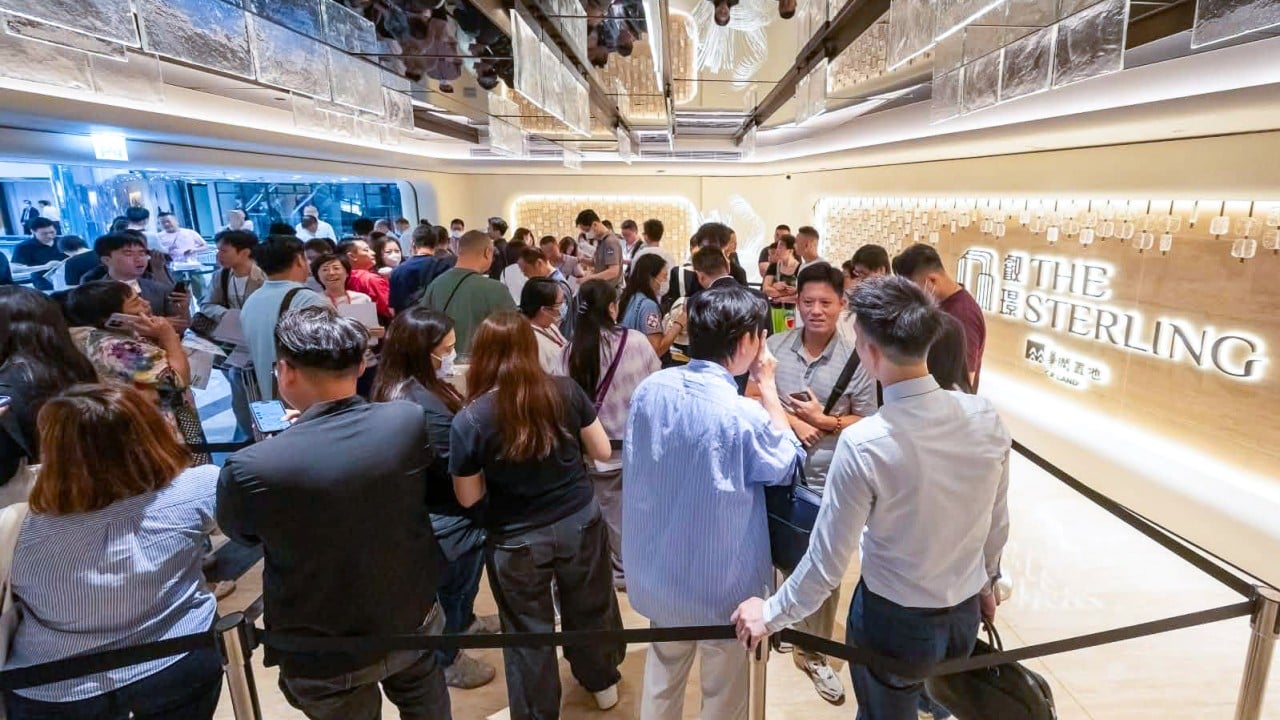
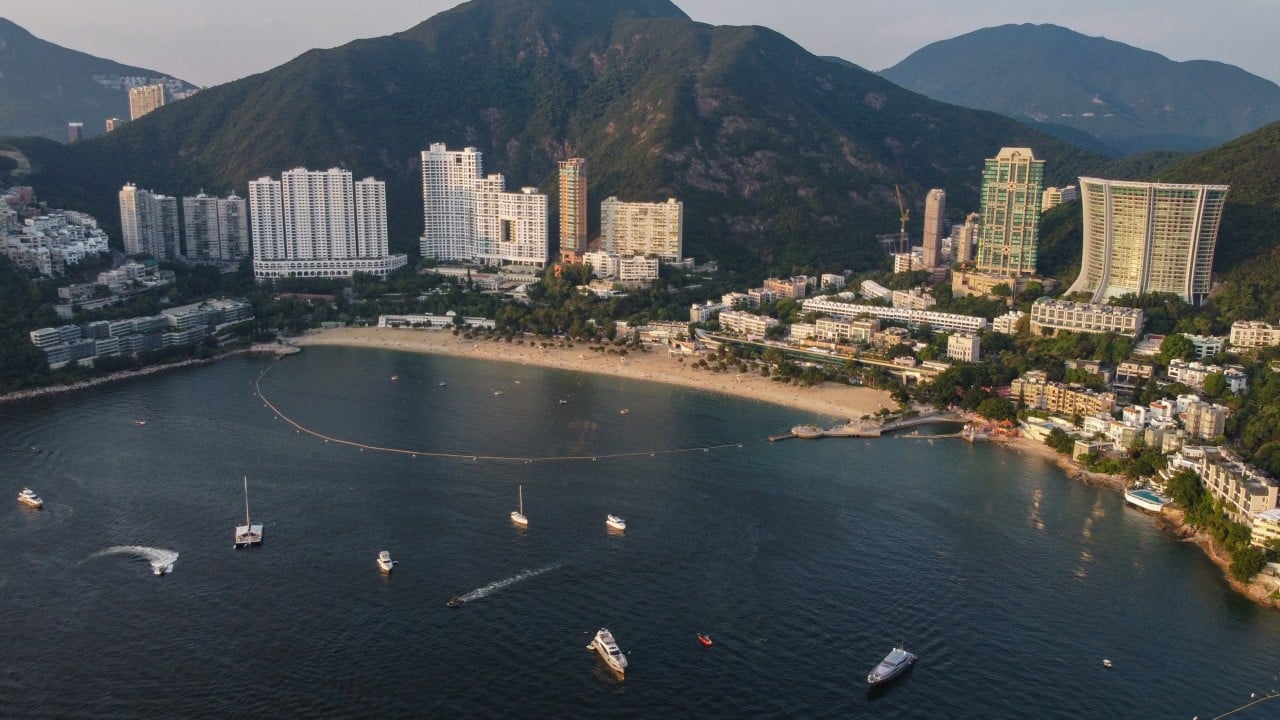
As Hong Kong pushes forward Northern Metropolis project, analysts say land supply should remain ‘measured’ to support property market recovery As Hong Kong moves forward with its huge new Northern Metropolis development zone, analysts argue the government should take a cautious approach to land sales to help sustain the recent recovery in the residential property market. The parcels of land – which comprise three residential sites and three enterprise and technology park sites – measure about 11 hectares and can supply more than 3,100 flats and about 280,000 square metres (3 million square feet) of industrial floor space. “Recent land tenders already reflected a more realistic supply pace, alongside improving bidding momentum, which helps support price stability and market confidence,” said Eric Tsang, acting head of valuation and advisory services at Colliers Hong Kong.

Why Citigroup CEO Jane Fraser left the US-China summit feeling optimistic
Markets

Why Citigroup CEO Jane Fraser left the US-China summit feeling optimistic

Leader of US$239 billion company discusses yuan internationalisation, Hong Kong’s fintech leadership, and US-China economic stabilisation For Citigroup’s global CEO Jane Fraser, her time in Beijing last month meant far more than a handshake and photograph with heads of state. Fraser was among 17 business leaders US President Donald Trump invited to China as part of his three-day visit to Beijing from May 13 to May 15. Standing on the western steps outside the Great Hall of the People – an enormous building near Tiananmen Square that is the primary venue for China’s legislative activities, diplomatic receptions and state banquets – Fraser took in one of China’s most iconic panoramas. Amid analyst caution about the structural tensions shaping the China-US relationship, some saw the meeting as little more than good optics. To Fraser, such takes missed the big picture, one that was broader and more encouraging. “Two important powers in the world were engaging with each other, making sure there was an understanding of each other’s points of view,” she said in an exclusive interview.

China’s Momenta IPO oversubscribed 414 times as Hong Kong listings pack calendar
Markets

China’s Momenta IPO oversubscribed 414 times as Hong Kong listings pack calendar

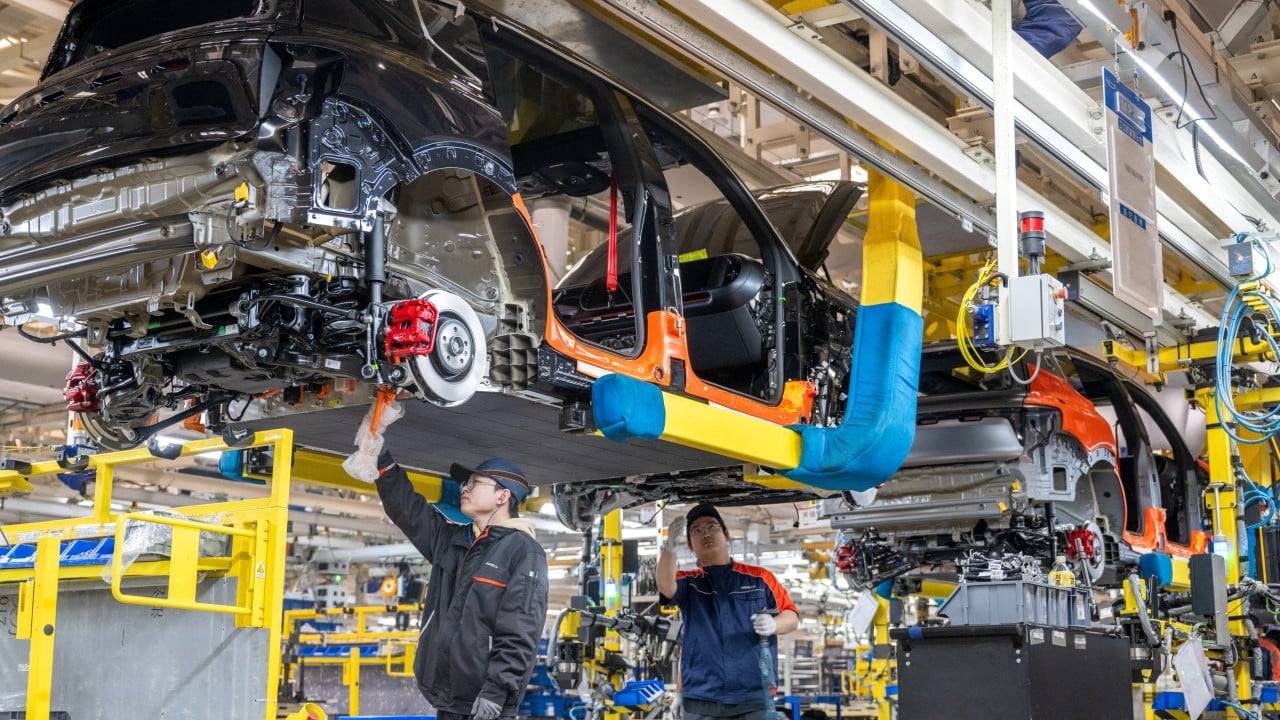
Autonomous-driving firm draws nearly 210,000 orders for a US$751 million offering, making it year’s second ‘red-chip’ firm to get Beijing’s permission to list via offshore structure Chinese autonomous-driving start-up Momenta drew massive subscription numbers for its HK$5.89 billion (US$751 million) initial public offering in Hong Kong, even as it competed against five other issuers launching their IPOs at the same time. The Suzhou-based company’s bookbuilding closed on Friday. Preliminary figures showed that it attracted nearly 210,000 subscription applications, with the public offering subscribed 414 times, according to people familiar with the matter. Sponsored by China International Capital Corporation and Deutsche Bank, Momenta is offering nearly 19.94 million shares at HK$295.60 (US$38) each, ahead of Wednesday’s scheduled trading debut. The start-up successfully tested market sentiment amid a broader sales slump in China’s automotive industry.

China’s BYD surpasses Tesla to regain lead in global EV race
Markets

China’s BYD surpasses Tesla to regain lead in global EV race

China’s electric vehicle (EV) king BYD has leapfrogged once more over Tesla to become the world’s largest battery-powered car manufacturer, spurred by its surging overseas shipments, despite posting an 8.2 per cent year-on-year drop in deliveries. As BYD gained the upper hand in the race against the US carmaker, it is the latest signal that China’s prowess in EVs is increasingly recognised by consumers around the globe amid an energy crisis. Tesla said in a statement on Thursday that it had...

Chinese tea chain ordered to pay Louis Vuitton US$1.5 million for trademark infringement
Markets

Chinese tea chain ordered to pay Louis Vuitton US$1.5 million for trademark infringement

Shenzhen-based Molly Tea says it plans to appeal against the ruling The Suzhou Intermediate People’s Court, in eastern China’s Jiangsu province, ruled this week that Shenzhen-based Molly Tea must pay the amount within 10 days. Molly Tea has updated the logo displayed on its mini-program, switching from a black-and-white version to a coloured one. The court also ordered Molly Tea to post a statement on the homepages of its six official accounts – on its website and mini-program and on the Weibo, WeChat, RedNote and Douyin social media platforms – to eliminate the negative impact of the infringement.

Hong Kong broadens yuan’s financial footprint as currency gains global appeal
Markets

Hong Kong broadens yuan’s financial footprint as currency gains global appeal

Hong Kong Monetary Authority widens scope of yuan finance to solidify status as ‘offshore laboratory’ for currency amid de-dollarisiation trend Beijing’s promotion of the global use of the yuan, also known as the renminbi (RMB), creates an opportunity for Hong Kong to reinforce its status as what Law referred to as an “offshore laboratory and distribution hub” for the currency. The HKMA’s plan could “lower friction for using yuan in trade and investment and make it easier for foreign and mainland clients to hold and deploy yuan,” said Law, who is also an adviser to China’s Ministry of Finance. In Thursday’s release, the HKMA vowed to have “an enabling ecosystem that is characterised by easy access, stickiness and growth opportunities for international capital”. Yue added that banks should provide “holistic, tailored” yuan products and services, leverage their global networks and seize the opportunities created by mainland Chinese companies expanding abroad.

Astana Finance Days 2026 – Delivering Impact: Capital in Action
Markets

Astana Finance Days 2026 – Delivering Impact: Capital in Action

Astana Finance Days (AFD), the flagship financial forum of the Astana International Financial Centre, has evolved into one of the region’s leading platform for capital markets, investment dialogue and cross-border cooperation. [The content of this article has been produced by our advertising partner.] Astana Finance Days (AFD), the flagship financial forum of the Astana International Financial Centre, has evolved into one of the region’s leading platform for capital markets, investment dialogue and cross-border cooperation. What began as an industry-focused event has grown into a strategic meeting point for investors, regulators, policymakers, financial institutions and businesses from Central Asia, the Caucasus and the broader Eurasian region. The 9th edition of AFD will take place on 9-10 September, 2026, in Astana under the theme Delivering Impact: Capital in Action. The programme will focus on how capital is mobilized, structured and deployed across regional and global markets – from capital markets and investment products to regulation, innovation, real-economy financing and cross-border cooperation.

Global investors remain in China’s orbit despite SpaceX blockbuster IPO: HKEX chief
Markets

Global investors remain in China’s orbit despite SpaceX blockbuster IPO: HKEX chief

Global investors remain committed to Chinese technology companies despite concerns that SpaceX’s record-breaking initial public offering (IPO) could drain liquidity from Asian markets, according to Hong Kong Exchanges and Clearing (HKEX) CEO Bonnie Chan Yiting. Speaking at the Lujiazui Forum in Shanghai on Wednesday, Chan said international institutions continued to view Asia – and China in particular – as a priority investment destination even after Elon Musk’s commercial space company raised a...

Can Pop Mart sustain the Labubu juggernaut as China sales cool?
Markets

Can Pop Mart sustain the Labubu juggernaut as China sales cool?

Analysts warn of rising sales pressure as China demand tapers off, even as Pop Mart bets on new launches and overseas growth Chinese toymaker Pop Mart recorded its first year-on-year decline in domestic online sales since 2024 in May, raising fresh questions about the sustainability of demand for its intellectual property (IP) portfolio, including its blockbuster Labubu character. Domestic online sales fell 5 per cent from a year earlier and 14 per cent from April, according to Moojing e-commerce data tracking transactions across Tmall, Taobao and Douyin. Sales were also 25 per cent below the average monthly level recorded in the second half of last year. “This confirms our earlier prediction of mounting sales pressure in Pop Mart’s domestic market from the second quarter of 2026 onwards,” said Deutsche Bank analyst Sammi Xu. “We believe this pressure could intensify in the second half of the year, driven by a higher comparison base and waning IP popularity in China.” Shares of the Hong Kong-listed company fell 2 per cent to close at HK$171.30 on Wednesday.

HKMA keeps rate unchanged as new Fed chair holds steady, but a rise is expected this year
Markets

HKMA keeps rate unchanged as new Fed chair holds steady, but a rise is expected this year

The HKMA left its base rate at 4 per cent after the Fed’s first meeting under Kevin Warsh ended with no policy change The HKMA kept its base rate at 4 per cent. Hours earlier, the Federal Reserve maintained its target range at 3.5 per cent to 3.75 per cent following the fourth meeting of the Federal Open Market Committee (FOMC) this year. The US S&P 500 Index fell 1.2 per cent overnight after the Fed’s quarterly projections indicated nine Fed officials now anticipate an increase in interest rates by the end of this year, while an updated policy statement removed language that had been used to flag the likelihood of a further interest rate cut this year. “I can’t give you any forward guidance about what we’re going to do ⁠next. The good news is we’ll be meeting in six weeks,” Warsh said at a press conference after chairing his first FOMC meeting. He succeeded Jerome Powell, who remains a member of the Federal Reserve Board of Governors. He did not give any forward guidance like his predecessor. The decision was widely expected. According to CME FedWatch data on Wednesday, 99.6 per cent of traders anticipated no change, while the remainder expected an increase of 0.25 percentage points.

China moves to end ‘irrational’ food-delivery subsidies and the sector’s price wars
Markets

China moves to end ‘irrational’ food-delivery subsidies and the sector’s price wars

Regulators target predatory pricing and merchant coercion, with new rules requiring that tech giants disclose subsidy data and not disrupt the market Chinese authorities introduced draft regulations on Wednesday to crack down on the misuse of subsidies by food-delivery platforms, as Beijing seeks to rein in the sector’s intense competition. The proposed rules, open for public comment until July 17, identify several practices that would be banned, including using subsidies to disrupt the market and selling goods at a loss, according to a statement from the State Administration for Market Regulation (SAMR). “China’s food-delivery platforms exhibit problems such as using capital advantages to seize market share, coercing businesses on their platforms into taking part in subsidies, and triggering irrational competition in the industry,” the regulator said, adding that such cutthroat competition was hurting businesses, delivery drivers and consumers. The draft regulations will ban platforms from using “long-term, large-scale” subsidies to hamper market competition or disrupt market order, according to the SAMR.