Innovation — 261 insights
How China Works author on the data economy, robots and AI
Innovation

How China Works author on the data economy, robots and AI

Lan Xiaohuan is a professor of economics at China Europe International Business School. His book, How China Works: An Introduction to China’s State-led Economic Development, has sold millions of copies in China and has been translated into multiple languages. Here, he discusses the economic realities behind China’s record trade surplus, the case for a stronger social safety net, and how public data infrastructure shapes the artificial intelligence race with the United States. SCMP Plus readers...
China’s robot revolution may not arrive in the way you expect
Innovation

China’s robot revolution may not arrive in the way you expect

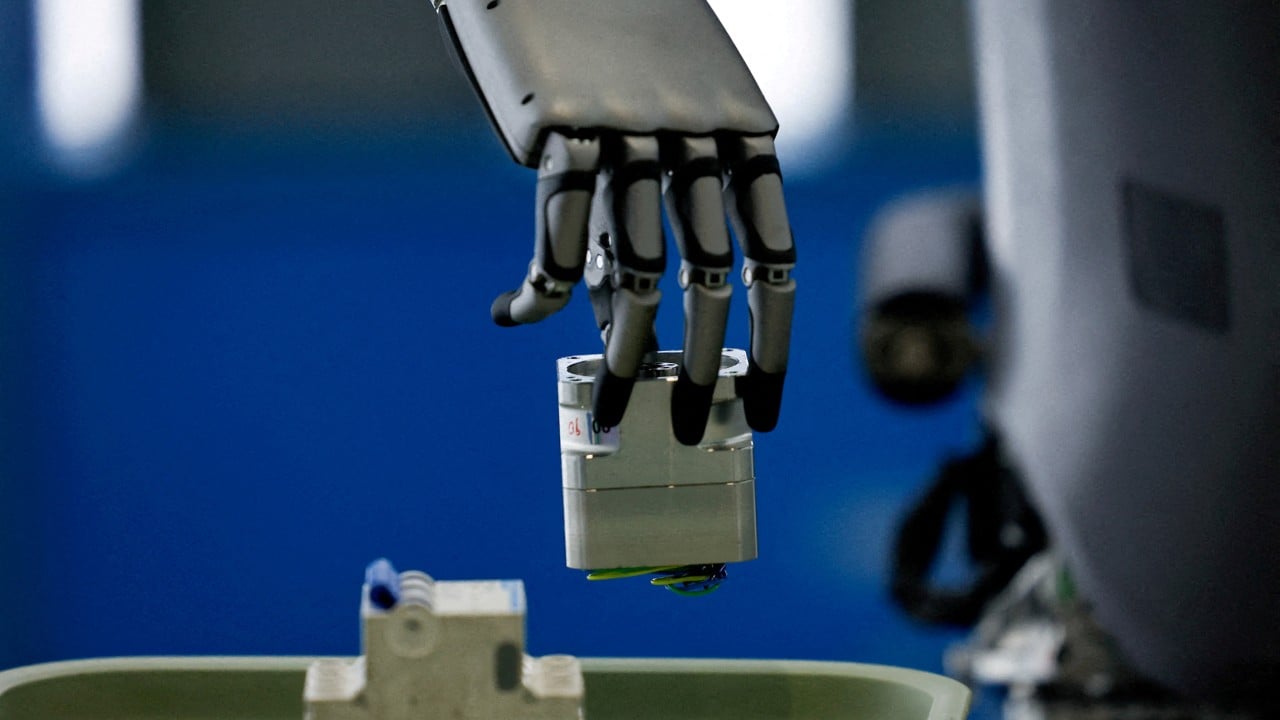
Electric vehicles generally travel abroad as finished, branded products. Chinese robotics could spread differently Unitree is a leading example of the first approach. Its strength in locomotion and motion control has helped push Chinese humanoids forward at remarkable speed, yet founder Wang Xingxing has also been candid about the software challenge ahead. He said last month that a breakthrough allowing robots to handle unfamiliar environments and tasks could come in two or three years in an optimistic case, or it could take as long as a decade.

Are Z.ai and MiniMax heading down opposite financial paths months after Hong Kong IPOs?
Innovation

Are Z.ai and MiniMax heading down opposite financial paths months after Hong Kong IPOs?

Post-earnings results suggest an emerging divide as differing revenue growth and model capabilities may shape their market standing, analysts say When two of China’s leading AI pioneers went public in Hong Kong in January, they pitched investors on a shared promise: capturing the explosive demand for artificial intelligence at home and abroad. Their first-half earnings, however, suggest that narrative could be splintering into two different trajectories. Z.ai on Monday reported a nearly 400 per cent year-on-year surge in first-half revenue to 953.9 million yuan (US$142 million). By contrast, MiniMax’s revenue grew 283 per cent to US$116.6 million, according to its financial report released last week. The commercial gap appeared even wider when measured by annual recurring revenue (ARR), a metric used by software companies to project 12-month revenue based on current monthly subscriptions. Z.ai co-founder and chief scientist Tang Jie said during an earnings call that the company’s ARR had reached US$1.6 billion based on August’s results. MiniMax founder and CEO Yan Junjie, meanwhile, said its ARR had reached US$800 million in August – half that of Z.ai.

ByteDance to expand massive AI data centre cluster in Inner Mongolia, source says
Innovation

ByteDance to expand massive AI data centre cluster in Inner Mongolia, source says

As Chinese tech giants ramp up artificial intelligence spending, TikTok’s parent company is set to expand data centres in Ulanqab TikTok parent ByteDance is seeking to expand its computing capacity by building out more data centres in north China’s Inner Mongolia autonomous region in the next two years, according to a person familiar with the matter, another example of a Chinese tech giant stepping up its investments in artificial intelligence infrastructure. The company had been in preliminary talks with local data centre vendors to add between five and six gigawatts’ worth of compute in the city of Ulanqab, the person said, who asked not to be identified due to the private nature of the information. Typically, the cost of upfront investment for a one-gigawatt AI data centre was around 160 billion yuan (US$23.8 billion), according to a research note published by Soochow Securities last month, meaning that ByteDance’s new facility – at between five and six gigawatts – could cost roughly 800 billion to 960 billion yuan.

Chinese chipmaker Enflame 4,073 times oversubscribed in Shanghai IPO amid Nvidia race
Innovation

Chinese chipmaker Enflame 4,073 times oversubscribed in Shanghai IPO amid Nvidia race

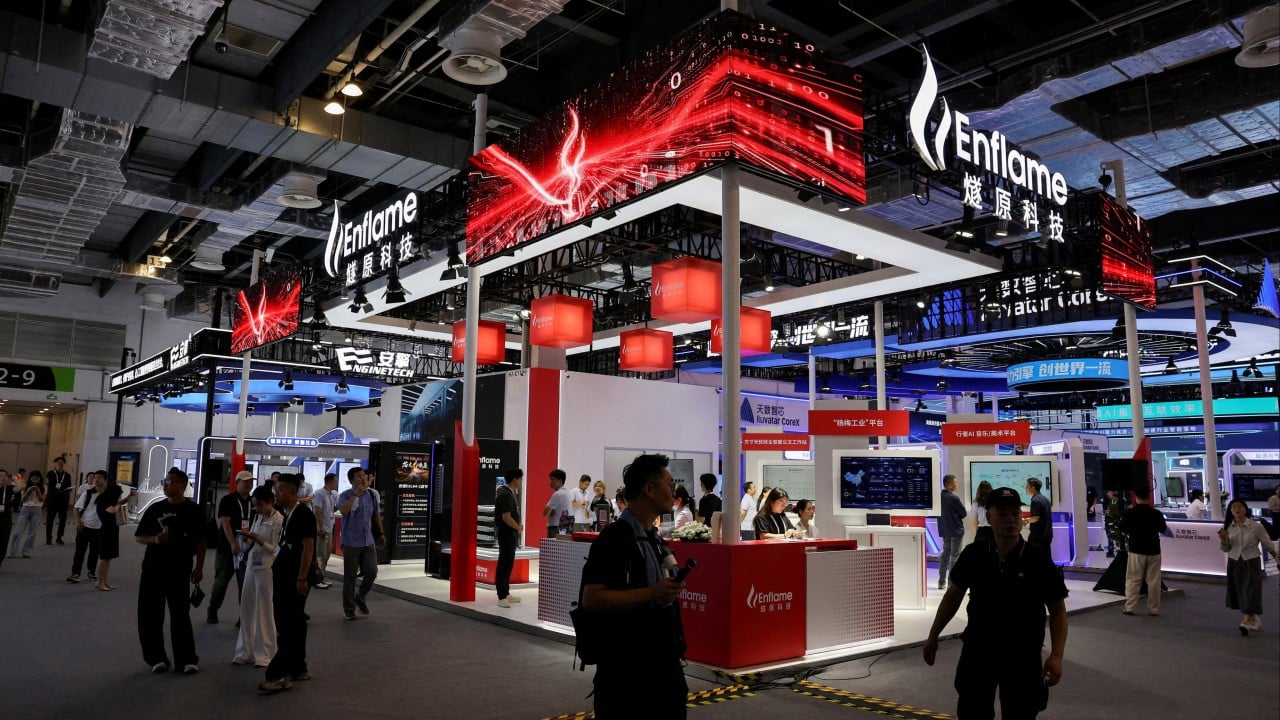
The last of China’s ‘four little dragons’ to go public has drawn millions of retail investors, despite odds of securing an allocation at less than 0.03 per cent Enflame Technology, one of China’s leading AI chipmakers, has sparked a retail frenzy for its 6.12 billion yuan (US$910.9 million) initial public offering in Shanghai’s tech-heavy Star Market, underscoring growing investor appetite for home-grown alternatives to Nvidia. The Tencent Holdings-backed chipmaker saw the retail portion of its IPO oversubscribed by 4,073 times, with about 7 million online investors alone submitting orders for 42.1 billion shares, according to its filing to the exchange on Wednesday. The high demand amounted to an allocation rate for individual investors of just 0.025 per cent. That made it one of the lowest in mainland China this year alongside robotics maker Unitree Robotics, whose rate was just 0.018 per cent, or about one successful lot for every 5,500 applications. Priced at 142.18 yuan (US$21.16) per share, Enflame expects to raise 6.12 billion yuan to fund the research, development and production of its fifth- and sixth-generation AI chips.

Frontier AI at a cost: what Anthropic’s Fable 5.1 means for the US-China model race
Innovation

Frontier AI at a cost: what Anthropic’s Fable 5.1 means for the US-China model race

The US firm’s new models claim top position on leading benchmarks, though steep operating costs against Chinese rivals highlight a growing divide Anthropic’s powerful new Claude Fable 5.1 model has widened its lead in performance benchmarks over Chinese rivals, even as budget-friendly open-weight models from China continue to gain commercial traction globally. Fable 5.1 also claimed first place on San Francisco-based Vals AI’s index for handling complex, real-world tasks across sectors such as finance, coding and law. Anthropic’s earlier Opus 5 and Fable 5 models trailed closely in second and third place. The benchmark results prompted industry insiders to weigh in on whether leading labs in the United States were pulling further ahead of Chinese competitors. Yuchen Jin, a technical staff member at US artificial intelligence platform Databricks, called Fable 5.1’s capability leap “insane”, while some observers noted its performance shattered claims that Chinese open-weight developers had already closed the gap with the frontier. However, a stark price gap points to a sharp divide between the two countries’ approaches.

China’s No 2 foundry Hua Hong invests US$2b in new fab to meet surging AI-driven demand
Innovation

China’s No 2 foundry Hua Hong invests US$2b in new fab to meet surging AI-driven demand

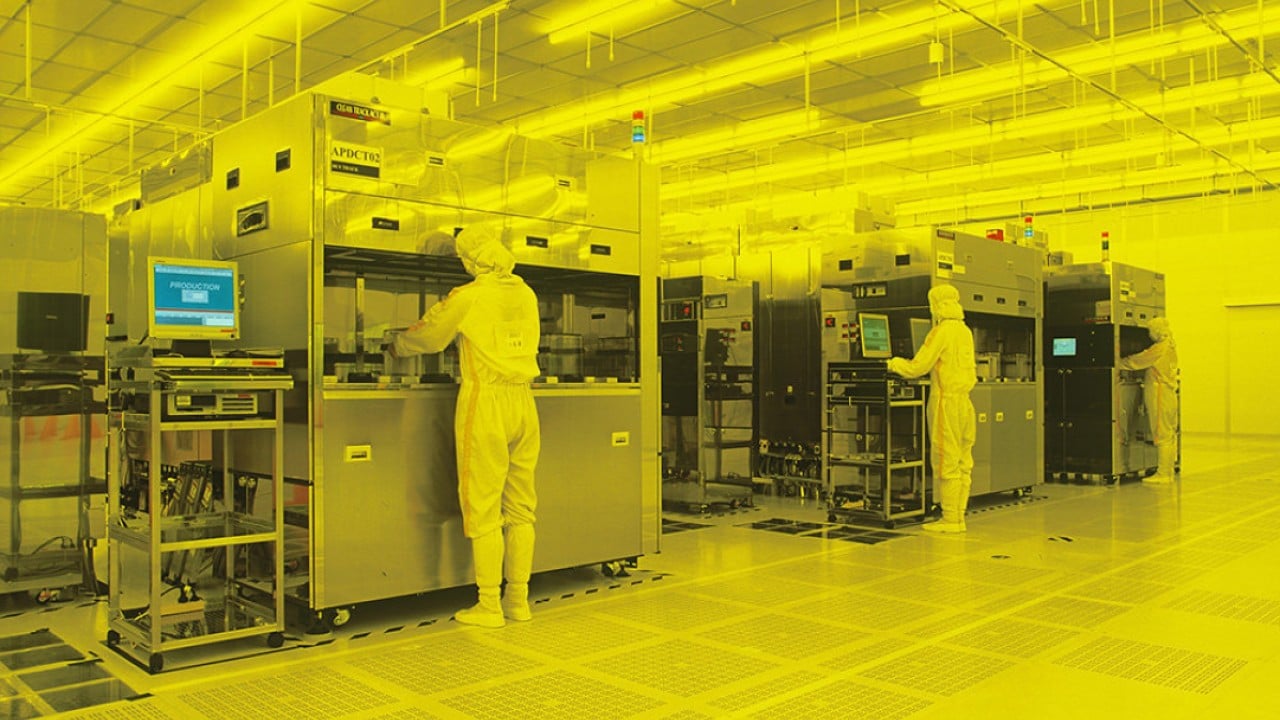
Project is via a joint venture with state-backed investment entities under China’s National Integrated Circuit Industry Investment Fund Major Chinese foundry Hua Hong Grace Semiconductor is pouring US$2 billion into a massive capacity expansion in the Chinese chip production hub of Wuxi, racing to meet skyrocketing domestic demand for AI infrastructure and bypass US tech curbs. The fresh capital would fund the construction of a new 12-inch speciality line, its third facility in the eastern Chinese city, the country’s second-largest contract chipmaker said in a filing to the Hong Kong stock exchange on Tuesday. Once fully operational, the expansion will add 55,000 wafers to its monthly production capacity, representing a roughly 30 per cent increase to its total capacity in Wuxi. Hua Hong and its Shanghai subsidiary are providing US$1 billion and US$1.1 billion respectively, holding a controlling 51 per cent stake, while the state entities will provide the remaining capital. The state capital injection will bring total funding for the project to US$4.2 billion, according to the filing.

China’s AMEC unveils 6 chip-making machines in a day, boosting self-reliance ambitions
Innovation

China’s AMEC unveils 6 chip-making machines in a day, boosting self-reliance ambitions

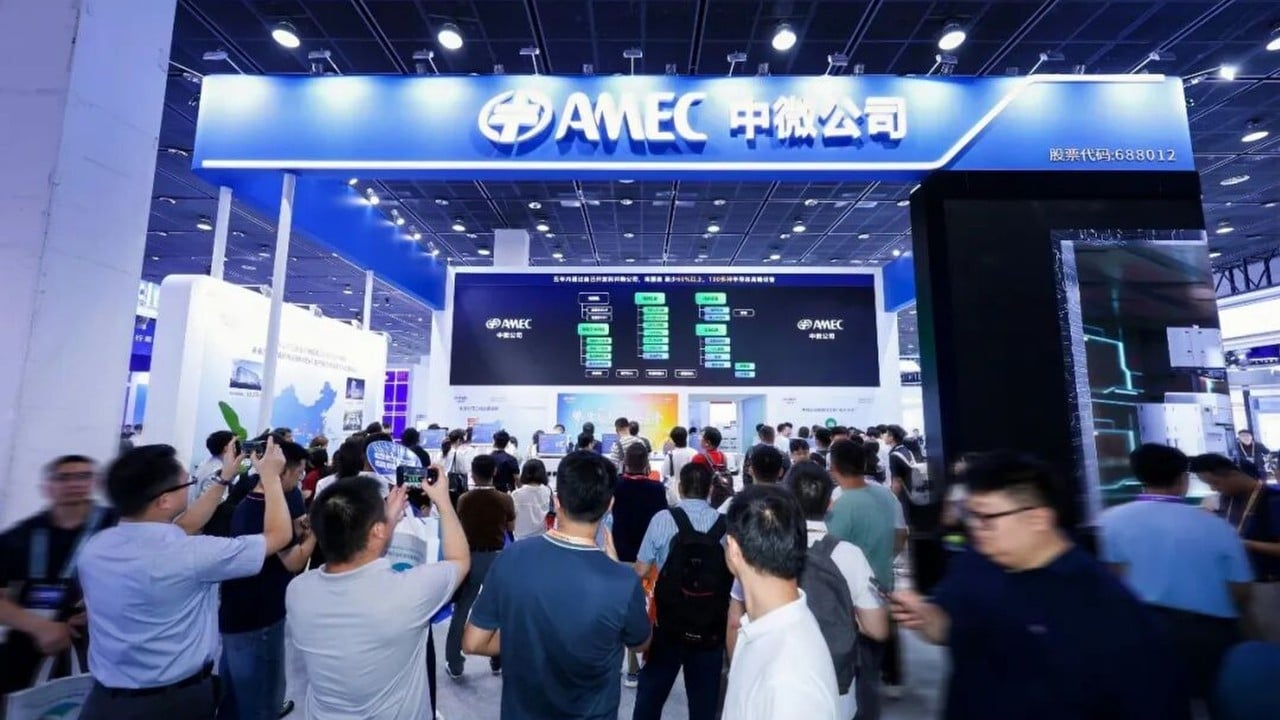
A rapid R&D drive is powering the firm’s transition beyond its core business The new line-up, announced at an industry conference in Wuxi on Tuesday, spans several steps in chip production, including etching tools that carve microscopic patterns into wafers, deposition systems that build ultra-thin layers of material and the complex equipment used to make silicon-carbide power chips. Unveiling six tools simultaneously marks a notable shift for AMEC as it accelerates its transformation from an etching specialist to an all-around semiconductor equipment firm. Four of the six new products are deposition tools. The global etching and deposition markets are dominated by US and Japanese giants like Lam Research, Applied Materials and Tokyo Electron. During an investor briefing last month, AMEC said it had cut its product development cycle from three to five years down to two years or less. The company poured 2.04 billion yuan (US$303.5 million) into research and development in the first half of the year – a 36.9 per cent year-on-year surge representing 30.5 per cent of its total revenue. It currently has more than 20 new machines under development across six equipment categories.

Tencent’s Hy4 model gains in open-source AI rankings after ecosystem-driven training
Innovation

Tencent’s Hy4 model gains in open-source AI rankings after ecosystem-driven training

On the DeepSWE benchmark, the Hy4 preview scored 64.3, surpassing Alibaba’s Qwen-3.8 Max at 56.6 and DeepSeek-V4 Pro at 62.7 Tencent Holdings’ use of its vast product ecosystem to train its new Hy4 preview model gives it an edge in developing AI agents and brings its flagship model suite back into the top tier of open-source offerings, according to analysts. The Chinese tech giant’s “differentiated product-plus-model strategy”, where preview models were first deployed across Tencent’s suite of products, enabled it to collect user data before feeding the information back into subsequent rounds of training, Goldman Sachs analysts said in a research note on Monday. “We view this closed-loop approach as particularly relevant for productivity and coding workloads, where real-world task trajectories, user interactions and evaluation signals drive model differentiation in the agentic AI era,” said the analysts led by Goldman’s head of Asia internet research Ronald Keung. They added that the Hy4 preview brought Tencent’s Hunyuan series back to the forefront of open-source models, with notable gains in coding capabilities over Hy3.

Rethinking cybersecurity operations in the age of artificial intelligence
Innovation

Rethinking cybersecurity operations in the age of artificial intelligence

AI-driven security systems allow companies to respond to threats and attacks on their technology infrastructure with speed and accuracy [The content of this article has been produced by our advertising partner.] Cybersecurity is evolving from a manual operation to one driven by artificial intelligence (AI). The volume, speed and sophistication of modern cyber threats now exceed the capabilities of conventional processes to handle them alone. AI is reshaping the operating model by automating repetitive, high-volume work while improving accuracy and efficiency across the security life cycle. By accelerating threat detection through behavioural analytics and orchestrating rapid incident responses, AI enables cybersecurity professionals to focus on areas where human judgment remains essential, such as strategic planning, risk management and long-term security governance. The traditional cybersecurity approach typically struggles on three main fronts: scale, speed and visibility. Analysts can be inundated with thousands of notifications daily and many of them are false positives. This leads to alert fatigue, increasing the risk that genuine threats are overlooked.

Chinese internet giants set to reap artificial intelligence profits in 2 to 3 years: UBS
Innovation

Chinese internet giants set to reap artificial intelligence profits in 2 to 3 years: UBS

Despite short term macro headwinds, vast user bases and costs are positioning Chinese firms for gains Internet platforms with vast data and large user bases will capture a larger share of artificial intelligence profits in two to three years, even though macro headwinds have temporarily fuelled investor caution over aggressive AI spending by Chinese tech giants, UBS analysts said. Investors have been cautious over a weak macro environment in the second half of the year, and greater AI spending for hardware and infrastructure would drag down short-term profits, but the industry’s power balance was set to flip soon, according to Kenneth Fong, head of China internet research at UBS. “This is all about the cycle. Now the capacity constraint is on the upstream... so [they] capture a big chunk of the whole profit pool,” Fong said in an interview on Tuesday on the sidelines of a UBS event in Shenzhen. “But two to three years down the road after the capacity constraint eases, the pricing power will shift to the downstream, where they have the distribution capability, data and users,” Fong noted.

Call for Trump-Xi AI safety talks comes as state media slams US AI governance
Innovation

Call for Trump-Xi AI safety talks comes as state media slams US AI governance

Dean Ball, a former White House adviser, says the window for cooperation will ‘widen’ in next few months but will not stay open forever “I have always believed US/China AI safety collaboration would be desirable but thought it was unlikely to happen,” Dean Ball, OpenAI’s head of strategic futures, wrote on X on Tuesday. “In the past few months, though, the ground has shifted. There is a window of opportunity.” Ball, a former adviser to the White House Office of Science and Technology Policy, said the window for cooperation would “widen over at least the next few months” because of escalating AI risks and the upcoming bilateral meeting, but warned it “will not remain open forever”. Ahead of Xi’s planned state visit to the US on September 24, officials from both sides “will press forward with dialogues” on topics including AI guardrails, US Treasury Secretary Scott Bessent told Reuters on Sunday. However, Chinese state media delivered a harsh critique of US AI governance ahead of the talks.