Innovation — 149 insights
How ByteDance’s Seedance model empowers China’s nascent AI drama industry
Innovation

How ByteDance’s Seedance model empowers China’s nascent AI drama industry

China’s studios are using ByteDance’s model to cut production times from months to weeks and drive down video creation costs At a video production base in Shenzhen, creators are generating so-called comic dramas using artificial intelligence, compressing months of production down to a matter of weeks. China’s AI short-drama market was projected by market intelligence firm DataEye to hit 40 billion yuan (US$5.9 billion) in value this year after generating more than 22 billion yuan in profit in just five months. The number of viewers of short-drama videos also surged past 600 million in the first half of the year. Zhou Xiangxiang, the founder of the Shenzhen-based community, said its content had reached global audiences from Southeast Asia to Latin America. AI helps to reduce not only production time but also production costs. According to Zhou, the computing cost of producing an 80-minute comic drama could be reduced to as low as 25,000 yuan (US$3,694.2). Traditional animation production for a similar-length project could cost at least 160,000 yuan, according to a February report by Guosen Securities.
In an era defined by AI, can work still be measured by the clock?
Innovation

In an era defined by AI, can work still be measured by the clock?

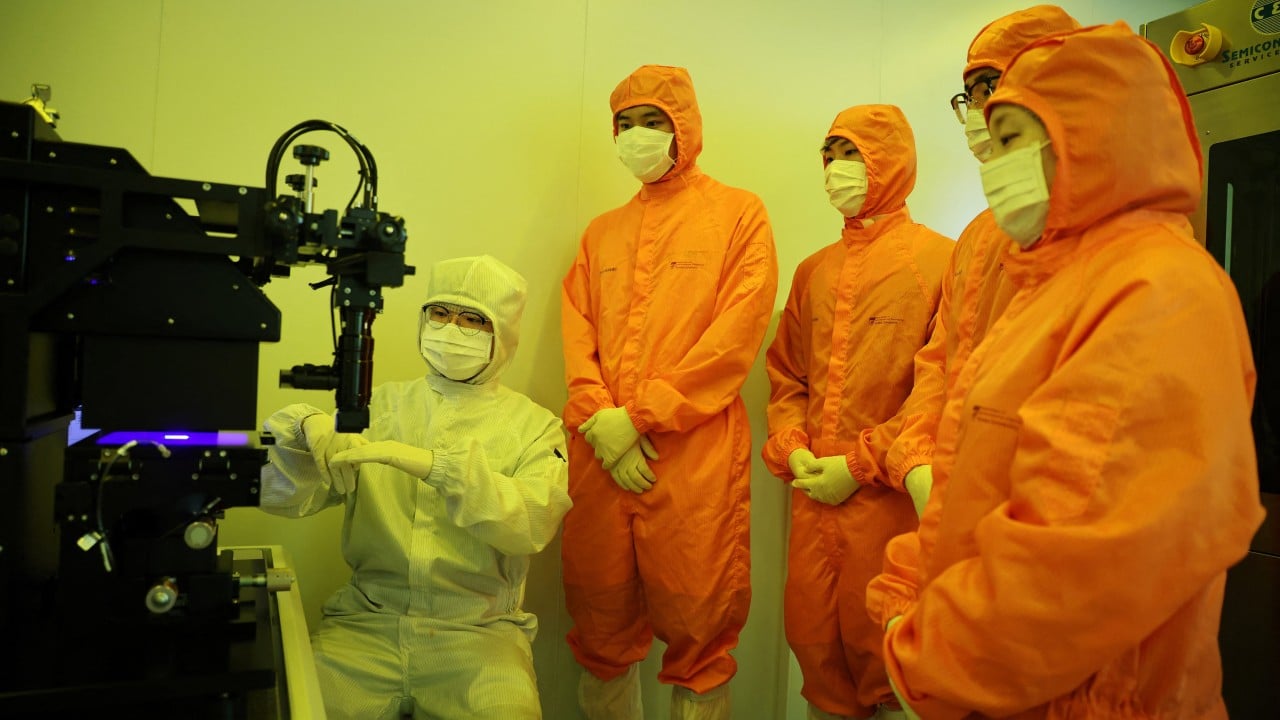
Hwaseong, South Korea, past midnight. An engineer watches a defect pattern surface on her screen – the kind that, caught now, saves a week of wafers. She is locked in, fully absorbed, the way engineers get when a breakthrough is close. But she has to go home. The law says so. Yet something is disrupting the clock she races against. Artificial intelligence is quietly rewriting what her hours are worth. On June 29, South Korean President Lee Jae Myung stood alongside the leaders of Samsung...

Why US-led alliance might struggle to rein in Beijing’s growing 6G influence
Innovation

Why US-led alliance might struggle to rein in Beijing’s growing 6G influence

24-country alliance aims to coordinate next-generation telecoms strategies, but analysts say China’s tech prowess provides clearer road map The alliance, involving 24 countries including the United Kingdom, Germany and Japan, aims to coordinate their governments’ 6G strategies, share technical resources and lay the groundwork for the commercial deployment of the technology, which is expected to begin replacing 5G in the 2030s. The initiative aimed to “secure leadership in the next generation of global communications”, the US Department of Commerce’s National Telecommunications and Information Administration said this week. Unlike previous generations of mobile networks that focused primarily on faster connectivity, 6G is expected to integrate artificial intelligence, sensing and computing capabilities, enabling applications ranging from autonomous systems to humanoid robots. “The US is seeking to build an alternative ecosystem across four fronts – technology, standards, industry and geopolitics – that reduces China’s role,” said Shan Guangcun, a professor at the University of Chinese Academy of Sciences whose research focuses on AI, robotics and smart sensors.

Google makes Gemini Spark AI agent available to Hongkongers as it lowers geofences
Innovation

Google makes Gemini Spark AI agent available to Hongkongers as it lowers geofences

Roll-out of agent that connects with Google’s Workspace tools echoes industry-wide push into agentic AI Google on Wednesday launched its artificial intelligence agent Gemini Spark in the Hong Kong market, giving local users direct access to a smart assistant to manage complex digital workflows. The launch came months after the American tech giant’s decision in March to lift regional geofences for generative AI services, starting with the Gemini chatbot. Hong Kong users can now access Gemini without using a virtual private network or third-party platform. The roll-out of the Spark agent echoes an industry-wide push into agentic AI: the ability to perform tasks on behalf of human users. Powered by the Gemini 3.6 Flash model, Spark can handle tasks including summarising email threads and logging customer feedback in charts. It was initially launched in the United States in May. To carve out market share against open-source alternatives, Google is leaning heavily on its native advantage: zero set-up integration across its own ecosystem. Unlike open-source models that require local script configurations, Spark connects natively with Google’s Workspace tools, including Gmail, Docs, Sheets and Calendar.

Advanced technologies now account for 1 in 6 valid invention patents in China
Innovation

Advanced technologies now account for 1 in 6 valid invention patents in China

Hi-tech manufacturing and digital industries such as AI have emerged as key drivers of economic growth Advanced technologies now account for around one in every six valid invention patents in China, according to official data. “The accelerated accumulation of patents in cutting-edge sectors is empowering and enhancing the creation of new drivers of economic growth,” administration spokesman Rui Wenbiao said at a press conference in Beijing. China’s stock of “high-value invention patents” – which included patents in the advanced technology and new energy sectors, award-winning patents, and patent families with overseas extensions – now stood at 2.36 million, or 16.8 per 10,000 people, he said. Hi-tech manufacturing and digital industries such as AI have emerged as key drivers of economic growth in China, even as the wider economy struggles with a prolonged property downturn and weak domestic demand.

Lenovo Capital takes aim at robotics, coding agents in ‘sniper’ AI investment strategy
Innovation

Lenovo Capital takes aim at robotics, coding agents in ‘sniper’ AI investment strategy

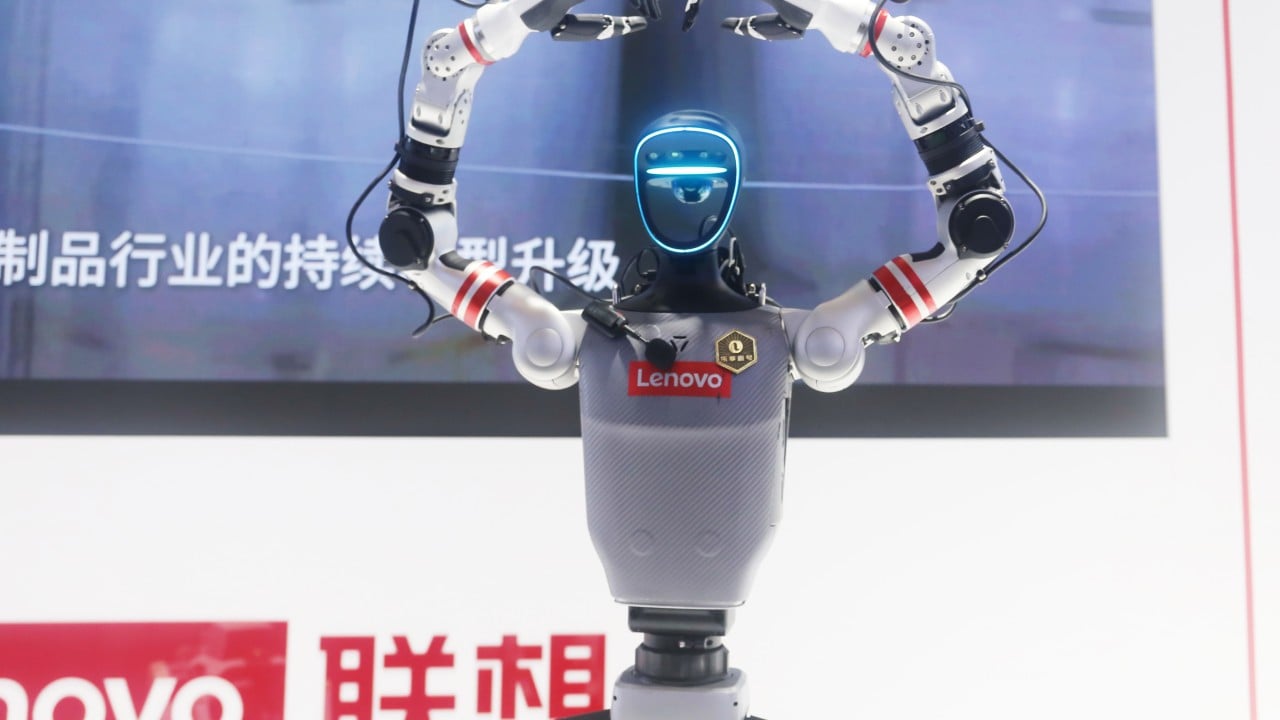
The venture capital arm of Lenovo Group is doubling down on artificial intelligence for the next industrial cycle, expanding its focus beyond foundational models into robotics, computing infrastructure and AI agents, according to a senior executive. Lenovo Capital has made long-term bets on more than 100 AI companies across the value chain, ranging from chips and hardware infrastructure to models and applications, Song Chunyu, chief investment officer and senior partner at the unit, told the...

China has 6 of world’s 10 most innovative humanoid robot start-ups: report
Innovation

China has 6 of world’s 10 most innovative humanoid robot start-ups: report

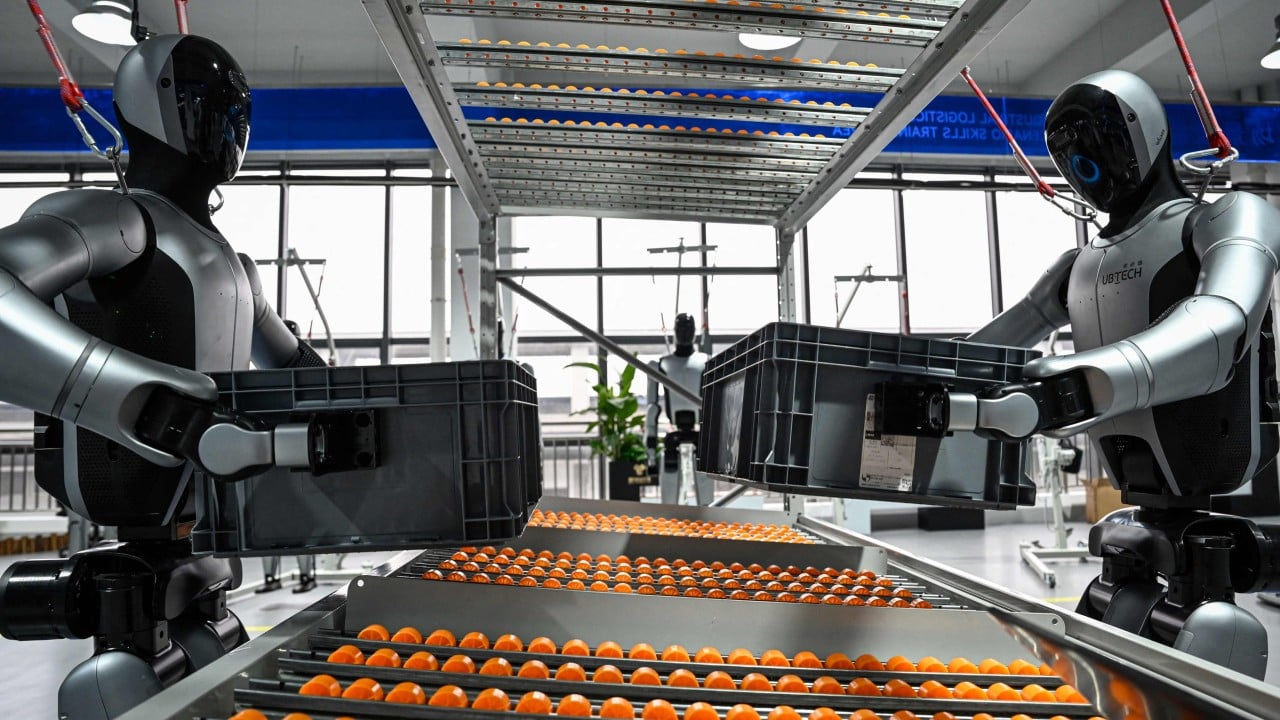
The LexisNexis study identified a ‘clear shift towards China’ in the humanoid robot race, with the US falling behind Firms from China dominated the ranking released by legal research platform LexisNexis on Tuesday, claiming a clean sweep of the top five. The top five places went to Shanghai-based Fourier and AgiBot, Shenzhen-based LimX Dynamics and Pudu Robotics, and Hangzhou-based Unitree Robotics. Shenzhen’s Leju Robot also made the top 10, ranking ninth. By contrast, only three US start-ups made the cut: Figure AI, Apptronik and Agility Robotics, which took sixth, eighth and 10th positions, respectively. Germany’s Agile Robots was the sole European entrant, ranking seventh. LexisNexis said it evaluated the “strength” of patent assets held by private start-ups that had demonstrated at least one bipedal walking robot. Its proprietary metric, the Patent Asset Index, measured patent portfolio size, technological value and geographic scope. The study highlighted a “clear shift towards China” in terms of innovation across three key humanoid technologies.

China chip dreams still face long road even after breakthrough
Innovation

China chip dreams still face long road even after breakthrough

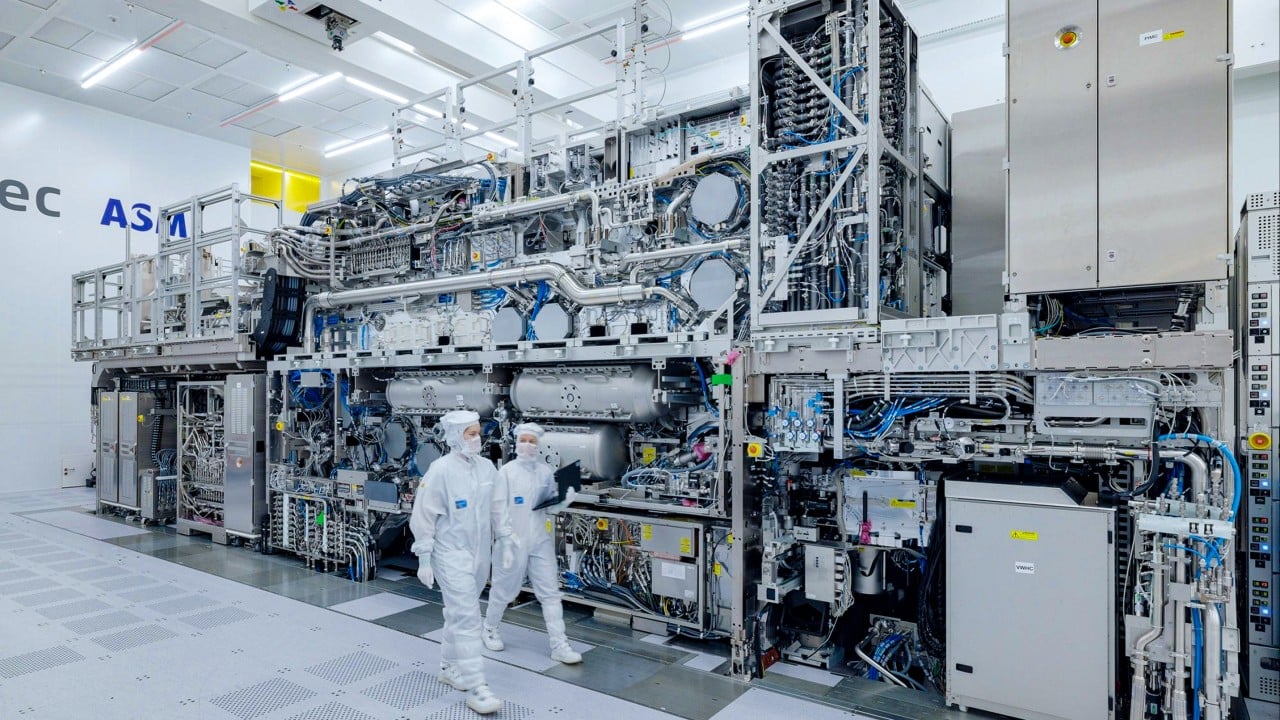
China has begun mass-producing some chipmaking machines, according to a report, marking a step forward in national efforts to become technologically self-sufficient. A state-backed company in Shanghai is making deep ultraviolet (DUV) immersion lithography machines, The Information reported, citing people familiar with the matter. The unidentified Shanghai-based company plans to hand over five machines this year and about 20 next year, according to the report. Shares of ASML, the world’s biggest...

Anthropic CEO urges Washington to tighten China chip export bans
Innovation

Anthropic CEO urges Washington to tighten China chip export bans

Anthropic co-founder and CEO Dario Amodei is urging Washington to tighten chip export bans and clamp down on Chinese “distillation”, framing it as critical for preserving the US lead in artificial intelligence. In a blog post on Monday, Amodei called a chip ban “the most efficient and direct way” of preventing Beijing from building frontier AI models for military use and domestic surveillance, which he said was his primary concern. The US “should not sell powerful chips or chipmaking equipment...

Chinese AI developers may shift to ‘paid weights’ commercial licensing: Goldman Sachs
Innovation

Chinese AI developers may shift to ‘paid weights’ commercial licensing: Goldman Sachs

Chinese artificial intelligence developers could start charging cloud platforms commercial licensing fees to host their open-weight models, according to the head of Asia internet research at Goldman Sachs, as firms look to capture more revenue from their soaring global use. The assessment comes as Chinese AI models – such as Moonshot AI’s Kimi K3 and Zhipu AI’s GLM-5.2 – have reached performance levels just a fraction behind top US rivals. However, because Chinese developers typically release...

Profits in China’s chipmaking sector soar 2,500% in first half amid AI boom
Innovation

Profits in China’s chipmaking sector soar 2,500% in first half amid AI boom

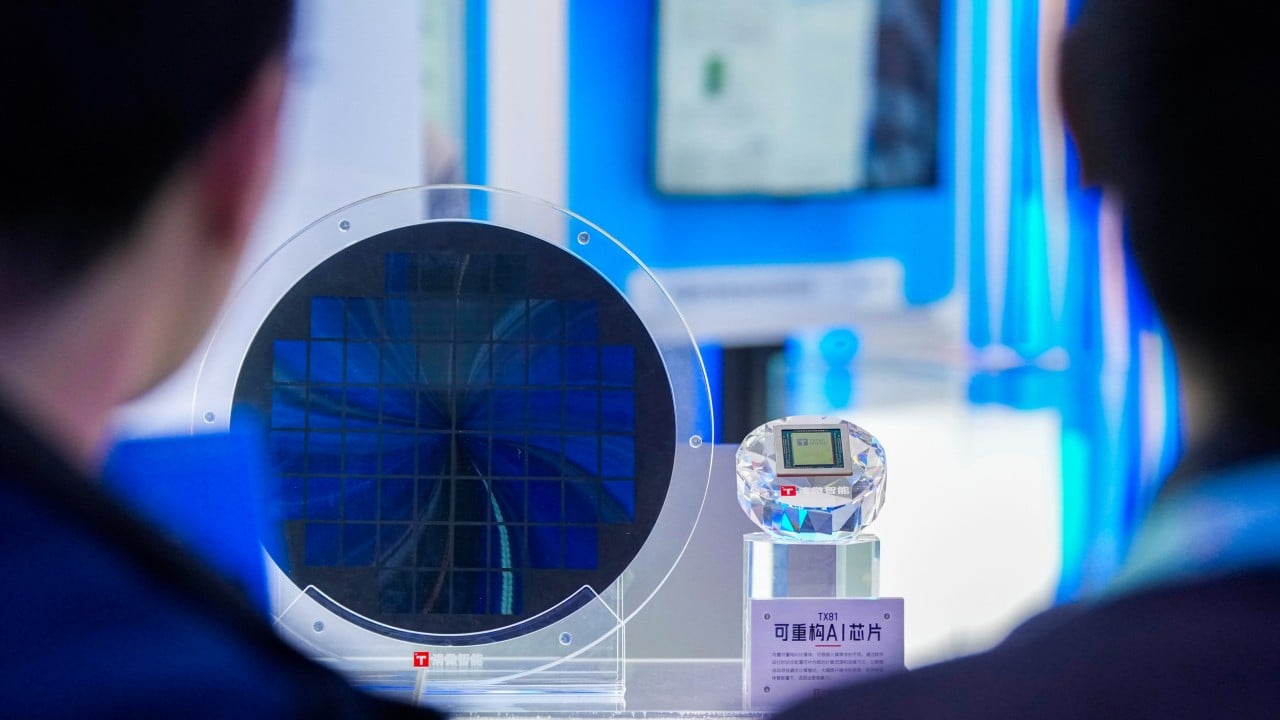
Surge marks a stark contrast with the same period last year, when AI had yet to trigger the massive global data centre buildout China’s major chip manufacturers saw their profits skyrocket a staggering 2,579.5 per cent in the first half of 2026, fuelled by unprecedented demand for artificial intelligence and computing power, according to data from the National Bureau of Statistics (NBS) on Monday. The state agency attributed the surge to accelerated integration of AI across various fields, which in turn generated massive demand for computing power, according to Yu Weining, chief statistician of the NBS department overseeing industrial statistics. Computing demand also pushed the broader electronics industry’s profits up by 97 per cent year on year, according to Yu, who added that electronics also served as a key driver of the rapid growth of total industrial profits. During the first half, profits for China’s major industrial enterprises – those with an annual revenue of over 20 million yuan (US$2.9 million) – grew 18.7 per cent to 4 trillion yuan. The data marked a stark contrast with the same period last year, when AI had yet to trigger the massive global data centre buildout.

Apple’s biggest-ever leak happened in India. Will firms rethink their China relocations?
Innovation

Apple’s biggest-ever leak happened in India. Will firms rethink their China relocations?

In the wake of a cyberattack on a local Apple partner, insiders say India has a long way to go before challenging China as a manufacturer When Apple set its sights on India as its next promising market, CEO Tim Cook planned to take a leaf out of the company’s China playbook – a retail and manufacturing strategy that had paid hefty dividends to the US tech giant. “We are, in essence, taking what we learned in China years ago and how we scale to China and bringing that to bear,” Cook told investors in February 2023. The company had just seen record quarterly sales in the Indian market, and was just weeks ahead of the opening of Apple’s first stores in the country. “India is a hugely exciting market for us.” At the time, Cook’s optimism in India also carried a degree of pragmatism. To navigate the rising trade tensions between the world’s two largest economies and avoid US tariffs on China-made goods – both the duties already in place and those likely to be imposed in the future – Apple had bet on India to become its next manufacturing hub. India began to deliver. In 2022, the country produced around 6 per cent of all iPhones, but by 2026, that figure was expected to surpass 25 per cent, according to data from Counterpoint Research.