Why are China’s coastal fish farms disappearing while India’s are expanding?
Business

Why are China’s coastal fish farms disappearing while India’s are expanding?

China’s coastal aquaculture ponds span the largest area in the world but they are shrinking – and that is a good thing China’s coastal aquaculture ponds are shrinking due to environmental policies while India’s are expanding at the fastest rate of any country, according to a new bird’s-eye view of fish farms worldwide. The conclusions are based on a fresh dataset compiled from millions of satellite snapshots of coastal aquaculture around the world in 2022. From 1990 to 2016, the global pond area for aquaculture expanded rapidly. After 2017, the overall area declined, but changes varied between countries. The work was carried out by researchers from the Northeast Institute of Geography and Agroecology of the Chinese Academy of Sciences and teams from various countries, including Britain and the United States. The results were published in the academic journal Science Bulletin on April 15. This dataset provides a first-of-its-kind map of the world’s coastal aquaculture ponds, documenting their annual spread and transformation. India was the biggest source of growth in the sector, expanding by 676 sq km or 19 per cent, between 2017 and 2022 as demand for seafood rose, according to the study.

Trump’s Beijing trip, Iran war diplomacy, tech earnings
Business

Trump’s Beijing trip, Iran war diplomacy, tech earnings

US President Donald Trump will bring a scaled-back group of chief executive officers with him on a trip to Beijing next week, reflecting limited expectations for a summit that may be overshadowed by the war on Iran. The White House considered inviting about a dozen business leaders on the May 14-15 trip, compared with the 29 high-profile executives on Trump’s last visit in 2017, Reuters said, citing unidentified people briefed on preparations. Nvidia, Apple and Boeing are among the companies...

Australian remanded on fresh eat-and-run charges in Hong Kong a day after being fined
Business

Australian remanded on fresh eat-and-run charges in Hong Kong a day after being fined

Samuel Monkivitch allegedly fled four other restaurants without paying bills totalling more than HK$2,000 and destroyed electronic property An Australian man has been remanded in custody and hit with fresh charges in Hong Kong for fleeing restaurants without paying more than HK$2,000 (US$255) in bills, just a day after being fined for similar offences. He was fined HK$3,000 and ordered to use his bail money to pay the amounts owed to the two businesses. After paying his fine and leaving the courthouse, he was immediately intercepted by two men believed to be plain-clothes police officers and taken away in a vehicle. On Friday, Monkivitch – who earlier described himself as a “lawyer” but now called himself a “legal consultant and merchant” – reappeared in court. He was accused of leaving four dining outlets between April 24 and May 5 with the intent of avoiding bills totalling HK$2,039. In the first of the new cases, Monkivitch dined at a Chinese restaurant in Central, where he allegedly left without settling a HK$284 bill.

New database tracks shifting outcomes of Malaysia’s political corruption cases
Business

New database tracks shifting outcomes of Malaysia’s political corruption cases

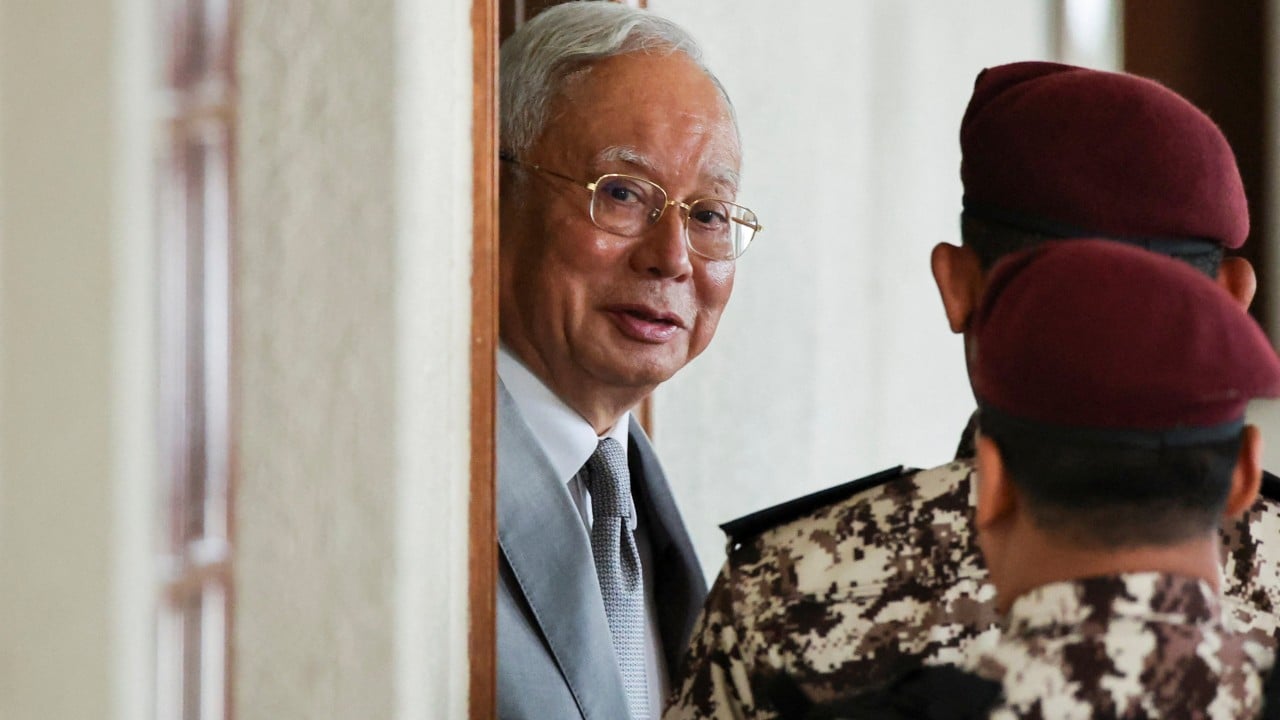
The Prosecutorial Accountability Watch database is an attempt to make sense of a justice system clouded by ‘double standards’ Since the 2018 election that ended six decades of Malay nationalist party Umno and its Barisan Nasional coalition rule, Malaysia has seen a wave of corruption charges against powerful politicians, followed by acquittals, discharges, appeal withdrawals and cases that appear to move in different directions whenever governments change. According to Projek SAMA convenor Ngeow Chow Ying, the database attempts to make sense of a justice system clouded by the phrase dua darjat, a Malay expression often used to describe double standards.

Happy Horse: From Anonymous AI Video Dark Horse to E-commerce Workhorse — The Reality Behind the SOTA Hype
Technology

Happy Horse: From Anonymous AI Video Dark Horse to E-commerce Workhorse — The Reality Behind the SOTA Hype

Alibaba's Happy Horse AI video model topped anonymous leaderboards in April, but gray testing revealed a gap between benchmark performance and real usability. Built for high-volume, low-cost commercial content rather than AI film direction, Happy Horse is reframing itself as the "donkey that eats grass and produces milk" — a reliable, affordable content pipeline for e-commerce merchants.

Trump invites Boeing, Mastercard CEOs to join China trip next week: sources
Business

Trump invites Boeing, Mastercard CEOs to join China trip next week: sources

Donald Trump Jnr and Eric Trump will also join the high-stakes summit in Beijing, sources say A full list of participants from the business community has not yet been released. Other companies, including Nvidia, are also awaiting final confirmation on whether their CEO, Jensen Huang, will join the entourage. Bloomberg reported on Friday that Huang – who has lobbied Trump to permit sales of advanced AI chips in the world’s second-largest economy – said he would gladly join the trip if invited. A source also said that Trump’s two sons – Donald Trump Jnr and Eric Trump – would take part in the trip and “visit on ground [for] one day.”

Kimi Operator Moonshot AI Valued at $20B+ After $2B Funding Round
Technology

Kimi Operator Moonshot AI Valued at $20B+ After $2B Funding Round

Moonshot AI, the company behind Kimi, has closed a ~$2 billion funding round at a post-money valuation exceeding $20 billion, with Meituan Longzhu leading the investment alongside China Mobile and CPE源峰. The company has raised nearly $4 billion in under six months, making it the best-funded AI startup in China.

Genesis AI Releases GENE-26.5: Humanoid Robot Finally Takes On Tomato and Egg Stir-Fry
Technology

Genesis AI Releases GENE-26.5: Humanoid Robot Finally Takes On Tomato and Egg Stir-Fry

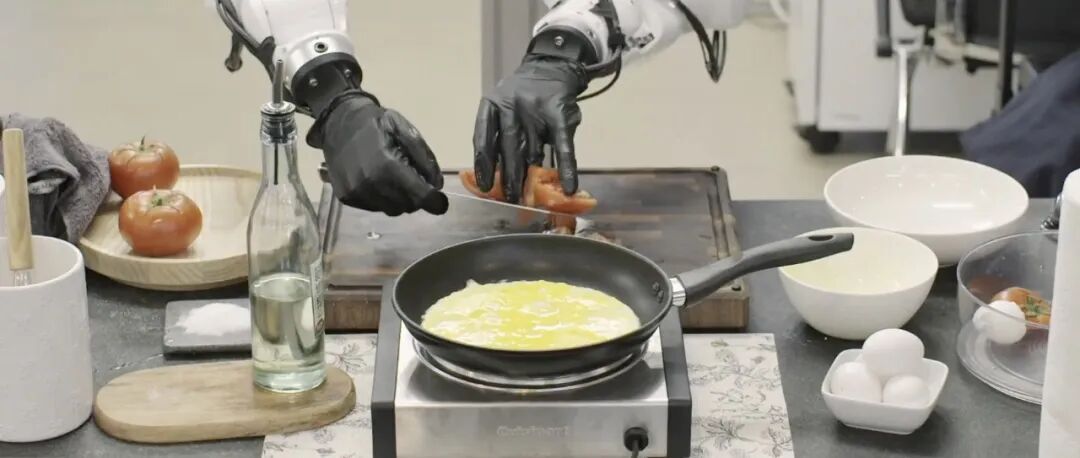
Genesis AI, a French robotics startup, has released its first foundation model GENE-26.5 — featuring a robot that autonomously cracks eggs, cuts tomatoes, makes smoothies, solves Rubik's cubes, and organizes cables. The company's approach: large-scale human operation data pretraining combined with simulation closed-loop evaluation, moving robot manipulation toward a foundation model training paradigm.

Supercell acquires Metacore, Tencent expands its presence in the global casual gaming market
Technology

Supercell acquires Metacore, Tencent expands its presence in the global casual gaming market

Every Wednesday and Friday, TechNode’s Briefing newsletter delivers a roundup of the most important news in China tech, straight to your inbox. Your support helps TechNode continue to provide credible, on-the-ground journalism and industry insights about the Chinese tech industry. Supercell announced this week that it has completed the full acquisition of Metacore and its flagship title Merge Mansion, a deal that has drawn attention across the global games industry and further highlighted Tencent’s evolving strategy in the casual gaming sector. Since Tencent acquired a majority stake in Supercell for roughly $8.6 billion in 2016, the Finnish studio has continued to operate with a high degree of independence. Rather than folding Supercell into a traditional top-down structure, Tencent has allowed the company to maintain its small-team, high-autonomy development model — an approach widely credited for helping sustain long-life-cycle titles such as Clash of Clans and Brawl Stars. Against that backdrop, the Metacore acquisition is being viewed less as a standalone transaction and more as a strategic extension of Supercell’s broader portfolio.

Li Auto design chief rejects claims that MEGA was a design failure
Technology

Li Auto design chief rejects claims that MEGA was a design failure

Every Wednesday and Friday, TechNode’s Briefing newsletter delivers a roundup of the most important news in China tech, straight to your inbox. Your support helps TechNode continue to provide credible, on-the-ground journalism and industry insights about the Chinese tech industry. Na Jia, Vice President of Design at Chinese EV maker Li Auto, has for the first time publicly addressed the controversy surrounding the company’s flagship MEGA model, pushing back against claims that it was a design failure. The claim that the Li Auto MEGA was a design failure originated from intense aesthetic controversy over its avant-garde, streamlined exterior, which was controversially associated with negative labels such as a “coffin car.” Na Jia firmly rejected the characterization of the model as a failure, arguing that Li Auto’s second-generation design language—used across both the L-series and MEGA—reflects the brand’s Future Icon design philosophy. In January, the Li Auto MEGA reached 30,000 cumulative deliveries, becoming the best-selling model in the premium MPV segment priced above RMB 500,000 ($70,000). [IThome, in Chinese]

South Korean temple ordains China’s Unitree G1 humanoid robot in world-first Buddhist ceremony
Technology

South Korean temple ordains China’s Unitree G1 humanoid robot in world-first Buddhist ceremony

Every Wednesday and Friday, TechNode’s Briefing newsletter delivers a roundup of the most important news in China tech, straight to your inbox. Your support helps TechNode continue to provide credible, on-the-ground journalism and industry insights about the Chinese tech industry. The G1 humanoid robot developed by Chinese robotics company Unitree has taken part in a Buddhist ordination ceremony at Jogyesa Temple in South Korea, in what is believed to be the world’s first religious ritual involving a robot. During the ceremony, the 130-centimeter-tall robot was given the Dharma name Gabi and dressed in Buddhist robes while wearing a string of 108 prayer beads. Powered by an AI dialogue system, the robot responded “I am willing to take refuge” as it participated in traditional rites including repentance rituals and symbolic arm-burning stickers. The Jogye Order of Korean Buddhism also reinterpreted the traditional Five Precepts for the AI era, adapting them into rules for robots: do not harm life, do not damage objects, do not defy humans, do not deceive, and do not overcharge. Temple officials said the move was intended to highlight the importance of building technology on principles of compassion and responsibility.

Asian firms hopeful on US investment again, but cautious after 2025 tariffs
Economy

Asian firms hopeful on US investment again, but cautious after 2025 tariffs

Indian pharma, tech and energy firms tout $20.5bn in commitments at summit Investment commitments worth billions of dollars were announced by Asian companies at this year's annual SelectUSA Investment Summit, held May 2-5 in Maryland. (Photo by Pak Yiu) NATIONAL HARBOR, Maryland -- Asian companies returned to the premier U.S.-hosted foreign investment event this week with cautious optimism, after President Donald Trump's volatile trade policy paralyzed any decision-making a year ago.