Technology — 1,140 insights
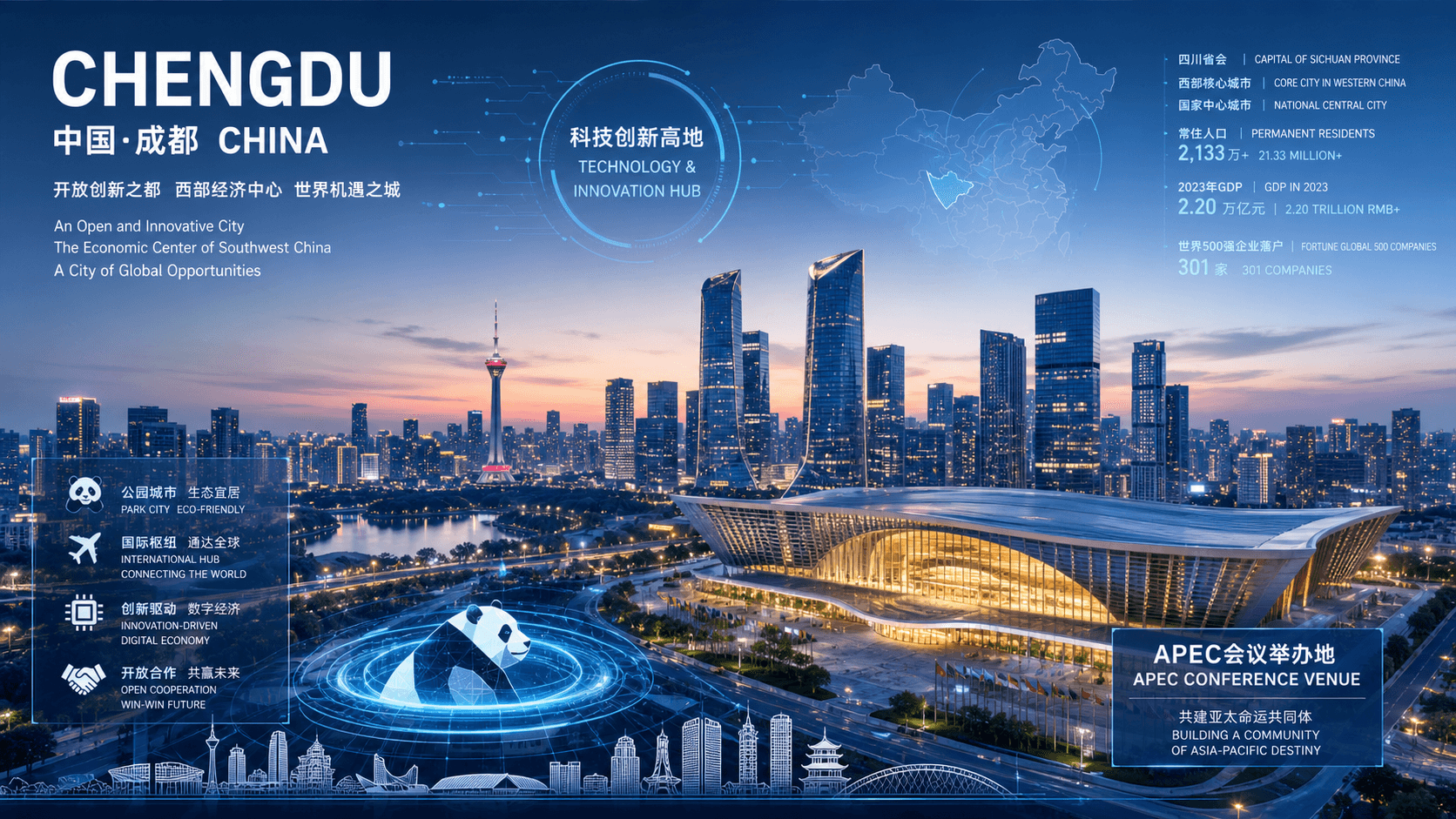
Why APEC 2026 Spotlight Turns to Chengdu: A Western Chinese City Digital Economy Transformation
Technology

Why APEC 2026 Spotlight Turns to Chengdu: A Western Chinese City Digital Economy Transformation

Chengdu hosts APEC Digital and AI Ministerial Meeting from July 16-29, showcasing a systematic digital economy infrastructure from 29,000P computing capacity to 53.96 billion data records open.

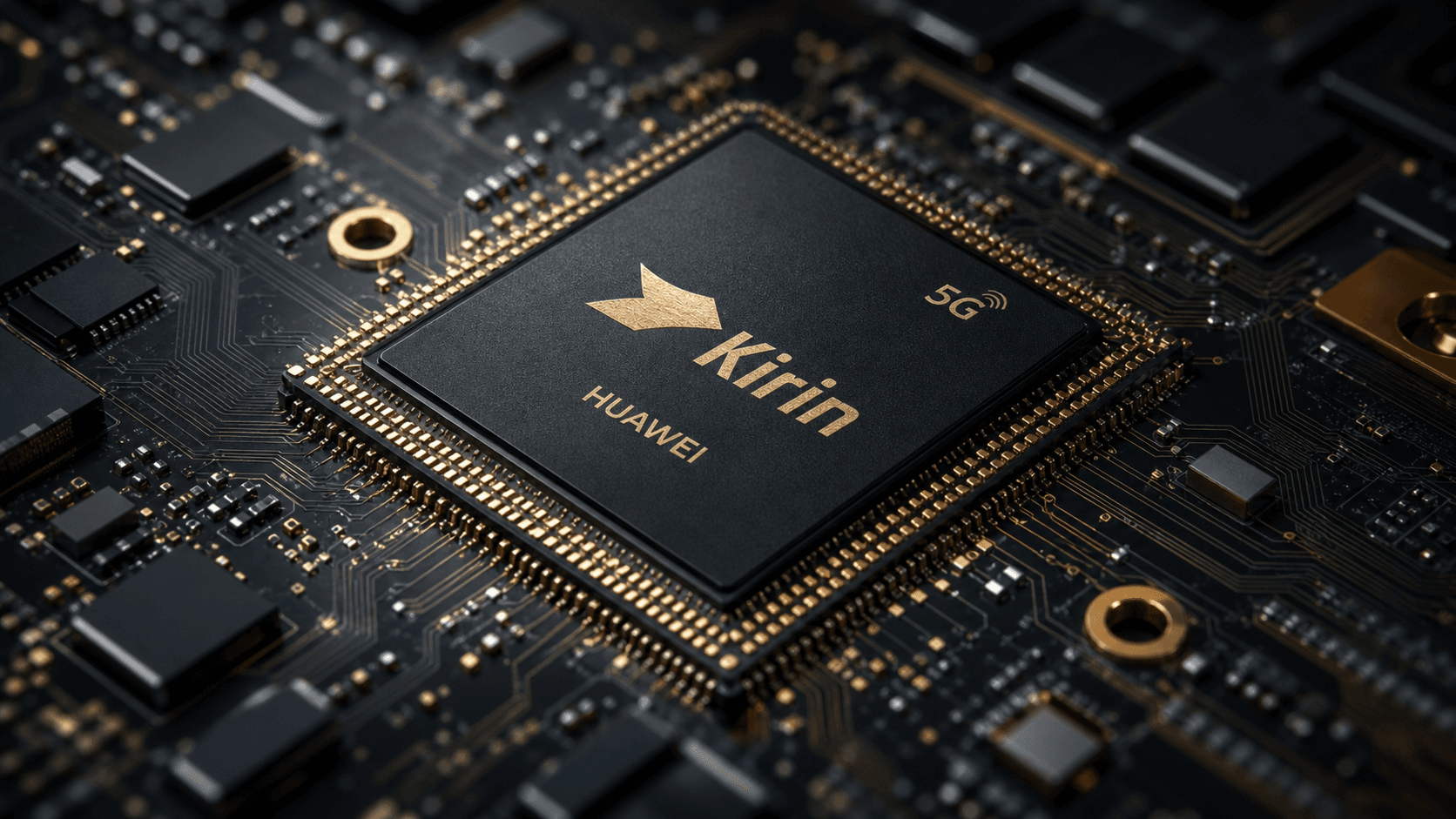
Tao Law V2 Delivers Measured Results: Huawei Kirin 2026 Chip Shows 53.5% Transistor Density Leap as Semiconductor Rally Broadens
Technology

Tao Law V2 Delivers Measured Results: Huawei Kirin 2026 Chip Shows 53.5% Transistor Density Leap as Semiconductor Rally Broadens

Huawei Tao Law V2 publishes Kirin 2026 measured data showing 238MTr/mm² density via LogicFolding while Goldman Sachs reweights toward semiconductors, signaling a full-industry-cycle rally.

Quantum Heavyweight Arrives: Zhongqi Wuliang to Debut Data-Center-Grade Quantum Computer at WAIC
Technology

Quantum Heavyweight Arrives: Zhongqi Wuliang to Debut Data-Center-Grade Quantum Computer at WAIC

Shanghai-based neutral atom quantum computing startup Zhongqi Wuliang, spun out from CAS SIOM, to unveil the world first data-center-deployable quantum computer concept at WAIC 2026.

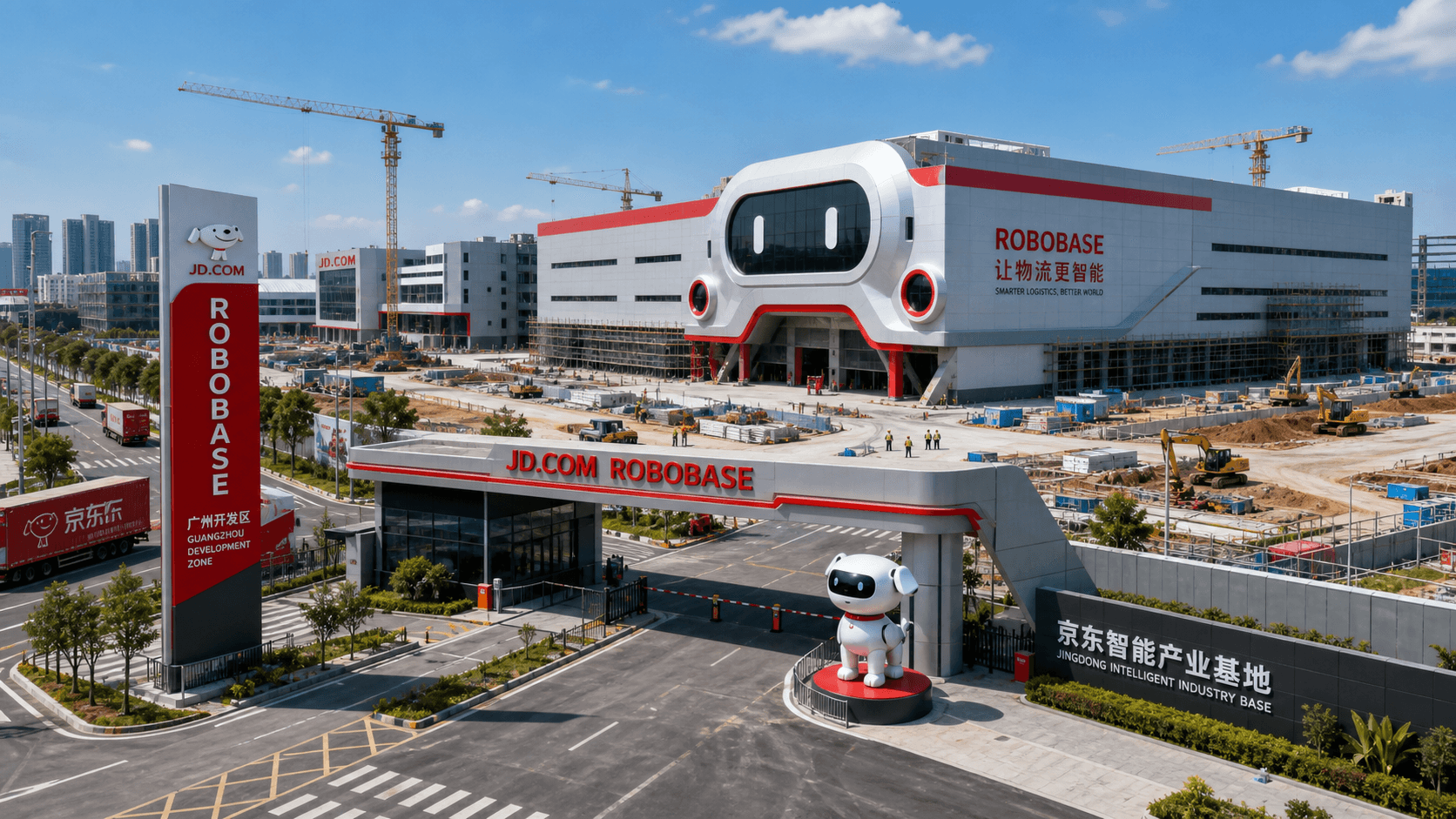
JD.com Enters Embodied AI: First RoboBase Robot Facility Breaks Ground in Guangzhou
Technology

JD.com Enters Embodied AI: First RoboBase Robot Facility Breaks Ground in Guangzhou

JD.com invests $1.4B in nationwide RoboBase network as it transforms from logistics giant to embodied AI platform, planning 300 million robot procurements and 80+ bases across China.

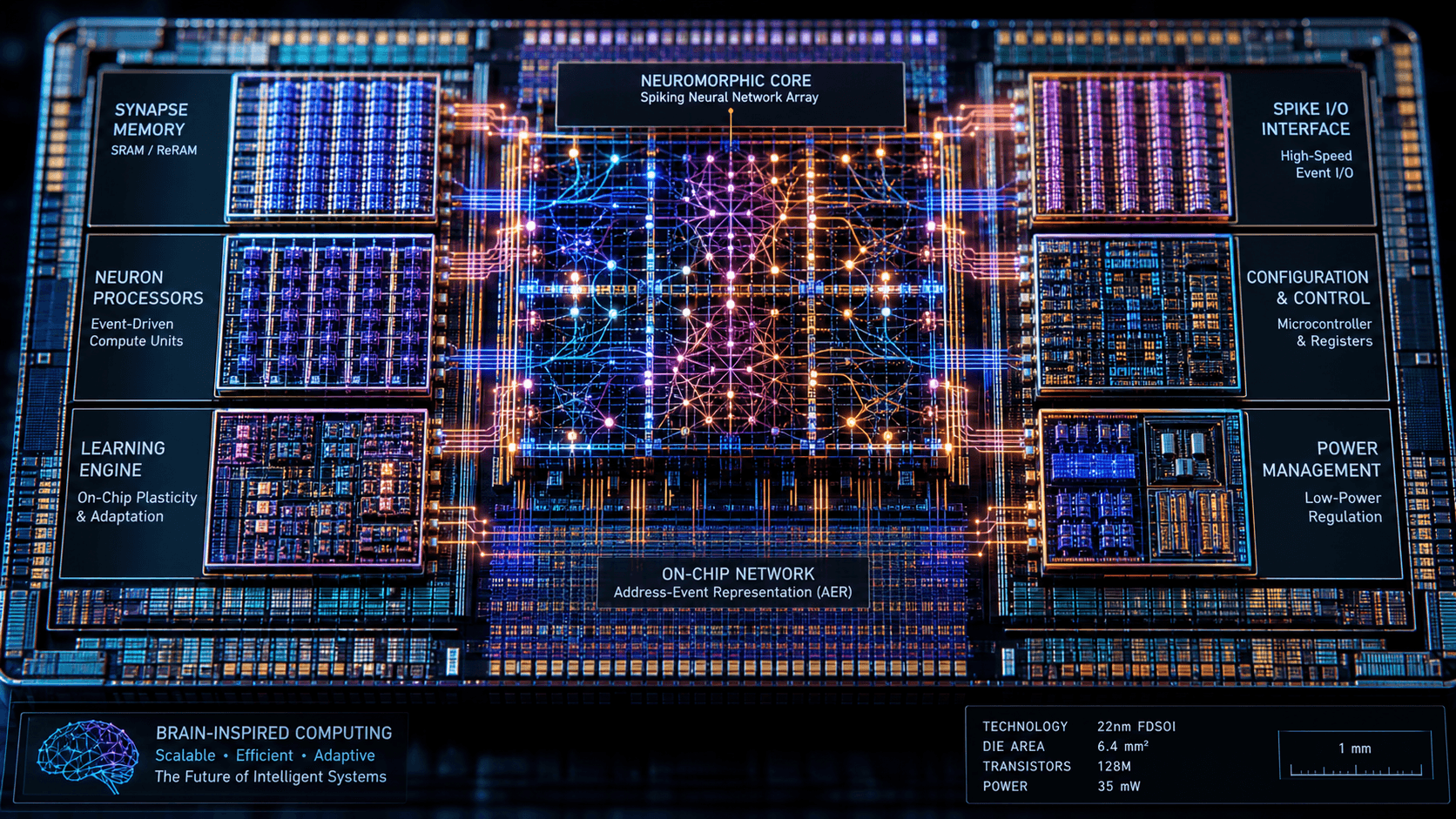
478x Faster Than NVIDIA A100: Peking University and CAS Neuromorphic Chip Published in Science
Technology

478x Faster Than NVIDIA A100: Peking University and CAS Neuromorphic Chip Published in Science

A 40nm phase-change memristor neural dynamics chip achieves 2.12ms computation latency and outperforms NVIDIA A100 GPU by 50-478x in brain cortex reconstruction, published in Science.

QuestMobile: China’s AI-native apps reach 499 million monthly active users
Technology

QuestMobile: China’s AI-native apps reach 499 million monthly active users

China’s AI-native apps recorded 499 million monthly active users by May 2026, up 85.4% from a year earlier, according to QuestMobile’s 2026 first-half report released on July 14. Doubao, Qwen and DeepSeek formed the top tier, with 382 million, 167 million and 130 million monthly active users, respectively. The report measured AI-native apps separately from AI plugins and built-in AI applications developed by device makers. Users of AI-native apps averaged 92.7 uses per month and 183 minutes of monthly usage time. Doubao also added 13.78 million users in June compared with May. [IT Home, in Chinese] Every Wednesday and Friday, TechNode’s Briefing newsletter delivers a roundup of the most important news in China tech, straight to your inbox. Your support helps TechNode continue to provide credible, on-the-ground journalism and industry insights about the Chinese tech industry.
SenseTime open-sources SenseNova-Vision unified vision model
Technology

SenseTime open-sources SenseNova-Vision unified vision model

SenseTime has released and fully open-sourced SenseNova-Vision, a unified vision model in its SenseNova foundation-model suite. The model is designed to handle object detection, optical character recognition, keypoint localization, image segmentation, depth estimation and 3D reconstruction within one system, instead of relying on separate specialist models for each task. The model also supports dense geometric prediction, including surface-normal estimation, as well as multi-view 3D tasks such as point-cloud reconstruction and camera-pose estimation. SenseTime has released the SenseNova-Vision Corpus-50M, a visual instruction dataset containing 50 million samples, and plans to integrate the model into its SenseNova U-series. [IT Home, in Chinese] Every Wednesday and Friday, TechNode’s Briefing newsletter delivers a roundup of the most important news in China tech, straight to your inbox. Your support helps TechNode continue to provide credible, on-the-ground journalism and industry insights about the Chinese tech industry.

China’s electric vehicle exports rise 68.7% in H1 2026
Technology

China’s electric vehicle exports rise 68.7% in H1 2026

China’s electric vehicle exports rose 68.7% year-on-year in the first half of 2026, according to customs data released on July 14. Exports of electric motorcycles and bicycles increased 31.5%, electric locomotives 45.1%, lithium batteries 37.6% and wind turbines 35.6%. The same data showed that exports of AI-integrated intelligent bionic robots exceeded 10,000 units and reached more than 90 countries and regions. Exports of electronic components and computer parts also grew at double-digit rates, contributing 6.9 percentage points to overall export growth. [IT Home, in Chinese] Every Wednesday and Friday, TechNode’s Briefing newsletter delivers a roundup of the most important news in China tech, straight to your inbox. Your support helps TechNode continue to provide credible, on-the-ground journalism and industry insights about the Chinese tech industry.
Marvel-Tech raises more than RMB500 million across two financing rounds
Technology

Marvel-Tech raises more than RMB500 million across two financing rounds

Shanghai-based Marvel-Tech, a developer of gas turbines and industrial waste-heat and waste-pressure recovery turbine systems, has completed two consecutive financing rounds totaling more than RMB500 million. The C round was led by HongShan, while the B round was jointly led by C&D Emerging Investment and Qiming Venture Partners. The company said the funds will support a manufacturing and assembly center for its gas turbine product lines, as well as a high-power unit performance testing center. Marvel-Tech plans to build 1GW of manufacturing and delivery capacity in 2026. Marvel-Tech’s current product line includes 8MW and 30MW gas turbines for green-fuel applications and AI data center power infrastructure. Its technology is designed to support hydrogen, ammonia and natural gas combustion without hardware changes. [TechNode reporting] Every Wednesday and Friday, TechNode’s Briefing newsletter delivers a roundup of the most important news in China tech, straight to your inbox. Your support helps TechNode continue to provide credible, on-the-ground journalism and industry insights about the Chinese tech industry.
Amap launches ABot-World Studio for interactive video and 3D scene generation
Technology

Amap launches ABot-World Studio for interactive video and 3D scene generation

Amap, Alibaba’s digital mapping and navigation platform, has launched ABot-World Studio and opened it for testing. The product combines interactive video generation with 3D Gaussian splatting, allowing users to create explorable 3D scenes from text or images rather than producing only a fixed video. ABot-World Studio is part of Amap’s broader ABot world-model product line. Its interactive scene-generation capabilities extend the company’s mapping and navigation work into 3D spatial content and world-model applications. [TechWeb, in Chinese] Every Wednesday and Friday, TechNode’s Briefing newsletter delivers a roundup of the most important news in China tech, straight to your inbox. Your support helps TechNode continue to provide credible, on-the-ground journalism and industry insights about the Chinese tech industry.

ByteDance denies plans to enter smart driving business
Technology

ByteDance denies plans to enter smart driving business

ByteDance has denied reports that it plans to enter the autonomous driving sector. Recent media reports claimed the company was exploring autonomous driving, with a particular focus on driverless logistics, and that the initiative would fall under the automotive division of ByteDance’s cloud platform, Volcano Engine. Responding to China Star Market, ByteDance said: “ByteDance is conducting early-stage research and exploration in frontier AI large model technologies, including Physical AI. However, we have no plans to develop a smart driving business.” [China Star Market, in Chinese] Every Wednesday and Friday, TechNode’s Briefing newsletter delivers a roundup of the most important news in China tech, straight to your inbox. Your support helps TechNode continue to provide credible, on-the-ground journalism and industry insights about the Chinese tech industry.

miHoYo launches AI companion app BSide: Olivia Lin on Steam Early Access
Technology

miHoYo launches AI companion app BSide: Olivia Lin on Steam Early Access

On Monday, Chinese gaming firm miHoYo launched Early Access for its AI companion app, BSide: Olivia Lin, on Steam. Unlike the studio’s anime-style games, the new release is listed as a Free to Play Utility rather than a game, marking miHoYo’s latest effort to expand beyond interactive entertainment and into AI-powered digital companionship. At the heart of the app is Olivia Lin, a virtual character designed as a Shanghai student majoring in piano with a minor in psychology. According to her official profile, she enjoys vinyl records, classic films, and rainy days, and is devoted to exploring the relationship between music and memories. Olivia’s debut wasn’t an overnight launch. The character began appearing on Bilibili in August 2025, where piano performance videos featuring realistic motion capture, synchronized lip movements, and a grounded visual style gradually built an audience. Earlier this March, the account expanded into letter-reading and reply videos that laid the groundwork for the app’s interactive experience months before its release.