Markets — 725 insights
CATL, BYD battle for supremacy in Middle East energy-storage market
Markets

CATL, BYD battle for supremacy in Middle East energy-storage market

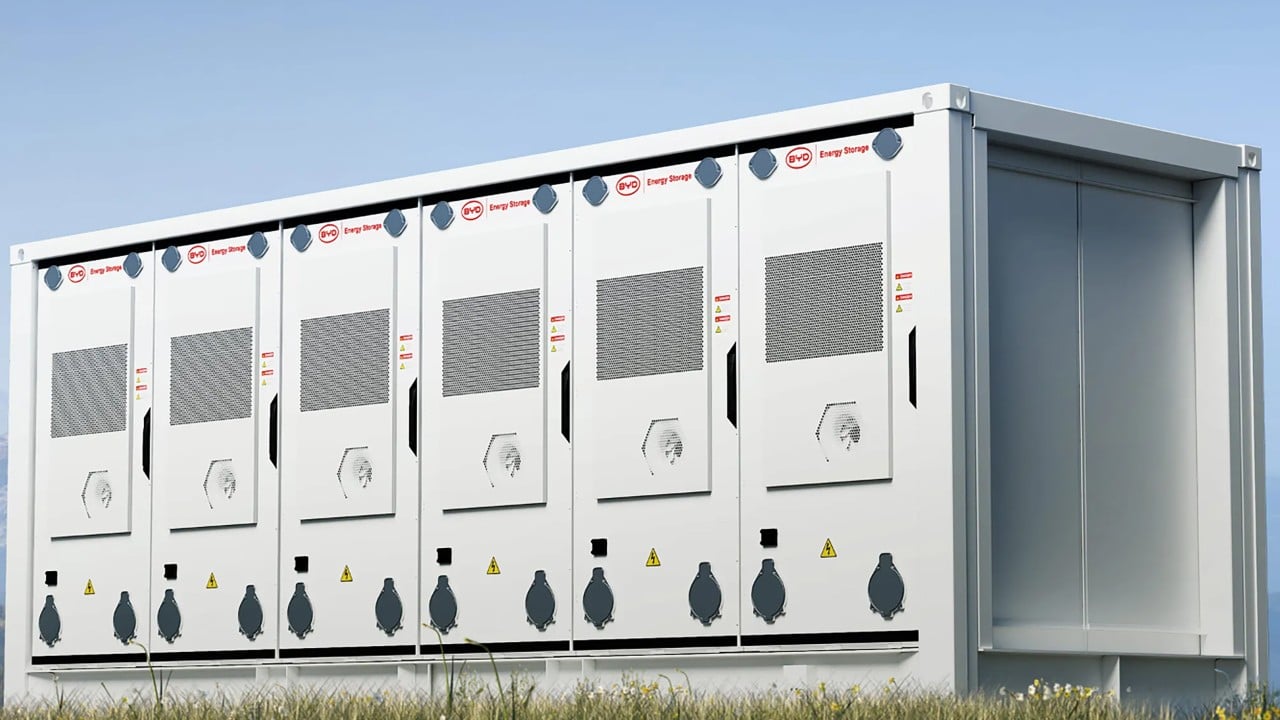
BYD, Sungrow win contracts for storage at massive UAE solar plant, as EV battery makers seek better margins selling storage systems The two orders, totalling 18.775GWh, account for nearly all of the planned storage capacity of RTC, which features a 5.2 gigawatt solar photovoltaic plant and 19GWh of battery storage. Located in Abu Dhabi’s desert, the RTC project was unveiled last year as the world’s first large-scale, combined solar and battery storage facility, supporting the UAE’s Energy Strategy 2050 and Net Zero by 2050 goals, according to the website of the Emirates Water and Electricity Company. In January 2025, the megaproject was expected to be granted to CATL, which established a 19GWh partnership with Masdar that month, involving an investment of US$6 billion. “As major battery suppliers are expecting to have a new growth engine amid the fierce race in electric-car batteries, the competition in the energy storage sector is inevitable,” said Yale Zhang, managing director at the consultancy Automotive Foresight in Shanghai.

LVMH’s fashion and leather division reports 1% organic growth in second quarter
Markets

LVMH’s fashion and leather division reports 1% organic growth in second quarter

The French luxury brand has also seen persisting positive momentum in China for Hennessy cognac since the 2026 Chinese New Year Over the first half, organic sales at the fashion and leather goods division fell 1 per cent, an improvement on the 3 per cent decline in the second half of 2025 and the 7 per cent drop in the first, with the group noting a “rapid acceleration” in the United States. The wine and spirits division saw 5 per cent organic growth during the first half of the year, a visible improvement from the 4 per cent decline in the second half of 2025. Notably, the group saw persisting positive momentum for Hennessy cognac in China since the Chinese New Year, according to LVMH. The group’s cognac sales had previously plunged in China since Beijing imposed provisional anti-dumping duties on European brandy as retaliation to Brussels’ tariffs on made-in-China electric vehicles.

Fortune roller-coaster: as Elon Musk loses US$130b, Chinese chip and AI founders gain
Markets

Fortune roller-coaster: as Elon Musk loses US$130b, Chinese chip and AI founders gain

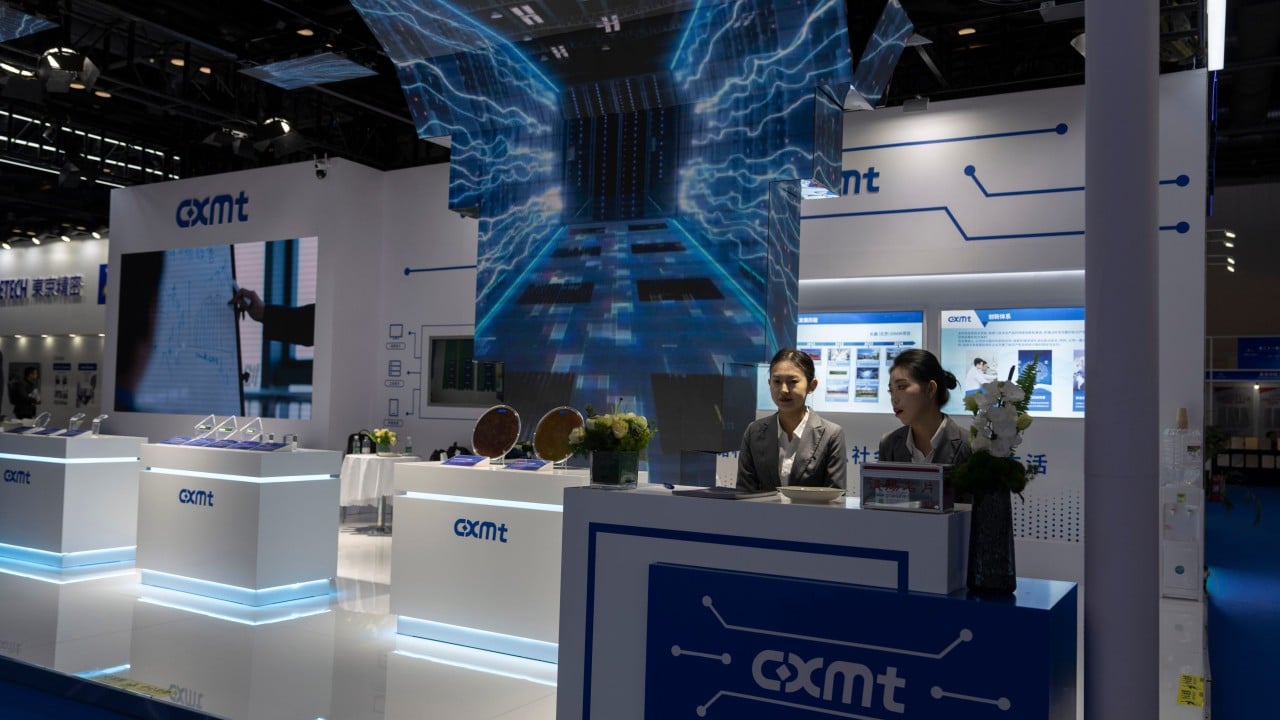
Surging stocks of CXMT, Zhipu and MiniMax create billions in wealth as world’s first trillionaire loses status amid SpaceX’s plunge Elon Musk poked fun at himself on social media on Saturday, saying he was a “(former) trillionaire” after losing around US$130 billion over five trading days just weeks after he became the first human to ascend beyond billionaire status. At the same time, the wealth of some executives at ChangXin Memory Technologies (CXMT), China’s leading maker of memory chips, surged as its stock soared 466 per cent on its first trading day in Shanghai on Monday, valuing the company at 3.28 trillion yuan (US$484.5 billion). Much of the wealth held by tech tycoons in both the US and China is paper wealth rather than accessible liquid assets and is also highly volatile, analysts said. “Stocks move in natural cycles, an inherent law of financial markets,” said Liu Shengjun, chief of the China Financial Reform Institute, a Shanghai-based think tank.

A tale of two markets: Wall Street cheers record highs while Beijing deflates bubbles
Markets

A tale of two markets: Wall Street cheers record highs while Beijing deflates bubbles

When the S&P 500, Nasdaq and Dow Jones Industrial Average hit record highs in early July, US President Donald Trump hailed it as evidence of America’s economic revival. “This is WINNING. The Golden Age of America is beginning – and we are just getting started,” he wrote in a social media post on July 4, the 250th anniversary of the signing of the US Declaration of Independence. Though it was only the latest in a long series of boasts about the stock market that have punctuated Trump’s...

What CXMT must do to grow global memory market share and build on its surge: analysts
Markets

What CXMT must do to grow global memory market share and build on its surge: analysts

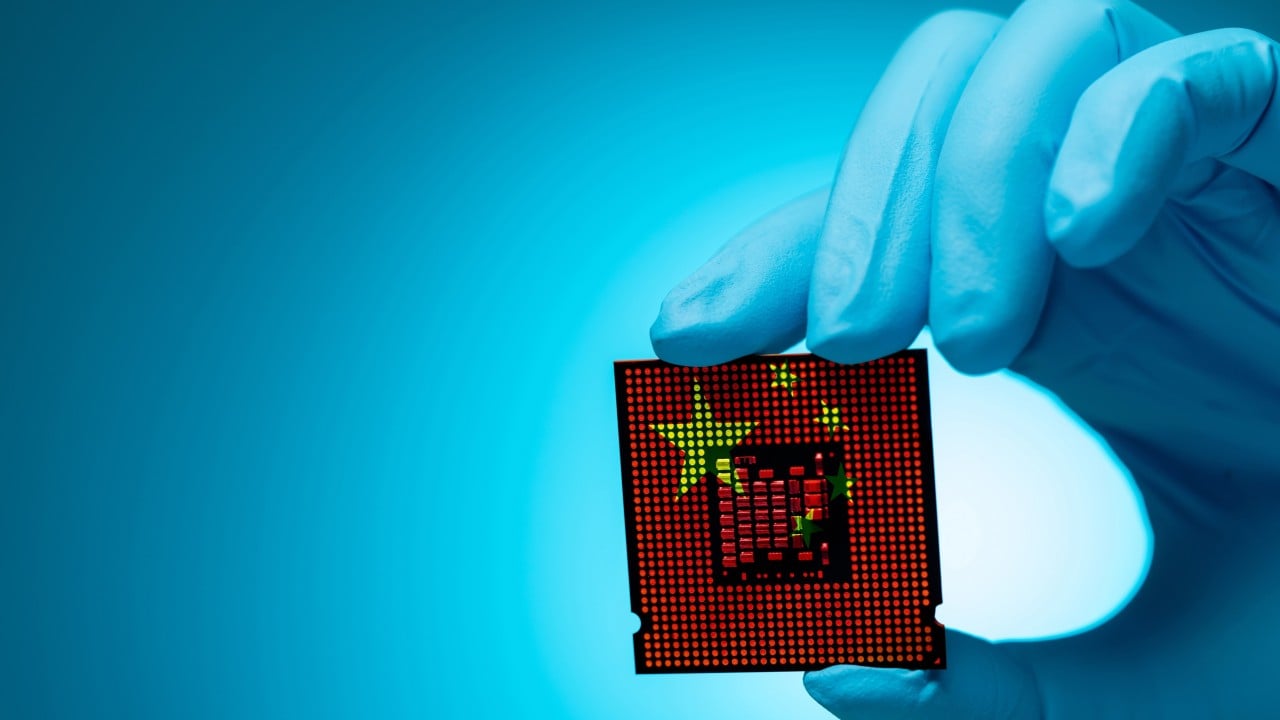
Company’s wafer expansion and AI demand could lift its DRAM share and more than double the stock’s value, analysts say The listing of CXMT, the country’s top maker of DRAM chips, sparked investor momentum as its shares surged 466 per cent to close at 49 yuan. It has become the most valuable company listed on the mainland Chinese market. Its market cap of 3.28 trillion yuan (US$484.6 billion) is larger than US chip giant Intel, valued at about US$464 billion. Nomura on Monday estimated its share of the global DRAM market could rise from about 10 per cent now to about 18 per cent by the end of 2028. That growth would be supported by monthly capacity expanding from 280,000 12-inch wafers in Hefei and Beijing at the end of 2025 to 350,000 by the end of 2026 and 550,000 by the end of 2028, with new lines added in Shanghai, it added.

Big Short trader Michael Burry’s rising bearish AI positions test China’s stock support
Markets

Big Short trader Michael Burry’s rising bearish AI positions test China’s stock support

Burry’s increasing bearish wagers put pressure on Beijing’s stock market intervention as Moody’s flags mounting debt risks Moody’s cautioned last week that heavy capital spending was eroding cash flows at US hyperscalers including Microsoft and Amazon.com. The global AI trade, alongside a bull run on Chinese technology stocks, has faltered amid doubts over whether data-centre and cloud spending will translate into real cash flows and justify stretched equity valuations. “I believe much of current and future demand is not driven by end customers, end demand,” said Burry in a post on Substack. The high-profile investor was featured prominently in the 2010 nonfiction book The Big Short, as well as its 2015 film adaptation. “Much and possibly most is financed, off-balance sheet and not lit. Future revenues are majority financed in a circular arrangement, per the 2026 BIS [Bank for International Settlements] annual report.”

CXMT surge shows why China stock buyers see IPOs as one-way bet
Markets

CXMT surge shows why China stock buyers see IPOs as one-way bet

Chipmaker CXMT surged more than fivefold on its Shanghai trading debut to become the largest mainland-listed company by market value as the artificial intelligence boom stokes demand for memory chips. The stock closed at 49 yuan, versus a sale price of 8.66 yuan. That gave the Hefei-based company a market capitalisation of 3.3 trillion yuan, surpassing Industrial and Commercial Bank of China. It traded as high as 55.03 yuan during the day on the tech-heavy Star Market. CXMT raised 57.92 billion...

7 Hong Kong developers bid for waterfront project as Kowloon renewal gathers pace
Markets

7 Hong Kong developers bid for waterfront project as Kowloon renewal gathers pace

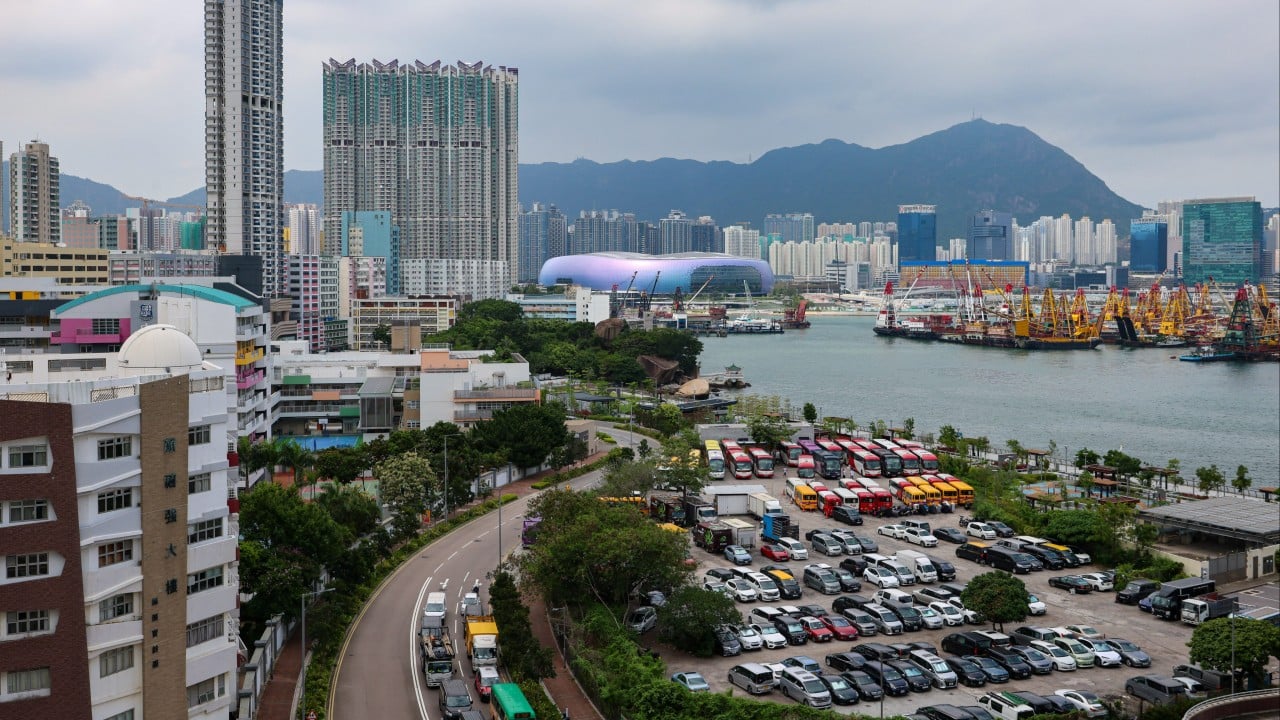
Site for 1,200 flats, worth at least US$688 million, is part of urban renewal initiative linking Kowloon neighbourhoods to Kai Tak Hong Kong’s Urban Renewal Authority (URA) received seven tender submissions for a major waterfront residential redevelopment project in Hung Hom, drawing bids from some of the city’s largest developers despite a subdued land market. The authority said on Monday that seven developers submitted tenders for the project before the noon deadline. A tender review panel under the URA board will assess the bids before making recommendations, with the board to decide on the successful developer. Wheelock Properties and Chinachem Group confirmed to the South China Morning Post that they had submitted a tender, while Sino Land said it had formed a consortium with Kerry Properties and Great Eagle Holdings to bid for the project. Other bidders include CK Asset Holdings, Sun Hung Kai Properties, K. Wah International, and China Overseas Land & Investment, according to local Chinese media reports and sources.

Quant funds blamed for driving Chinese equities slump, but data shows they were net buyers
Markets

Quant funds blamed for driving Chinese equities slump, but data shows they were net buyers

Some investors accuse quant funds of accelerating the July decline through share dumping, reigniting suspicions rooted in the 2015 crash Industry data, however, tells a different story. Several major quant funds were net buyers during some of the market’s weakest sessions this month, according to the Private Securities Investment Fund Professional Committee under the China Securities Investment Fund Association, as reported by domestic media last week. Market participants said the buying pattern reflected the way quantitative strategies were designed to operate. “Quant funds actually provide market liquidity rather than making one-sided directional bets,” said Wang Zheng, chief investment officer at Shanghai-based venture capital investment firm Jingxi Investment Management. However, he noted that similarities among quantitative models could sometimes amplify market movements.

How UOB is turning regional scale into customer relevance
Markets

How UOB is turning regional scale into customer relevance

The bank uses sharper customer segmentation, regional connectivity and partnerships to support customers in Asean as their needs evolve When UOB decided in early 2022 to proceed with the acquisition of Citigroup’s consumer banking businesses in four Asean markets, there was a clear strategic intent behind the deal. The goal for the Singapore-based financial institution was to scale up its business and advance its position as a leading regional bank by tapping into rising affluence in Asean, acquiring customers through its digital capabilities, and meeting their financial needs as they move up the wealth continuum. To reach that point, though, it was first necessary to complete a multi-year integration of the businesses acquired in Malaysia, Thailand, Indonesia and Vietnam, which went far beyond a basic transfer of management controls and portfolios. Each aspect of the replicable migration model was planned and executed to ensure definite benefits could be realised while also taking full account of client expectations, languages and banking preferences in four very distinct markets.

Hong Kong home sales recovery expected to boost developers’ earnings
Markets

Hong Kong home sales recovery expected to boost developers’ earnings

Despite the brighter residential market outlook, commercial real estate continues to be weighed down by a lack of demand in non-core areas Hong Kong property developers are expected to report stronger first-half earnings in the coming weeks, buoyed by a rebound in home sales and improving development margins, as investors look for clues on whether the sector’s recovery is sustainable. Bank of America Global Research expected Hong Kong developers and conglomerates to post average core net profit growth of 8 per cent year on year, excluding New World Development, according to a report published on July 15. “We expect the Hong Kong [property] sector to deliver a solid set of first-half 2026 results, driven by a strong recovery in depository participant margins, an early rental earnings rebound, and the foreign exchange tailwind from the yuan’s 6 per cent year-on-year appreciation,” said Karl Choi, a research analyst at Merrill Lynch (Hong Kong). Citi Research estimated that new-home registrations rose 34 per cent year on year to about 12,500 units, the highest first-half tally since 2004 and a 22-year high. Meanwhile, secondary home volume climbed 43 per cent year on year to a five-year high.

Fast-fashion giant Shein swings to US$99m first-quarter loss ahead of Hong Kong listing
Markets

Fast-fashion giant Shein swings to US$99m first-quarter loss ahead of Hong Kong listing

Tariffs, war and rising costs squeeze company’s margins as IPO looms, testing investor appetite for fast-fashion The Singapore-headquartered fast-fashion retailer, founded in China, recorded a US$99 million loss in the three months to March, reversing a US$395 million profit a year earlier. Net revenue edged up 1.1 per cent to US$9.05 billion in the same period. For full-year 2025, Shein’s net revenue rose nearly 8 per cent to US$41.85 billion, while net profit slumped 38.7 per cent to US$2 billion. The filing showed Shein was facing multiple risks in 2026, warning that net revenue, operating profit and net profit were being pressured by tariffs, potential pricing pressures, weaker regional demand and higher logistics and material costs. The European Union, accounting for about a third of Shein’s net revenue in 2025 and the first quarter of 2026, imposed a €3 (US$3.42) fee on low-value e-commerce imports this month, raising selling costs and likely hurting short-term volumes, Shein said.