Business — 1,959 insights
China AI summit hears Global South needs equal access to avoid digital divide
Business

China AI summit hears Global South needs equal access to avoid digital divide

Delegates at the World AI Conference in Shanghai warn fragmentation risks isolating emerging markets and concentrating advanced computing in rich economies Greater global cooperation and development-focused AI regulations are urgently needed to prevent a widening digital divide, scholars and international figures said at China’s premier AI conference on Saturday. “We need to build international consensus,” said Xue Lan, a prominent scholar of public policy and global AI governance and dean of the Schwarzman College at Tsinghua University, during a panel on Saturday. Xue called on international organisations to improve interoperability between national governance systems and prevent the fragmentation of global rules, while urging expanded cooperation between the Global South and the Global North. Meanwhile, representatives from developing economies cautioned that AI governance risked stifling early-stage progress in emerging markets. “Governance is not about regulating at the very beginning,” said Nambaryn Enkhbayar, former president of Mongolia, adding that nations had to first be able to seize technological opportunities and participate in the global AI economy.
Chinese social media accounts ‘profit from leaking official corruption scandals’
Business

Chinese social media accounts ‘profit from leaking official corruption scandals’

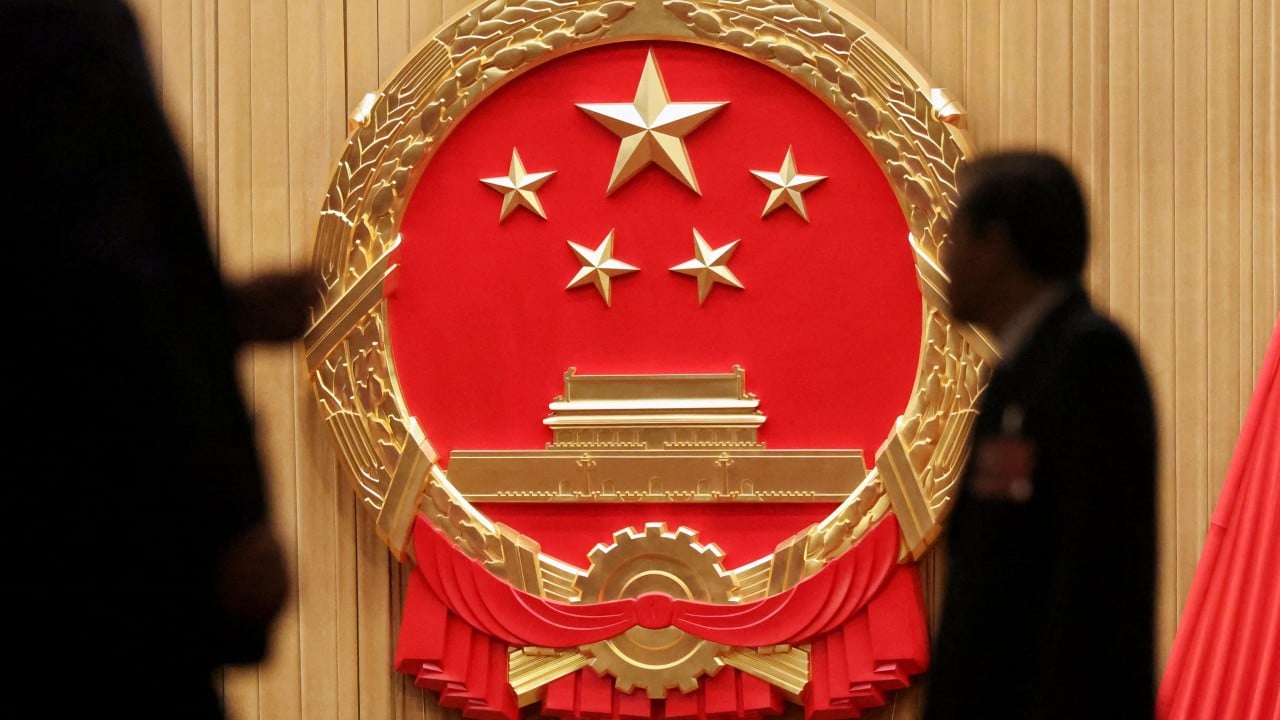
‘Grey market’ exploiting legal loopholes has made prosecution difficult, state media report warns The trend had created a new challenge for Chinese law enforcement, state-run journal Banyuetan reported on Friday. One tactic involves posting an official’s resume as a coded signal that they are under disciplinary investigation, according to Banyuetan, which is affiliated with state news agency Xinhua. It cited a case from a year ago involving Zhou Xianwang – a former senior official from Hubei province. On July 6 last year, a private social media account published Zhou’s detailed career history. Just two days later, China’s top anti-corruption watchdog announced that he was under investigation. The sequence of events was far from coincidental or isolated, Banyuetan noted, but rather part of a lucrative grey market where leaked information is circulated and monetised through online networks.

Sonam Wangchuk hospitalised after 21-day hunger strike over exam leaks
Business

Sonam Wangchuk hospitalised after 21-day hunger strike over exam leaks

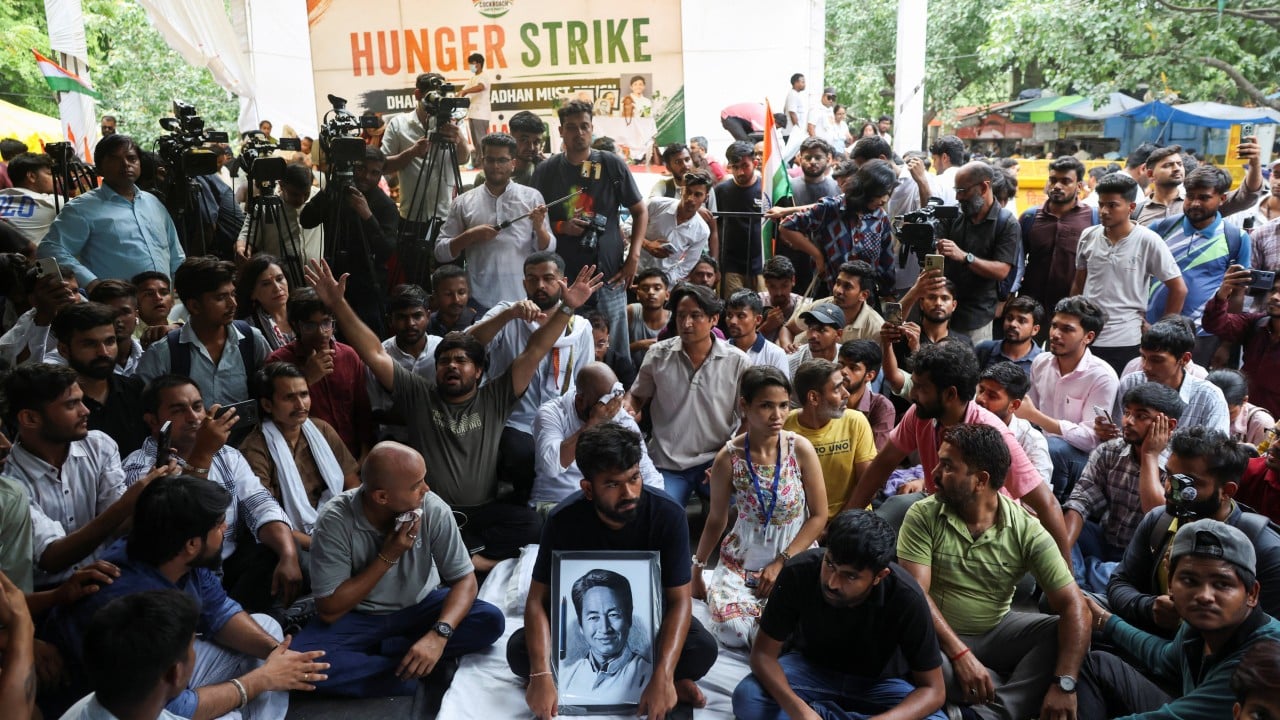
The 59-year-old Wangchuk has been fasting to demand the resignation of Modi’s education minister ‌over exam paper leaks that affected millions of students Authorities in India’s capital Delhi moved social activist Sonam Wangchuk to hospital against his will on Saturday, after his condition worsened on the 21st day of a hunger strike launched to demand the resignation of the federal education minister. Wangchuk, 59, had been fasting since June 28 in solidarity with India’s youth Cockroach Janta Party (CJP), which is demanding Education Minister Dharmendra Pradhan step down ‌over exam paper leaks in May that affected millions of students. Wangchuk’s campaign has emerged as a rare public challenge to Prime Minister Narendra Modi’s government, drawing support across India and amplifying the activist’s demands through millions of views and shares on social media. Television footage on Saturday showed dozens of security personnel, some in plain clothes, holding large white sheets before Wangchuk was taken away. Wangchuk had told government doctors on Friday that he did not wish to be moved to a hospital. On Saturday, he was refusing treatment, hospital authorities said.

AI-powered robots take over cotton topping
Business

AI-powered robots take over cotton topping

By continuing to browse our site you agree to our use of cookies, revised Privacy Policy and Terms of Use. You can change your cookie settings through your browser. AI machines are replacing grueling manual labor during cotton topping season. Using 3D cameras & 108 robotic arms, the robot can work at a high temperature of 38°C, covering up to 600 acres of land daily. (Shang Jianglong contributed to this story.)

Weather weapons: why the atmosphere could become the next geopolitical battleground
Business

Weather weapons: why the atmosphere could become the next geopolitical battleground

There is growing disquiet in several nations about how weather-manipulation tools are used in cross-border rivalries When devastating floods swept through Assam in northeastern India in 2018, the disaster quickly triggered a troubling question within New Delhi’s security corridors. As technology advances, could control over the weather become a tool of geopolitical pressure, or even a weapon? The project, which was first raised in 2016, aims to intercept and redirect atmospheric moisture across the Tibetan Plateau, but has triggered criticism both within China and abroad. “If this new system is introduced, there will surely be huge ramifications,” Sarma said, arguing that India could not afford to ignore the downstream effects of large-scale atmospheric manipulation. With China planning to expand its artificial rainfall capabilities across 5.5 million sq km (2.1 million square miles) – an area about 1.7 times the size of India – apparent regional speculation has evolved into a national security concern. With climate disasters becoming more frequent and destructive, from devastating typhoons in China to unprecedented floods that brought Dubai to a standstill, the sky is no longer just a symbol of climate change.

3 arrested after 131kg of ketamine disguised as sugar cubes found in air cargo
Business

3 arrested after 131kg of ketamine disguised as sugar cubes found in air cargo

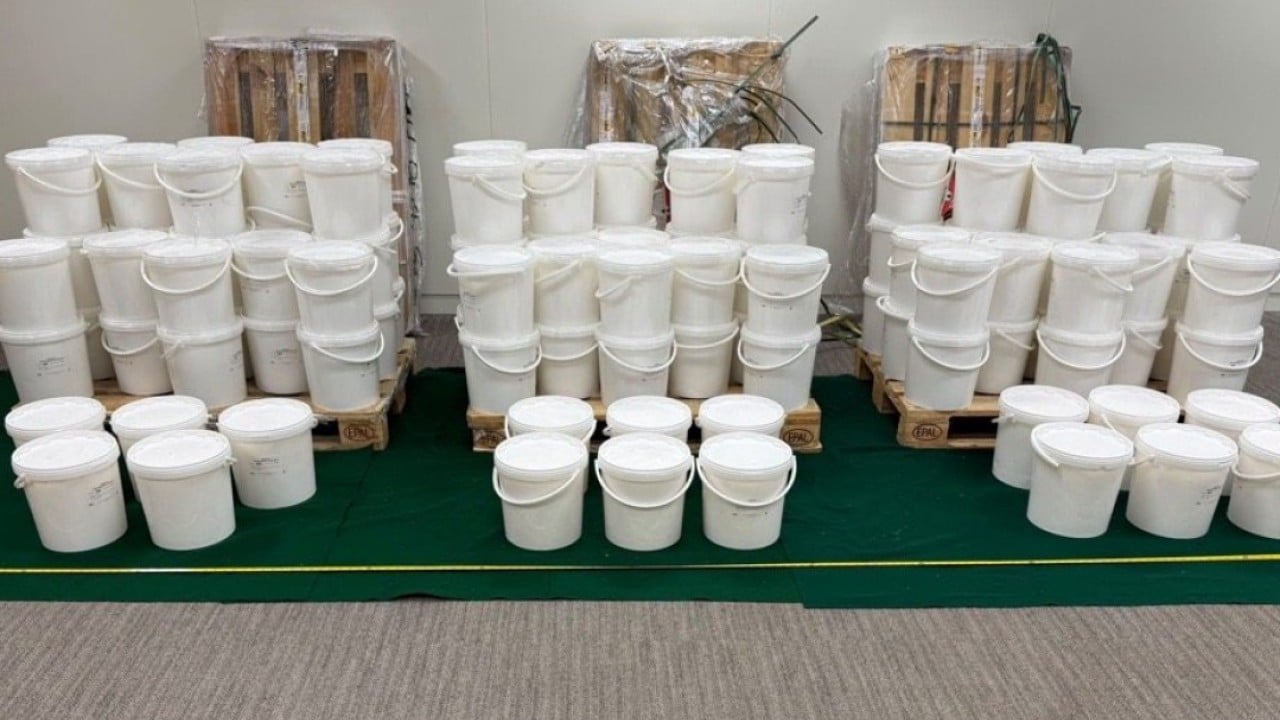
Hong Kong customs intercept cargo from Germany with help from mainland authorities and find pails containing drugs worth about HK$51 million Hong Kong customs officers have arrested three men in connection with 131kg of suspected ketamine worth about HK$51 million (US$6.5 million), disguised as sugar cubes and found in air cargo transported to the city. Chiu Kai-wing, a senior investigator with the Customs and Excise Department’s drug investigation bureau, said on Saturday that officers had intercepted an air cargo consignment from Germany declared as containing sugar cubes on Tuesday, after exchanging intelligence with mainland Chinese authorities. “The syndicate exploited convenient logistics in the city, using a complicated and more expensive route to traffic drugs, in a bid to hide the goods’ origins and evade detection,” Chiu said. Customs officers discovered 131kg (289lbs) of suspected ketamine in the form of white crystals inside 17 of 117 plastic pails declared as containing sugar cubes. The suspected illegal drugs had an estimated value of around HK$51.4 million. Chiu said that the use of air transport, which is more expensive than road or sea freight, for low-cost goods such as sugar had aroused suspicions.

Call to merge housing checking unit with Buildings Department after Tai Po fire
Business

Call to merge housing checking unit with Buildings Department after Tai Po fire

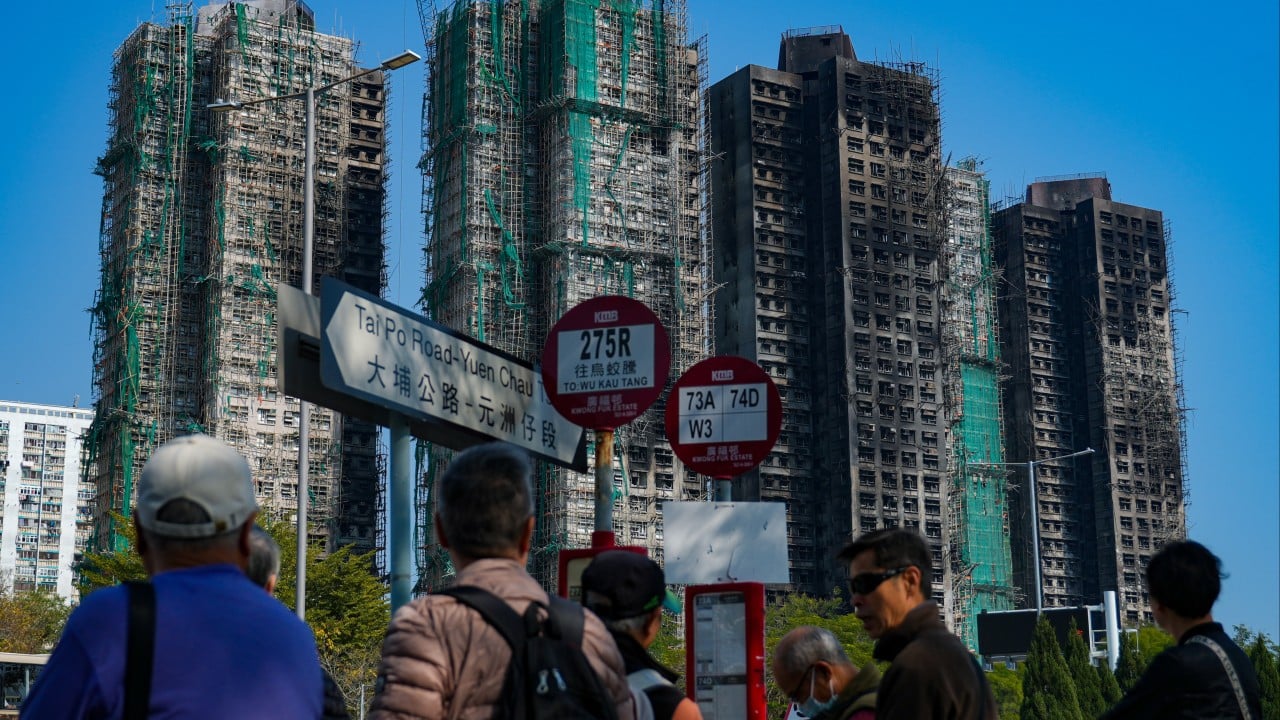
Some Wang Fuk Court residents question why team tasked with inspecting construction projects should remain under Housing Bureau Some residents left homeless by Hong Kong’s deadliest inferno in decades have called for merging the Housing Bureau’s Independent Checking Unit (ICU) with the Buildings Department after a public inquiry revealed communication failures between them. In recommendations submitted to the independent committee investigating the Wang Fuk Court fire, which were released on Saturday, legal representatives for nine residents said folding the ICU into the department would reduce regulatory overlap. “Given the systemic defects and collaborative failures as revealed by the fire, we recommend that the work of the Independent Checking Unit be handed to the Buildings Department, to reduce redundancy and avoid any errors caused by delays in information flow,” they said. The inferno that broke out at Wang Fuk Court in Tai Po on November 26 last year killed 168 people and displaced nearly 5,000. The eight blocks were undergoing renovation at the time. Following the disaster, Chief Executive John Lee Ka-chiu ordered the establishment of the judge-led independent committee to investigate the cause of the fire.

Hong Kong homebuyers snap up 138 Garden Regency flats in New Territories project
Business

Hong Kong homebuyers snap up 138 Garden Regency flats in New Territories project

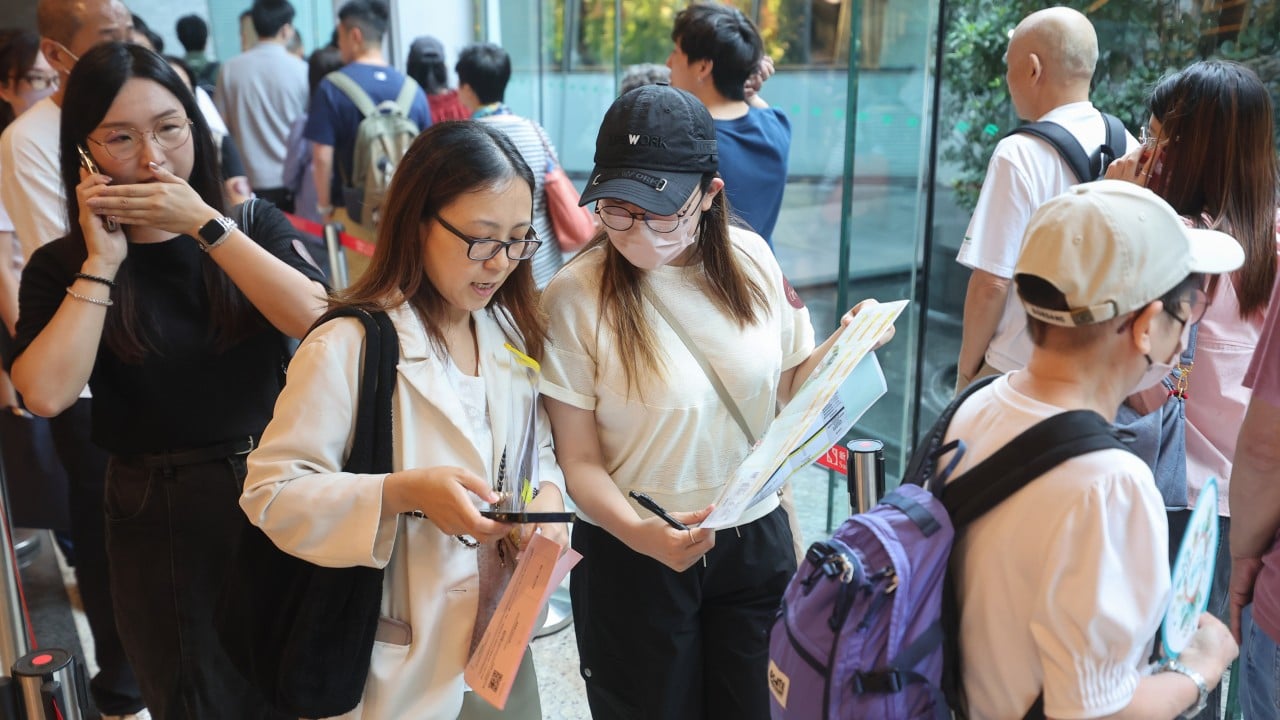
Top developer clears all units in weekend launch after offering a maximum 16 per cent discount Sun Hung Kai Properties (SHKP), Hong Kong’s largest developer by market capitalisation, has sold out the first batch of units at its Garden Regency project in the New Territories on Saturday, according to agents. By 3.30pm, all 138 flats the developer had launched in the Kam Tin North project in Yuen Long had found buyers, the agents said. “It’s been a while since we have seen the launch of a new project in Hong Kong,” said Norry Lee, senior director of projects strategy and consultancy at JLL. The slowdown in the launch of new projects in Hong Kong came amid an anticipated increase in interest rates in the second half of the year, with developers also expected to adjust their pricing strategy to boost sales. “I believe a potentially higher interest rate will slow the market,” Lee said. “But for Garden Regency, SHKP has already started with a lower price to counter the risk of a high-interest rate environment.” The first price list of the Garden Regency indicated a maximum 16 per cent discount on the flats, which ranged from 289 sq ft to 412 sq ft and were put on the market at HK$3.93 million (US$501,000) to HK$5.88 million.

Why China’s approach is outperforming flashy narratives
Business

Why China’s approach is outperforming flashy narratives

By continuing to browse our site you agree to our use of cookies, revised Privacy Policy and Terms of Use. You can change your cookie settings through your browser. Editor's note: Warwick Powell is an adjunct professor at Queensland University of Technology. This article reflects the author's opinion not necessarily those of CGTN's. Tourists taking photos and sightseeing at the Temple of Heaven, Beijing, China, June 9, 2026. /VCG In an era of relentless information warfare and competing global narratives, one might expect the side with the slickest messaging to dominate. Yet recent evidence suggests otherwise. A June 2026 Pew Research Center survey across 36 countries reveals a notable shift: In 25 nations, more respondents held favorable views of China than of the United States — the first time Pew has recorded this outcome in roughly two decades of tracking. China's favorability reached a median of around 46%, while the US sat at 36%. This reversal is particularly pronounced in middle-income and Global South countries. This outcome challenges assumptions about the supremacy of creative propaganda. China is not renowned for flashy public diplomacy.

Alibaba targets Nvidia’s dominant software ecosystem with open-source AI stack
Business

Alibaba targets Nvidia’s dominant software ecosystem with open-source AI stack

The firm’s chip unit T-Head aims to lower migration barriers to Zhenwu AI computing architectures, following similar initiatives by Huawei and Moore Threads Alibaba Group Holding’s chip design unit, T-Head, has announced that it will open-source its proprietary software stack, marking its latest effort to streamline developer operations and challenge the dominance of American chip giant Nvidia’s CUDA ecosystem. The vast majority of artificial intelligence programmers globally remain reliant on Nvidia’s specialised software, which effectively locks them into using the firm’s hardware. By offering alternative frameworks, Chinese technology firms seek to bolster self-sufficiency amid the broader US-China tech rivalry. In 2025, Huawei pursued a similar strategy by open-sourcing its Compute Architecture for Neural Networks (CANN), the software platform used to develop applications for its Ascend AI processors. T-Head stated that its own open-source initiative was designed to lower the barrier for international developers seeking to adopt its hardware, adding that programmers could adapt the SAIL stack to mainstream AI frameworks in less than seven days.

‘Litany of failures’ blamed as Hong Kong’s Tai Po fire inquiry concludes
Business

‘Litany of failures’ blamed as Hong Kong’s Tai Po fire inquiry concludes

Months of hearings uncover chain of errors and missed warnings behind city’s deadliest blaze since 1948 An independent inquiry into Hong Kong’s deadly Tai Po fire has concluded after examining more than 1 million files and hearing from 80 witnesses across 30 public sessions, uncovering the causes of the blaze that killed 168 people. The panel, chaired by Justice David Lok Kai-hong, wrapped up its hearings on Friday after proceedings that began on March 19. The inquiry examined evidence and testimony related to the Wang Fuk Court fire, the city’s deadliest since 1948. “Through open investigation and hearings, we seek to learn lessons and prevent a repeat of this tragedy. This is how we do justice to those who perished,” Lok said at the final session. During the inquiry, lead counsel Victor Dawes SC pointed to a series of systemic failures that led to the catastrophe, including the accumulation of combustible materials at the renovation site, authorities’ inability to curb their use and an unclear division of responsibility among government departments. “There is no single, simple cause,” Dawes said.

India launches first private orbital rocket as space start-ups expand
Business

India launches first private orbital rocket as space start-ups expand

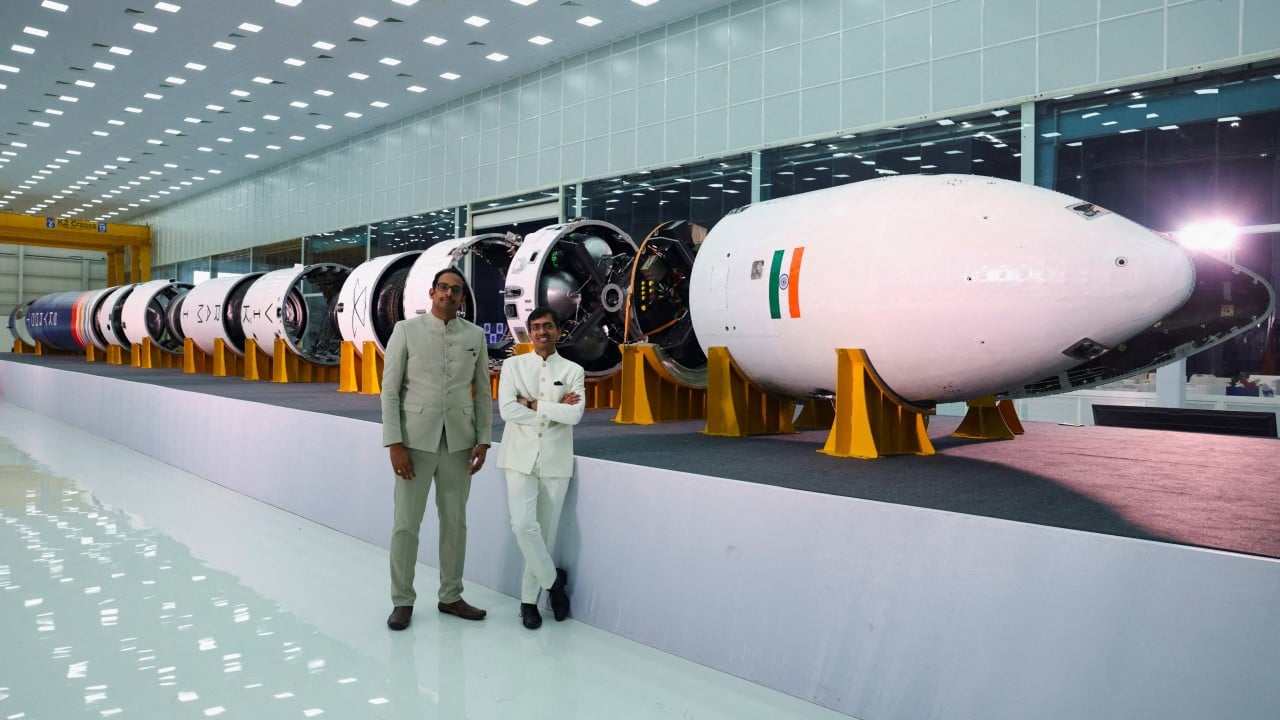
Skyroot Technologies’ Vikram-1 rocket is about as tall as a seven-storey building and capable of carrying up to 350kg India’s first privately built orbital rocket took its maiden flight on Saturday, its company said, marking a significant step for the South Asian giant as it eyes a bigger slice of the global space economy. The Vikram-1 rocket, built by Skyroot Aerospace and designed to carry small satellites into low-Earth orbit, took off from the Satish Dhawan Space Centre in Sriharikota amid loud cheers. “Hello space, we have arrived!” Skyroot Aerospace said on social media. “Vikram-1’s Test Flight-1 has completed its mission. The first ever Indian private sector launch has been successfully completed.” Vikram-1 is about as tall as a seven-storey building and capable of carrying payloads weighing up to 350kg (771 pounds). Pawan Goenka, Chairman of the government’s Indian National Space Promotion and Authorisation Centre, said the achievement went “way beyond expectation for the very first orbital launch ever taken by an Indian private company”. Prime Minister Narendra Modi hailed the endeavour as “a defining moment in India’s space journey”.