Business — 1,959 insights
US party heads to China to examine national security implications of trade relationship
Business

US party heads to China to examine national security implications of trade relationship

The fact-finding mission by members of a congressional advisory body is the first of its kind since 2019 Delegates representing a United States congressional advisory panel are making their first trip to China in seven years to investigate how the two countries’ economic and trade relationship affects national security. The US-China Economic and Security Review Commission has requested meetings with Chinese government officials, academics and industry leaders in key technology sectors such as artificial intelligence, biotechnology and robotics. It said it would also meet with US diplomats and American companies operating in China during this week’s fact-finding trip. “We are not travelling to reset the relationship. We are travelling to understand it,” the commission’s chairman Randall Schriver said on Sunday. The commission is an independent panel established by Congress in 2000 to advise lawmakers on the national security implications of the US-China trade and economic relationship. It last visited mainland China before the Covid-19 pandemic in 2019 – amid the heightened trade tensions that marked Donald Trump’s first term as president – and also visited Hong Kong in May that year.


‘They only eat to sustain life’: how does isolation shape Hong Kong’s elderly diets?
Business

‘They only eat to sustain life’: how does isolation shape Hong Kong’s elderly diets?

Higher malnutrition risk among isolated elderly who stick to limited choices, but social interaction fosters better eating habits and helps meet nutrition needs, dietitian says In the second of a five-part Health Matters wellness series on ageing in Hong Kong, Lo Hoi-ying examines rising social isolation among the elderly, its serious health risks and how activities and community support are helping seniors stay socially engaged. For Lee Chor-kwan, an 89-year-old living alone in Hong Kong, mealtimes are often lonely. But the highlight of his day is lunchtime, when he visits an elderly care home to eat with his 86-year-old wife, whom he met through an arranged marriage more than 60 years ago. “I visit her every day and wheel her out for a stroll in the sun,” he said, adding that both of them celebrated their diamond anniversary over burgers last week. Lee, who wears dentures, said he sometimes bought small treats to share with his wife when they got tired of meals served in the home, although they rarely ate out because they found the food served at restaurants too greasy. For the meals he ate alone, Lee said he cooked them “as simply as possible”. “I wake up every day at 4am to cook myself oatmeal for breakfast,” he said.

France and Germany reach nuclear deal as Europe builds up defences
Business

France and Germany reach nuclear deal as Europe builds up defences

France is the only nuclear power in the 27-member EU, while Germany plans to build Europe’s strongest conventional military by 2039 The leaders of Germany and France announced on Friday that the German military would participate in a nuclear exercise under a French initiative to deepen European nuclear cooperation. The move by both countries to deepen nuclear cooperation underscores growing European defence self-reliance amid concerns about the future of US security commitments to the continent. “We will have German conventional forces participate in a nuclear exercise conducted by the French armed forces before the end of this year,” Chancellor Friedrich Merz announced after talks with French President Emmanuel Macron at Norvenich airbase near Cologne in western Germany. He said that the cooperation with France “complements” the Nato nuclear sharing agreement, to which Germany remains committed. US nuclear bombs are stationed in Germany as part of the treaty organisation’s nuclear deterrent, and German fighter jets have been certified to potentially carry the weapons in case of an emergency.

How Yunnan’s mineral wealth and border corridors could solve China’s ‘Malacca dilemma’
Business

How Yunnan’s mineral wealth and border corridors could solve China’s ‘Malacca dilemma’

‘Nationally leading resource reserves’ make the province indispensable to Beijing’s push for ‘defence industry mobilisation’, report says Their study was published in the academic journal Defence Industry Conversion in China, which is supervised by the national defence technology authority and aims to encourage the military-civilian dual use of technology. The study also described Yunnan – which borders Myanmar, Laos and Vietnam – as an “irreplaceable gateway” to resources on the Indochinese peninsula that provided an “effective solution” to China’s so-called Malacca dilemma. This refers to Beijing’s heavy reliance on the Strait of Malacca for trade, a vulnerability that adversaries could exploit during periods of high tension. “Yunnan acts as a land-based lifeline that ensures the supply of mineral raw materials required for the defence industry in wartime or extreme scenarios remains free from maritime power constraints, making it the most reliable and controllable strategic guarantee corridor for critical mineral resources,” the report said.

Chinese AI chipmaker: Open collaboration is key to the future of AI
Business

Chinese AI chipmaker: Open collaboration is key to the future of AI

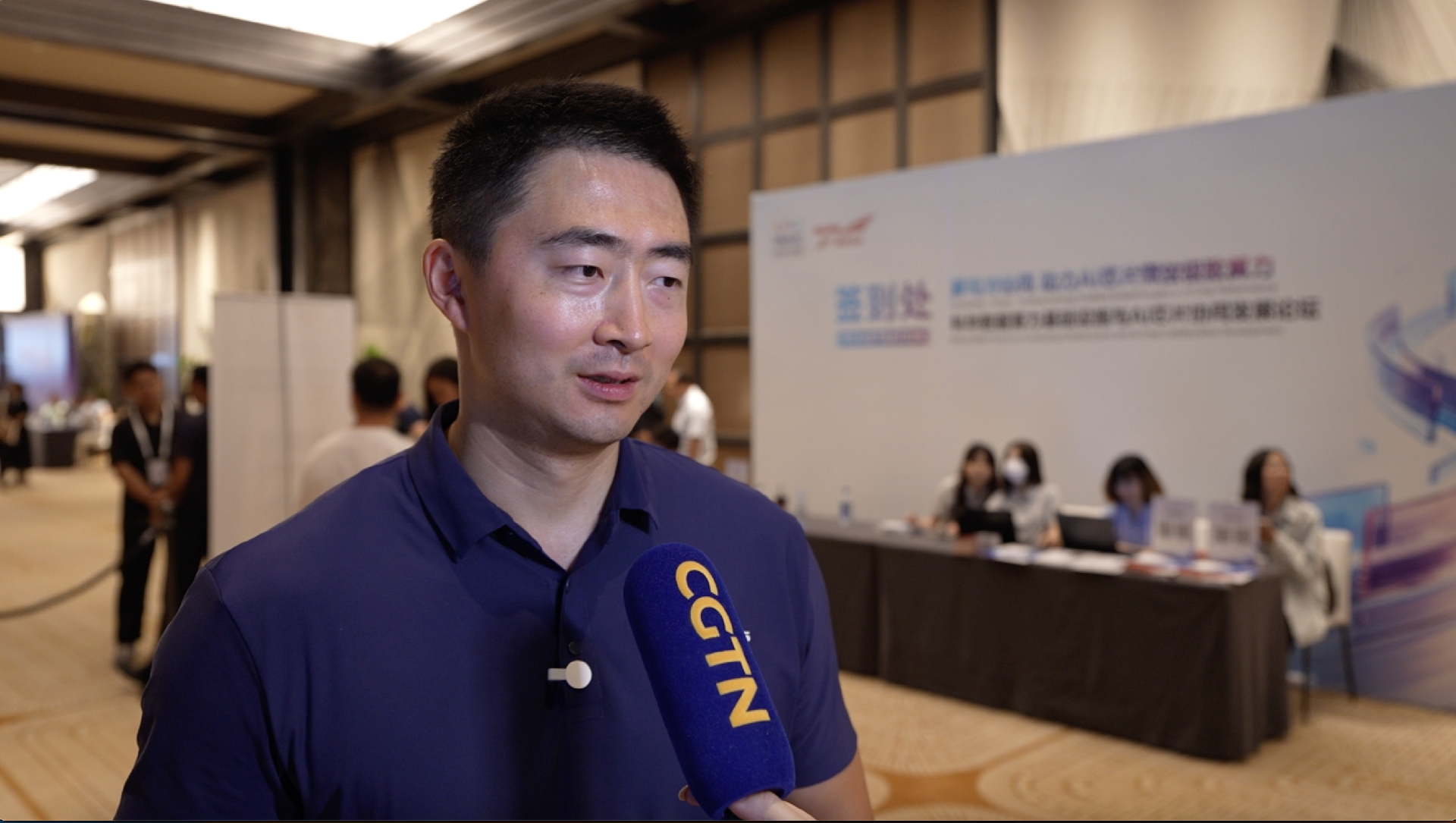
By continuing to browse our site you agree to our use of cookies, revised Privacy Policy and Terms of Use. You can change your cookie settings through your browser. China's homegrown AI innovations, such as optoelectronic computing, will help build an open global AI ecosystem across both domestic and international dimensions, said Zou Tianqi, CEO of MakeSens, in an interview with CGTN reporter He Jingyi at WAIC 2026.

Spectacular feats of robots at WAIC 2026
Business

Spectacular feats of robots at WAIC 2026

By continuing to browse our site you agree to our use of cookies, revised Privacy Policy and Terms of Use. You can change your cookie settings through your browser. Robots showcased impressive skills at WAIC 2026. Beyond basic running and jumping, robots played ping-pong, quadruped robots pulled off stunning 720° backflips, and some other robots performed delicate daily household chores.

Malaysia investigates state pension’s failed eFishery investment
Business

Malaysia investigates state pension’s failed eFishery investment

The agritech start-up collapsed over a US$300 million fraud, with its jailed CEO revealing that he had falsified the company’s accounts A team was formed on Friday to “study and examine the issue thoroughly,” Malaysian Anti-Corruption Commission Chief Commissioner Abdul Halim Aman said in a statement on Saturday. “The investigation will be conducted fairly, transparently and impartially based on existing legal provisions,” Abdul Halim said. “The public is requested not to speculate on this investigation to avoid confusion and maintain the integrity of the investigation process.” KWAP, as the pension fund is known, invested about 163.4 million ringgit (US$40 million) in eFishery, it said in a statement on Saturday. That represented about 2.51 per cent of eFishery’s shareholding, it said. “KWAP was a minority shareholder, while the majority of the company’s shares were held by other investors, including major global institutional investors that were similarly affected by the misconduct,” the pension fund said. “KWAP is also continuing to pursue all available avenues to maximise the recovery of its investment.”

For every dollar invested, we bring in more than 8, Hong Kong investment chief says
Business

For every dollar invested, we bring in more than 8, Hong Kong investment chief says

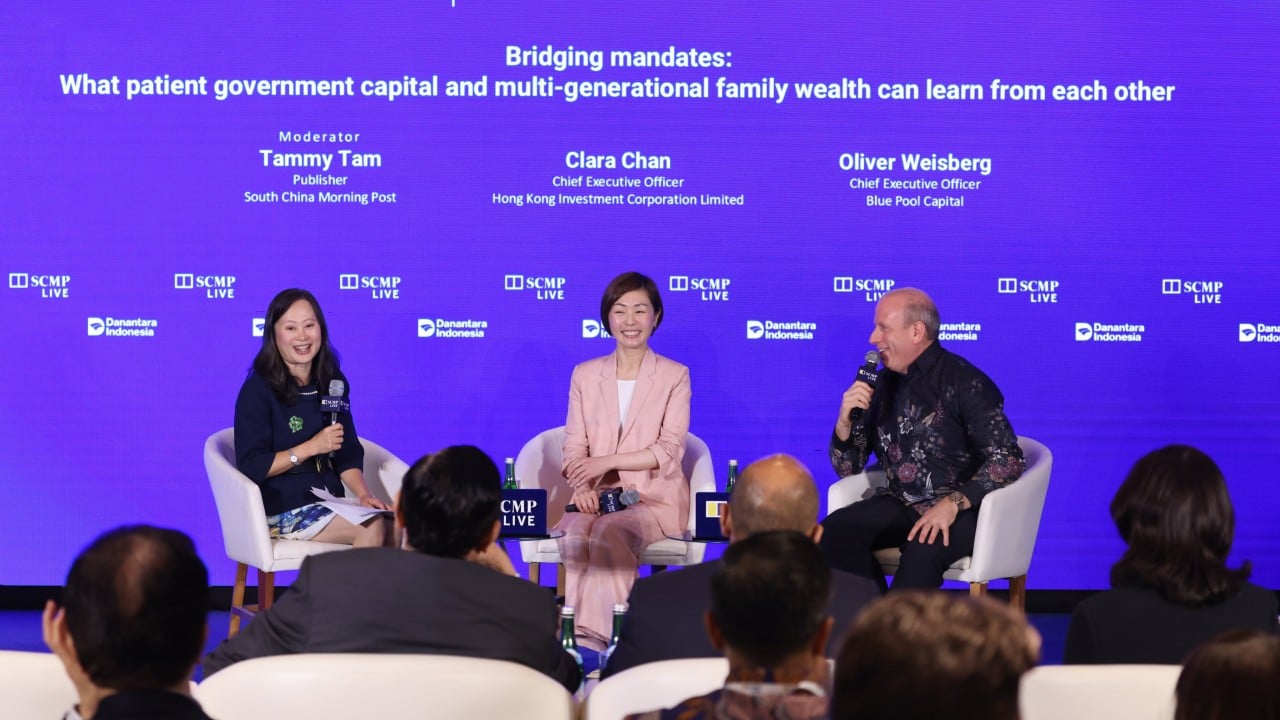
Hong Kong Investment Corporation head Clara Chan explains her strategies at Nusa Dua Forum organised by SCMP and Indonesia’s sovereign wealth fund Danantara Official support and collaboration with private capital are critical for sovereign wealth funds to succeed, the head of Hong Kong’s government-owned investment vehicle has said, as she spelled out strategies needed to deliver high returns. At the inaugural Nusa Dua Forum organised by the South China Morning Post and Indonesia’s sovereign wealth fund Danantara in Bali on Friday, Hong Kong Investment Corporation (HKIC) CEO Clara Chan Ka-chai said that partnerships were key to its strong performance. She was speaking at a panel discussion with Blue Pool Capital CEO Oliver Weisberg that was moderated by SCMP publisher Tammy Tam. “For every dollar we invest, we bring in more than eight from international patient capital such as sovereign wealth funds, pension funds and universities,” Chan said. The forum brought together 120 participants ranging from Indonesian and Hong Kong officials, sovereign fund operators, family office leaders and institutional investors in Bali, which is aiming to become a global financial centre.

China team cuts 3D optical chip production time from hours to seconds
Business

China team cuts 3D optical chip production time from hours to seconds

New fabrication method speeds up production time for photonic chips via parallel processing technology However, translating that potential into mass-producible hardware is often bottlenecked by slow, complex manufacturing. A Chinese research team says it has overcome one of the field’s biggest manufacturing hurdles, unveiling a fabrication method that cuts production time for complex three-dimensional optical structures from hours to seconds. “Our work establishes a versatile platform that bridges the gap between design complexity and scalable manufacturing for next-generation 3D integrated photonics,” wrote the research team led by PhD student Wang Yi.

Hong Kong’s 5-year plan must focus on what the city does best
Business

Hong Kong’s 5-year plan must focus on what the city does best

Hong Kong has embarked on the path of drawing up its first five-year plan – a significant moment in its history. Hong Kong’s first five-year plan should be more than a local economic blueprint. Properly conceived, it should define how the city contributes to China’s national development while preserving the global connections that make Hong Kong uniquely valuable. Success will depend on three mutually reinforcing pillars – deeper integration with the mainland, seamless connectivity across the...

Chinese man discovers family dining table is ancestor’s Qing dynasty academic record
Business

Chinese man discovers family dining table is ancestor’s Qing dynasty academic record

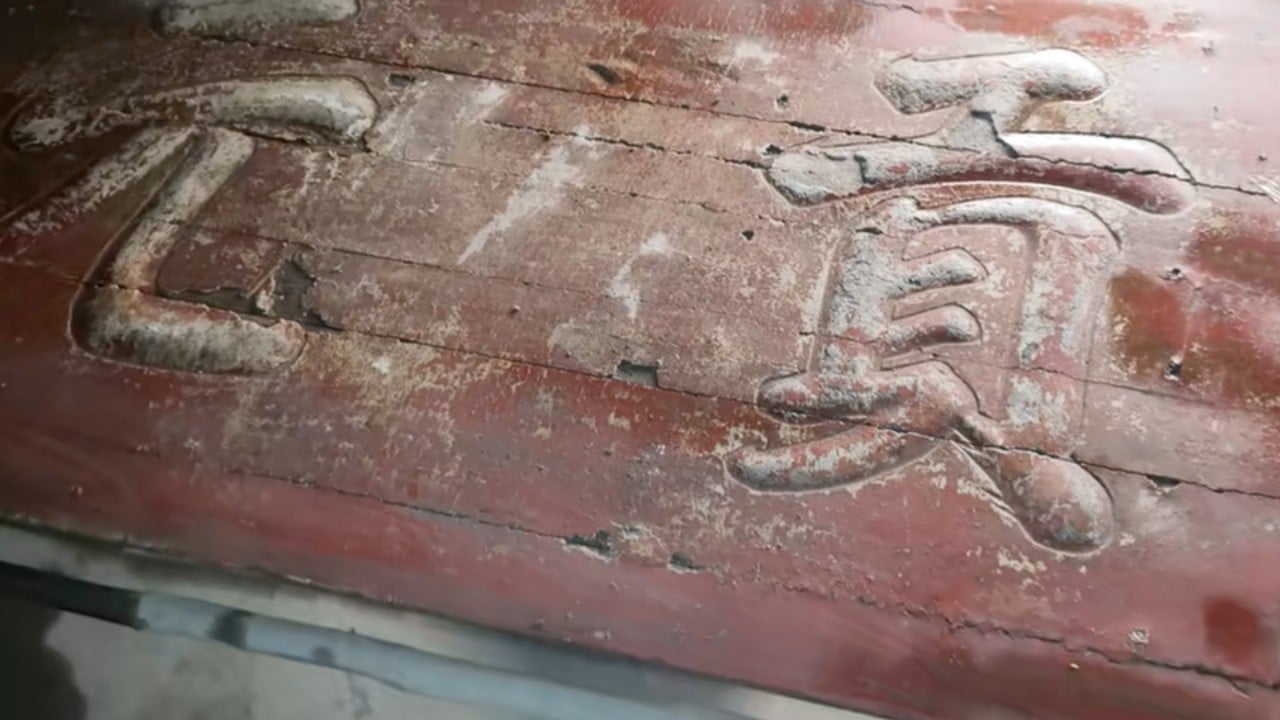
Carvings on cracked and faded furniture reveal it to be honour board recognising ancestor’s high mark in provincial imperial examinations A man in eastern China was stunned to discover that his family’s battered dining table was in fact a Qing dynasty (1644–1912) honour board commemorating an ancestor’s success in the imperial examinations. Xu, a villager in Anhui province, shared the unusual story in an online video on July 12, which subsequently went viral on mainland social media. The footage shows a dark-red wooden table scarred by decades of use, with cracked edges and a faded surface. Yet two carved Chinese characters – “Gongyuan” – remain visible. “I never imagined that the table our family had used for decades was actually my great-great-grandfather’s academic record,” Xu wrote. He said the object was originally a plaque. Older relatives, impressed by its thick, sturdy timber, later repurposed it as a dining table, unaware of its historical significance. The inscription went largely unnoticed until Xu, driven by curiosity, searched the characters online.

Tears of anger as Tai Po fire survivors slam negligent authorities after hearing
Business

Tears of anger as Tai Po fire survivors slam negligent authorities after hearing

Following independent committee hearings, residents say government departments are passing the buck and call for courts to ensure accountability Tears, anger and exhaustion marked the conclusion of an inquiry into the deadly fire at Hong Kong’s Wang Fuk Court, as survivors condemned government departments for passing the buck and demanded accountability. Residents have reacted to the conclusion of an inquiry into the deadly fire at Hong Kong’s Wang Fuk Court with tears of anger and exhaustion, as survivors condemned government departments for passing the buck and demanded accountability and apologies. An independent committee investigating the Tai Po fire, which killed 168 people and displaced about 5,000 residents last November, wrapped up its final hearing on Friday after 30 sessions over four months. Some survivors told the South China Morning Post that the end of the hearings represented just one step in the search for justice. “Today is not the final chapter, but the starting point. Only when the committee releases its final report will it be the true beginning of uncovering facts and achieving justice,” said Yip Ka-kui, a former Wang Tai House resident who lost his wife to the fire and testified in an earlier session.