Business — 1,913 insights
China becomes a summer hotspot for European travelers
Business

China becomes a summer hotspot for European travelers

By continuing to browse our site you agree to our use of cookies, revised Privacy Policy and Terms of Use. You can change your cookie settings through your browser. With temperatures soaring across Europe, travel bookings to China surged nearly fourfold this summer. Thanks to visa-free access and convenient tax refunds, exploring China has never been easier for global tourists. Swipe through to see the numbers behind the trend.

‘Micro-discrimination’ against Indonesians? Bali run club controversy revives concerns
Business

‘Micro-discrimination’ against Indonesians? Bali run club controversy revives concerns

The alleged exclusion of Indonesians from the running group has resurfaced claims that racism and colourism are well and alive in Bali Indonesian immigration authorities have blacklisted two Dutch nationals linked to Entourage running club after an online outcry over the alleged exclusion of locals from the popular group. The incident echoes long-standing concerns about discrimination against Indonesians on the resort island. The furore has also underlined the challenge facing law enforcement as officials try to rein in foreign-run activities suspected of breaching immigration and business rules, despite recent efforts to stop the practice early. The controversy flared after several Indonesian residents in Bali shared screenshots showing their attempts to join the Canggu-based club, which had organised early-morning silent disco runs in May and June.

Moonshot’s Kimi K3 triggers Silicon Valley debate over bans on Chinese open source models
Business

Moonshot’s Kimi K3 triggers Silicon Valley debate over bans on Chinese open source models

Chinese open-weight models are gaining wider adoption overseas, raising concerns in Washington over China’s accelerating AI progress On Monday, the Chinese AI start-up not only released the model’s “weights” – the underlying parameters that encode its intelligence – but also made available key infrastructure, including tools to improve efficiency and stability. The move has allowed developers around the world, including in the United States, to use, copy, modify and distribute the software – the largest open-weight AI model so far with 2.8 trillion parameters. The cloud unit of Alibaba Group Holding said its supernode powered by proprietary Zhenwu M890 chips was compatible with Kimi K3, while a computing platform powered by Huawei Technologies’ Ascend 910C also completed adaptation. Alibaba owns the South China Morning Post. Moonshot itself is diversifying beyond the Nvidia ecosystem.

What does deeper tech integration during US-led Rimpac mean for China?
Business

What does deeper tech integration during US-led Rimpac mean for China?

Forces from 30 countries joined the US military for the world’s largest maritime drills, with uncrewed systems playing an active role From Japanese land-based anti-ship missiles to US attack submarines and exploding drone boats, allied forces linked troops on shore with aircraft, surface and undersea vessels to form a single network able to find, track and attack the same maritime target. The drills, which ran from June 24 to July 31 and are the world’s largest maritime exercises, involved forces from 30 nations but one of its most complex live-fire events brought together troops and weapons from six countries alongside the United States. Forces from Japan, South Korea, Australia, Canada, Chile and Spain joined the live-fire exercise, which included the sinking of two retired warships. The multinational forces fired at the former guided-missile cruiser USS Mobile Bay and the nearly 40,000-tonne amphibious assault ship USS Peleliu in separate live-fire events during the drills. A Spanish frigate fired a Harpoon at Peleliu, while US and Japanese ground forces took part in the exercise from the Pacific missile range facility at Barking Sands in Hawaii.


Chinese cinemas seek new growth by diversifying business models
Business

Chinese cinemas seek new growth by diversifying business models

By continuing to browse our site you agree to our use of cookies, revised Privacy Policy and Terms of Use. You can change your cookie settings through your browser. Movie posters at a cinema in Fuyang City, east China's Anhui Province, July 19, 2026. /VCG China's summer movie season is heating up. With a string of new releases, including Kung Fu Soccer and All Wishes Come True hitting theaters, students and family audiences have become a major source of traffic during the summer holiday. Data from online platforms showed that as of 3:40 p.m. on July 28, the total box office revenue of China's 2026 summer movie season, including presales, had surpassed 6 billion yuan ($886.7 million). With cinemas seeing a surge in audiences, they are exploring new ways to expand beyond traditional film screenings and create more immersive, multi-purpose entertainment spaces. In Beijing's Wukesong area, a weekend "food street" event has turned the local cinema into one of the most popular spots in the surrounding commercial area. Moviegoers can enjoy free local delicacies by presenting their cinema purchase receipts, with long lines forming at many food stalls.

Hong Kong parents rush babies for check-ups over infant formula lead scare
Business

Hong Kong parents rush babies for check-ups over infant formula lead scare

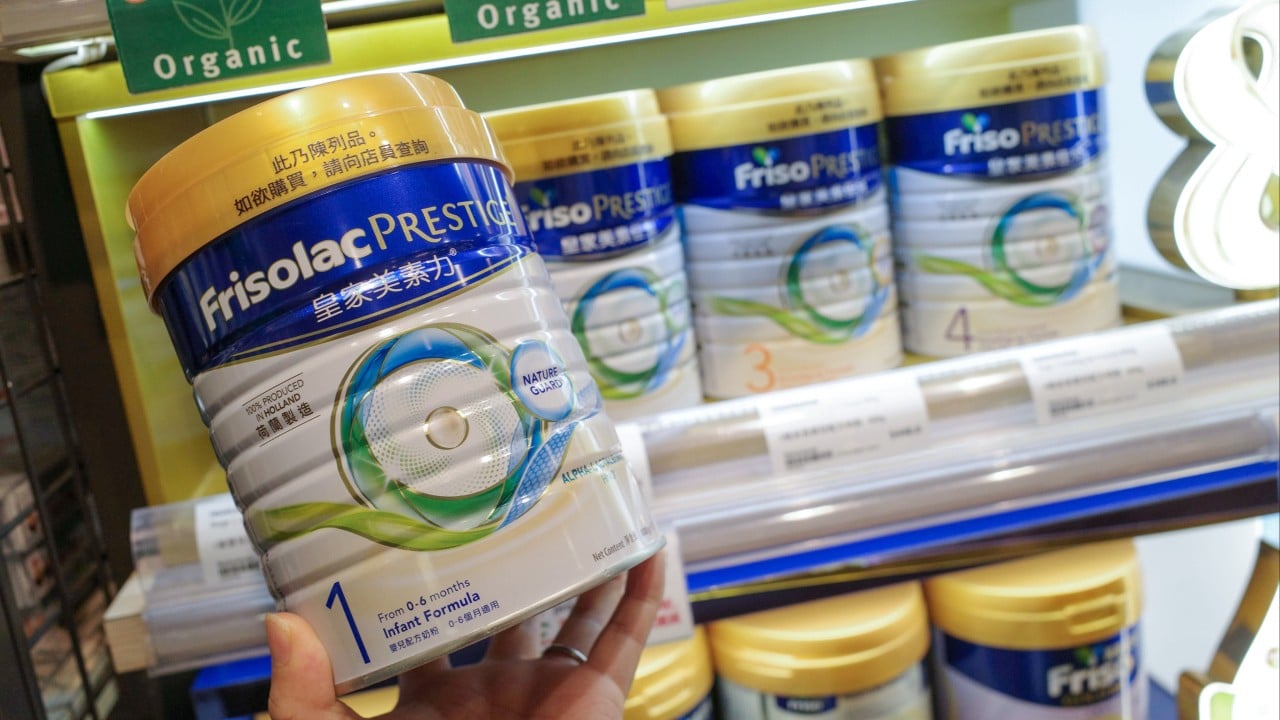
Mother tells SCMP that her five-month-old baby is in hospital for observation after consuming Friso batch flagged by Macau authorities Worried Hong Kong parents who bought a popular powdered infant formula are taking their children for medical check-ups after a batch of the product was found to contain excessive levels of lead. One mother told the South China Morning Post on Tuesday that her five-month-old baby was staying in hospital for observation after the child consumed the same batch of Frisolac Prestige Stage 1 (800 grams) flagged by Macau authorities. Royal FrieslandCampina, which manufactures the Friso milk formula brand, has stressed that third-party testing confirmed the batch complied with standards. After Hong Kong’s Centre for Food Safety requested a recall on Saturday, parents who used the brand’s other formula products expressed concern and asked for advice on alternatives. “Even if I switch to a new formula, how do I know that brand is safe? Would that one be the next affected product?” a Threads user wrote. Another parent, who had been buying Frisolac Prestige for her daughter since she was born, said: “My six-month-old girl has been taking Frisolac Prestige Stage 1 since birth.

Engel’s Law at work: China’s H1 income and consumption data in context
Business

Engel’s Law at work: China’s H1 income and consumption data in context

By continuing to browse our site you agree to our use of cookies, revised Privacy Policy and Terms of Use. You can change your cookie settings through your browser. Editor's note: Warwick Powell is adjunct professor at Queensland University of Technology. The article reflects the author's opinions and not necessarily the views of CGTN. Maturing incomes, structural upgrading and the limits of aggregate narratives The National Bureau of Statistics' mid-year release on households' income and consumption expenditure delivers a data-driven rebuttal to persistent claims of stagnation in China. In the first half of 2026, nationwide per capita disposable income reached 22,981 yuan ($3,395), marking a nominal increase of 5.2% and a real increase of 4.2% after adjusting for prices. This is no picture of frozen wages or hollowed-out household finances. Wage income grew 5.3%, net business income 6.5%, and transfer income 5.8%. These gains reflect broad-based progress amid global uncertainties. Rural areas led the way, with per capita disposable income rising 6.4% nominally and 5.5% in real terms, comfortably outpacing urban growth of 4.4% nominal and 3.4% real.

Will Europe follow the path of American-style protectionism?
Business

Will Europe follow the path of American-style protectionism?

By continuing to browse our site you agree to our use of cookies, revised Privacy Policy and Terms of Use. You can change your cookie settings through your browser. European Union flags seen at the Berlaymont building in Brussels, Belgium, July 20, 2026. /VCG Editor's note: Xu Deshun is a research fellow at the Chinese Academy of International Trade and Economic Cooperation under the Ministry of Commerce. The article reflects the author's opinions and not necessarily the views of CGTN. Following the end of the COVID-19 pandemic, countries around the world should have joined forces to overcome common challenges and worked together to restore global economic growth. Yet reality has fallen short of this expectation. According to UNCTAD's Trade and Development Report 2025, the global economy is projected to grow at an average annual rate of 2.7% during 2023-2026, below the 3.0% average recorded between 2011 and 2019, the pre-pandemic period. This slowdown stems from a complex interplay of factors, among which the Russia-Ukraine conflict, the conflict in the Middle East, and the uncertainty surrounding the US trade policy have had particularly significant adverse effects.

China’s new ‘new three’ industrial upgrade
Business

China’s new ‘new three’ industrial upgrade

By continuing to browse our site you agree to our use of cookies, revised Privacy Policy and Terms of Use. You can change your cookie settings through your browser. China's foreign trade is undergoing a critical structural upgrade. Moving past cost-reliant manufacturing exports, the country now relies on continuous technological innovation to sharpen its global edge, transforming from a traditional manufacturing exporter to a high-end, innovation-driven trade player.

Graphics: China’s new ‘new three’ high-tech exports in numbers
Business

Graphics: China’s new ‘new three’ high-tech exports in numbers

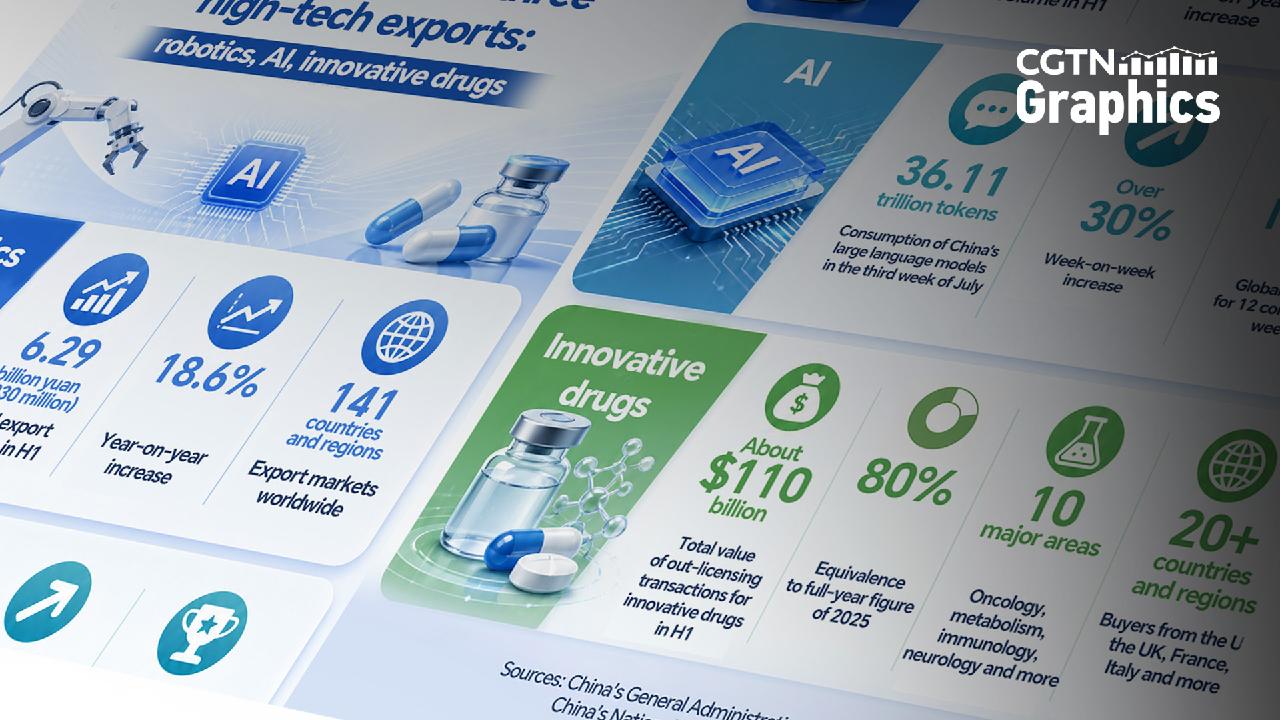
By continuing to browse our site you agree to our use of cookies, revised Privacy Policy and Terms of Use. You can change your cookie settings through your browser. While exports of electric vehicles, lithium batteries and solar cells are known as China's "new three," the country's manufacturing lineup is rapidly evolving. Robots, artificial intelligence (AI) and innovative medicines – labeled the "new 'new three'" – have emerged as powerful new foreign trade growth drivers in the first half of the year.

China issues document calling for objectivity over ‘excess capacity’
Business

China issues document calling for objectivity over ‘excess capacity’

By continuing to browse our site you agree to our use of cookies, revised Privacy Policy and Terms of Use. You can change your cookie settings through your browser. China's Ministry of Commerce (MOFCOM) on Tuesday released a document titled "China's Position on the So-called Excess Capacity Issue" to clarify the facts surrounding the matter and elaborate China's policy stance on the issue. The document states that the rapid development of China's modern industries has been driven by innovation, adding that the relationship between manufacturing capacity and demand is a changing dynamic in a market economy. The document urges all parties to be open-minded and objective when it comes to the issue of capacity, saying that protectionism can only disturb global trade and bring long-term risks to global growth. File photo of a solar panel factory in China's Jiangxi Province. /VCG Following the release of the document, Lin Weilong, a MOFCOM researcher, told the press that China's industrial capacity utilization is at a reasonable level — 74.4% among factories over a designated size in 2025.

CATL-backed smart driving tech firm to kick off Hong Kong IPO this week: sources
Business

CATL-backed smart driving tech firm to kick off Hong Kong IPO this week: sources

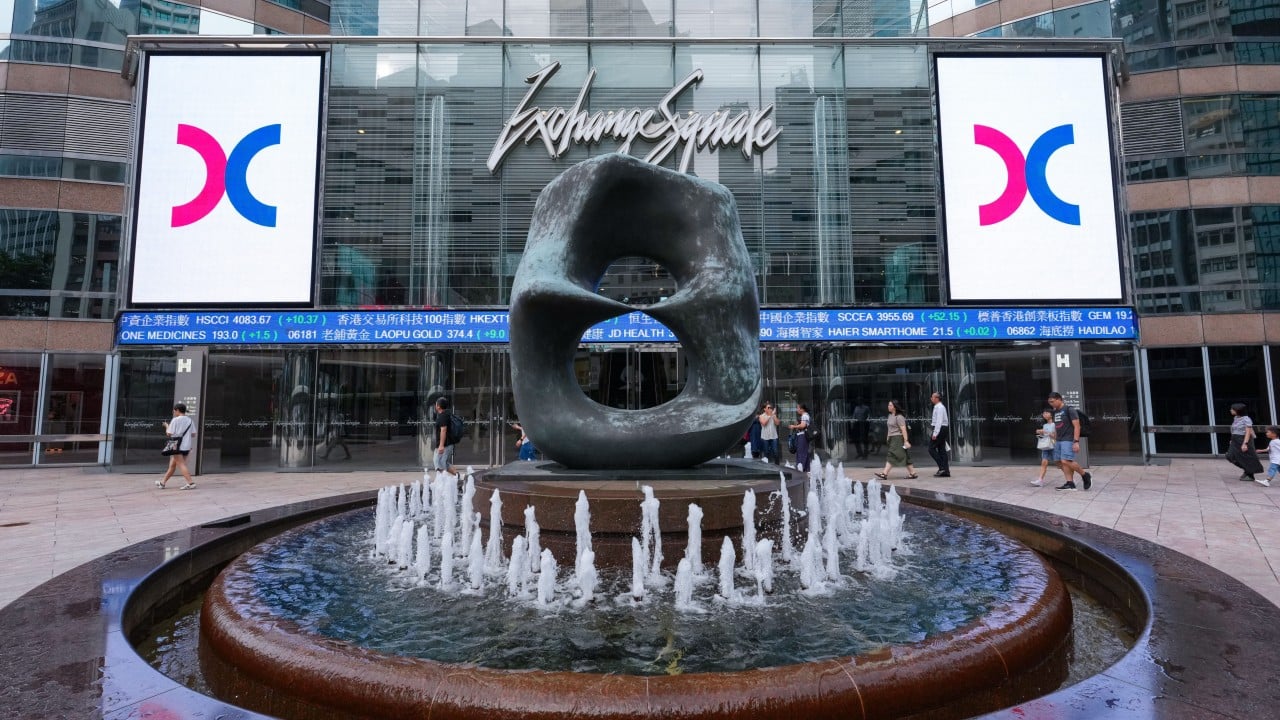
NASN Intelligent Tech could launch its book-building as early as Thursday and debut in early August NASN Intelligent Tech, a mainland Chinese smart driving motion control technologies company, is seeking to kick off its initial public offering (IPO) as soon as Thursday, according to people familiar with the matter. Founded in 2016, NASN completed multiple funding rounds before the IPO, with CATL and Hillhouse Investment each holding more than 3 per cent of shares. Other backers include Qiming Venture Partners and the Bank of China Capital. Prior to the IPO, NASN announced that CLSA stepped down as one of its overall coordinators, without disclosing the reason for the termination. Haitong International Securities and BOCI Asia continue to serve as joint sponsors. The company remains unprofitable, posting a 2025 full-year loss of 189 million yuan (US$26.9 million), up 12 per cent year on year, and a first-quarter loss this year of 54.9 million yuan, up 37 per cent, driven by high R&D spending. It expects to remain operating at a loss for 2026.