Business — 3,570 insights
Japanese agency warns of ‘cruelly hot days’ amid 40 degrees and above heat
Business

Japanese agency warns of ‘cruelly hot days’ amid 40 degrees and above heat

At least 14 people have died from heat-related causes in the past week as emergency officials describe the rising heat as ‘a disaster’ Japanese cities are experiencing “cruelly hot days”, a new meteorological term devised this year to warn people of intense heat above 40 degrees Celsius (104 Fahrenheit), with emergency officials describing the soaring temperatures on Wednesday as “a disaster”. Heatstroke alerts were issued across almost the whole country and emergency officials said at least 14 people had died from heat-related causes in the past week. Three central cities logged scorching temperatures on Tuesday above the new threshold, called kokushobi, which translates to “cruelly hot day”, according to the Japan Meteorological Agency (JMA). Large areas, including the central hub of Nagoya and communities near Tokyo in the east, were enduring temperatures approaching or above 40 degrees on Wednesday. The new term was designed to draw greater public attention to heat-related warnings, although it does not trigger any official measures nationwide. The JMA has issued heatstroke alerts in 41 out of Japan’s 47 prefectures, urging the public – especially the country’s many elderly – to take steps to stay cool.
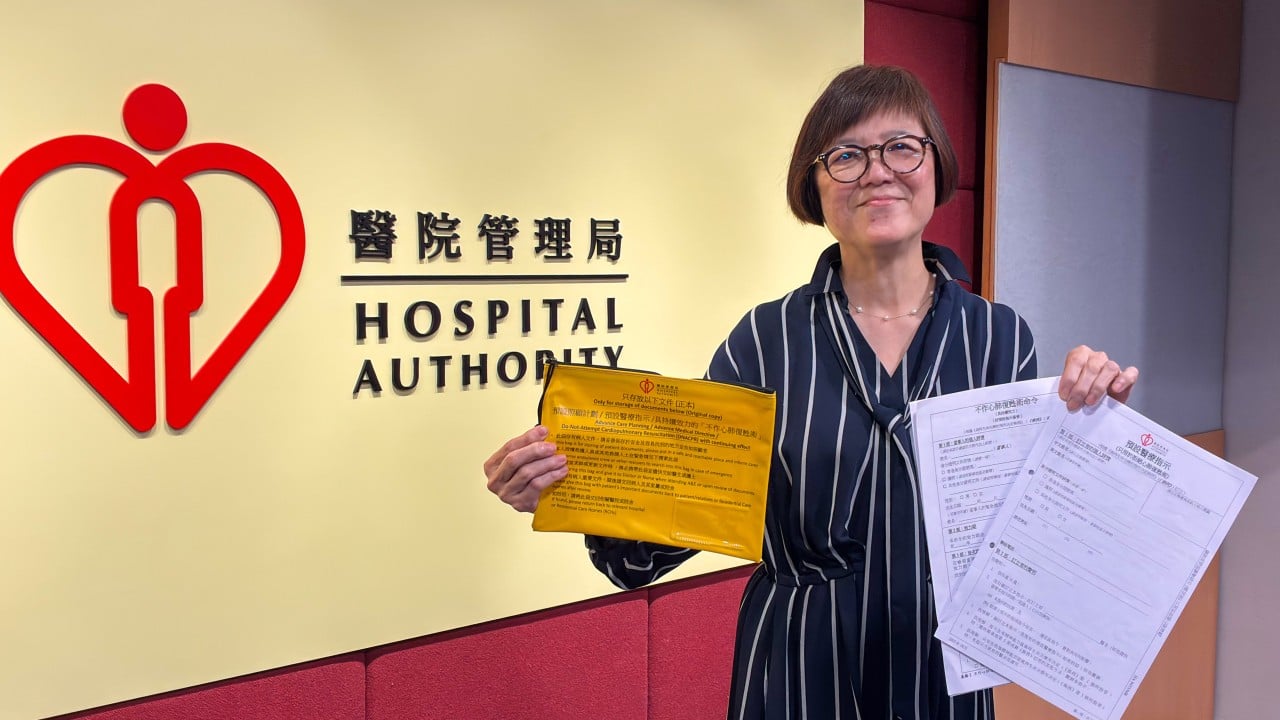

End-of-life directives to go on eHealth as new law takes effect in Hong Kong
Business

End-of-life directives to go on eHealth as new law takes effect in Hong Kong

Hospital Authority’s Doris Tse says Advance Decision on Life-sustaining Treatment Ordinance ‘milestone for Hong Kong’s end-of-life care’ Hongkongers will be able to upload orders specifying which life-sustaining treatments they do not wish to receive when terminally ill to the city’s electronic health record platform from next Friday, when the new law comes into effect. The move marks a significant step in formalising end-of-life care arrangements, more than 20 months after the Advance Decision on Life-sustaining Treatment Ordinance was passed by lawmakers. “This legislation is a milestone for Hong Kong’s end-of-life care,” Dr Doris Tse Man-wah, chairwoman of the Hospital Authority’s clinical ethics committee, said on Wednesday. While advance medical directives and do-not-attempt cardiopulmonary resuscitation (DNACPR) orders – the two instruments key for end-of-life decisions – had been in place in public hospitals based on common law since 2010, Tse said the new ordinance provided clearer legal protection for both patients and healthcare professionals. “The legislation could help rule out all uncertainties, and protect people who draft [the directives] as well as rescue personnel,” Tse said.

China expresses strong opposition to EU’s fine on AliExpress
Business

China expresses strong opposition to EU’s fine on AliExpress

By continuing to browse our site you agree to our use of cookies, revised Privacy Policy and Terms of Use. You can change your cookie settings through your browser. The front of an AliExpress high-street shop in Madrid, Spain, July 20, 2026. /VCG China's Ministry of Commerce on Wednesday expressed strong dissatisfaction and serious concern over the European Commission's decision to fine AliExpress 550 million euros (about $627 million) under the EU's Digital Services Act. China firmly opposes the EU's moves to erect digital barriers under the guise of platform regulation and adopt discriminatory measures to restrict and suppress the normal operations of Chinese e-commerce companies in Europe, a spokesperson for the ministry said in a statement. China urges the EU side to stop abusing its discretionary power through legal ambiguities and treat Chinese companies in a fair and just manner, the spokesperson said. The spokesperson added that China will firmly support Chinese companies in safeguarding their rights via legal means and will take solid steps to protect their legitimate interests.

How China keeps the world cool this summer
Business

How China keeps the world cool this summer

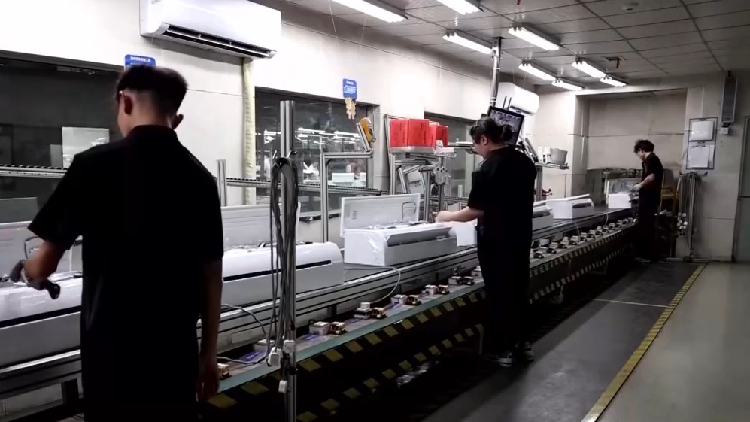
By continuing to browse our site you agree to our use of cookies, revised Privacy Policy and Terms of Use. You can change your cookie settings through your browser. Summer heat is driving demand for cooling appliances worldwide. Behind the scenes, China's manufacturing is shifting into high gear — with smart designs, efficient production, and strong supply chains keeping products moving.

China’s low altitude economy moves from vision to reality
Business

China’s low altitude economy moves from vision to reality

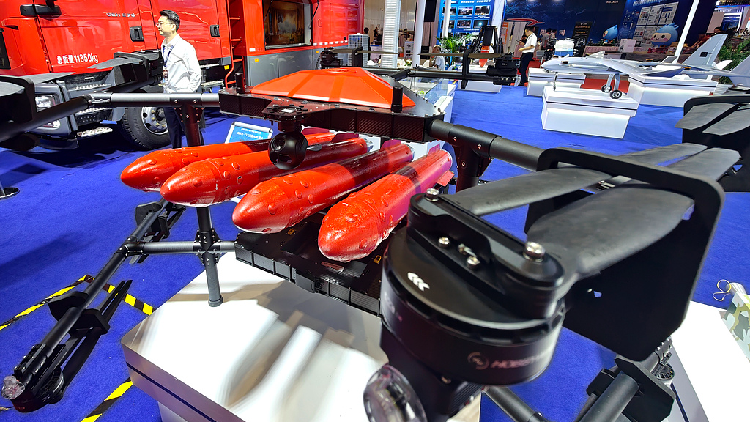
By continuing to browse our site you agree to our use of cookies, revised Privacy Policy and Terms of Use. You can change your cookie settings through your browser. A firefighting AI robot​ on display at the 2026 Beijing International Low-Altitude Economy and UAV System Industry Exhibition, Beijing, China, June 26, 2026. /VCG For years, the idea of flying cars, drone deliveries and low-altitude travel belonged mostly to the world of science fiction. But that future is gradually moving closer to reality as China's low-altitude economy enters a new stage of development. Low-altitude economy, generally referring to economic activities conducted in airspace below 1,000 meters, is undergoing a profound transformation. Once largely associated with agricultural drones, aerial surveying and emergency rescue, low-altitude aviation is expanding into areas that directly connect with everyday life. Drone deliveries, smart city management, industrial inspections and future urban air mobility are opening new possibilities beyond traditional aviation. At the center of this transformation are technologies such as artificial intelligence, autonomous flight systems, advanced batteries and intelligent manufacturing.

When the stars bloom above, and the flowers bloom below
Business

When the stars bloom above, and the flowers bloom below

By continuing to browse our site you agree to our use of cookies, revised Privacy Policy and Terms of Use. You can change your cookie settings through your browser. Bring your friends and experience a night like this in Fujin, Heilongjiang Province.

Summer is unfolding in slow motion
Business

Summer is unfolding in slow motion

By continuing to browse our site you agree to our use of cookies, revised Privacy Policy and Terms of Use. You can change your cookie settings through your browser.

BizDataDive: Europe’s economic ties with the Chinese market
Business

BizDataDive: Europe’s economic ties with the Chinese market

By continuing to browse our site you agree to our use of cookies, revised Privacy Policy and Terms of Use. You can change your cookie settings through your browser. China and the EU remain closely linked through trade and industry. Check out the infographics to discover the depth of Europe's economic ties with the Chinese market.

Xi’s national team rides again to save swooning tech stocks
Business

Xi’s national team rides again to save swooning tech stocks

Support us China is pumping state money into stocks to stabilize sliding tech shares. Image: X TOKYO — Chinese stocks just had a remarkable week, with stellar news from startup Moonshot AI delivering a DeepSeek-like jolt to a fragile market. Its new AI model reminded investors how fast China Inc. is closing the technology gap with Silicon Valley. But as China’s “new economy” grabs the headlines, its “old economy” troubles are grabbing the wrong kind of global attention at a rough moment for Xi Jinping’s Communist Party. A giant property crisis, near-record youth unemployment, dismal local government finances and weak consumer demand are weighing on markets — and Beijing’s “national team” is back in action. Xi’s inner circle has reactivated its usual cast of regulators, state-backed investors, insurers and asset managers to circle the wagons after a chaotic tech-share selloff. On Sunday alone, funds tied to Beijing announced purchases of nearly US$8.9 billion in stocks. National-team deployments have a track record of stabilizing Shanghai shares. The most famous came in summer 2015, when shares fell by a third in a few weeks.

How Australia resisted PRC economic coercion: lessons for others
Business

How Australia resisted PRC economic coercion: lessons for others

Support us It can be argued that Australia weathered the economic coercion storm despite massive tariffs from the PRC because of its rich iron ore export industry. China invested in smaller iron-ore suppliers in Western Australia. Photo: AAP The People’s Republic of China has used its statecraft to weaponize its trade with other countries on several occasions in recent years. Such behavior usually arises when the PRC interprets another country’s actions as hostile to its political interests and resorts to nonofficial sanctions, tariffs, regulations, and consumer boycotts that damage a host nation’s economy. These actions don’t follow market sentiments and can be revoked without a change in any underlying economic concerns the PRC initially used to justify its imposition. Many targeted countries use terms such as economic coercion to refer to trade decisions intended to alter a nation’s policies, behaviors or decisions. Among the many advanced economies experiencing trade deficits with the PRC, Australia is a unique case. Australia possesses abundant natural resources, from iron ore to coking coal to barley and fisheries. Many of these products became major trading commodities between Australia and the PRC.

China’s urban employment remains stable in first half of 2026
Business

China’s urban employment remains stable in first half of 2026

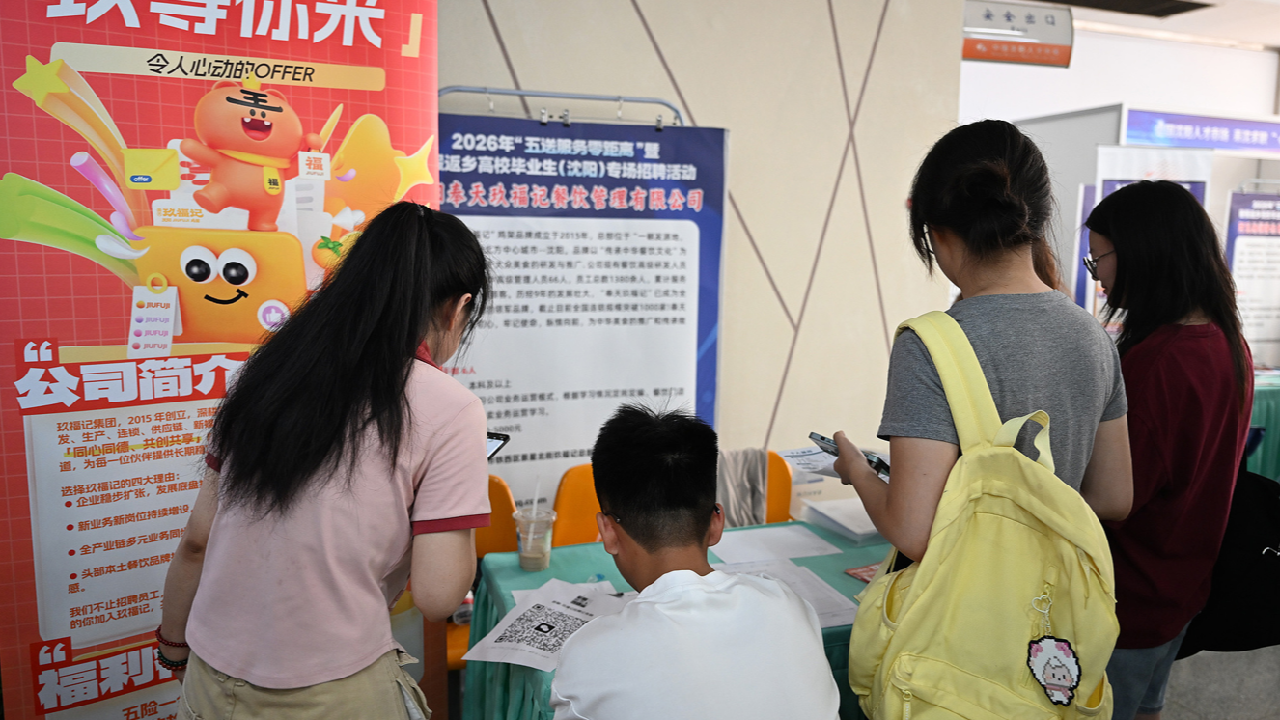
By continuing to browse our site you agree to our use of cookies, revised Privacy Policy and Terms of Use. You can change your cookie settings through your browser. A job fair in Shenyang, northeast China's Liaoning Province, July 18, 2026. /VCG China's employment situation remained generally stable in the first half of 2026, with 6.95 million new urban jobs created, the Ministry of Human Resources and Social Security said on Wednesday. The number of new urban jobs was unchanged from the same period last year, while the average surveyed urban unemployment rate stood at 5.2% from January to June, the ministry said. During the period, China issued 3.6 billion yuan ($530 million) in unemployment insurance subsidies to help stabilize employment, 900 million yuan in one-off job expansion subsidies and 1.2 billion yuan in skills training subsidies, according to the ministry.

Carney to intensify trade talks with Trump, warns all options on table
Business

Carney to intensify trade talks with Trump, warns all options on table

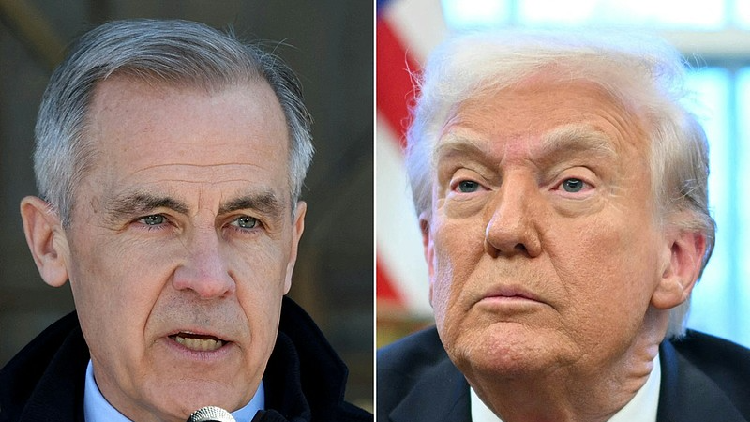
By continuing to browse our site you agree to our use of cookies, revised Privacy Policy and Terms of Use. You can change your cookie settings through your browser. File combo photo of Canadian Prime Minister Mark Carney and US President Donald Trump. /VCG Canadian Prime Minister Mark Carney said he and US President Donald Trump agreed to intensify trade negotiations after speaking on Tuesday, but warned he would consider all ‌options if the tariffs Trump threatened go ahead. Trump on Monday unveiled plans for 50% tariffs on a wide range of imports from Canada in retaliation to what he described as discriminatory treatment of American-made cars, alcohol and dairy goods. Relations between Canada and its largest trading partner have been tested by Trump's repeated jibes to make Canada the 51st state, disagreements over a new bridge and sharp comments about wildfire smoke. The tariffs came just before US and Mexican trade negotiators met for a third round of bilateral talks to try to revise the US-Mexico-Canada Agreement (USMCA), or the North American trade agreement, without Canada. The development deepens a rift that has kept ‌Canada largely sidelined in the USMCA negotiations.