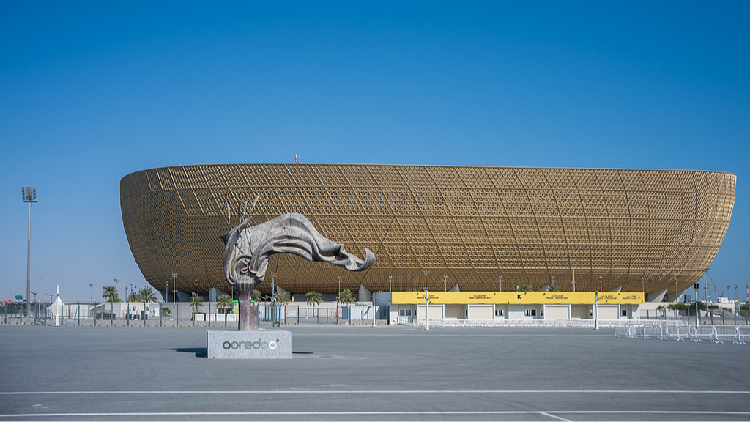
By continuing to browse our site you agree to our use of cookies, revised Privacy Policy and Terms of Use. You can change your cookie settings through your browser. A close-up view of Lusail Stadium in Doha, the host venue of the 2022 FIFA World Cup in Qatar, February 21, 2026. /VCG The final curtain has fallen on the World Cup in the US, with Spain hoisting the trophy. According to FIFA, this year's tournament injected a massive 17 billion dollars into the American economy. But as the stadium lights dim, how can such a legacy be sustained? Perhaps the current hosts can take a page out of the playbook of their predecessor: Qatar. The 2022 World Cup may be over, but Qatar's stadiums have never gone quiet. FIFA announced that starting in 2025, the U17 Men's World Cup would become an annual event. And Qatar has secured the hosting rights for five consecutive tournaments—from 2025 through to 2029. On top of that, the 2025 FIFA Arab Cup is also returning to Qatar, lighting up six of its iconic World Cup stadiums. What's more, as Ali Salem Afifa, deputy director general of Qatar-based Aspire Academy points out, the local clubs are also participating in Asian and Gulf region-level competitions.
Comments
İlk yorumu siz yazın!