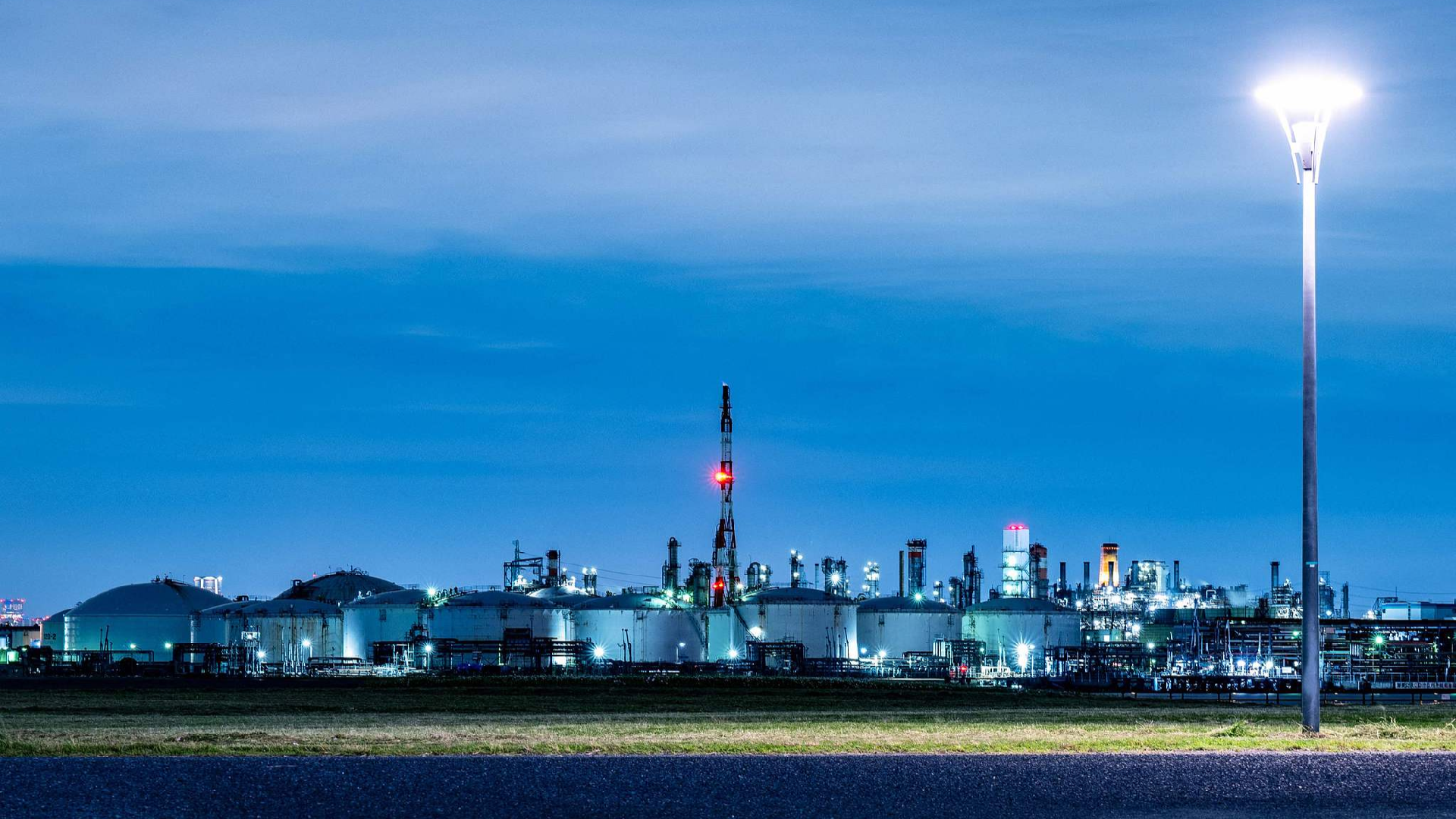
By continuing to browse our site you agree to our use of cookies, revised Privacy Policy and Terms of Use. You can change your cookie settings through your browser. Editor's note: Liu Xu is executive director of the Center for International Energy and Environment Strategy Studies, Renmin University of China. The article reflects the author's opinions and not necessarily the views of CGTN. Facilities in the Keihin Industrial Zone, Kawasaki, Japan, May 26, 2025. /VCG Japan's high-end manufacturing — from electric vehicles and industrial robots to semiconductor equipment and medical devices — rests on a fragile foundation: An overwhelming dependence on rare earth elements imported from China. With China tightening export restrictions since early 2026, that foundation is now shaky. The supply shock is already visible in trade data, corporate balance sheets, and factory floors, raising urgent concerns about cost pressures, supply chain resilience, and the global search for alternatives. China controls roughly 70% of global rare earth mining and over 90% of the refining capacity that turns ores into usable metals. For Japan, which sourced about 66% of its rare earths from China in 2025, this dependence has become a strategic liability.
Comments
İlk yorumu siz yazın!