Technology — 675 insights
Amap launches ABot-World Studio for interactive video and 3D scene generation
Technology

Amap launches ABot-World Studio for interactive video and 3D scene generation

Amap, Alibaba’s digital mapping and navigation platform, has launched ABot-World Studio and opened it for testing. The product combines interactive video generation with 3D Gaussian splatting, allowing users to create explorable 3D scenes from text or images rather than producing only a fixed video. ABot-World Studio is part of Amap’s broader ABot world-model product line. Its interactive scene-generation capabilities extend the company’s mapping and navigation work into 3D spatial content and world-model applications. [TechWeb, in Chinese] Every Wednesday and Friday, TechNode’s Briefing newsletter delivers a roundup of the most important news in China tech, straight to your inbox. Your support helps TechNode continue to provide credible, on-the-ground journalism and industry insights about the Chinese tech industry.

ByteDance denies plans to enter smart driving business
Technology

ByteDance denies plans to enter smart driving business

ByteDance has denied reports that it plans to enter the autonomous driving sector. Recent media reports claimed the company was exploring autonomous driving, with a particular focus on driverless logistics, and that the initiative would fall under the automotive division of ByteDance’s cloud platform, Volcano Engine. Responding to China Star Market, ByteDance said: “ByteDance is conducting early-stage research and exploration in frontier AI large model technologies, including Physical AI. However, we have no plans to develop a smart driving business.” [China Star Market, in Chinese] Every Wednesday and Friday, TechNode’s Briefing newsletter delivers a roundup of the most important news in China tech, straight to your inbox. Your support helps TechNode continue to provide credible, on-the-ground journalism and industry insights about the Chinese tech industry.
miHoYo launches AI companion app BSide: Olivia Lin on Steam Early Access
Technology

miHoYo launches AI companion app BSide: Olivia Lin on Steam Early Access

On Monday, Chinese gaming firm miHoYo launched Early Access for its AI companion app, BSide: Olivia Lin, on Steam. Unlike the studio’s anime-style games, the new release is listed as a Free to Play Utility rather than a game, marking miHoYo’s latest effort to expand beyond interactive entertainment and into AI-powered digital companionship. At the heart of the app is Olivia Lin, a virtual character designed as a Shanghai student majoring in piano with a minor in psychology. According to her official profile, she enjoys vinyl records, classic films, and rainy days, and is devoted to exploring the relationship between music and memories. Olivia’s debut wasn’t an overnight launch. The character began appearing on Bilibili in August 2025, where piano performance videos featuring realistic motion capture, synchronized lip movements, and a grounded visual style gradually built an audience. Earlier this March, the account expanded into letter-reading and reply videos that laid the groundwork for the app’s interactive experience months before its release.

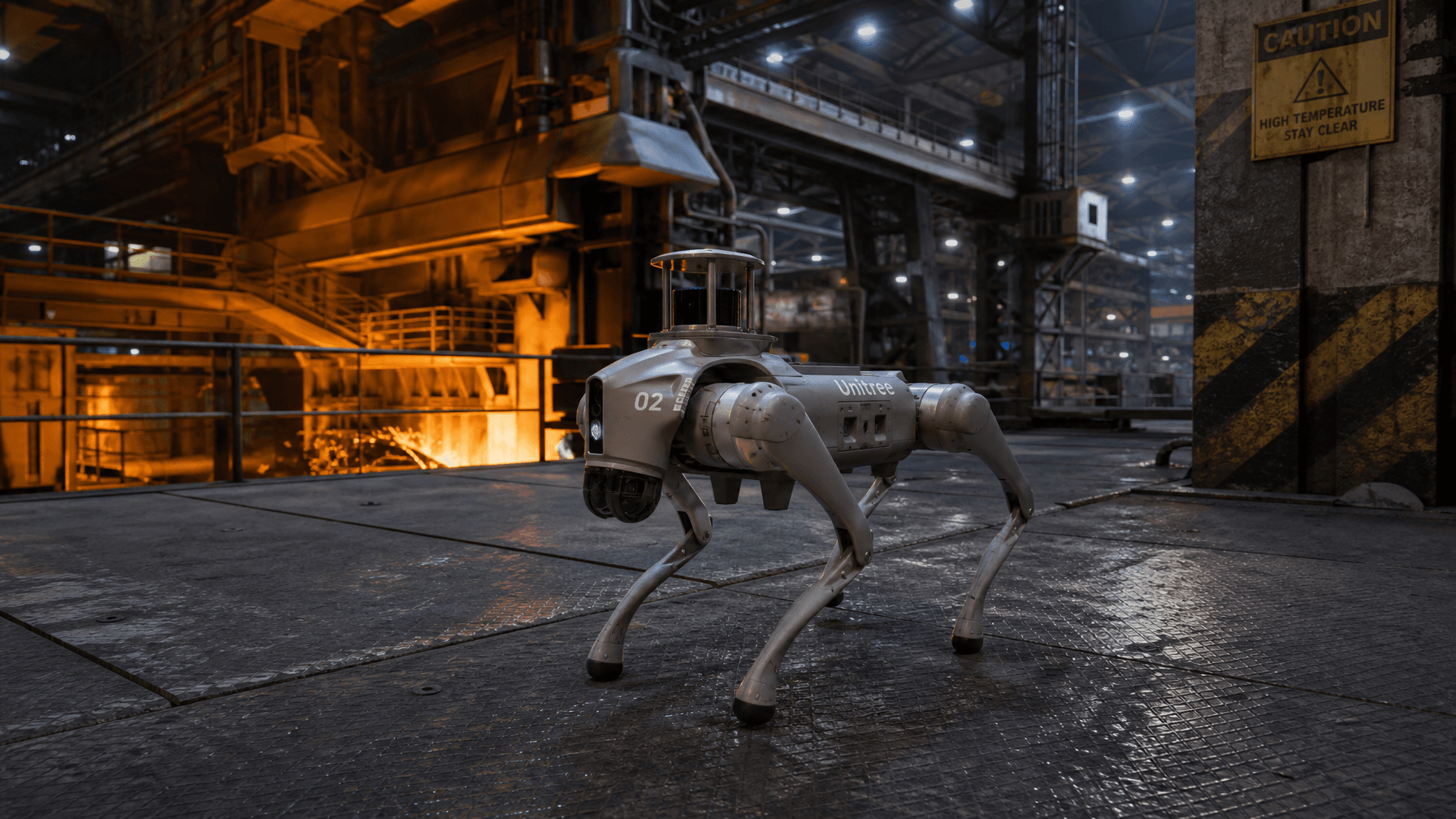
Unitree Robotics Partners With Hunan Steel: A Physical AI Infrastructure Company Emerges
Technology

Unitree Robotics Partners With Hunan Steel: A Physical AI Infrastructure Company Emerges

Unitree, Hunan Steel, and spatial AI company Looper Robotics form tripartite alliance to deploy legged robots in steel plant inspection, marking embodied AI entry into heavy industry.

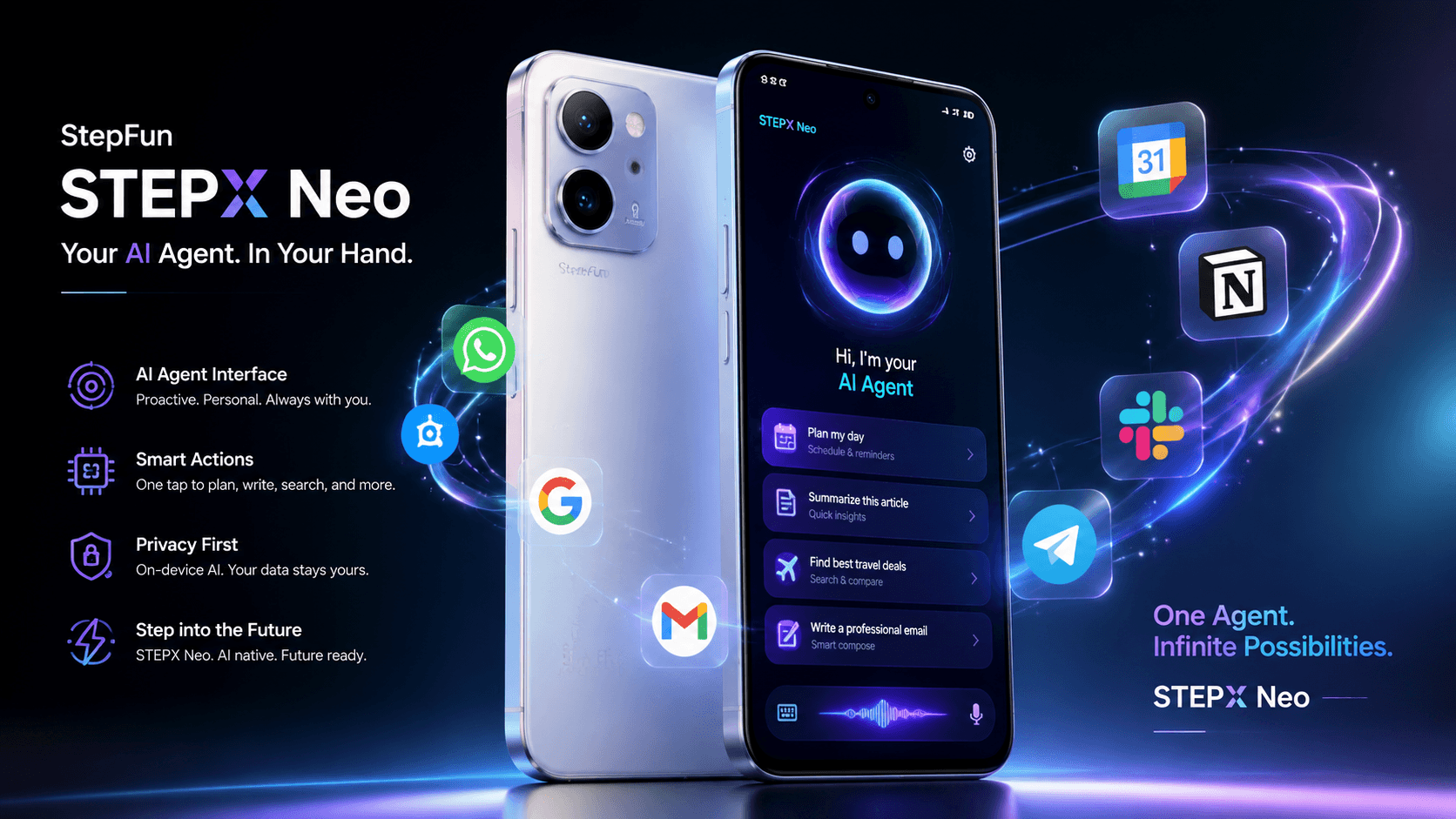
StepFun First AI Agent Phone Arrives: STEPX Neo Integrates Alipay, Meituan, Didi, and Baidu for Cross-App Autonomy
Technology

StepFun First AI Agent Phone Arrives: STEPX Neo Integrates Alipay, Meituan, Didi, and Baidu for Cross-App Autonomy

Shanghai AI unicorn StepFun launches STEPX Neo with agent-native Step AOS and Amoo agent, integrating 10+ major platforms including Alipay, Meituan, and Baidu for autonomous task execution.

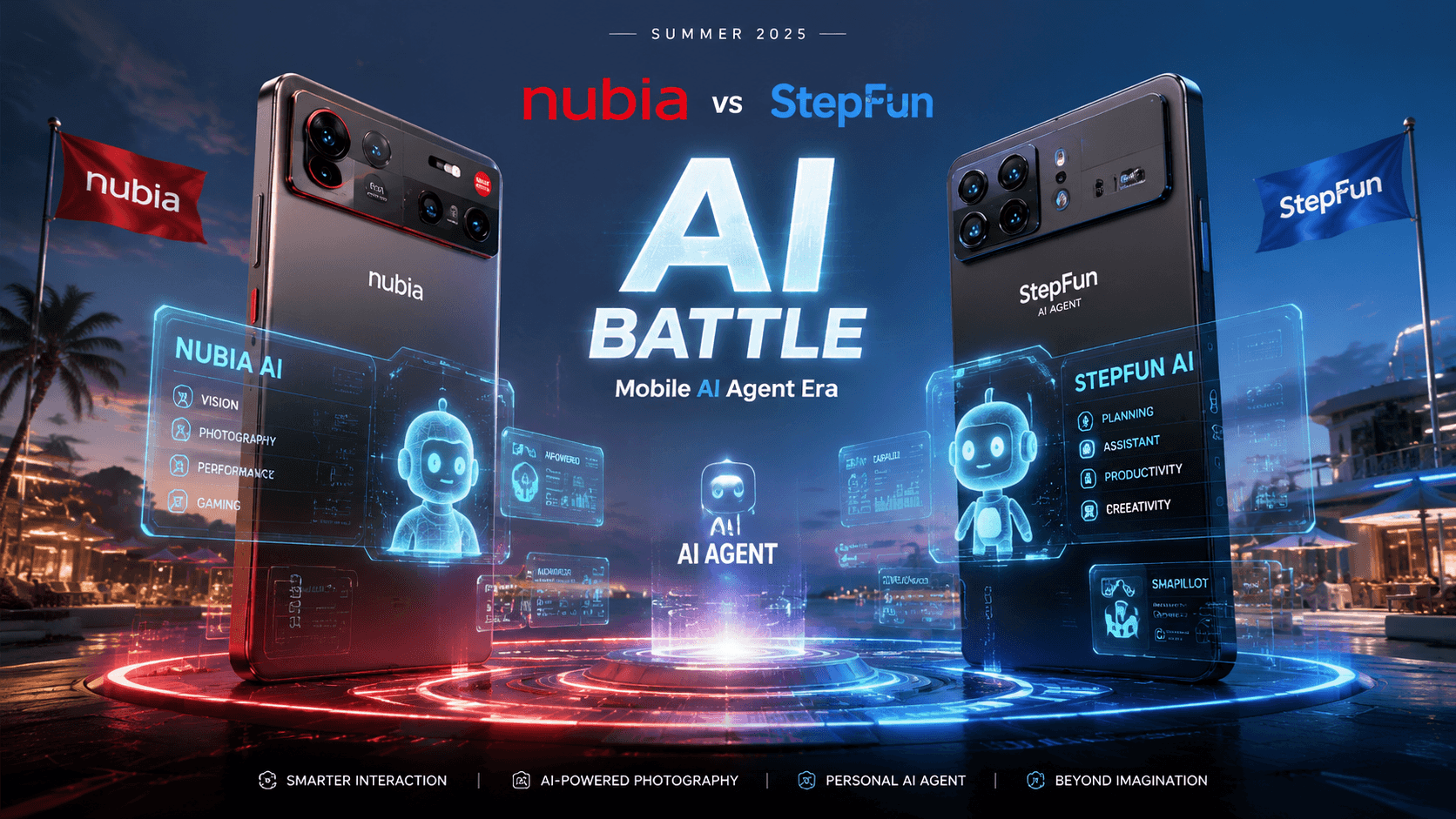
ZTE Nubia vs StepFun: The Showdown Over AI Agent Smartphones Heats Up This Summer
Technology

ZTE Nubia vs StepFun: The Showdown Over AI Agent Smartphones Heats Up This Summer

Nubia debuts world first AI agent phone at WAIC while StepFun launches STEPX Neo with Step AOS and Amoo agent, as the agent phone era officially begins with competing visions.

520 TFLOPS at 14nm: China Self-Developed AI Chip Achieves Architecture Breakthrough With Software-Defined Computing
Technology

520 TFLOPS at 14nm: China Self-Developed AI Chip Achieves Architecture Breakthrough With Software-Defined Computing

China first AI chip combining software-defined and 3D near-memory computing delivers 520 TFLOPS at 14nm, achieving 6.4TB/s memory bandwidth through architecture innovation instead of process scaling.

China Breaks World Record: Perovskite-Organic Tandem Solar Cell Achieves 28.04% Steady-State Efficiency
Technology

China Breaks World Record: Perovskite-Organic Tandem Solar Cell Achieves 28.04% Steady-State Efficiency

CAS Chemistry Institute achieves 28.04% certified steady-state efficiency in perovskite-organic tandem solar cells using a full-phase regulation strategy, published in Nature.

Chinese internet firms sign AI agent data protection pact
Technology

Chinese internet firms sign AI agent data protection pact

The China Internet Association released a self-regulatory pact on personal information protection for AI agents at a forum in Beijing, with Baidu, Tencent, Alibaba, Volcengine, and 27 other internet companies among the first signatories. The pact is aimed at standardizing how AI agents collect, process, and use personal data as agent-based services spread across internet platforms. The association also released a separate self-regulatory pact for mini-program ecosystems, signed by Tencent, Ant Group, Baidu, and other platform operators. [IT Home, in Chinese] Every Wednesday and Friday, TechNode’s Briefing newsletter delivers a roundup of the most important news in China tech, straight to your inbox. Your support helps TechNode continue to provide credible, on-the-ground journalism and industry insights about the Chinese tech industry.
China sets 2030 target for next-generation internet infrastructure
Technology

China sets 2030 target for next-generation internet infrastructure

China’s Ministry of Industry and Information Technology and three other agencies issued guidelines on July 13 to upgrade the country’s internet basic resources, targeting “systematic breakthroughs” by 2030 and a more advanced national internet infrastructure by 2035. The document calls for research into agent-to-agent networks, satellite internet, digital identity infrastructure, IPv6 upgrades, and the integration of AI, blockchain, and distributed identifiers with internet resource systems. [IT Home, in Chinese] Every Wednesday and Friday, TechNode’s Briefing newsletter delivers a roundup of the most important news in China tech, straight to your inbox. Your support helps TechNode continue to provide credible, on-the-ground journalism and industry insights about the Chinese tech industry.
Ant Group unveils AI safety models for agents and multimodal systems
Technology

Ant Group unveils AI safety models for agents and multimodal systems

Ant Group’s AI Safety Lab has open-sourced SingGuard-NSFA, a safety guardrail model for autonomous agents, and disclosed details of SingGuard, a multimodal safety model. SingGuard-NSFA is designed to detect risks such as prompt injection, sensitive data theft, malicious code execution, resource abuse, and permission misuse before agents take action. The model covers seven major risk categories, 28 subcategories, 185 scenarios, and 133 languages, with nearly 100,000 samples in its evaluation system. Ant said the model is available in 0.8B, 2B, 4B, and 9B versions and can make a single risk judgment in about 50 milliseconds. [TechWeb, in Chinese] Every Wednesday and Friday, TechNode’s Briefing newsletter delivers a roundup of the most important news in China tech, straight to your inbox. Your support helps TechNode continue to provide credible, on-the-ground journalism and industry insights about the Chinese tech industry.

Zhipu AI founder outlines Touch High plan for AGI research
Technology

Zhipu AI founder outlines Touch High plan for AGI research

Zhipu AI founder Tang Jie told employees in an internal letter that the Chinese foundation model developer will launch a “Touch High” plan, focusing on AGI research rather than short-term commercialization, according to LatePost. Zhipu AI is the company behind the GLM series of large language models. Tang listed four technical priorities for the plan: long-horizon tasks, autonomous agent systems, fully self-training, and extreme safety governance. The letter also singled out mechanistic interpretability, which studies the logic behind model decisions, as a major safety research direction. [LatePost, in Chinese] Every Wednesday and Friday, TechNode’s Briefing newsletter delivers a roundup of the most important news in China tech, straight to your inbox. Your support helps TechNode continue to provide credible, on-the-ground journalism and industry insights about the Chinese tech industry.