Markets — 725 insights
What does South Korea’s Kospi chaos mean for China’s markets?
Markets

What does South Korea’s Kospi chaos mean for China’s markets?

China has taken deleveraging actions amid wake-up call from South Korean market volatility The volatile state of South Korean stocks is reminiscent for some investors of China’s rapid boom-to-bust cycle a decade ago, analysts say, when leveraged trading fuelled a meltdown that eventually wiped US$5 trillion from the market within months. The South Korean stock market’s frantic artificial intelligence trade has many similarities to China’s markets in 2015, when record-high outstanding margin debts and a retail frenzy led to government intervention that eventually deflated the stock bubble. “South Korean stocks may become an amplifier of sentiment on global technology stocks, given the high leveraged levels,” said Jin Qianjing, an analyst at Shenwan Hongyuan Group. “The market may face a double whammy of high leverage and an exodus of foreign capital in the short term.”
Goldman Sachs backs HKEX with ‘buy’ rating, citing Beijing’s policy support, AI stock boost
Markets

Goldman Sachs backs HKEX with ‘buy’ rating, citing Beijing’s policy support, AI stock boost

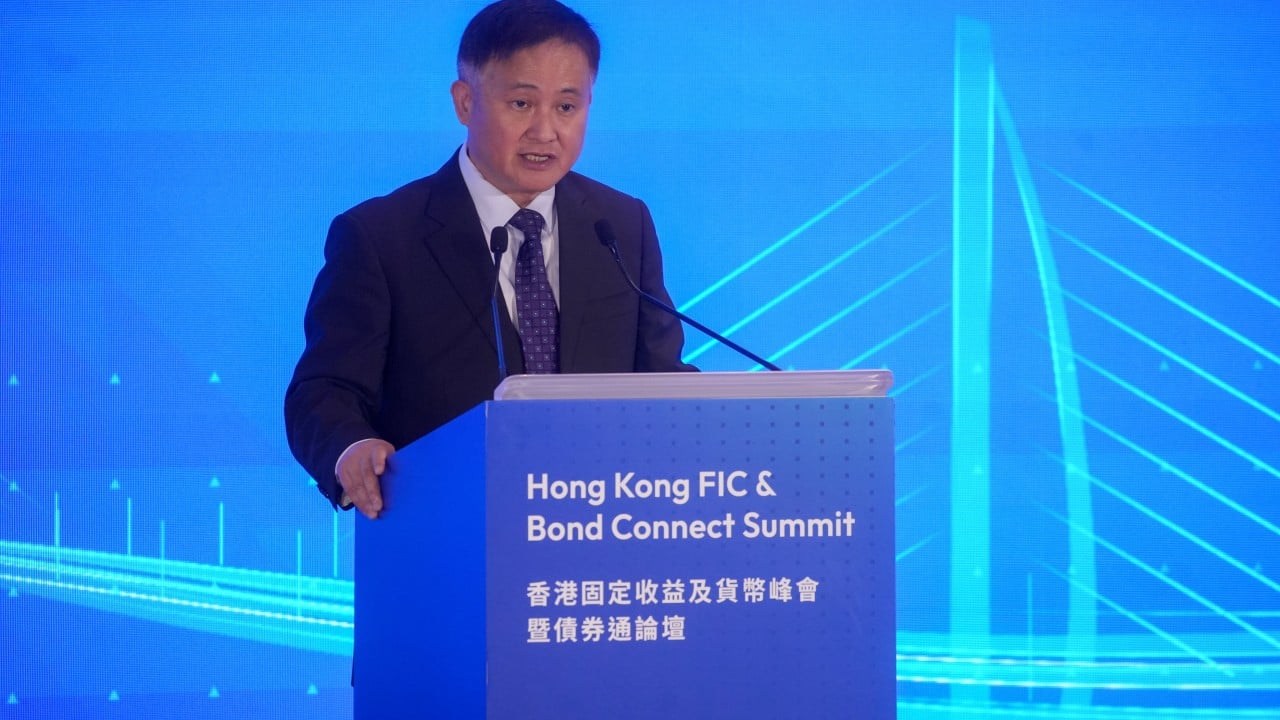
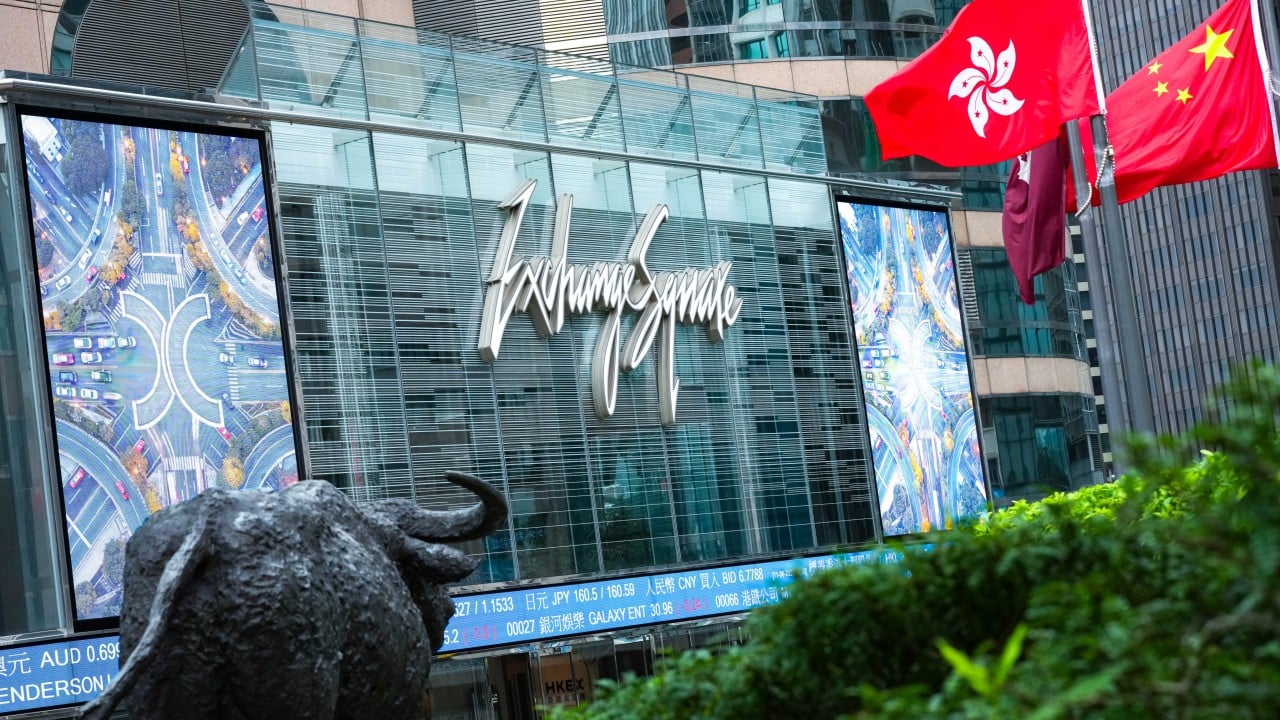
Shares of HKEX have lost about 5 per cent so far this year, roughly in line with the performance of the Hang Seng Index Analysts Thomas Wang and Simone Chen said in a research note on Wednesday they saw “multiple tailwinds to ADT [average daily turnover] and revenue growth” in the second half of this year. The move comes amid weak share performance of Hong Kong’s exchange operator and market doubts over the sustainability of its trading activity. Shares of HKEX have lost about 5 per cent so far this year, roughly in line with the performance of the Hang Seng Index. Goldman said there were favourable conditions for HKEX, including Beijing’s growing policy support and strong northbound trading driven by foreign interest in China’s artificial intelligence stocks. Beijing has doubled down on its support for Hong Kong, with a series of policies rolled out by People’s Bank of China governor Pan Gongsheng at a forum in the city last week.

Mainland China funds increase stakes in Hong Kong biotech amid surge of licensing deals
Markets

Mainland China funds increase stakes in Hong Kong biotech amid surge of licensing deals

Analysts say valuation of the sector is attractive, with biotech firms trading relatively cheaply China’s largest mutual fund manager, E Fund Management, has taken a 7 per cent stake in gene-editing biotechnology firm Biocytogen Pharmaceuticals, buying additional 91,500 shares in the Beijing-based firm at an average price of HK$46.90 each on July 2, according to the Hong Kong stock exchange website. Fullgoal Fund Management also increased its stake in Biocytogen from 6.7 per cent to 7 per cent, acquiring shares at an average price of HK$48.2 on July 7. Biocytogen’s stock has surged about 44 per cent over the past month. “We believe the sector’s valuation is attractive,” wrote Linda Shu, head of China healthcare research at HSBC, in a note on July 10. The Hang Seng Innovative Drug Index, which tracks some of China’s most innovative pharmaceutical and biotechnology companies, including Innovent Biologics and Akeso, has risen by about 12.62 per cent over the past month. The mainland-Hong Kong Stock Connect allows onshore investors to buy and sell shares listed on the city’s bourse and allows offshore investors to trade on mainland exchanges.

Taobao’s first physical shop in Hong Kong to close after lease ends in October: sources
Markets

Taobao’s first physical shop in Hong Kong to close after lease ends in October: sources

Landlord Sino Group seeking a new tenant for the second-floor shop at China Hong Kong City mall in Tsim Sha Tsui, marketing materials show Taobao Hong Kong’s first furniture showroom will close its doors at a Tsim Sha Tsui mall when its lease expires in October, according to multiple people familiar with the matter, ending the retailer’s first offline furniture venture in the city after less than two years. The 25,684 sq ft PapaHome Taobao Furniture Store at China Hong Kong City opened in February 2025 as Taobao Hong Kong’s first bricks-and-mortar furniture showroom, allowing customers to check products before ordering online. Marketing materials showed landlord Sino Group had begun seeking a new tenant for the second-floor unit, shop 202B, which would be available from October. While marketing a retail unit before a lease expires does not necessarily mean the tenant will leave, three sources said PapaHome had decided not to renew its tenancy. Taobao is operated by Alibaba Group Holding, which owns the South China Morning Post.

Will UFC be a hit in China with a Shanghai bout – and a home-grown contender?
Markets

Will UFC be a hit in China with a Shanghai bout – and a home-grown contender?

Two months after the White House fight night, UFC will bring one of US President Donald Trump’s favourite sports to Shanghai The Ultimate Fighting Championship (UFC), one of US President Donald Trump’s favourite sports organisations, is set to hold a tournament in Shanghai next month, part of a broad effort by American sports leagues to tap into the world’s leading leisure and entertainment market. Ticket sales will open on Friday, according to the organiser. UFC is not alone in eyeing the emerging opportunities in China’s sport sector as the country’s huge middle-class cohort – larger than the total US population – embraces new sports and appears willing to loosen their purse strings to spectate. The promoter is applying a similar star-driven strategy to the one adopted by the US’ National Basketball Association, which penetrated China’s market with great success after the Houston Rockets selected Yao Ming, a Shanghai native, as the first overall pick in its 2002 draft. The move provided the league with a direct connection to Chinese audiences. UFC has emulated this approach, placing Chinese stars at the centre of its fight cards.

China eyes broader global access to yuan assets, as panda bond demand surges
Markets

China eyes broader global access to yuan assets, as panda bond demand surges

Beijing plans further reforms to make it easier to issue and trade panda bonds, as it focuses on boosting the yuan’s role as a global currency Officials from China’s central bank have pledged to introduce further measures to make it easier for global investors to access yuan-denominated assets, as Beijing views the recent appreciation of the yuan and surge in demand for panda bonds as reflecting rising global recognition of the Chinese currency. Speaking at a press conference on Wednesday, officials highlighted the yuan’s strong performance in the first half of the year despite a volatile global economic landscape. The currency appreciated 3 per cent against the US dollar and 4.7 per cent against a basket of global currencies in the first six months of 2026. “This was the result of supply and demand dynamics in the foreign exchange market and also reflected greater market confidence in China’s macro economy,” said Zou Lan, deputy governor of the People’s Bank of China. Overseas issuers are also increasingly looking to China’s onshore debt markets, he noted. The number of institutions trading panda bonds also rose to 2,493 in the first half of the year, an increase of 599 compared with last year, central bank data showed.

Mainland China’s luxury housing boom is keeping wealthy buyers at home, report says
Markets

Mainland China’s luxury housing boom is keeping wealthy buyers at home, report says

Shanghai’s high-end market continues to outperform as Hong Kong records fewer HK$100 million-plus deals China’s booming luxury housing market is keeping more wealth onshore, a trend that analysts say may pose a growing challenge to Hong Kong’s still resilient high-end residential market. While China’s broader housing market remained mired in a five-year downturn, with average new-home prices having fallen about 13 per cent since the market peaked in 2021, the report said prices of new luxury homes in Shanghai had climbed 31 per cent in the same time, with the number of sales up more than 50 per cent. It said the recent buying frenzy had begun to ease as pent-up demand faded, but the luxury market was likely to continue outperforming because its supply/demand dynamics were fundamentally different from those of the broader housing sector. “Wealthy households have taken less of a hit from sluggish economic growth,” Zhang said in the report, which was released on Monday. Unlike most homebuyers, affluent households relied more on investment income than wages, had lower debt levels and benefited from higher mainland stock prices, she said.

China’s slowing economic growth boosts case for stimulus
Markets

China’s slowing economic growth boosts case for stimulus

China’s economy grew at the slowest pace in nearly four years in the second quarter, with sluggish consumption amid the fallout from the Iran war offsetting strong export growth. The 4.3 per cent increase in gross domestic product, down from 5 per cent in the first three months of the year, dragged first-half growth down to 4.7 per cent. While that is within Beijing’s annual target of “4.5 per cent to 5 per cent” GDP growth, the deceleration was bigger than economists surveyed by Chinese...

Connect scheme for gold shines light on China’s financial liberalisation
Markets

Connect scheme for gold shines light on China’s financial liberalisation

When Hong Kong launched its latest Connect programme on July 7, most of the attention focused on gold. That misses the bigger story. Delivery Connect, part of the city’s new gold clearing and settlement system, is not simply another financial initiative but the latest evidence that Beijing has settled on a distinctive model for opening up China’s financial markets. Rather than embracing wholesale financial liberalisation, China is steadily integrating with global markets through carefully...

Will diversification restore Hong Kong’s IPO title? Think tank maps out plan
Markets

Will diversification restore Hong Kong’s IPO title? Think tank maps out plan

City can regain ground by attracting new economy companies and issuers from across Asean, Middle East and Europe, FSDC says “Hong Kong should continue to find ways to diversify both its listing issuers as well as potential future investors,” said Benjamin Hung Pi-cheng, chairman of the Financial Services Development Council (FSDC), at a media briefing on Wednesday. “That form of diversification enhances the quality rather than [simply] focusing on quantity.” Hung said the city could still attract a lot of new economy companies to list, and could regain ground by drawing issuers from across Asean, the Middle East and Europe.

Chinese AI stock trade remains intact despite 10% correction from jumbo IPO, Fed jitters
Markets

Chinese AI stock trade remains intact despite 10% correction from jumbo IPO, Fed jitters

Global investors’ diversification into Chinese assets coupled with strong AI earnings could make the pullback in tech stocks short-lived A decline of more than 10 per cent in the tech-centric Star Market 50 Index over the last two weeks was a reaction to a flurry of short-term tailwinds, according to domestic brokerages, HSBC Jintrust Fund Management and UBS Group. However, both financial institutions said these negatives could be overcome and well digested by strong earnings from AI companies and global investors’ diversification into Chinese assets. “We still like AI stocks and AI-linked sectors, such as semiconductors,” said Chen Ping, a money manager at HSBC Jintrust Fund in Shanghai. “Earnings from growth stocks representative of AI are generally strong now. AI capital expenditure may maintain an about 50 per cent annual compound growth rate through 2030. AI-pulled demand for domestic semiconductor products is showing up in China.”

AI investor mania: China’s DeepSeek chases US$70 billion valuation in fresh round
Markets

AI investor mania: China’s DeepSeek chases US$70 billion valuation in fresh round

Company’s fresh fundraising talks come straight off its landmark Series A, as investors scramble to back national AI champion DeepSeek launched the new round shortly after closing the landmark deal because the first round was limited to a few selected backers, leaving other investors eager to support a national AI champion and still seeking ways to get involved, one of the sources said. The previous round was backed by Chinese tech giants, including Tencent Holdings, NetEase and JD.com. Contemporary Amperex Technology Ltd, also known as CATL, the world’s largest electric-vehicle battery maker, also joined, alongside venture capital firms including Monolith, Loyal Valley Capital and Shixiang. Another source added that the fundraising talks remained at a preliminary stage and the valuation could change. The sources requested anonymity as they were discussing private information.