Industry — 781 insights
Shenzhen-based AI mathematician Yurii Nesterov wins top prize in applied maths
Industry

Shenzhen-based AI mathematician Yurii Nesterov wins top prize in applied maths

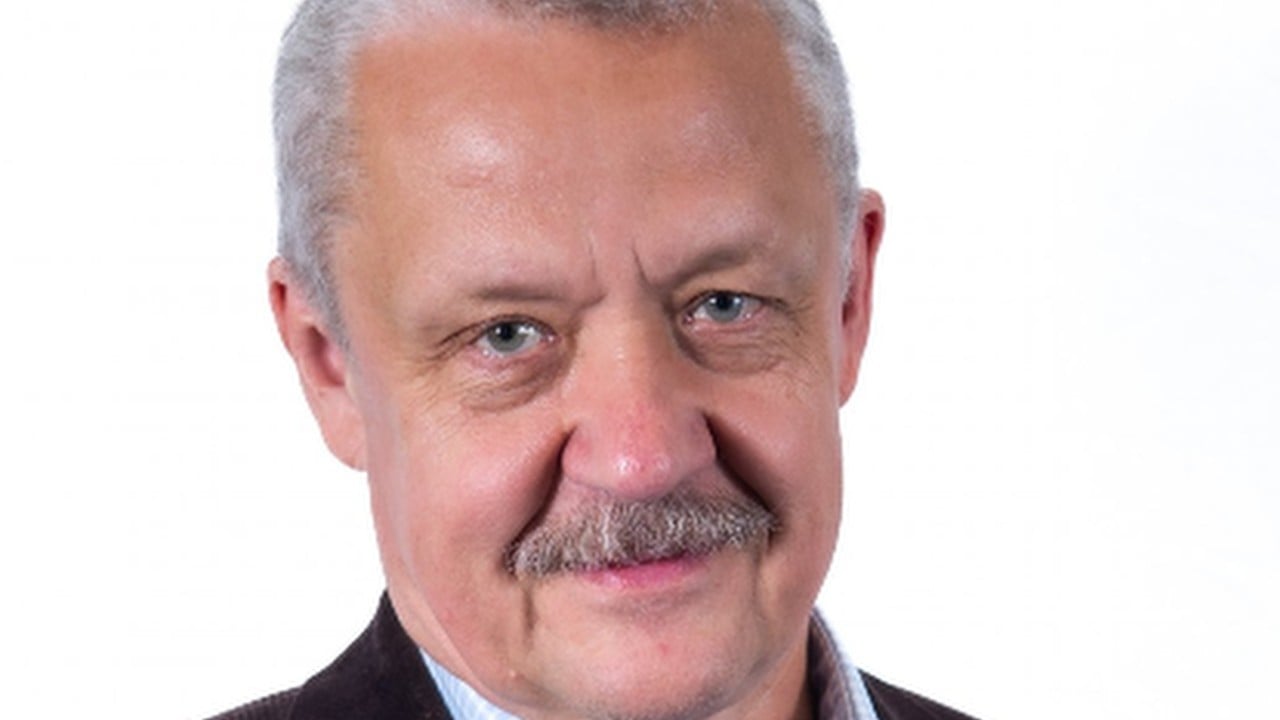
‘Crazy to stop right now’: researcher rejects retirement to build on his 40-year legacy during the golden age of artificial intelligence When Russian-born Belgian mathematician Yurii Nesterov reached retirement age in 2023, he found himself at the centre of a technological storm. In June, Nesterov, now 70, embarked on a new full-time career in southern China’s tech hubs, joining the Chinese University of Hong Kong, Shenzhen (CUHK-Shenzhen) and the Shenzhen Loop Area Institute (SLAI) as a professor at the Centre for AI Theoretical Foundation and Systems. Almost immediately, the scholar won the highest honour in the global applied mathematics community – the Carl Friedrich Gauss Prize – which he received at the International Congress of Mathematicians (ICM) ceremony in Philadelphia on July 23. “The main feature of China today is the fast and progressive development,” Nesterov said.

How China’s US$900 million port deal in Angola shows its dominance over US interests
Industry

How China’s US$900 million port deal in Angola shows its dominance over US interests

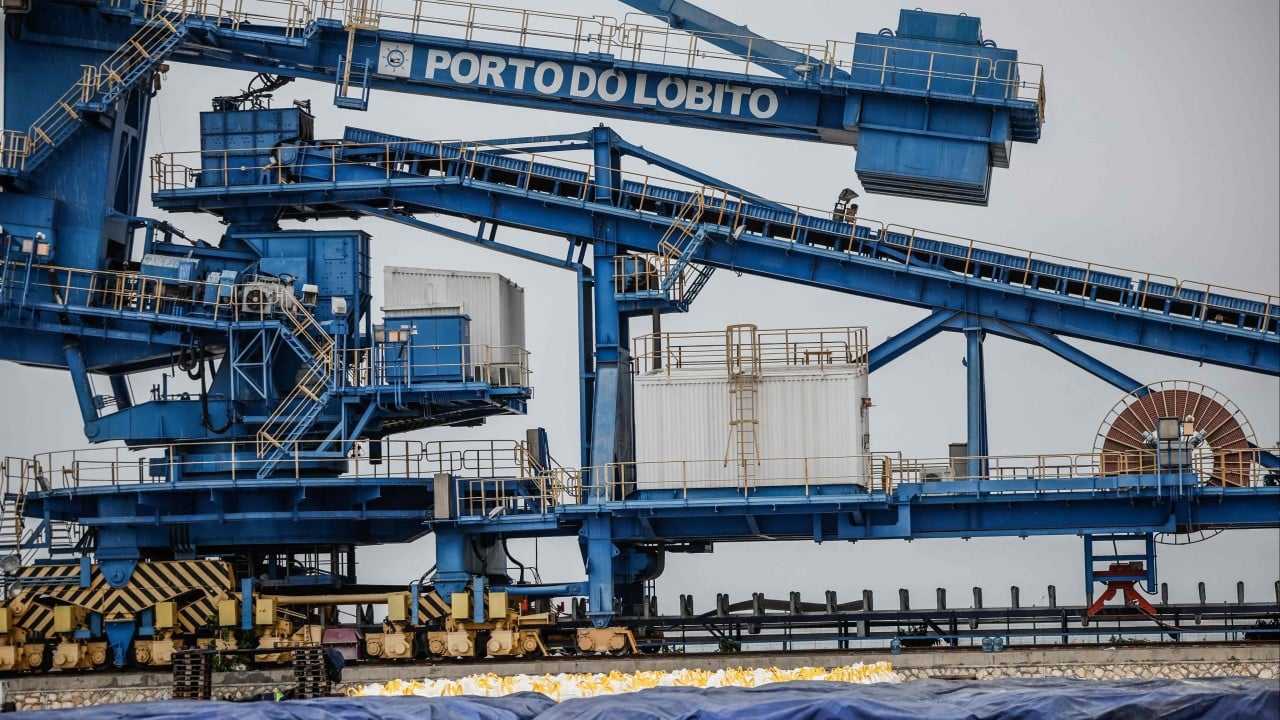
As Washington eyes the nation’s critical minerals and invests in a strategic rail project, Beijing leads in strengthening its supply chain It was the only country on the continent visited by former US president Joe Biden, albeit in the twilight of his term in December 2024. During the trip – the first by a sitting US president – Biden made the case for investment in the strategic Lobito Atlantic Railway. The railway links Angola’s Port of Lobito to neighbouring Democratic Republic of Congo and Zambia, providing the US with what it considers its own access route to critical mineral supplies from both countries. So far, the US has invested US$553 million in the project through its International Development Finance Corporation, the agency mainly charged with countering China’s economic influence around the world.

Chinese observatory finds most powerful particle accelerator in the universe
Industry

Chinese observatory finds most powerful particle accelerator in the universe

Cygnus X-3 provides opportunity to test how black holes and other objects launch particles to highest energies in the Milky Way, team says A China-led team has detected the highest-energy light particle ever recorded, showing that the universe can accelerate matter to 30 times the previously predicted limit. The particle was born in a violent binary system – known as Cygnus X-3 – in the constellation Cygnus. That process involves a dead star stripping material from a massive companion and shooting powerful jets into space. The LHAASO team reported their discovery this month in the journal National Science Review. Cao Zhen, LHAASO’s principal investigator at the Chinese Academy of Sciences, said previous theories held that particles could be accelerated to no more than about 1 peta-electron volt (PeV), or 1 quadrillion electron volts, in star explosions or swirling black holes in the Milky Way.

Trump claims ‘last chance’ for Iran to strike deal in latest warning
Industry

Trump claims ‘last chance’ for Iran to strike deal in latest warning

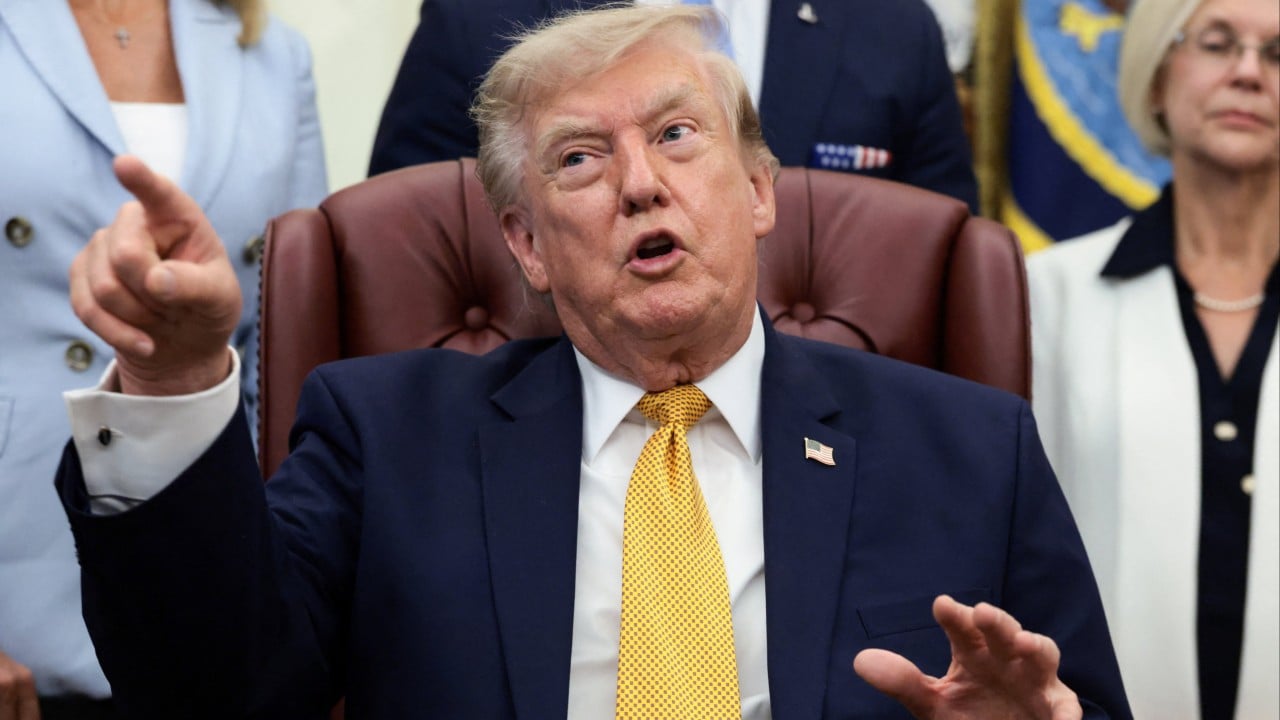
US President Donald Trump on Monday said Iran was facing its “last chance” to reach an agreement with Washington to reopen the Strait of Hormuz and end the five-month-long war. “This is a last chance for them to sign a good document,” Trump said at the Oval Office in the White House. “I want to give them every last chance before decapitation.” He also claimed that negotiations with Tehran are “going on right now” despite Tehran’s insistence that no direct talks were under way. “We are talking,...

Chinese executive filmed taking cash on Colombia metro, South America’s biggest project
Industry

Chinese executive filmed taking cash on Colombia metro, South America’s biggest project

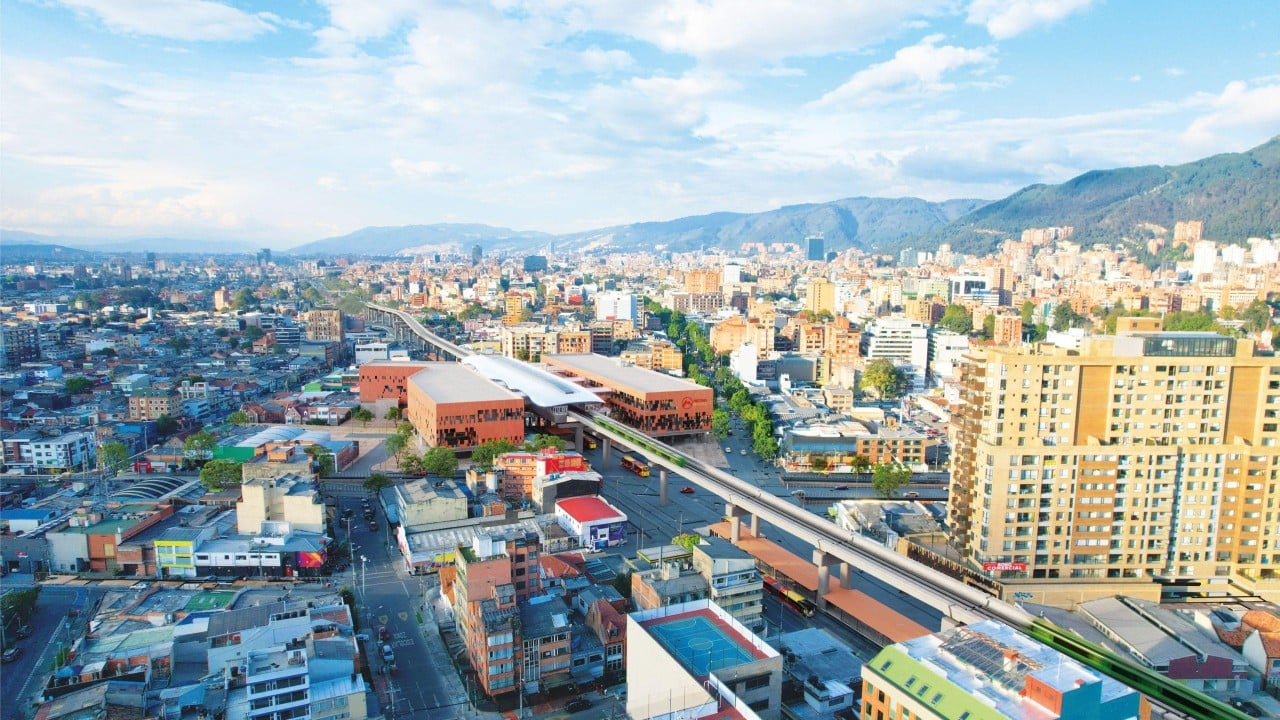
Subcontractor accuses China Harbour managers of demanding cash to release payments on Bogota metro project Colombian prosecutors are investigating allegations that executives of a Chinese state-owned contractor building the Bogota metro demanded cash from a local subcontractor in exchange for releasing payments owed for work on the project, according to an investigation published over the weekend by Semana, the country’s leading news magazine. The consortium building the line has denied any wrongdoing, saying the money seen changing hands was a retention payment agreed upon between the two firms in a contractual dispute over the quality of the subcontractor’s work. The allegations centre on a 26-minute video showing the legal representative of a Colombian subcontractor handing over 60 million pesos (US$19,000) in cash to a commercial manager of China Harbour Engineering Company (CHEC) at the firm’s former offices in Bogota’s Teusaquillo district on April 18. In the footage, the Colombian contractor pulls a dark bag from his suitcase and passes it to the Chinese executive, identified in the criminal complaint only as Yang, telling him in English that each package contained 5 million pesos (US$1,600).

A military base, a displaced people and Trump’s China fears: Burnham’s Chagos test
Industry

A military base, a displaced people and Trump’s China fears: Burnham’s Chagos test

Britain’s new prime minister’s first challenge may lie in the Indian Ocean where the future of a US-British facility remains unresolved “Some families, like brothers, sisters, were separated,” she said. “Some went to the Seychelles, some to Mauritius … close family, brothers, sister, mother, father, separated … and they never saw each other again.” The entire population of the largest island in the Chagos Archipelago was removed in the late 1960s and early 1970s to make way for one of the most strategically important US-British military bases in the world. “We were always identified as different,” Pompe said, about growing up in the Seychelles. Now based in London, she has become a prominent voice in the Chagossian fight for the right to return. She also opposes the 2025 agreement to transfer sovereignty to Mauritius and allow Britain to retain a 99-year lease on Diego Garcia for billions of dollars.

Could Silicon Valley’s lobbying create ‘mutual suspicion’ between US and China?
Industry

Could Silicon Valley’s lobbying create ‘mutual suspicion’ between US and China?

American tech giants are trying to tap into lawmakers concerns about China to secure favourable outcomes, some analysts have warned The US tech industry’s increasingly hawkish attitude towards China has caused alarm among some observers who warn it could cause greater mistrust between the two countries. The article said corporate leaders were “selectively” presenting information to tap into Washington’s concerns about China and “maximise” the chances of favourable policy decisions. “The instrumentalisation of China-related issues in government-business interactions will further reinforce US misperceptions about China and intensify strategic mutual suspicion between the two sides,” warned the authors, Tan Yannan, a PhD student in international relations at Renmin University, and Sun Chenghao, a senior fellow of the Centre for International Security and Strategy at Tsinghua University. The researchers said an “emerging” generation of American tech leaders had used their Chinese competitors as a “strategic lever” to “proactively shape the policy agenda” in the United States.

Are commercial sea drones a new headache for PLA in South China Sea and Taiwan Strait?
Industry

Are commercial sea drones a new headache for PLA in South China Sea and Taiwan Strait?

A crewless vessel’s footage of a Chinese warship operating near the Philippines highlights their potential intelligence-gathering role The latest encounter reportedly took place 105km (65 miles) northwest of Luzon, the largest Philippine island, but the exact location was not disclosed. The company did not respond to questions about who commissioned the drone involved in last month’s incident or what mission it was carrying out, but the firm has said previously that it had received more than US$100 million in US government contracts. “The key point isn’t that a Chinese destroyer was observed; it’s that a relatively inexpensive commercial platform was able to do it,” said Ray Powell, director of Stanford University’s SeaLight Foundation. So far, the Philippines has not reacted to the latest incident, while the Chinese foreign ministry has said only that the People’s Liberation Army Navy’s activities complied with international law.

How a Xinjiang weed could reduce China’s reliance on Southeast Asian rubber
Industry

How a Xinjiang weed could reduce China’s reliance on Southeast Asian rubber

Dandelion that oozes milky fluid when root is broken poised to help ease country’s import reliance Chinese scientists have turned a dandelion-like weed into natural rubber, a step that could help cut China’s heavy reliance on imported rubber. But when its root is broken, it oozes a milky fluid that is natural rubber. The weed is known as the rubber dandelion, or Taraxacum kok-saghyz. Last month, researchers in Xinjiang harvested one tonne of dried roots from a 20-mu (about 1.3-hectare) test field and extracted 40kg (88lbs) of natural rubber.

China is working towards 100% renewable power at its Antarctic bases by 2035
Industry

China is working towards 100% renewable power at its Antarctic bases by 2035

A system that uses wind, solar and hydrogen energy already meets more than 60 per cent of demand at Qinling Station Inland, the temperature can plummet below minus 80 degrees Celsius (minus 112 degrees Fahrenheit) during winter, while wind speeds of over 100km/h (62mph) – and even over 200km/h – can be experienced for days at a time. Qinling, which opened in 2024, already meets more than 60 per cent of its energy needs through solar, wind and hydrogen power and energy storage batteries. Ultimately, the plan is to use renewables for 100 per cent of energy demand at all of China’s Antarctic research stations by 2035, Sun Hongbin, chief scientist on the country’s polar clean energy programme, told state-run China Natural Resources News in June.

Is China’s climate returning to that of Tang dynasty golden age? Experts warn of a trap
Industry

Is China’s climate returning to that of Tang dynasty golden age? Experts warn of a trap

Higher rainfall across arid Ningxia has invited comparison to prosperous Tang dynasty ‘warm period’, but scientists offer a note of caution In China’s arid northwest, state media have been celebrating an increase in much-needed rainfall. The Ningxia Hui autonomous region usually averages about 300mm (about 12 inches) of rain per year, but the annual total has risen in recent years by around 12mm. The rain belt was moving northwards, shifting the 400mm precipitation line – the vital boundary that separates China’s arid grazing lands from its humid, agricultural heartland, the Ningxia Broadcasting News Centre reported last month. This “heavenly fortune” would bring “climate dividends”, the report said, promising that “loess soil will turn green and farming area will expand”. “The warming and greening of northwest China is not accidental but the restart of a millennia-long climate cycle,” the broadcaster reported on social media on July 21.

Is Turkey putting pressure on China in Africa’s infrastructure market?
Industry

Is Turkey putting pressure on China in Africa’s infrastructure market?

While Beijing is beating out Western players for major construction projects on the continent, it is not without competition Two years after Kenya’s deal with India’s Adani Group to modernise Jomo Kenyatta International Airport collapsed, the state-owned China Road and Bridge Corporation (CRBC) has won a US$1.2 billion contract to do just that. The same pattern played out when France’s Vinci lost a major highway deal in Kenya and CRBC took over as developer alongside another Chinese firm. Under the original 30-year concession, the national government would bear all the risk in the deal, raising public cost concerns. These two takeovers underscore China’s deepening infrastructure footprint in Africa. CRBC has been awarded US$9.3 billion worth of Kenyan infrastructure contracts, according to local media. Aly-Khan Satchu, a Nairobi-based analyst on sub-Saharan African geoeconomics, said that China offered a “full suite” package that included financing, construction and often operation. China’s advantage stemmed from flexible financing and lower costs, he explained. “Western companies are simply not competitive,” Satchu said, noting that Western firms had “very elevated” prices due to the risks of doing business in Africa.