Industry — 43 insights
Trump’s China visit watched in US for signs of stability – and tangible wins
Industry

Trump’s China visit watched in US for signs of stability – and tangible wins

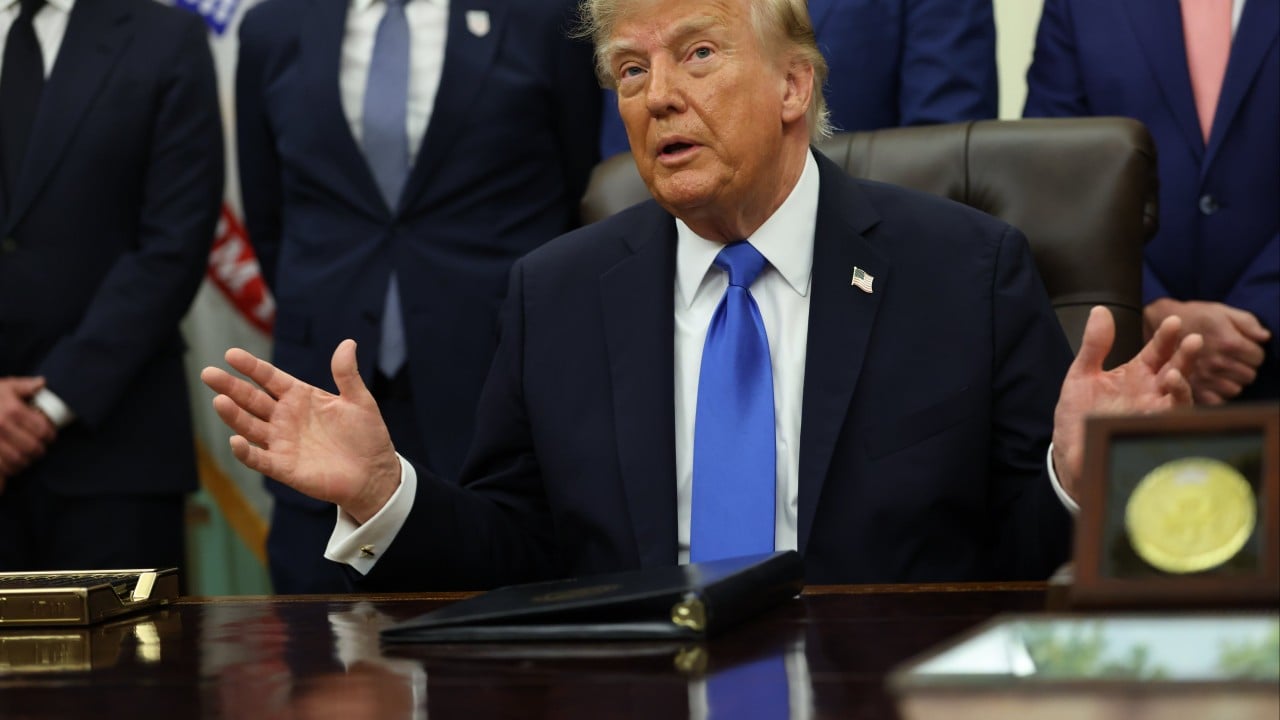
US President Donald Trump’s coming visit to China is being closely watched by business leaders, policymakers and Chinese-American groups hoping for signs that Washington and Beijing can stabilise one of the world’s most consequential relationships, even as expectations for major breakthroughs remain limited. The trip comes against the backdrop of mounting geopolitical tensions, including the ongoing war involving Iran and disruptions linked to the Strait of Hormuz, as well as continued friction...

Did US pressure before Xi-Trump summit force KMT hand on Taiwan’s defence budget?
Industry

Did US pressure before Xi-Trump summit force KMT hand on Taiwan’s defence budget?

Taiwan’s main opposition parties have cleared special defence budget bill after months of fractious debate and infighting Pressure from Washington was likely to have played a decisive role in Taiwan’s opposition parties backing a sharply expanded special defence budget last week, analysts said, as concerns mount in Taipei ahead of a summit between US President Donald Trump and his Chinese counterpart, Xi Jinping. The agreed amount was far above the “NT$380 billion plus N” framework previously favoured by the main opposition party Kuomintang, but still well short of the government’s proposed NT$1.25 trillion package. The bill was jointly pushed through by the KMT and the smaller opposition Taiwan People’s Party (TPP), which together hold a legislative majority. The scaled-down package covers US arms sales to Taiwan, but excludes many locally produced weapons and military-industrial programmes championed by the ruling Democratic Progressive Party, including drones, AI-enabled battlefield systems and indigenous missile projects.

Here’s how China plans to sanction-proof its C919 passenger jet
Industry

Here’s how China plans to sanction-proof its C919 passenger jet

Aviation expert Zhang Yanzhong, who played a leading role in developing the C919, warns of a real risk of being cut off from supply chains A leading Chinese aviation engineer has set out a detailed blueprint for building a fully self-sufficient supply chain for large passenger jets. The paper, written by Zhang Yanzhong, a senior academician at the Chinese Academy of Engineering (CAE) and the former chief scientist of the Aviation Industry Corporation of China, acknowledged there was a very real risk that the country could be cut off entirely from components made in the West. Known as the “father of China’s large aircraft” for his decades of work on the Y-20, a military transport plane, and the C919 passenger jet, Zhang is one of the most authoritative voices in China’s aviation establishment. Besides the engine, the auxiliary power unit is supplied by America’s Honeywell and the shell around the engine by Nexcelle. The plane also uses avionics designed and tested by GE and its joint ventures; communication and navigation subsystems from Collins Aerospace and an air data system from Honeywell, according to Zhang.

China readies for Trump visit amid rebound in trade growth
Industry

China readies for Trump visit amid rebound in trade growth

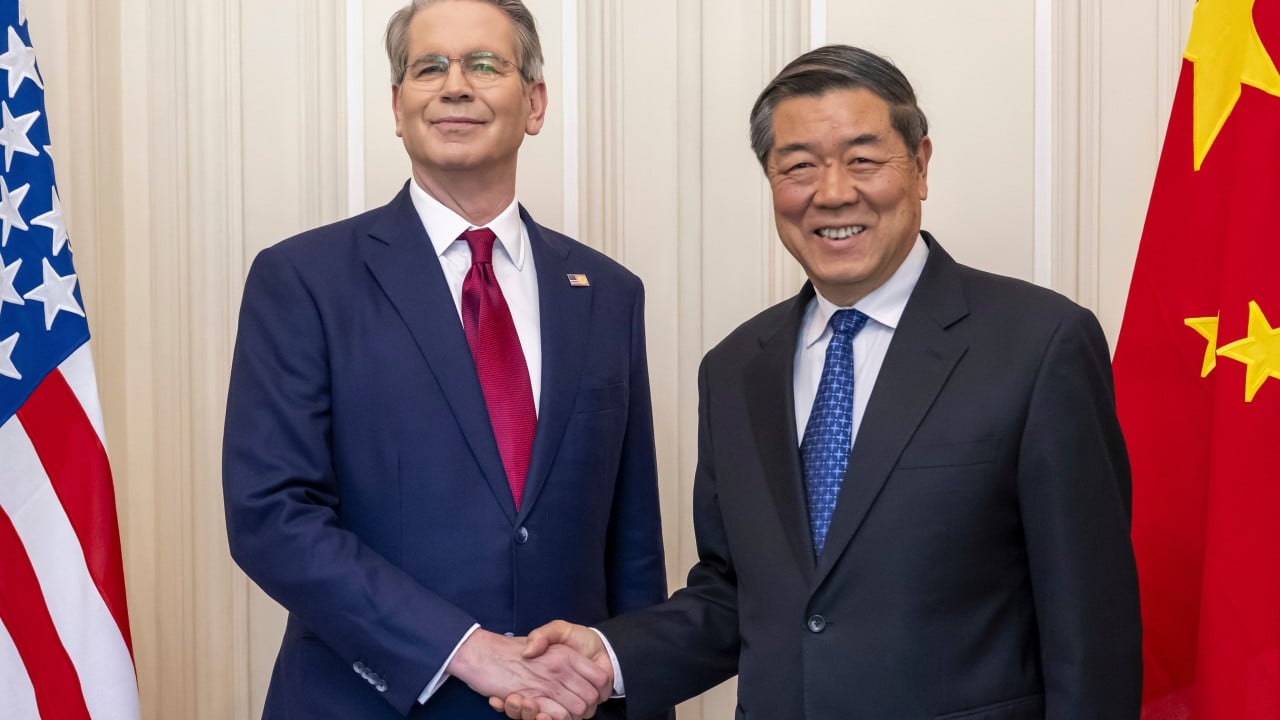
Chinese Vice-Premier He Lifeng and US Treasury Secretary Scott Bessent will meet for trade talks in Seoul on Wednesday, probably to iron out final details before a presidential summit in Beijing the following day. The discussions would focus on “economic and trade issues of mutual concern”, China’s Ministry of Commerce said on Sunday. The country also confirmed that US President Donald Trump will make a state visit from Wednesday to Friday, the first by a US president in almost nine years. Trump...

Why China’s new duty-free access is a lifeline for South African exporters
Industry

Why China’s new duty-free access is a lifeline for South African exporters

South African trade is pivoting to China as US tariffs bite, but Chinese industrial dominance poses a new dilemma The duty-free access for African partners from May 1, which saw the 10 per cent tariff rate for apples removed, arrived as a lifeline for South African exporters looking to diversify away from increasingly restrictive American trade channels. Latest data from the South African Reserve Bank (SARB) shows the United States has lost its position as the No 2 export market to Germany, while long-time leader China held its top slot. While US share of South African exports fell to a decade-low 7.1 per cent, Germany’s rose to 8 per cent and China’s held steady at 10.7 per cent, the data showed. Trump ambushes South Africa’s Ramaphosa with false ‘white genocide’ claims But South Africa faces a dilemma: although the Chinese market offers huge opportunities for agricultural exports, it is unlikely to be a viable alternative for South African vehicles and industrial goods.

Inspired by crocodile scales, Chinese armour tech said to deflect projectiles
Industry

Inspired by crocodile scales, Chinese armour tech said to deflect projectiles

Diamond-shaped ceramic tiles arranged at 45-degree angles could be used for body armour, vehicles and armed helicopters, researchers say The team – led by associate research fellow Zhaoxiu Jiang at Ningbo University – based their design on the asymmetric, overlapping scales of crocodile skin, which provide a protective barrier against predators and other crocs. Their research findings were published on March 25 in the peer-reviewed Chinese journal Acta Armamentarii. “The asymmetric structure can indeed cause projectile deflection – that is an experimentally verified result,” Jiang said in an interview. Instead of the conventional hexagonal ceramic tiles common in composite armour, the team built a mosaic of diamond-shaped alumina ceramic units arranged at 45-degree angles, bonded with epoxy resin onto an aluminium alloy backing plate. Ceramic materials were used due to their hardness, high compressive strength and low density.

A big step forward for optical core of China’s Taiji gravitational wave project
Industry

A big step forward for optical core of China’s Taiji gravitational wave project

A detector that will form part of a 3 million km-long triangular ruler has passed ground tests Now, Chinese scientists have made a step forward in turning that idea into hardware – only in reverse. Science and Technology Daily reported on Saturday that a team from the Institute of Mechanics at the Chinese Academy of Sciences had developed the optical core of a giant space detector to listen to the universe. The detector is part of a space-based gravitational wave project called Taiji that is designed to pick up gravitational waves rippling through the fabric of space and time. “The ground tests [of the optical core] were a success, and all the key numbers met the strict demands of the mission. That means that the core measurement system of Taiji has officially moved from [theory] to real hardware,” the report said.

Why the UAE’s Opec exit spells the beginning of the end of Gulf unity
Industry

Why the UAE’s Opec exit spells the beginning of the end of Gulf unity

The fighting over oil production quotas was the symptom. Security realignment is the disease The Opec exit made visible what the shift had made possible. Security architecture, not quota arithmetic, is what holds a cartel together. Opec has always been a political institution. The standard account of Opec is that it is a production cartel coordinating output to protect revenue. That is technically accurate and analytically insufficient. Its founding logic was sovereign solidarity, the assertion by post-colonial states that they would collectively control a resource the West had long treated as its own. That required a shared threat environment, a sense that members needed each other because the alternative was exposure. For 50 years, Gulf states had that. The fiscal asymmetry deepens the rupture and makes it permanent. The UAE’s fiscal break-even oil price sits below US$50 per barrel. Saudi Arabia’s exceeds US$90. These are not negotiating positions. They are incompatible survival strategies.

Chinese transcript of SCMP’s interview with KMT’s Cheng Li-wun
Industry

Chinese transcript of SCMP’s interview with KMT’s Cheng Li-wun

Cheng Li-wun is the chairwoman of Taiwan’s largest opposition party, the Kuomintang (KMT). In this wide-ranging interview, she discusses her vision for peace and cooperation between Taiwan and mainland China, her meeting in April with Communist Party chief Xi Jinping and her upcoming trip to the United States in June. The original interview was conducted in Chinese. SCMP Plus members can access the Chinese transcript. Chinese transcript: interview with KMT’s Cheng Li-wun by scmp

China, US confirm Seoul trade talks days before Trump-Xi summit in Beijing
Industry

China, US confirm Seoul trade talks days before Trump-Xi summit in Beijing

Meeting follows Paris round in March and a video call in April as both sides prepare for Trump’s state visit Chinese Vice-Premier He Lifeng will travel to South Korea this week for trade talks with US Treasury Secretary Scott Bessent, both sides confirmed on Sunday, in the final round of negotiations before a summit between President Xi Jinping and US President Donald Trump in Beijing. The meeting is scheduled for May 12 and 13 in Seoul and comes days before Trump’s state visit to China on May 14 and 15. China’s Ministry of Commerce said He would lead a delegation to hold economic and trade consultations with the US side. A White House spokeswoman said that Trump plans to host Xi for a reciprocal visit later in 2026. The talks would be “guided by the important consensus” reached between the two heads of state at their meeting in Busan and in previous phone calls and would address “economic and trade issues of mutual concern”, a ministry spokesperson said in response to a reporter’s question.

Could Spain’s ‘compliment sandwich’ approach to China work for the EU?
Industry

Could Spain’s ‘compliment sandwich’ approach to China work for the EU?

Spanish Prime Minister Pedro Sanchez’s recent visit to Beijing illustrates ‘delicate equilibrium’, analyst says as others voice scepticism Sanchez pushed for closer ties with Beijing while raising concerns over a persistent bilateral trade deficit and the Ukraine war, an approach that analysts said could serve as a diplomatic template for Brussels amid its fraying relationship with Washington. According to Wang Hanyi, a research fellow at the Shanghai International Studies University, the Spanish leader “achieved a delicate equilibrium between high-level strategic rhetoric and pragmatic cooperation”. “The equilibrium provides a viable blueprint for European countries navigating their ties with China,” Wang said. However, some analysts have voiced scepticism, arguing that Spain’s “compliment sandwich” approach of pairing praise with pointed criticism was a tried-and-tested failed model that would do little to change Beijing’s behaviour on important issues.

Can China engineer a price recovery that doesn’t make people feel poorer?
Industry

Can China engineer a price recovery that doesn’t make people feel poorer?

The producer price uptick offers a policy window: if reinforced by household demand and expectations, it could kick off a broader recovery China may finally have a chance to loosen the grip of deflation. Yet, the more important question is whether it can do so without making households feel poorer first. But last month’s purchasing managers’ index (PMI) suggests a rockier path than some might expect – and why the policy window should not be wasted. Manufacturing remained in expansion with the official April PMI at 50.3, but non-manufacturing activity returned to contraction at 49.4, with services at 49.6 and construction at 48.0. While the index for raw material purchase prices remained elevated at 63.7, the factory-gate price index stood at 55.1. This means price pressure is returning ahead of demand, profits and household confidence. This is why this moment matters. If the producer price uptick can be reinforced by stronger household demand and firmer expectations, this could mark the start of a broader recovery. Otherwise, China risks a more fragile outcome, where rising cost pressure is not matched by consumption strength, with a price rebound that weakens confidence rather than restoring it.