Business — 1,751 insights
Credit, circulation and the dynamics of structural transformation
Business

Credit, circulation and the dynamics of structural transformation

By continuing to browse our site you agree to our use of cookies, revised Privacy Policy and Terms of Use. You can change your cookie settings through your browser. Editor's note: Warwick Powell is an adjunct professor at Queensland University of Technology. The article reflects the author's opinions and not necessarily the views of CGTN. Recent data from the People's Bank of China (PBOC) and China's National Bureau of Statistics paint a picture of resilient economic adaptation in China amid global uncertainties. Total Social Financing (TSF) stock reached 458.8 trillion yuan by the end of May 2026, up 7.7% year on year, with cumulative new TSF in the first five months hitting 17.48 trillion yuan. New yuan loans have rebounded, underscoring continued credit support for the real economy. Simultaneously, household bank deposits have seen a rare two-month decline, with funds shifting toward non-bank financial institutions, wealth management products, insurance, and equities as deposit rates fall. This redeployment of "dormant" savings signals money re-entering active circulation.

Cross-Strait film and TV cooperation enters new chapter
Business

Cross-Strait film and TV cooperation enters new chapter

By continuing to browse our site you agree to our use of cookies, revised Privacy Policy and Terms of Use. You can change your cookie settings through your browser. Amid a global slowdown in the film and television industry, cross-Strait cultural cooperation is experiencing a resurgence in 2026. Popular productions from both sides of the Taiwan Strait are reaching new audiences, while new mainland policies are opening the door to deeper industry collaboration. CGTN's Zheng Yibing reports from the annual Straits Forum underway in Xiamen.

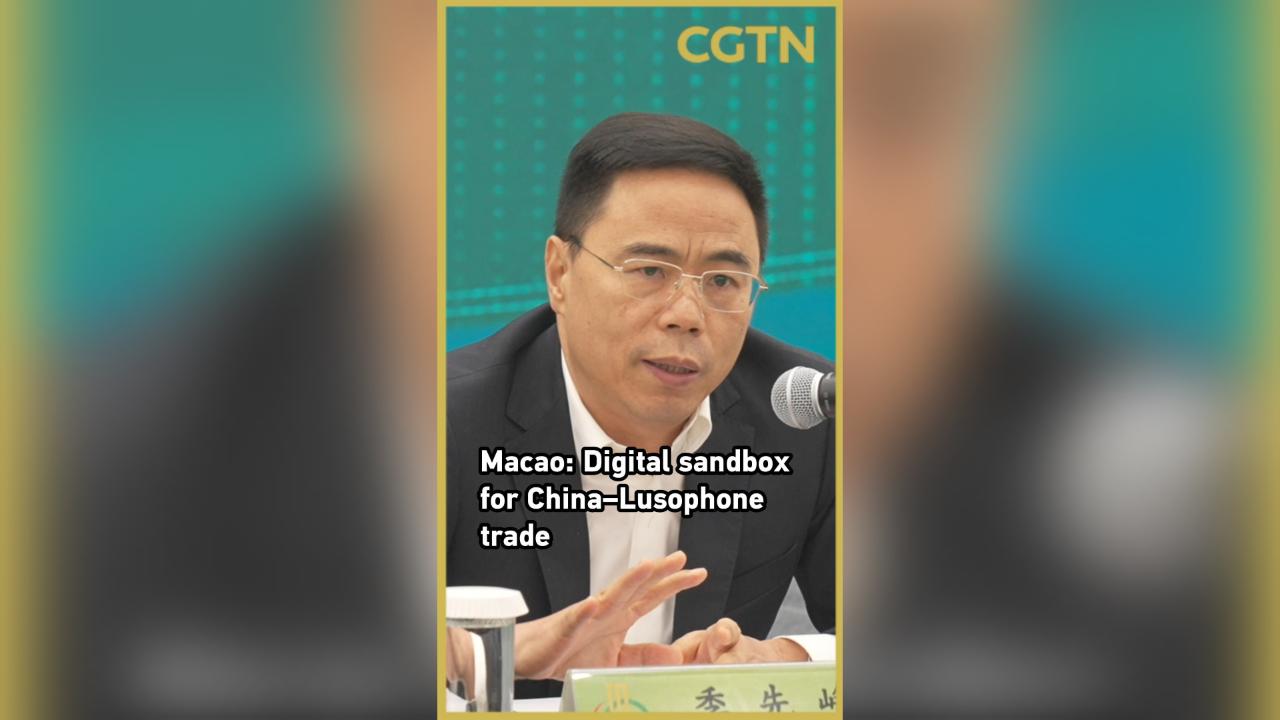
Macao: Digital sandbox for China–Lusophone trade
Business

Macao: Digital sandbox for China–Lusophone trade

By continuing to browse our site you agree to our use of cookies, revised Privacy Policy and Terms of Use. You can change your cookie settings through your browser. China-Lusophone trade totaled $225.8 billion last year, with Chinese investment stock at $80 billion and engineering contracting turnover at $140 billion, among China's highest regional totals. Now Macao is testing the future: digital currencies. Through its digital sandbox and cross-border settlement links with the central bank, Macao is enabling faster, smarter payments between these markets. Macao is not just a gateway — it is a laboratory for the future of trade.

Is China sleepwalking down Japan’s zombie economy path?
Business

Is China sleepwalking down Japan’s zombie economy path?

Support us Modified from a photo by RJD via Wikimedia Commons The photo above is not from China; it’s from Japan. In the 1970s, Daiei was Japan’s top retailer. But after Japan’s asset bubble burst around 1990, it became Japan’s most famous “zombie” company — staggering along unprofitably, kept afloat by a constant stream of below-market-rate loans from UFJ Bank and other big Japanese banks. Eventually the company was acquired by Aeon, a more successful retailer, and its once-storied brand is slated to be retired for good in the next few years. I tend to be very skeptical of comparisons between post-1990 Japan and post-2021 China, because there are just so many differences between the two economies (and between the global economic environments at the time). Their industrial policies are different, their trading relationships are different, their bubbles and busts happened for very different reasons and so on. But in the case of “zombie” companies, there may be some important parallels. What’s important about Daiei is not how it failed, but why it didn’t fail much sooner.

China’s economy: A stabilizing force in a volatile world
Business

China’s economy: A stabilizing force in a volatile world

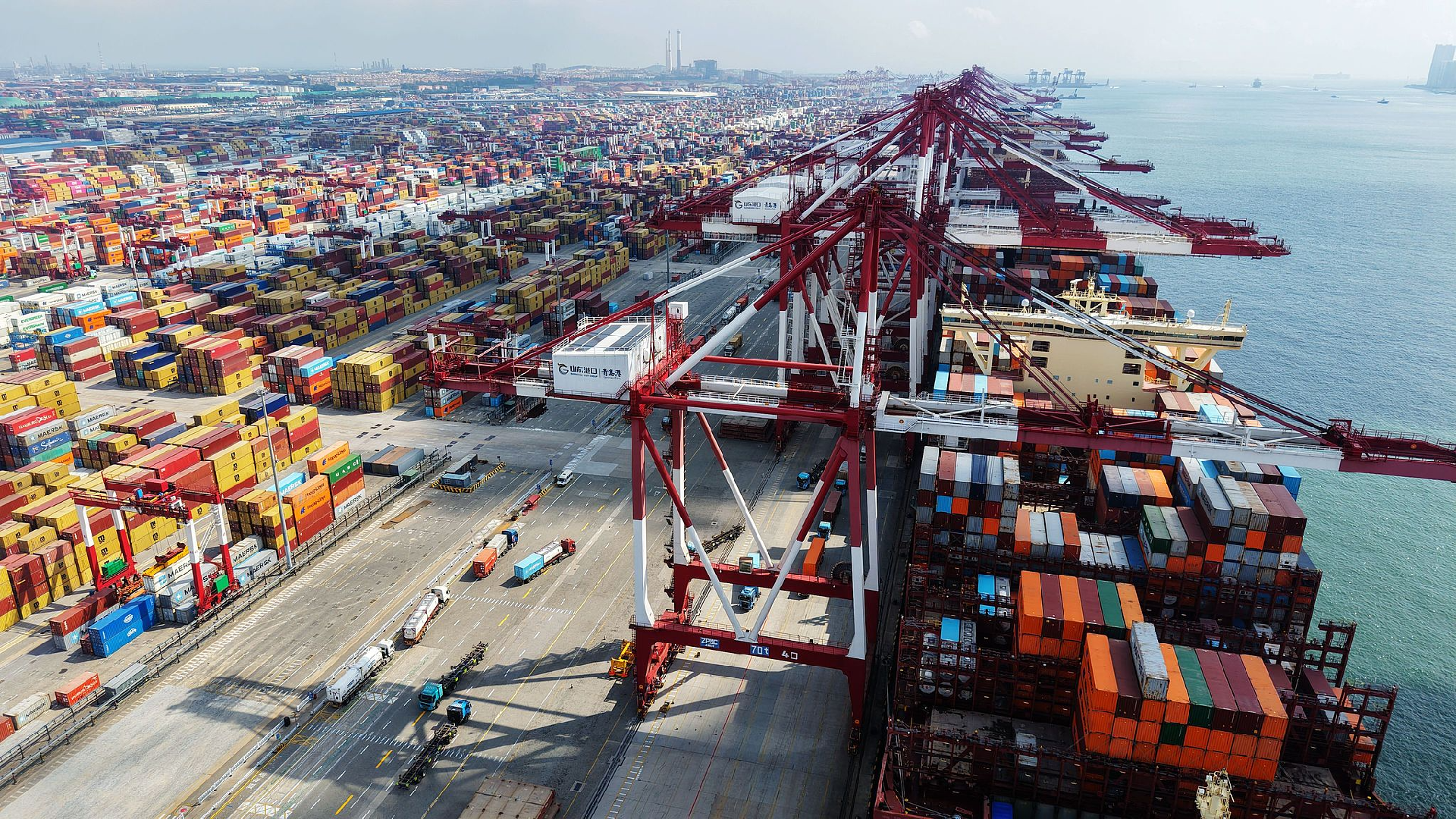
By continuing to browse our site you agree to our use of cookies, revised Privacy Policy and Terms of Use. You can change your cookie settings through your browser. A busy foreign trade container port is in operation in Qingdao, Shandong Province, China, June 16, 2026. /VCG Editor's note: Michael Wang is a CGTN anchor. The article reflects the author's opinion and not necessarily the views of CGTN. When people talk about China's economy today, the word "resilience" often comes to mind. It is a useful description, but it may no longer be sufficient. A resilient system withstands shocks and returns to its previous state. An anti-fragile system, as described by scholar and risk theorist Nassim Taleb, does something more: It adapts, reorganizes and becomes stronger under pressure. By that standard, the Chinese economy, in many respects, is moving beyond resilience and toward anti-fragility. This is not to say China is immune to challenges. Every country faces its own economic headwinds. What makes China different is its ability to convert stress into strength, a process that might be called "shock metabolism," where pressure becomes a forcing mechanism that upgrades its economy.

Macao: The super-connector at the heart of China’s 15th Five-Year Plan
Business

Macao: The super-connector at the heart of China’s 15th Five-Year Plan

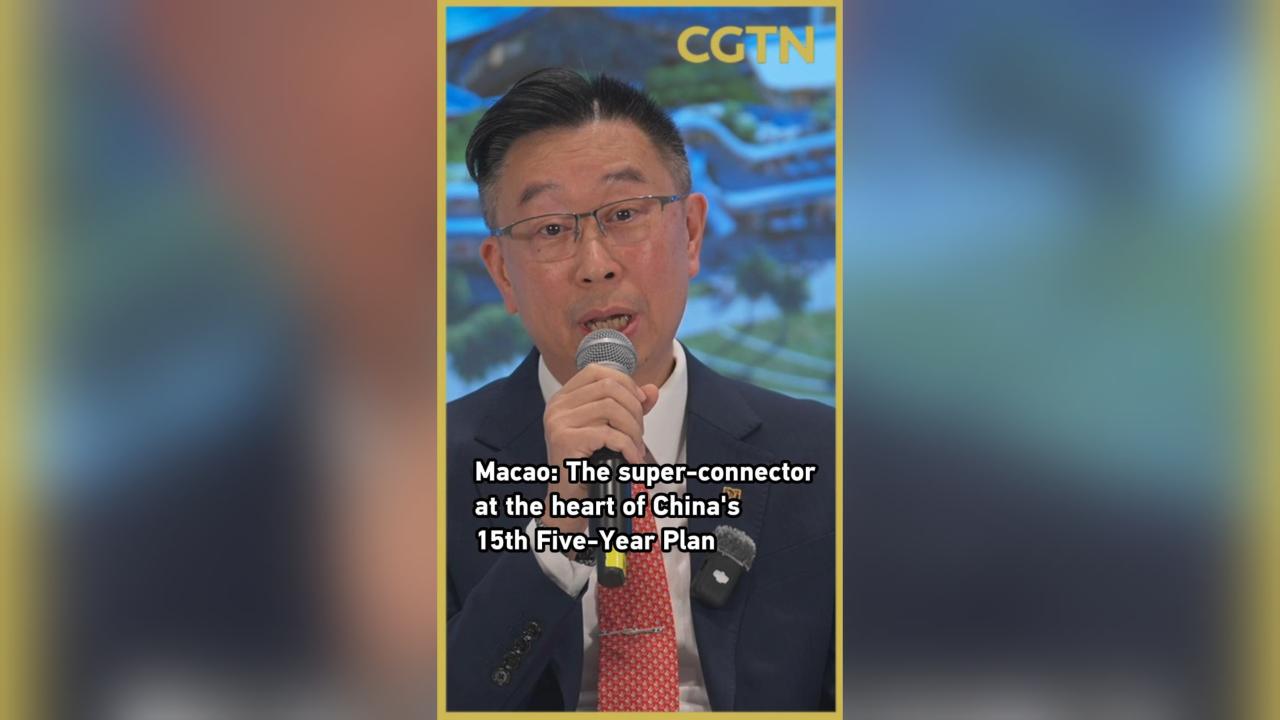
By continuing to browse our site you agree to our use of cookies, revised Privacy Policy and Terms of Use. You can change your cookie settings through your browser. China's 15th Five-Year Plan offers a global roadmap — and the Macao SAR is at the center. As a free port under "one country, two systems," Macao is bridging the 300M-strong Portuguese-speaking markets and reaching into Spanish-speaking countries. It helps overseas brands enter China and Chinese brands go global — backed by Macao's financial, legal and service strengths. This is Macao stepping up as the ultimate super-connector.

US-Iran peace deal rattles China’s energy strategy, geopolitics
Business

US-Iran peace deal rattles China’s energy strategy, geopolitics

Support us A 'teapot' refiner in China Photo: Baidu.com Beijing officially welcomed the United States-Iran peace deal announced over the weekend, hoping the reopening of the Strait of Hormuz will ease a months-long oil supply disruption that has rattled China’s fuel markets and battered its refining sector. However, the unofficial response, from the Chinese commentariat, is not so uniformly positive. Chinese commentators do say approvingly that the reopening of the Strait of Hormuz should allow Beijing to replenish its strategic crude reserves and benefit from softening oil prices, with some sanctioned “teapot” refiners potentially finding relief in the diplomatic thaw. However, with Western governments unfreezing Iranian assets and allowing Tehran to legally sell crude, China will lose the discounts it enjoyed by importing Iranian oil through a shadow fleet that bypassed sanctions. “International oil prices will likely fall after the US-Iran reconciliation, which is a double-edged sword for China,” a Sichuan-based columnist using the pseudonym Fanyuzhi says. “In the short term, lower oil prices will reduce logistics costs and ease inflation.

BizDataDive: China’s growth story in 105 years
Business

BizDataDive: China’s growth story in 105 years

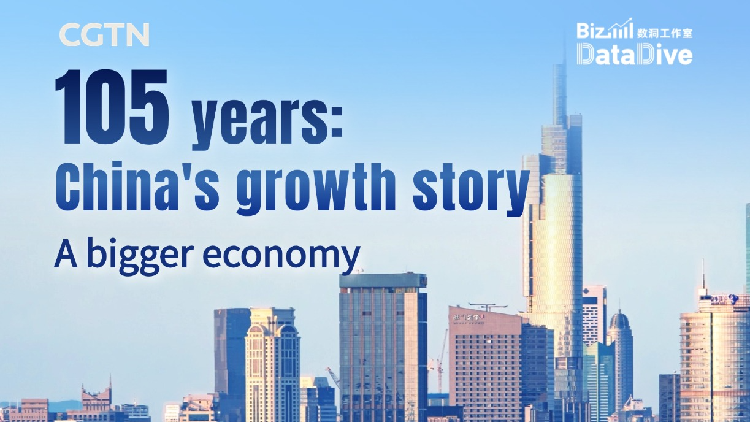
By continuing to browse our site you agree to our use of cookies, revised Privacy Policy and Terms of Use. You can change your cookie settings through your browser. China's GDP has expanded more than 2,000 times (unadjusted) since 1952. Meanwhile, incomes have risen significantly and urbanization has reshaped everyday life. Swipe through to discover the numbers behind China's growth and transformation, as CGTN launches a series of data-driven posters charting 105 years of rapid economic change across the country, to mark the 105th anniversary of the founding of the Communist Party of China.

China’s market regulator summons Walmart China over food safety issues
Business

China’s market regulator summons Walmart China over food safety issues

By continuing to browse our site you agree to our use of cookies, revised Privacy Policy and Terms of Use. You can change your cookie settings through your browser. China's top market regulator has held talks with Walmart China regarding food safety problems found in Sam's Club's brick-and-mortar stores and online shops, the regulator said on Monday. The State Administration for Market Regulation recently summoned officials of Walmart (China) Investment Co., Ltd., the headquarters of Sam's Club in China, for regulatory talks in accordance with the law, a statement released by the administration noted. The administration urged the company to conduct food business activities in strict accordance with Chinese laws and regulations. It also required the company to strengthen food safety awareness, strictly fulfill its primary responsibility for food safety, shoulder its corporate social responsibility, prevent food safety risks across the entire chain and effectively safeguard public safety. Walmart China said in a statement to multiple Chinese media outlets that it "fully acknowledged, deeply reflected on, and sincerely accepted" the concerns and rectification requirements raised by regulators during the regulatory interview.

Yiwu’s World Cup role reflects evolution of Chinese manufacturing
Business

Yiwu’s World Cup role reflects evolution of Chinese manufacturing

By continuing to browse our site you agree to our use of cookies, revised Privacy Policy and Terms of Use. You can change your cookie settings through your browser. A foreign businessman purchases officially licensed football-themed apparel at Yiwu International Trade City, Jinhua, Zhejiang Province, China, June 10, 2026. /VCG Known as the "world's supermarket", Yiwu, a small city in China's Zhejiang Province, supplies an estimated 2.1 million kinds of goods to 233 countries and regions. The world's largest wholesale market for small commodities, which is also well known for its large market share of global Christmas decorations, has recently kicked into World Cup mode. Nearly 70% of the production of World Cup-related merchandise is located in Yiwu, according to data from the Yiwu Sports Goods Association. This shift comes even as the excitement for this particular edition of the World Cup is being shaped more and more by commercial and economic calculations. Many companies moved early to apply for design patents and secure official IP licenses from national teams and football clubs, in a bid to compete on more than just price.

Two Chinas at North America’s World Cup
Business

Two Chinas at North America’s World Cup

Support us China isn't competing in the 2026 World Cup, but its presence will be felt throughout the event. Image: X North America’s World Cup summer has begun, and China is once again outside the tournament rather than inside it. That fact is familiar. But it should not be flattened into the usual joke about a country of 1.4 billion people failing to find eleven footballers. China did not vanish at the first hurdle. It narrowly reached the third round of Asian qualifying in 2024, preserving hopes of returning to the finals for the first time since 2002. But the expanded 48-team format, and Asia’s wider doorway into the tournament, still were not enough. China’s campaign ended before the finals, leaving the same uncomfortable conclusion: vast population, wealth, infrastructure and sporting ambition have not yet produced a reliable World Cup team. The more interesting point is that there are really two Chinas at this World Cup, and only one of them is missing. The absent China is obvious. It is the men’s national team, whose only World Cup appearance remains the goalless group-stage exit of 2002. The other China is everywhere.

The China collapse that just never arrives
Business

The China collapse that just never arrives

Support us China's economy isn't on the verge of collapse. Image: X Screengrab China has been on the verge of collapse for more than 20 years. In 2001, lawyer and commentator Gordon Chang published “The Coming Collapse of China.” The book famously predicted that China’s economic model would fail within a decade. The decade passed. The prediction was revised, republished and absorbed into a durable genre that has survived every missed deadline. The crisis, by Chang’s and others’ readings, was always near. Consider two other prominent figures on opposite ends of the China collapse spectrum. Nouriel Roubini earned the nickname “Dr. Doom” even before predicting the 2008 global financial crisis. In 2011, he warned that China faced a meaningful probability of a hard landing. He pointed to its runaway debt, over-investment and infrastructure projects disconnected from real demand. The crash, he suggested, would come after 2013. By 2015, as the hard-landing consensus reached its peak, Roubini reassessed the evidence. He rejected the collapse scenario and argued instead for a “bumpy landing” — growth slowing, but without systemic failure. The prediction changed because the evidence changed. Peter Zeihan took a different angle.