Business — 2,006 insights
China’s low altitude economy moves from vision to reality
Business

China’s low altitude economy moves from vision to reality

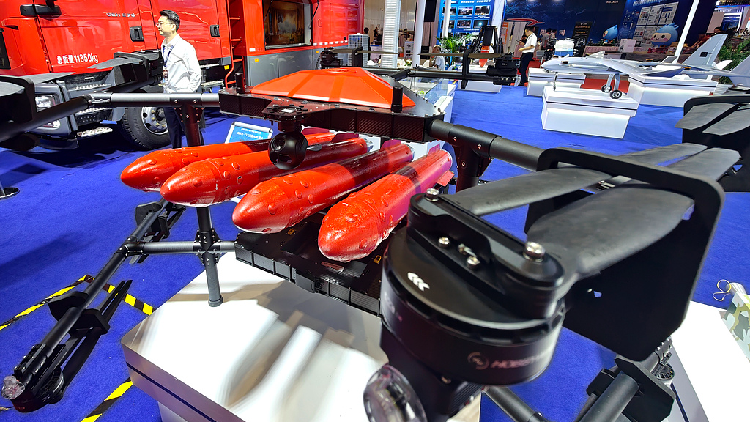
By continuing to browse our site you agree to our use of cookies, revised Privacy Policy and Terms of Use. You can change your cookie settings through your browser. A firefighting AI robot​ on display at the 2026 Beijing International Low-Altitude Economy and UAV System Industry Exhibition, Beijing, China, June 26, 2026. /VCG For years, the idea of flying cars, drone deliveries and low-altitude travel belonged mostly to the world of science fiction. But that future is gradually moving closer to reality as China's low-altitude economy enters a new stage of development. Low-altitude economy, generally referring to economic activities conducted in airspace below 1,000 meters, is undergoing a profound transformation. Once largely associated with agricultural drones, aerial surveying and emergency rescue, low-altitude aviation is expanding into areas that directly connect with everyday life. Drone deliveries, smart city management, industrial inspections and future urban air mobility are opening new possibilities beyond traditional aviation. At the center of this transformation are technologies such as artificial intelligence, autonomous flight systems, advanced batteries and intelligent manufacturing.


When the stars bloom above, and the flowers bloom below
Business

When the stars bloom above, and the flowers bloom below

By continuing to browse our site you agree to our use of cookies, revised Privacy Policy and Terms of Use. You can change your cookie settings through your browser. Bring your friends and experience a night like this in Fujin, Heilongjiang Province.

Summer is unfolding in slow motion
Business

Summer is unfolding in slow motion

By continuing to browse our site you agree to our use of cookies, revised Privacy Policy and Terms of Use. You can change your cookie settings through your browser.

BizDataDive: Europe’s economic ties with the Chinese market
Business

BizDataDive: Europe’s economic ties with the Chinese market

By continuing to browse our site you agree to our use of cookies, revised Privacy Policy and Terms of Use. You can change your cookie settings through your browser. China and the EU remain closely linked through trade and industry. Check out the infographics to discover the depth of Europe's economic ties with the Chinese market.

Xi’s national team rides again to save swooning tech stocks
Business

Xi’s national team rides again to save swooning tech stocks

Support us China is pumping state money into stocks to stabilize sliding tech shares. Image: X TOKYO — Chinese stocks just had a remarkable week, with stellar news from startup Moonshot AI delivering a DeepSeek-like jolt to a fragile market. Its new AI model reminded investors how fast China Inc. is closing the technology gap with Silicon Valley. But as China’s “new economy” grabs the headlines, its “old economy” troubles are grabbing the wrong kind of global attention at a rough moment for Xi Jinping’s Communist Party. A giant property crisis, near-record youth unemployment, dismal local government finances and weak consumer demand are weighing on markets — and Beijing’s “national team” is back in action. Xi’s inner circle has reactivated its usual cast of regulators, state-backed investors, insurers and asset managers to circle the wagons after a chaotic tech-share selloff. On Sunday alone, funds tied to Beijing announced purchases of nearly US$8.9 billion in stocks. National-team deployments have a track record of stabilizing Shanghai shares. The most famous came in summer 2015, when shares fell by a third in a few weeks.

How Australia resisted PRC economic coercion: lessons for others
Business

How Australia resisted PRC economic coercion: lessons for others

Support us It can be argued that Australia weathered the economic coercion storm despite massive tariffs from the PRC because of its rich iron ore export industry. China invested in smaller iron-ore suppliers in Western Australia. Photo: AAP The People’s Republic of China has used its statecraft to weaponize its trade with other countries on several occasions in recent years. Such behavior usually arises when the PRC interprets another country’s actions as hostile to its political interests and resorts to nonofficial sanctions, tariffs, regulations, and consumer boycotts that damage a host nation’s economy. These actions don’t follow market sentiments and can be revoked without a change in any underlying economic concerns the PRC initially used to justify its imposition. Many targeted countries use terms such as economic coercion to refer to trade decisions intended to alter a nation’s policies, behaviors or decisions. Among the many advanced economies experiencing trade deficits with the PRC, Australia is a unique case. Australia possesses abundant natural resources, from iron ore to coking coal to barley and fisheries. Many of these products became major trading commodities between Australia and the PRC.

China’s urban employment remains stable in first half of 2026
Business

China’s urban employment remains stable in first half of 2026

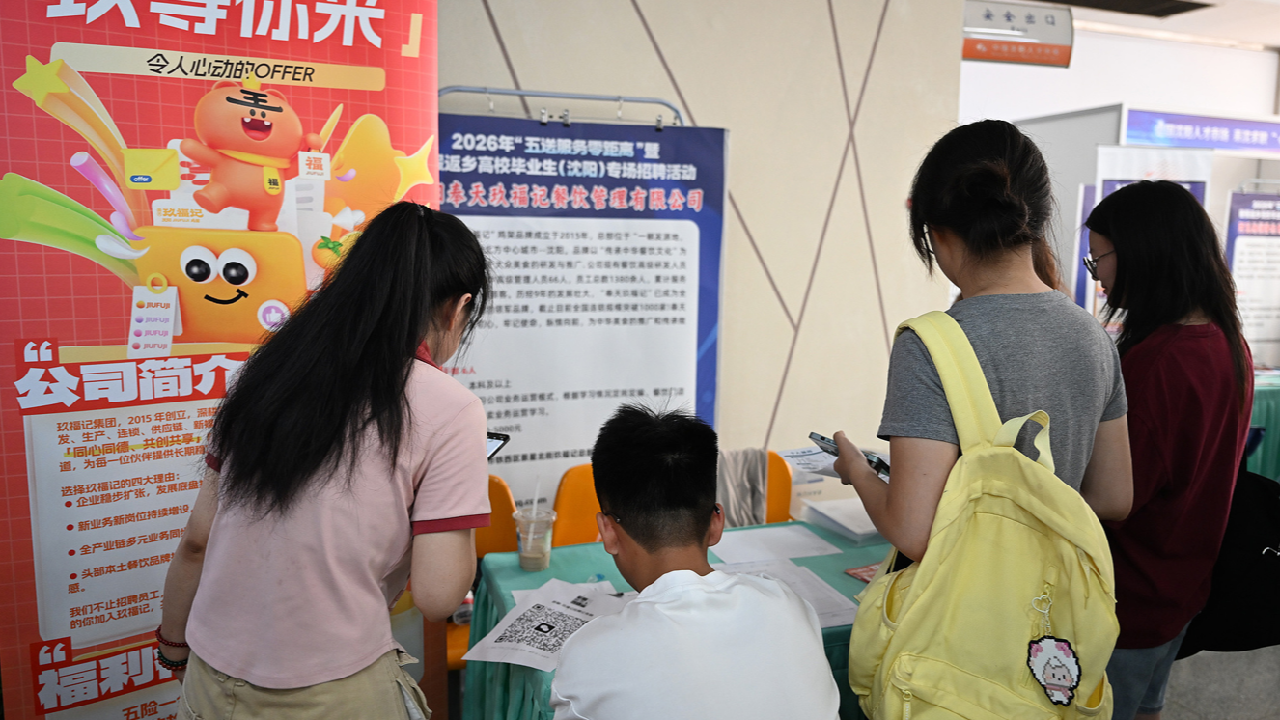
By continuing to browse our site you agree to our use of cookies, revised Privacy Policy and Terms of Use. You can change your cookie settings through your browser. A job fair in Shenyang, northeast China's Liaoning Province, July 18, 2026. /VCG China's employment situation remained generally stable in the first half of 2026, with 6.95 million new urban jobs created, the Ministry of Human Resources and Social Security said on Wednesday. The number of new urban jobs was unchanged from the same period last year, while the average surveyed urban unemployment rate stood at 5.2% from January to June, the ministry said. During the period, China issued 3.6 billion yuan ($530 million) in unemployment insurance subsidies to help stabilize employment, 900 million yuan in one-off job expansion subsidies and 1.2 billion yuan in skills training subsidies, according to the ministry.

Carney to intensify trade talks with Trump, warns all options on table
Business

Carney to intensify trade talks with Trump, warns all options on table

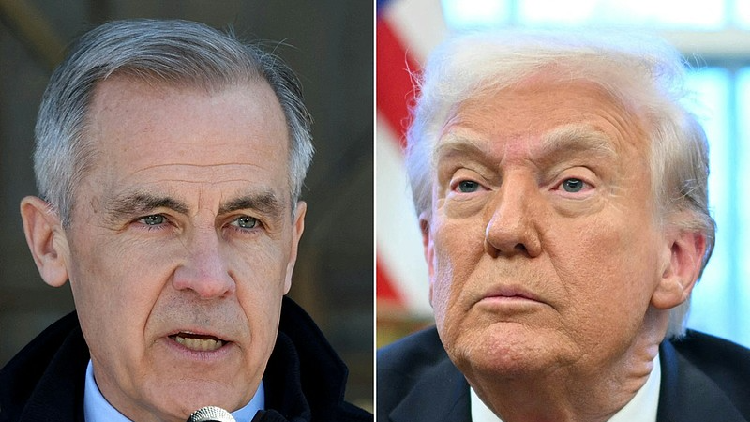
By continuing to browse our site you agree to our use of cookies, revised Privacy Policy and Terms of Use. You can change your cookie settings through your browser. File combo photo of Canadian Prime Minister Mark Carney and US President Donald Trump. /VCG Canadian Prime Minister Mark Carney said he and US President Donald Trump agreed to intensify trade negotiations after speaking on Tuesday, but warned he would consider all ‌options if the tariffs Trump threatened go ahead. Trump on Monday unveiled plans for 50% tariffs on a wide range of imports from Canada in retaliation to what he described as discriminatory treatment of American-made cars, alcohol and dairy goods. Relations between Canada and its largest trading partner have been tested by Trump's repeated jibes to make Canada the 51st state, disagreements over a new bridge and sharp comments about wildfire smoke. The tariffs came just before US and Mexican trade negotiators met for a third round of bilateral talks to try to revise the US-Mexico-Canada Agreement (USMCA), or the North American trade agreement, without Canada. The development deepens a rift that has kept ‌Canada largely sidelined in the USMCA negotiations.

Trump approves Saudi nuclear deal that could allow uranium enrichment, AP sources say
Business

Trump approves Saudi nuclear deal that could allow uranium enrichment, AP sources say

Deal is expected to last 30 years, with US firms helping the kingdom develop a civil nuclear industry US President Donald Trump has approved an agreement with Saudi Arabia that could potentially provide the kingdom with uranium enrichment capability for its civilian nuclear programme, according to two people familiar with the matter. The people, who were not authorised to comment publicly about the yet to be formally announced decision, said the agreement is expected to be announced publicly as early as Wednesday. The deal is expected to last 30 years and is also expected to involve US firms in developing the programme. The deal could allow for the building of a uranium enrichment facility in Saudi Arabia following a joint US-Saudi study. The White House did not immediately respond to a request for comment on the decision, which was first reported on by the Wall Street Journal. Both Trump and former US president Joe Biden tried to reach a nuclear deal with the kingdom to share American technology.

China’s missile test exposes lack of unity among Pacific island nations
Business

China’s missile test exposes lack of unity among Pacific island nations

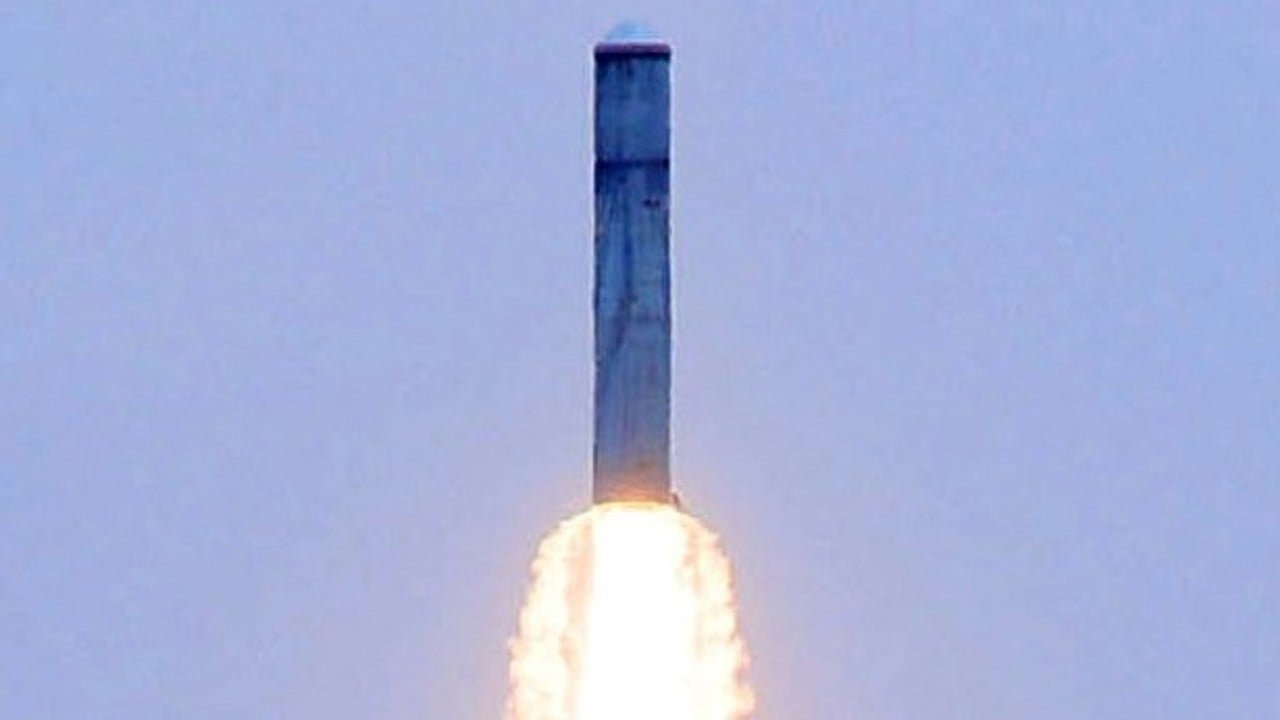
While some Pacific Islands Forum members have criticised the test near Tuvalu, Papua New Guinea appears to have backtracked, analysts say On July 6, China said one of its navy’s nuclear submarines launched a “strategic missile” carrying a dummy warhead towards “relevant high seas of the Pacific Ocean”, describing the test as routine annual military training that complied with international law and was “not directed at any specific country or target”. Beijing said it had notified relevant countries in advance. Still, the move did little to ease the concerns of Pacific governments and partners, with some criticising the short warning period. The Pacific region has for decades been cautious of missile tests as a result of the hundreds of nuclear tests carried out by the US, UK and France in the second half of the 20th century.

China Merchants Securities drops South Korea ETF as Seoul stock volatility spills over
Business

China Merchants Securities drops South Korea ETF as Seoul stock volatility spills over

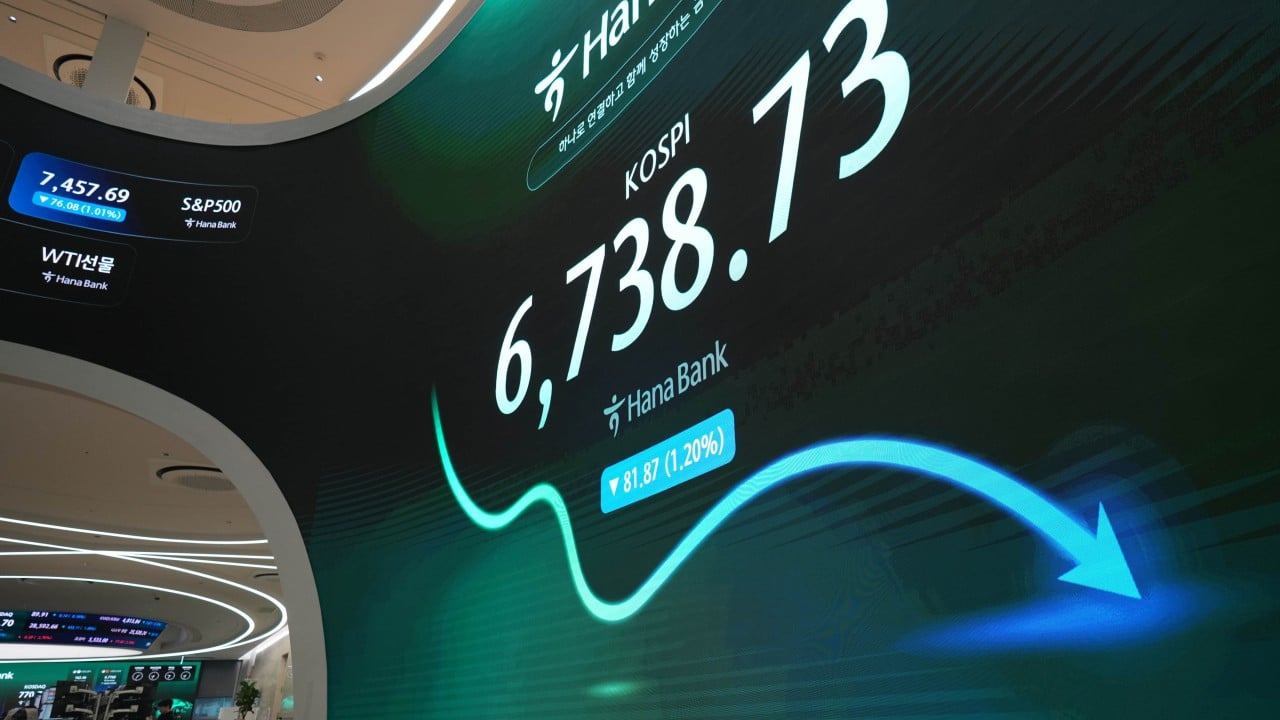
The Shenzhen-based brokerage’s retreat from Huatai-PineBridge semiconductor fund comes just weeks after stepping in as market maker A leading Chinese brokerage house has ended market making for the mainland’s only South Korea-focused exchange-traded fund (ETF), as Beijing steps up efforts to stabilise its capital markets and protect retail investors amid volatility in its East Asian neighbour’s stock market. Shenzhen-headquartered China Merchants Securities withdrew as a liquidity provider for the Huatai-PineBridge China-Korea Semiconductor ETF barely a month after assuming the role on June 17, according to Shanghai Stock Exchange filings. “The decision was purely commercial and did not reflect our view on market directions,” China Merchants told financial media outlet JWView on Monday, the same day it quit the ETF. The brokerage also ended market-making services – the provision of buy and sell quotes to provide liquidity – for five other Qualified Domestic Institutional Investor (QDII) products linked to Japan’s Nikkei 225 and the United States’ Nasdaq 100 indexes. QDII funds allow approved institutions to invest overseas within regulator-set limits.

Can the US and its allies break China’s grip on rare earths and AI technology?
Business

Can the US and its allies break China’s grip on rare earths and AI technology?

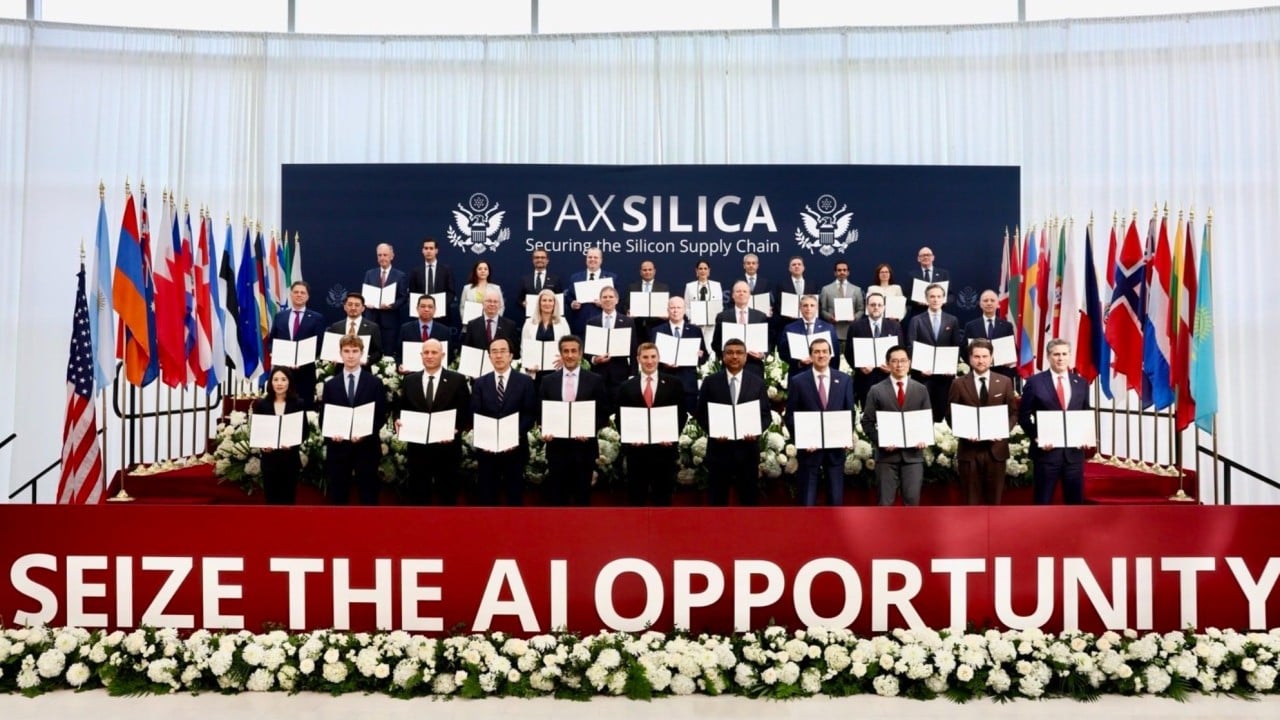
In an exclusive interview, senior US official says a whole-of-supply-chain strategy is needed to cut dependence on China “When it comes to the world, our allies were really put on alert by China’s export controls of minerals that have really come back to bite them in pretty serious ways,” Jacob Helberg, US undersecretary of state for economic affairs, told the South China Morning Post in an exclusive interview days before Trump’s action. Beijing’s restrictions set off a scramble for supplies and led to factory shutdowns across the developed world, including in the United States. While a temporary US-China truce in October resumed the flow of exports, countries such as Japan have continued to face shortages.