Business — 3,512 insights
China says willing to facilitate two-way agricultural trade with US
Business

China says willing to facilitate two-way agricultural trade with US

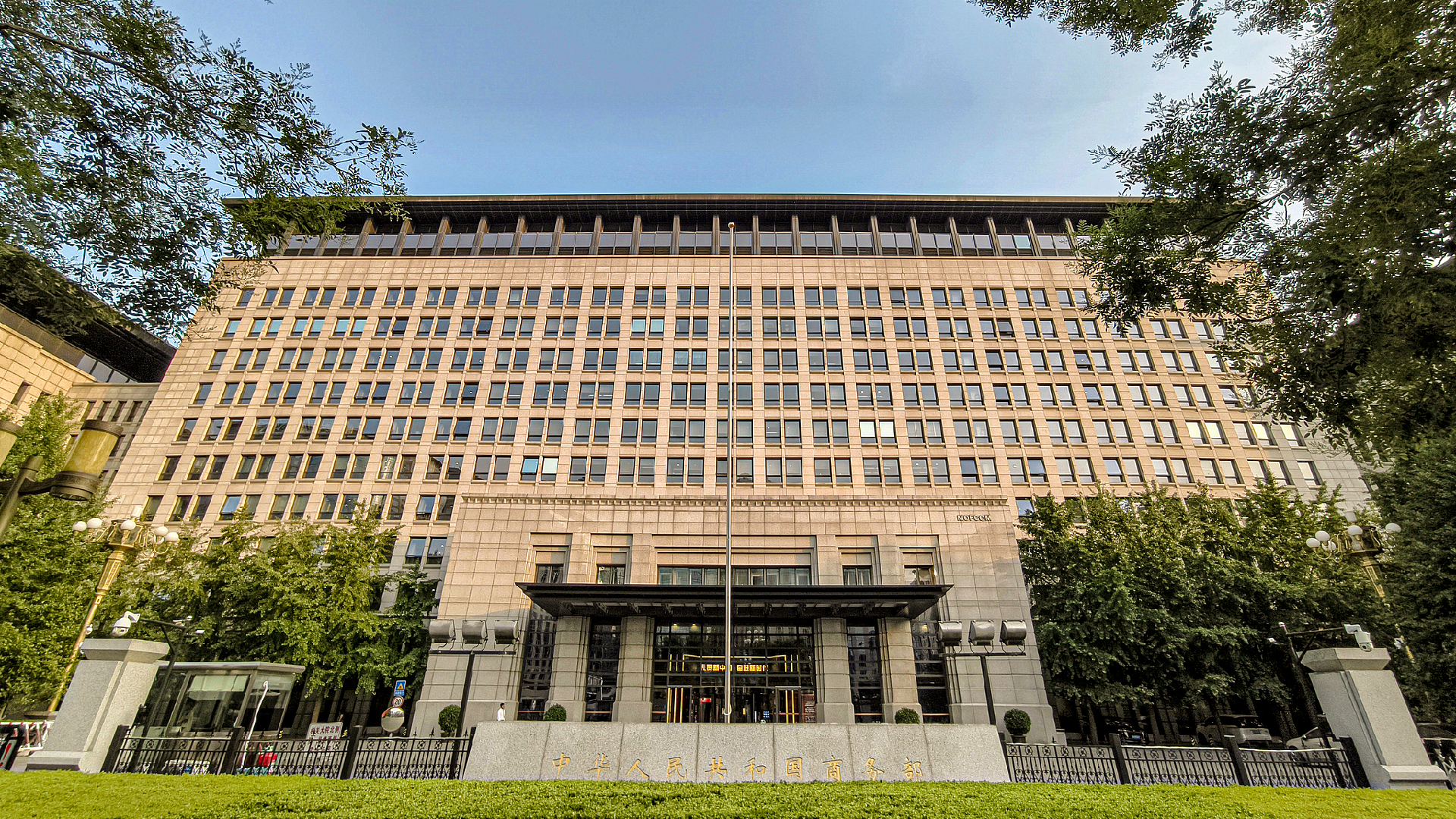
By continuing to browse our site you agree to our use of cookies, revised Privacy Policy and Terms of Use. You can change your cookie settings through your browser. China is ready to work with the United States to create favorable conditions for two-way agricultural trade, a spokesperson for the Ministry of Commerce said on Thursday. Responding to a question on whether China would reduce or cancel tariffs on US agricultural products, spokesperson He Yadong said agricultural trade is an important part of China-US economic and trade cooperation. Following recent economic and trade consultations, the two sides have set guiding targets for expanding two-way agricultural trade and agreed in principle to include relevant agricultural products in arrangements under a reciprocal tariff-reduction framework, He said. Companies will conduct trade independently in line with market principles and based on actual demand and market conditions, the spokesperson added.
China-EU trade: 3 keywords define pragmatic new phase
Business

China-EU trade: 3 keywords define pragmatic new phase

By continuing to browse our site you agree to our use of cookies, revised Privacy Policy and Terms of Use. You can change your cookie settings through your browser. China's Minister of Commerce Wang Wentao and EU Trade Commissioner Maros Sefcovic co-chaired the first meeting of the China-EU trade and investment consultation mechanism, signaling renewed momentum in bilateral economic relations. The establishment of the mechanism will help steer China-EU trade relations toward becoming more "important," "stable," and "balanced," according to CGTN's Zhu Zhu.

Hong Kong’s economy maintains steady momentum
Business

Hong Kong’s economy maintains steady momentum

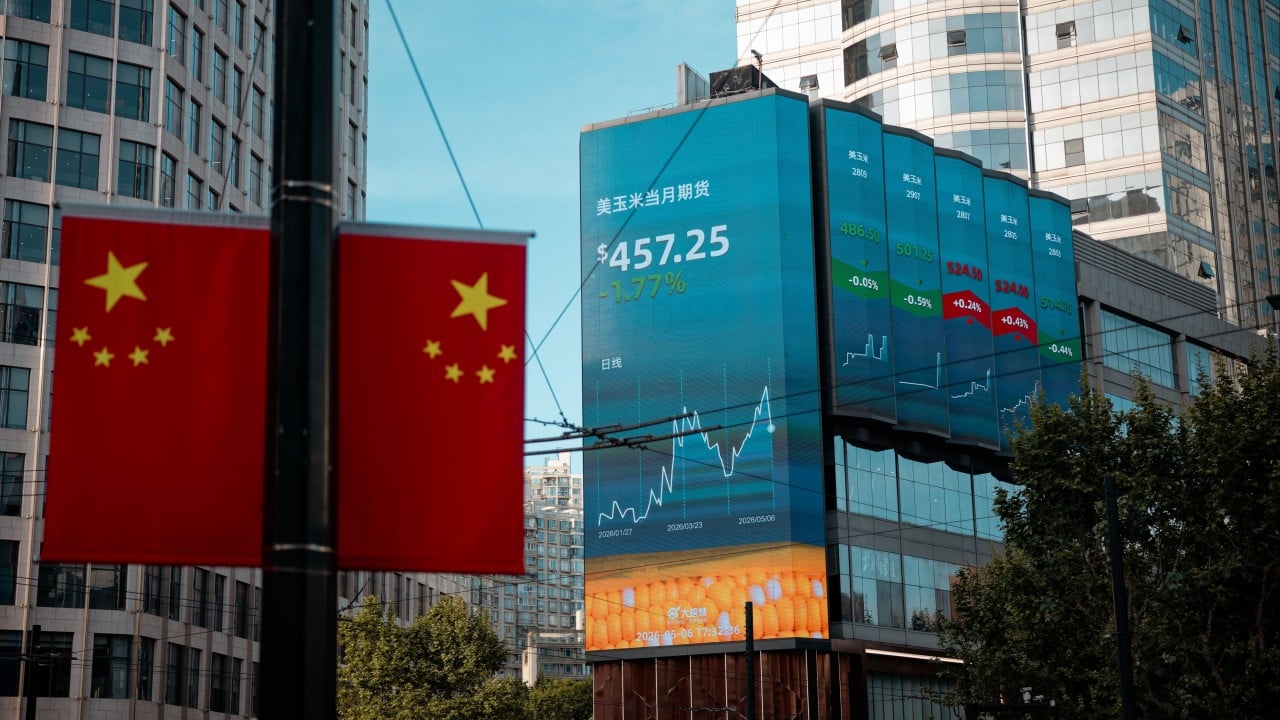
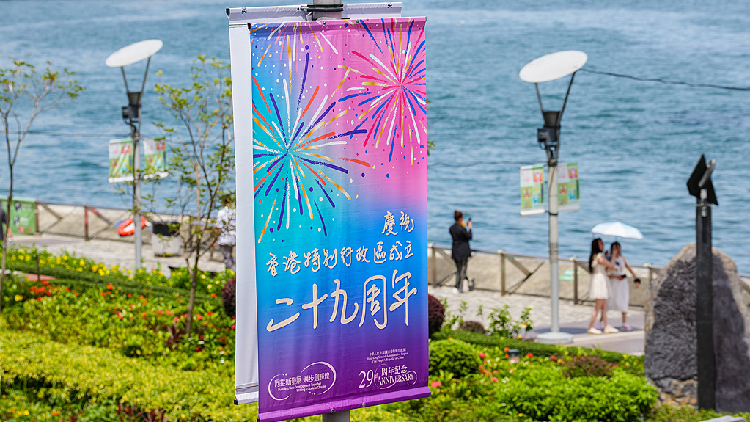
By continuing to browse our site you agree to our use of cookies, revised Privacy Policy and Terms of Use. You can change your cookie settings through your browser. Banners celebrating the 29th anniversary of Hong Kong's return to the motherland, HKSAR, China, June 29, 2026. /VCG Editor's note: Yang Hangjun is a professor and executive dean at the Graduate School of Excellence, University of International Business and Economics. The article reflects the author's views and not necessarily those of CGTN. It has been translated from Chinese and edited for brevity and clarity. July 1 marks the 29th anniversary of Hong Kong Special Administrative Region (HKSAR)'s return to the motherland and serves as an important vantage point for assessing the city's economic resilience and its role as an international financial center. At a time when global growth is slowing, geopolitical tensions are rising, and trade protectionism is resurging, international financial centes are under sustained pressure—and Hong Kong is no exception. Yet the latest data suggests a different narrative is emerging. Hong Kong's real GDP grew 5.9% year on year in the first quarter of 2026, marking its fastest quarterly expansion in nearly five years.

China Visionary: China working to achieve modernization
Business

China Visionary: China working to achieve modernization

By continuing to browse our site you agree to our use of cookies, revised Privacy Policy and Terms of Use. You can change your cookie settings through your browser. China's per capita GDP has surpassed $13,000, and its urbanization rate has reached 67%, highlighting the scale of its modernization.

Mexico still wants Chinese capital amid trade negotiations with the US
Business

Mexico still wants Chinese capital amid trade negotiations with the US

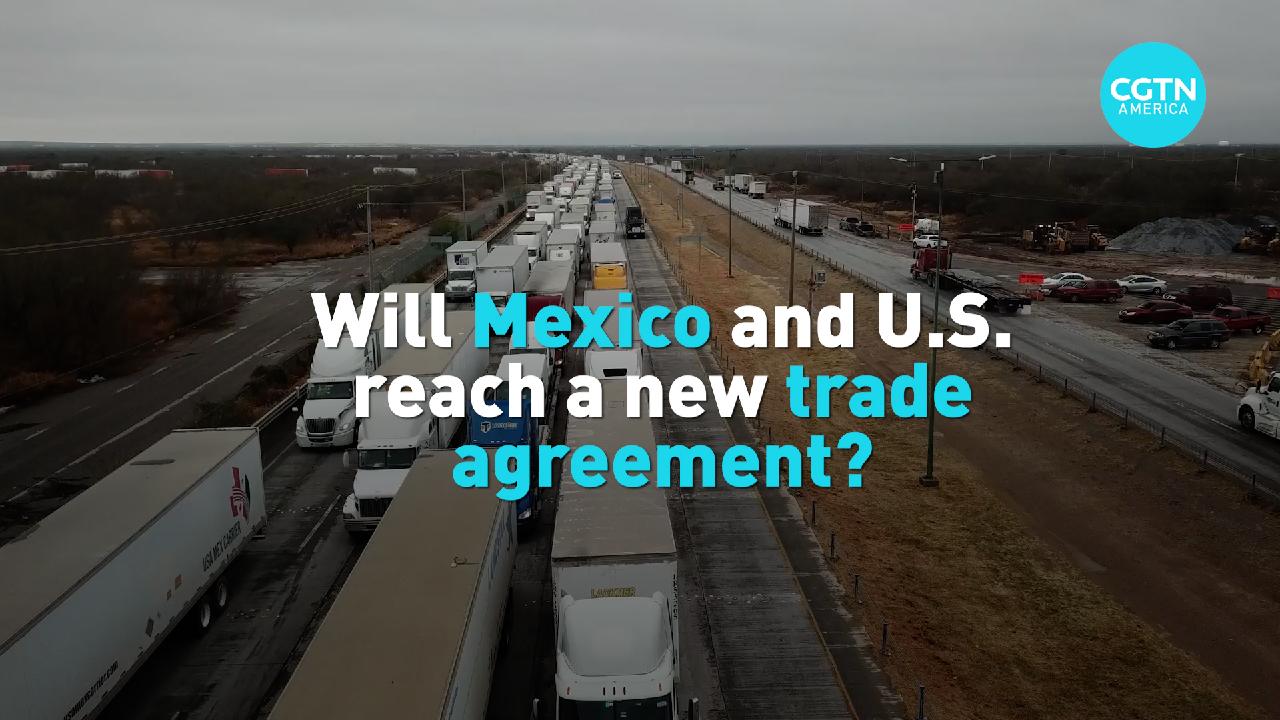
By continuing to browse our site you agree to our use of cookies, revised Privacy Policy and Terms of Use. You can change your cookie settings through your browser. The United States and Mexico recently concluded the second round of bilateral negotiations to remake the United States-Mexico-Canada Agreement (USMCA).A joint review is underway, and the Trump administration has expressed concerns that China might use the trade pact to bring its goods into the U.S. through Mexico.

China’s currency stance could cost it lost decades
Business

China’s currency stance could cost it lost decades

Support us Is China's exchange rate artificially manipulated? Image: YouTube Screengrab China may be facing a confusing short circuit in its economic and political calculations that could seriously harm the nation over the next few years. A huge and growing trade surplus seems to be the main obstacle driving China toward friction and conflict with much of the world. It is thus crucial for China to oppose the main narrative, as the official Global Times recently wrote: “The enhanced competitiveness of Chinese enterprises arises from a comprehensive industrial system, sustained investment in technology, a massive market, and robust market competition – not from the so-called ‘artificially manipulated’ exchange rates. Targeting the RMB will not solve the challenges facing Germany’s manufacturing sector, nor will it address the shortcomings in Europe’s innovation chain.” It added: “German Chancellor Friedrich Merz stirred controversy over the RMB exchange rate, claiming that the currency was undervalued by as much as 30% and citing the 1985 “Plaza Accord” – which plunged Japan into its “lost decades” – as a solution.

Nvidia flew to Beijing with Trump to sell but China said no
Business

Nvidia flew to Beijing with Trump to sell but China said no

Support us Porsche just opened, in Shanghai, its first integrated R&D hub outside Germany. Photo: ChinaEVHome A month ago, the CEO of the world’s most valuable company boarded Air Force One in Alaska as a last-minute addition to President Trump’s Beijing delegation. Jensen Huang came to sell Nvidia’s H200 chips, just cleared for export by Washington. But Beijing said no. It’s pushing Chinese firms to use Huawei and other domestic sources instead. Nvidia’s market share in China collapsed from 95% to essentially zero last year. The summit was framed as a negotiation over what China would buy from America: planes, soybeans, chips. The Huang episode reveals Beijing’s actual priority: technological independence, then supremacy. Trade, markets and profitability be damned. As China reaches parity and even overtakes the West in more technologies, the direction of technology transfer is reversing. Early signs are already visible. For decades, the global economic order operated under a comfortable paradigm: the West would invent and China would manufacture. This is now inverting. Over the coming decade, Western companies will increasingly need to license and learn Chinese technology to remain competitive.

O Tsinghua – the long and winding road leads me to your door
Business

O Tsinghua – the long and winding road leads me to your door

Support us That enough ivy for you? The Tsinghua University School of Journalism and Communication. Photo: International Association for Media and Communication Research The long and winding road Steelhead. Seafaring rainbow trout. Anadromous oncorhynchus mykiss. Steelhead are a puzzling fish. Are they salmon? Are they trout? Apparently, oncorhynchus mykiss’s life outcome is highly path dependent. Some spend their entire lives in the rivers and streams of their birth, feeding on insects, snails and leeches. In adult form, these homebodies are delicate and pretty with mottled olive-green backs, silvery bellies and a pink lateral band. “Do you have a plan B?” asked a family friend. Stupidly, we did not. Han Feizi Junior would be the second student from his mucky muck international school in Hong Kong to attend Tsinghua University. As bilingual as this school claims to be, English was still the default language and its graduates were funneled to the usual suspects – Ivy-plus, Oxbridge, near peers and wannabes. Chinese universities were not popular. Not even Tsinghua. Perhaps especially not Tsinghua. Fly fishermen pursue rainbow trout with dainty nymphs, dry flies and streamers.

Wall Street’s got China’s currency ambitions all wrong
Business

Wall Street’s got China’s currency ambitions all wrong

Support us China's ambitions for the yuan are bolder than most believe on Wall Street. Photo: Facebook Screengrab Wall Street has spent nearly two decades operating on a flawed assumption about China’s financial intentions. Eventually, Beijing would want what Washington has: the world’s reserve currency, the deepest capital markets and the extraordinary geopolitical advantages that come with financial dominance. That theory increasingly looks wrong. And if it is, investors may be underestimating one of the most important long-term shifts taking place in global finance. At this month’s Lujiazui Forum in Shanghai — seen as China’s equivalent of the World Economic Forum in Davos — the financial writing was on the wall for those who cared to notice. Senior officials announced a fresh round of measures designed to expand offshore renminbi markets, strengthen cross-border financing channels, bolster international participation in Chinese financial markets and promote Shanghai’s role as a global financial center.

Race to record China’s vanishing Dong minority heritage
Business

Race to record China’s vanishing Dong minority heritage

Support us The drum tower of Ze Li village. Xiang Ren, Author provided (no reuse) via The Conversation The Dong people in China are an Indigenous ethnic group who are known to have lived in the mountainous regions of southwestern China for about 600 years. They don’t have a written language – instead, their cultural knowledge is shared by word of mouth. This means that the outside world doesn’t know much about them. But an ambitious university-led research project to document the Dong people’s distinctive architecture is revealing a great deal about this marginalized Indigenous group’s way of life. There are an estimated 3 million Dong people living in the provinces of Guizhou, Hunan and Guangxi. They are renowned for their polyphonic choral singing, which has been inscribed by UNESCO since 2009 as an example of world-class intangible cultural heritage. Their architecture, landscape and refined agricultural terracing are also distinctive, but less well known and never digitally recorded. Dong buildings and settlements are typically hidden in fir forests with direct access to waterways at the bottom of valleys or halfway up hills.

Why Xi is walling in China’s money – and why it won’t work
Business

Why Xi is walling in China’s money – and why it won’t work

Support us China's government wants its people to keep their money at home. Photo: Facebook Screengrab TOKYO – China’s latest fix for its ailing economy: build a better birdcage. The metaphor runs deep in Chinese culture, where enclosures for pet birds have long captured the tension between freedom and control — the belief that markets, like captive creatures, need defined limits or they descend into chaos. But Xi Jinping’s attempt to cage Chinese citizens’ money movements abroad probably won’t fly as intended. In recent weeks, Beijing has moved to seal off the channels through which its 1.4 billion citizens send capital overseas. On May 22, the China Securities Regulatory Commission cracked down on unlicensed brokers funneling investor money into foreign markets. Regulators are now pressing Hong Kong and Singapore brokerages to wind down their cross-border securities, futures, and fund businesses. The CSRC is working on a two-year timeline and, officially, the target is “illicit” flows. But the shift in mood alone is likely to have an unintentional chilling effect on Asia’s largest economy.

Shanghai clarifies IPO path for cash-hungry AI labs racing against US
Business

Shanghai clarifies IPO path for cash-hungry AI labs racing against US

The move aims to support listings of ‘high-quality’ AI firms that have yet to form ‘a certain scale of revenue’ The Shanghai Stock Exchange (SSE) has clarified rules for unprofitable artificial intelligence model developers wanting to go public, as China’s large language model (LLM) firms scramble for fresh capital in an intense race with US labs. LLM developers can go public on the Shanghai bourse’s Star Market under a set of listing standards that require them to have an anticipated market cap of at least 4 billion yuan (US$591 million), as well as meeting certain criteria in terms of market potential, according to an exchange statement on Wednesday. The move aimed to support listings of “high-quality” AI firms that had yet to form “a certain scale of revenue”, according to the statement. AI players allowed to go public under such rules should have launched and operated at scale at least one LLM product, and need to have established “clear commercialisation arrangements”, according to the statement. LLMs have “emerged as the focal point of global technological competition”, the SSE said in a separate WeChat post on the same day.