Business — 3,512 insights
My conversation with Karl Marx about Donald Trump
Business

My conversation with Karl Marx about Donald Trump

Support us “I’m glad to say that I am not a ‘Marxist,’ given how much idiotic rubbish has been babbled by some who so label themselves,” said Karl Marx in the conversation imagined by the author. Image: AI-generated Norman Solomon: You’ve downplayed the importance of the individual in history. But the United States now has as president an individual who transformed power relations and the political landscape. Karl Marx: I can assure you that he did not do that by himself. Power relations are class relations. And by the way, I never said individuals are irrelevant to history. I exhorted individuals to get involved in changing history. NS: President Trump has rolled back gains from the last hundred years and more. Also, he’s mentally unstable, to put it mildly. KM: The basics still hold. As I wrote in 1869 about a situation in France where a cult existed around a tyrant, the class struggle “created circumstances and relationships that made it possible for a grotesque mediocrity to play a hero’s part.” NS: But now one highly dangerous and unhinged person has taken control of the US government. And he got there with a majority of votes of the working class. It’s been a huge shock to have a virtual psychopath as president.

Japan’s yen pain is Southeast Asia’s economic gain
Business

Japan’s yen pain is Southeast Asia’s economic gain

Support us Yen's collapse is viewed favorably across much of Southeast Asia. Image: YouTube Screengrab The Japanese yen’s collapse through mid-2026 has become one of the most consequential disruptions to hit global financial markets in decades. The currency has slid past 162 yen to the US dollar, its weakest level since 1986 — a sharp reversal from its 1995 peak of about 80 yen per dollar. Japan’s real effective exchange rate (REER) has fallen to its lowest point in more than 50 years, a sign that the yen’s decline reflects deep structural forces rather than a temporary market swing. The fallout has reached far beyond Japan’s shares, redrawing economic fortunes across Southeast Asia. The region has emerged as a net beneficiary of the yen’s slide — from lower debt-servicing costs on yen-denominated loans to a surge in Japanese investment and tourism — even as the same forces expose it to the risk of a sudden reversal should the yen’s decades-long carry trade unwind. Several factors have driven the sharp depreciation. Chief among them is the persistent interest-rate gap between Japan and other advanced economies, particularly the United States.

Trump resort rises on Vietnam graveyard as US links grow
Business

Trump resort rises on Vietnam graveyard as US links grow

Support us The Trump family have capitalist interests in communist Vietnam. Image: YouTube Screengrab BANGKOK – Vietnam is digging up a graveyard so a sprawling Trump International golf resort with plush residences can be built along the Red River, while “the highest Starbucks coffeehouse in Asia” has opened on Vietnam’s tallest mountain peak near Sapa. Trillionaire Elon Musk, meanwhile, received a Starlink satellite operating license in February to expand Vietnam’s highly censored internet. And Apple CEO Tim Cook told CNBC last year that for US sales of “Mac and iPad and AirPods and the (Apple) watch, almost all of the country of origin is Vietnam.” Hanoi’s eager embrace of American capitalism spotlights how vastly US-Vietnam relations have changed since their grueling war ended with a communist victory in 1975. Hanoi favors close ties with Washington to balance its economic vulnerability with China, its giant trading partner across Vietnam’s northern frontier. US investments in Vietnam, meanwhile, appear to be growing despite the Trump administration’s emphasis on reshoring to boost American manufacturing at home.

China’s often flawed arms still buy lasting influence
Business

China’s often flawed arms still buy lasting influence

Support us China's VT-4 tanks have reliability issues. Image: Instagram China’s weapons may face mounting questions over quality, reliability and after-sales support, but its arms trade still serves a larger strategic purpose: locking vulnerable states into long-term military, economic and political dependence. That paradox is at the center of a June 2026 report by The Takshashila Institution, which argues that China’s rise as a major global arms exporter has outpaced its ability to guarantee battlefield performance and life-cycle support. The report says China’s state-led military-industrial complex has supplied a rising number of tanks, drones, ships, missiles and aircraft to buyers, including Pakistan, Thailand, Saudi Arabia, Iraq, Algeria, Nigeria, Kenya and Myanmar. It notes repeated problems in widely exported systems, including thermal and metallurgical issues in VT-4 tanks used by Thailand and Nigeria, and crashes, offloading incidents or groundings involving CH-4B drones operated by Jordan, Iraq and Algeria. China became one of the world’s top arms exporters while reducing its own dependence on imports, with Pakistan, Serbia, Thailand and Algeria relying heavily on Chinese weapons systems by 2025.

AI ‘central plank’ in Hong Kong’s economic development, John Lee says
Business

AI ‘central plank’ in Hong Kong’s economic development, John Lee says

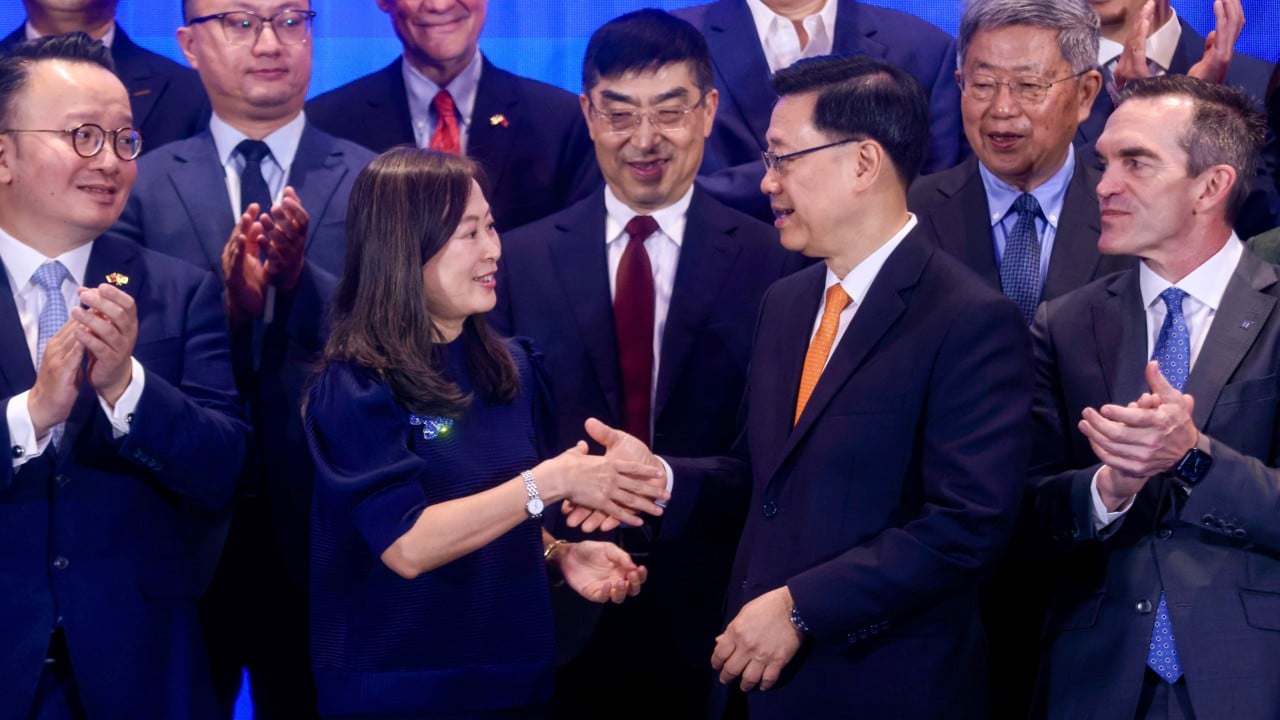
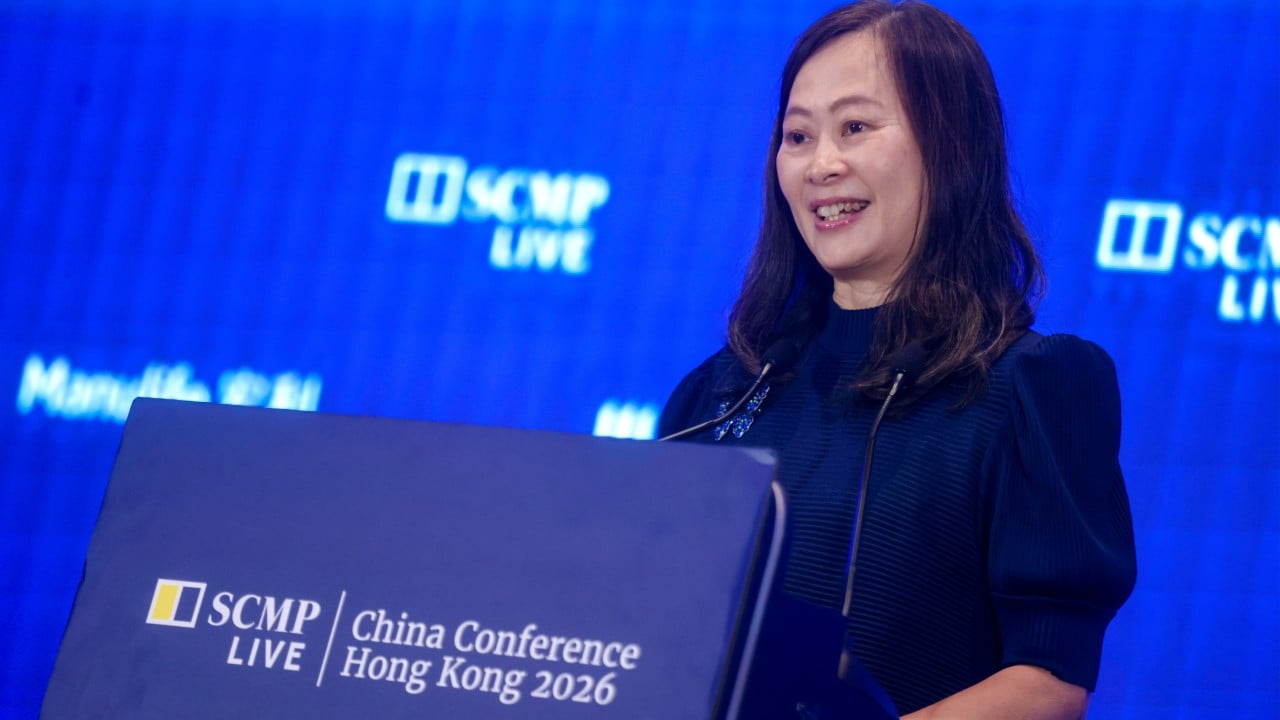
City leader says first five-year blueprint and coming policy address will drive AI-led growth Hong Kong’s high-quality economic development will be guided by its first five-year blueprint and the coming policy address, with artificial intelligence (AI) as the “central plank”, the city’s leader has said. Speaking at the South China Morning Post’s China Conference 2026 on Tuesday, Chief Executive John Lee Ka-chiu also said Hong Kong’s “one country, two systems” advantages and commitment to innovation and technology position the city to connect the world with opportunities in an AI-powered future. “Hong Kong is recognised worldwide for its openness, deep international networks and role as a vital bridge between mainland China and the rest of the world,” he said. This year’s China Conference, themed “Intelligence at Scale: Hong Kong’s AI-Powered Future”, is primarily sponsored by Manulife. The government last month launched a two-month public consultation on its first five-year plan and aims to publish the blueprint in the third quarter. Lee described the plan as a “historic milestone” and a strategic road map aligning Hong Kong with the national 15th five-year plan, which will guide the country’s development from 2026 to 2030.

Tanker set ablaze after hit by projectile in Strait of Hormuz region
Business

Tanker set ablaze after hit by projectile in Strait of Hormuz region

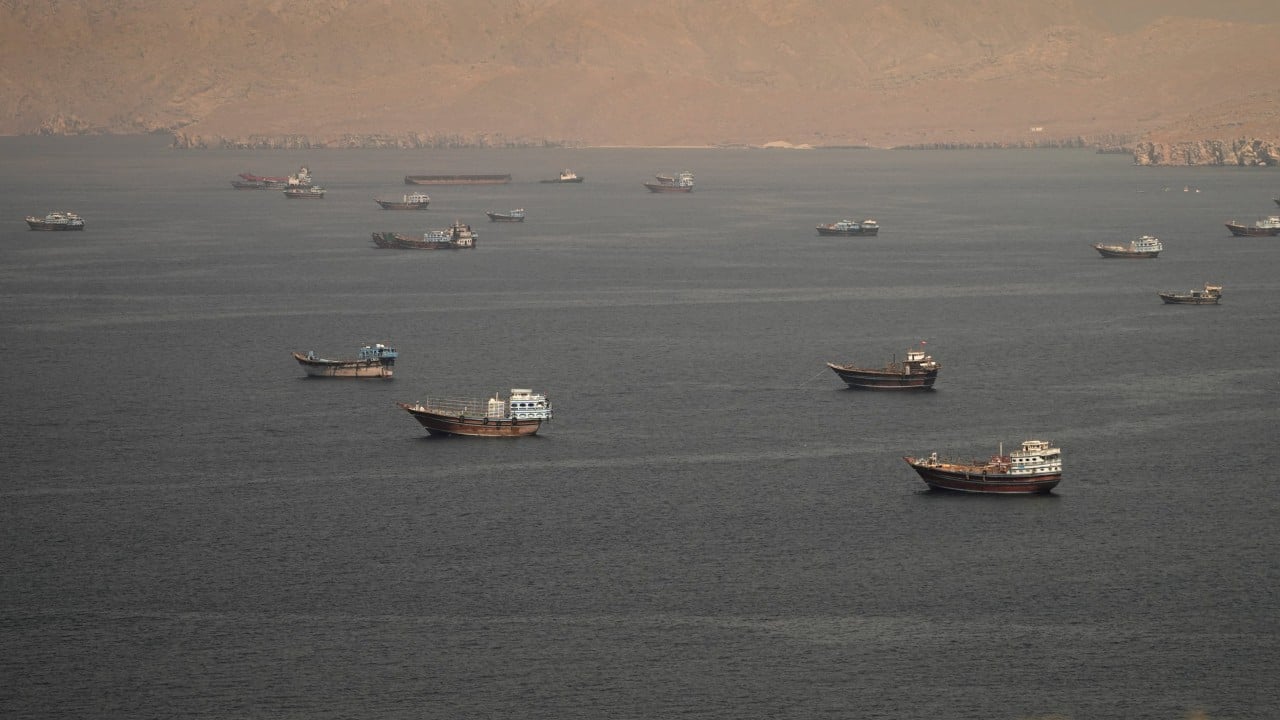
UKMTO reports no casualties or spill after vessel is struck off Oman’s coast An “unknown projectile” struck and caused a fire on an oil tanker off the coast of Oman near the Strait of Hormuz on Monday, British maritime security agency UKMTO said. The incident occurred near one of the world’s most important energy shipping routes, despite a ceasefire between the United States and Iran and ongoing efforts to secure a lasting peace agreement. The United Kingdom Maritime Trade Operations (UKMTO) said the incident took place about 8 nautical miles (15km) east of Limah, Oman. “A tanker has reported being hit by an unknown projectile on the port side causing a fire, whilst travelling southbound,” UKMTO said in a post on X. The agency said there were no reports of casualties or environmental damage. “Vessels are advised to transit with caution and report any suspicious activity to UKMTO,” the agency added, saying authorities were investigating.

Kuaishou shares tumble as Tencent slashes stake after US$3b Kling AI deal
Business

Kuaishou shares tumble as Tencent slashes stake after US$3b Kling AI deal

The divestment will reduce Tencent’s shareholding in Kuaishou to 9.37 per cent from 15.68 per cent Shares of Kuaishou Technology fell more than 6 per cent on Tuesday morning after Tencent Holdings slashed its stake in the short-video platform by selling 273 million Class B shares, just days after leading a US$3 billion financing round for Kuaishou’s artificial intelligence video unit, Kling AI. The divestment will reduce Tencent’s shareholding in Kuaishou to 9.37 per cent from 15.68 per cent, meaning the tech giant would cease to be a substantial shareholder, according to a Kuaishou filing to the Hong Kong stock exchange on Monday. The filing did not disclose the transaction price or range, but based on Kuaishou’s closing price of HK$46 on Monday, Tencent is expected to raise HK$12.56 billion (US$1.6 billion) from the sale. Kuaishou said the move was not expected to have “any material adverse effect” on its operations, adding that Tencent remained confident in the company’s long-term prospects and would maintain their business relationship. In the same filing, Kuaishou also provided an update on its recently announced HK$16 billion share buy-back programme.

Vandal demands peanut butter sandwich to end Australian bridge stand-off
Business

Vandal demands peanut butter sandwich to end Australian bridge stand-off

Police believe the bridge climber is the serial vandal responsible for the Pam the Bird graffiti appearing across Melbourne The man demanded ‌a peanut butter sandwich be delivered by drone before he would come down, causing a stand-off with police and closing a lane on the Bolte Bridge. “A man has scaled the bridge and remains in a restricted area ⁠on the eastern tower. He is refusing to follow police direction ‌and come down,” said Paul Hogan, an acting sergeant with Victoria Police. “Police allege the man is responsible for graffitiing the bridge earlier this morning.” The graffiti ⁠on ⁠the bridge closely resembles Pam the Bird, a symbol that has appeared on ‌dozens of buildings in Melbourne in recent years, including on the heritage-listed Flinders ‌Street railway station.

SCMP’s China Conference to debut in Astana this September
Business

SCMP’s China Conference to debut in Astana this September

Esteemed China Conference series in Kazakh capital will highlight opportunities in fast-growing Central Asia The South China Morning Post will host its China Conference in Kazakhstan’s capital in September, following a high-level Hong Kong delegation led by the city’s leader to Central Asia last month, marking the first such event organised by a local media outlet in the region. Announcing the move at the SCMP China Conference 2026 on Tuesday, publisher Tammy Tam said the event in Astana would enable participants to explore new opportunities while gaining first-hand experience of the dynamism in the fast-growing region. The global series convenes renowned experts and real insiders to explore China’s macro trends and emerging opportunities, and serves as a platform for global business leaders, investors and innovators to engage with and grasp the pulse of China. The global series also serves as a platform for global business leaders, investors and innovators to better understand China’s development trajectory. “Its footprint has expanded to the Greater Bay Area, Southeast Asia, the United States, and will reach Central Asia later this year,” Tam said.

Singapore’s Carousell hits profitability milestone, banks on AI as ‘force multiplier’
Business

Singapore’s Carousell hits profitability milestone, banks on AI as ‘force multiplier’

Co-founder Marcus Tan says he is ‘excited about the growth ahead’ as years of investment in user experience begin to pay off The Singapore-headquartered company, last valued at US$1.1 billion in 2021, said on Tuesday it had achieved positive Ebitda – earnings before interest, taxes, depreciation and amortisation – for the first time, using the closely watched measure of operating performance. Revenue grew 18 per cent year on year to US$141 million. For Carousell, founded in 2012 as a listings app where users could sell unwanted items, the milestone is also a test of its evolution from online classifieds into a more trusted, managed re-commerce business. Speaking to This Week in Asia from Carousell’s office in Singapore’s start-up district one-north, co-founder Marcus Tan, who started the company with Quek Siu Rui and Lucas Ngoo, said the most rewarding part of the milestone was seeing years of investment in user experience begin to pay off. “It’s a multi-year kind of transformation, so whatever happened today was built many years back, and I think we are forward-looking as well as excited about the growth ahead,” Tan said.

Bargain homes are to be had in New Zealand but here’s the catch: floods
Business

Bargain homes are to be had in New Zealand but here’s the catch: floods

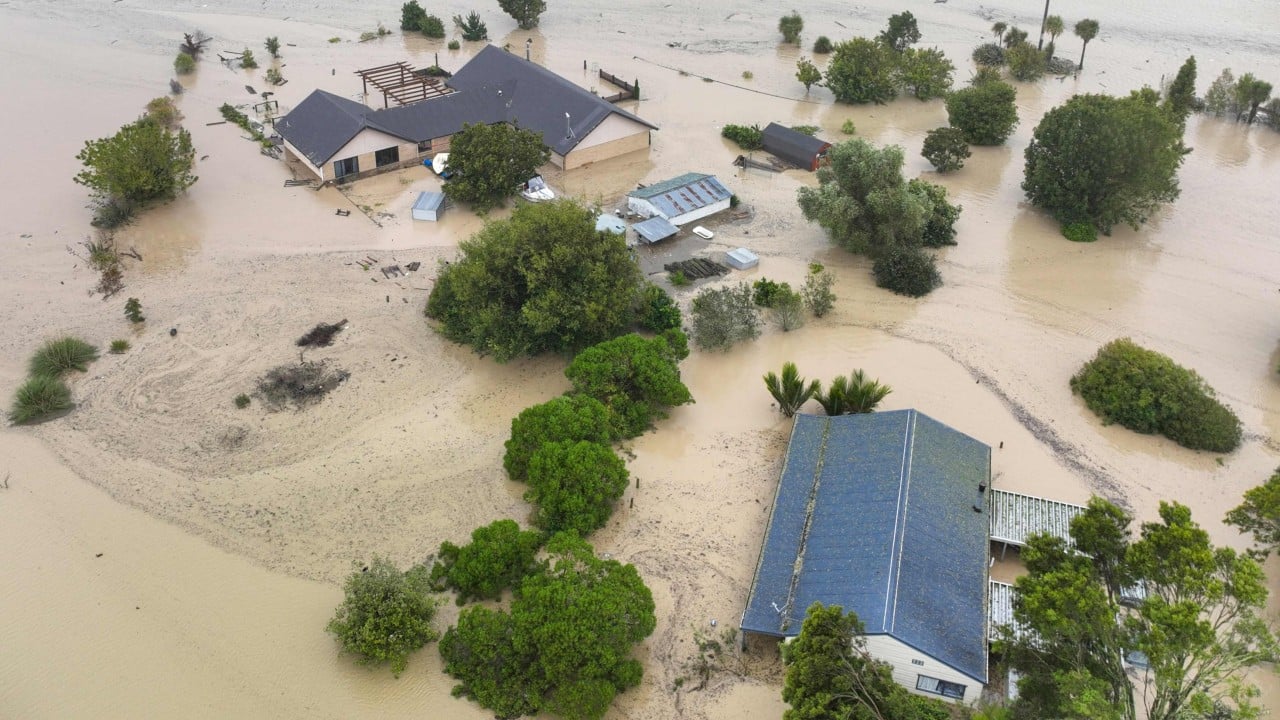
In Auckland, where thousands of properties were swamped in 2023, buying a home in a flood-prone area offers discounts of up to US$60,000 As buyers accept known flood exposure in exchange for a lower price point, those properties are outgrowing the broader market in value, according to Cotality’s chief data officer Craig Dargusch. “Our data shows that flood-affected properties trade at an initial discount, but the market is buying them anyway and growing their value faster than the rest,” Dargusch said. “Affordability wins today, but risk shapes tomorrow.” The trend underscores the trade-off facing many buyers. Even after a prolonged housing downturn that has cut New Zealand’s median house price by around 16 per cent from its 2021 peak, homes remain expensive enough that some buyers are prepared to accept flood risk to get onto the property ladder. This is despite increasingly severe and costly extreme weather. Cotality points to two regions hit by major weather disasters in recent years: Auckland, where floods affected thousands of properties in January 2023, and the central North Island region of Hawke’s Bay, where Cyclone Gabrielle caused an estimated NZ$14.5 billion in economic damage the following month.

China records most new unicorn start-ups in 5 years as AI and robotics boom
Business

China records most new unicorn start-ups in 5 years as AI and robotics boom

The pace is the fastest since 2021 though momentum for some start-ups remains uncertain, according to a new report China’s innovation ecosystem has witnessed a resurgence, minting 67 new unicorn start-ups in the first half of 2026 – the biggest increase in almost five years – as AI and robotics kick off a new investment cycle. The growth translates into an average of one new unicorn – private companies valued at US$1 billion or more – in less than every three days and was the highest since the second half of 2021 when 76 new unicorns were created, according to a Monday report by ITJuzi, a start-up database. The momentum was tightly clustered around two cutting-edge industries – artificial intelligence and robotics – which together accounted for more than 53 per cent of the cohort. This differed from the previous cycle between 2021 and 2022, when large start-ups spanned multiple sectors including new-energy vehicles, biomedicine and online consumer businesses. But most of the new unicorns – about 78 per cent – were valued between US$1 billion and US$2 billion, suggesting they were still “in the early stages of growth”, according to the report.