Business — 3,439 insights
Clips of flooded Hong Kong rivers, streets go viral online after heavy rain
Business

Clips of flooded Hong Kong rivers, streets go viral online after heavy rain

Intensity of floods prompts some users online to claim picture of the extreme was outdated or even AI-generated, only to be proved wrong Videos of flash-flooded rivers and overflowing pavements went viral on social media on Wednesday as residents in parts of Hong Kong grappled with more than 70mm of rainfall in 24 hours. The intensity of the floods prompted some users online to claim a picture of the extreme was outdated or even AI-generated, only to be proved wrong when a clip was shared by another person. “I actually live in the village houses right above that spot, so I wanted to post the video I took this morning to prove it’s not fake!” the user wrote. The earlier image, which was shared in a Facebook group, shows nearly identical scenes of flooding near Tsuen Wan’s Allway Gardens the day before. In the comments, another Hong Kong resident shared videos of overflowing pavements from outside her car window in Fanling, as a flash of lightning appears in the sky above. The local forecaster said areas such as Pok Fu Lam on Hong Kong Island and parts of Sha Tin, Tai Po, Sai Kung and Tseung Kwan O in the New Territories had experienced at least 70mm of rain by Wednesday afternoon.

China’s next tech wave? Robots
Business

China’s next tech wave? Robots

By continuing to browse our site you agree to our use of cookies, revised Privacy Policy and Terms of Use. You can change your cookie settings through your browser. China has led the global industrial robot market for 13 straight years. From January to May, industry revenue surpassed 90 billion yuan ($13 billion). Robots are rapidly becoming the new face of "Made in China."

South Korea’s market chaos puts region on AI meltdown alert
Business

South Korea’s market chaos puts region on AI meltdown alert

Support us South Korea's Kospi is vacillating wildly on AI-related news events. Image: X Screengrab TOKYO — South Korea has long been one of the world’s best early-warning systems. Its US$1.9 trillion economy is open, large, and sits at the intersection of every major shift in trade, finance and technology. Right now, Seoul, true to form, is flashing red about the risks of betting it all on artificial intelligence. No major economy has pivoted its core growth engine faster or more abruptly than the one President Lee Jae Myung has led since June 2025. Ask the average Korean on New Year’s Day what defined their economy, and they’d likely have said cars, ships, smartphones, or K-pop. Six months later, the answer is unanimous: AI. Investors are less sure the bet is paying off. The nearly $5 trillion Kospi index has been swinging like a meme stock — erratic behavior for a top-10 global bourse by market cap. It’s a case of the tail wagging the dog: a rally powered by two or three companies and an unproven technology now dwarfs the country’s GDP by more than 2.5 times. That concentration has become the Lee administration’s problem to manage. Monday’s 5% Kospi drop barely raised eyebrows by recent standards.

How Japan’s yen rout could spark a US financial crisis
Business

How Japan’s yen rout could spark a US financial crisis

Support us Japan's falling yen could soon reverberate in US debt markets. Image: X Screengrab For decades, the global financial system has been founded on a convenient assumption. The US would keep taking on more debt, and countries like Japan would cover the bill. America got to borrow money at low interest rates, while Japan got to amass massive cash reserves invested in US Treasury bonds. And in the meantime, Japan became an export-driven nation as low interest rates fueled growth among its many multinational companies. After decades of mutual gains, that bargain is beginning to crack. The recent dramatic depreciation of the Japanese yen is often portrayed as a Japanese domestic problem. But behind the weakening yen lies a structural imbalance that could shake global financial markets, exposing vulnerabilities not only in Tokyo but also in Washington. Ironically, what begins as a currency crisis in Asia could become a debt crisis in the United States. The greater danger is not merely a falling yen; it is the possibility that one of America’s largest creditors may no longer be willing — or able — to finance America’s expanding fiscal excess.

Xinjiang badam harvest heats up with e-commerce boost
Business

Xinjiang badam harvest heats up with e-commerce boost

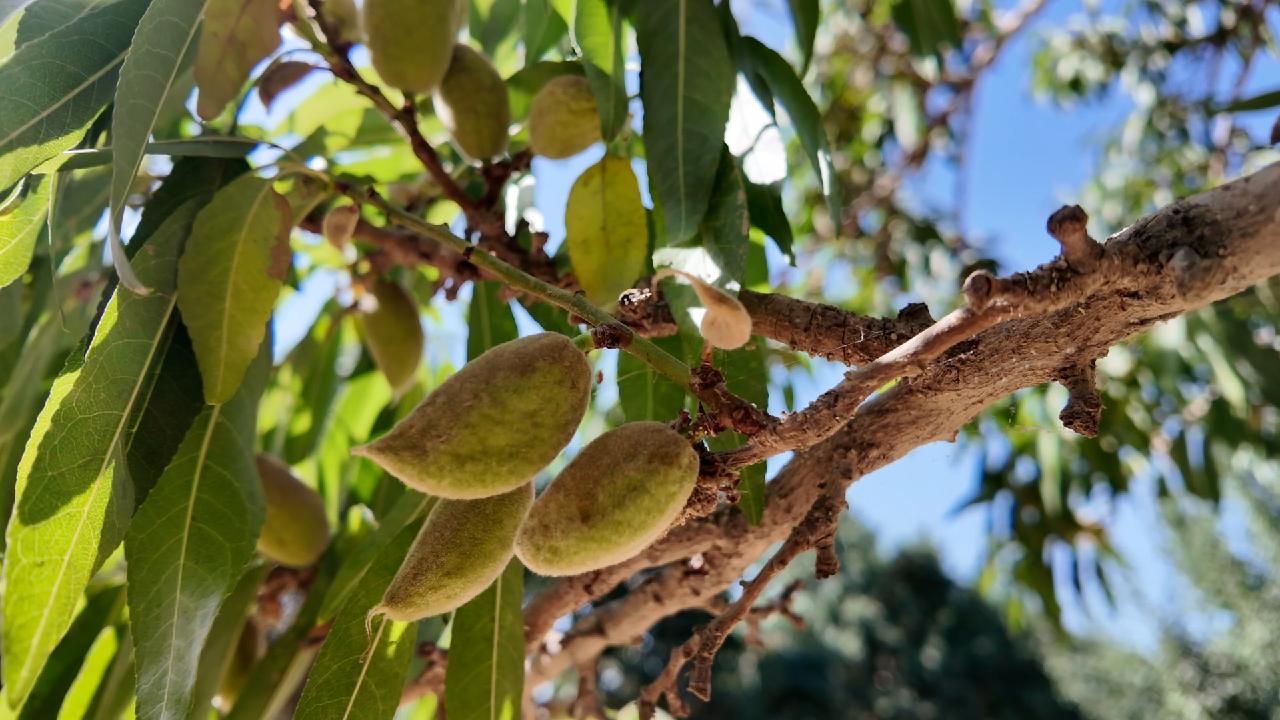
By continuing to browse our site you agree to our use of cookies, revised Privacy Policy and Terms of Use. You can change your cookie settings through your browser. As badam fruits enter peak harvest in Shache County, China's Xinjiang Uygur Autonomous Region, local authorities are boosting sales through technical guidance, cooperative sorting and grading, and live-streaming e-commerce. Fresh green-husked badam fruits have attracted strong demand from outside Xinjiang through online sales. These coordinated efforts are delivering real income gains for local farmers and driving rural revitalization.

Xinjiang’s 19 ports hit record highs in H1 2026
Business

Xinjiang’s 19 ports hit record highs in H1 2026

By continuing to browse our site you agree to our use of cookies, revised Privacy Policy and Terms of Use. You can change your cookie settings through your browser. In the Xinjiang Uygur Autonomous Region, 19 ports recorded more than 2.4 million cross-border trips and 946,000 vehicles, trains, and aircraft in the first half of 2026. This increase was fueled by surging self-driving and inbound tourism, marking a 33.2% surge from the previous year. Visa-free foreign arrivals jumped 38%, tourist entries rose 20%, and cargo throughput grew 25%, with rail ports ranking first nationwide. Urumqi Tianshan International Airport handled nearly 34% of China–Central Asia passenger flights, cementing Xinjiang as a key westward gateway.

Global institutions turn bullish on China’s growth outlook
Business

Global institutions turn bullish on China’s growth outlook

By continuing to browse our site you agree to our use of cookies, revised Privacy Policy and Terms of Use. You can change your cookie settings through your browser. Global institutions are growing more optimistic about China's economic outlook, even as geopolitical tensions, trade frictions, and energy price volatility weigh on the global economy. The World Bank, in its July China Economic Update, maintained its 2026 GDP growth forecast at 4.4%, citing steady gains in high-tech sectors. Investment in high-tech industries rose 4.5% year on year in the first five months, while exports of AI-related equipment, new energy products, and electronic hardware continued to support growth, offsetting weakness in property and softer domestic demand. Fitch Ratings has taken a more upbeat stance, raising its 2026 growth forecast for China to 4.6% in its June Global Economic Outlook. The upgrade reflects stronger-than-expected first-quarter data, underpinned by robust expansion in high-tech manufacturing such as new energy vehicles and industrial robots, alongside resilient foreign trade. Morgan Stanley is even more optimistic, lifting its 2026 GDP growth forecast to 4.8% and projecting 10% growth in nominal exports.

South Korea swings from political paralysis to punitive power
Business

South Korea swings from political paralysis to punitive power

Support us South Korean President Lee Jae Myung speaks during a New Year's greeting event at the presidential office, Cheong Wa Dae, in Seoul, South Korea, January 2, 2026. Photo: Yonhap On July 7, South Korea began enforcing a sweeping law against false and manipulated information. The law authorizes punitive damages of up to five times proven losses against news organizations and large online channels that knowingly distribute prohibited content to cause harm or gain profit. Repeat distribution after a final determination of falsehood can bring administrative fines of up to 1 billion won. The law captures a larger political shift. Under former President Yoon Suk Yeol, South Korean politics was defined by paralysis. Under President Lee Jae Myung, paralysis has given way to governing power. The democratic question is whether that power will be used mainly to solve problems or punish those judged to have acted in bad faith. Yoon governed throughout his presidency without control of the National Assembly.

NATO summit arms deals show realism trumps values
Business

NATO summit arms deals show realism trumps values

Support us Image: NATO The liberal internationalist story has always been seductive: Democracies prefer each other, build institutions together and let shared values govern how they distribute power and resources. But this week’s NATO summit in Ankara showed that security imperatives trump liberal values in today’s geopolitics. First, let’s examine the pattern of defense spending. NATO allies gathered in Ankara to announce arms deals worth tens of billions of dollars, structured almost entirely around demonstrating to the Trump administration that Europe was finally paying its share. This was carefully calibrated to satisfy a transactional US president who has consistently subordinated values-based ideological alignment to security burden-sharing calculations. Deals announced in Ankara — including Europe’s procurement of American AMRAAM, PAC-3 and GMLRS-variant missiles — involved almost exclusively NATO allies, consolidating a transatlantic defense industrial base that keeps procurement, co-production and R&D tightly guarded within the treaty perimeter.

The border killing fields separating India and Bangladesh
Business

The border killing fields separating India and Bangladesh

On the night of May 31, near Sadipur in Jashore’s Sharsha upazila, Border Guard Bangladesh (BGB) personnel found a section of the border fence cut open. On the far side stood more than a dozen people, among them women and children, driven to the spot by India’s Border Security Force (BSF) and told to start […] The post The border killing fields separating India and Bangladesh appeared first on Asia Times.

Woodworkers buried as landslide death toll rises to 21 in weather-ravaged China
Business

Woodworkers buried as landslide death toll rises to 21 in weather-ravaged China

All recovered from Gansu disaster as rescue parties around the country continue to search for people trapped by unprecedented floods A total of 21 people out of 33 have died and seven injured in a landslide in northwestern China, as typhoon, flooding and other geological disasters continue to ravage the country. The victims, who were mostly woodworkers hired to trim trees in Longnan, Gansu province, were buried on Tuesday. Local government said in a press conference that as of Wednesday morning, everyone involved in the incident had been rescued. Rescue parties are continuing to search for those trapped in unprecedented floods in southern China’s Guangxi Zhuang autonomous region, while in other parts of the country, alerts have been issued for strong winds and several days of rain.

Is Johor ready for new power balance? Malaysia’s Loke implores voters to curb BN dominance
Business

Is Johor ready for new power balance? Malaysia’s Loke implores voters to curb BN dominance

The transport minister urges voters to flood Saturday’s state election to ensure Malay-led Barisan Nasional does not have its way Crucial state polls on Saturday in Johor, where BN holds 40 of the 56 seats, may offer flickers of hope for a return to national power for the once all-conquering Malay umbrella party, which has grown increasingly restless with its own junior partner status inside Anwar’s government. Loke wants to ensure BN does not have it all its way on Saturday. His DAP is contesting 17 of the state’s seats hoping a message about returning quality jobs, investment and industry from Singapore may cut through in the Malay bastion. “We know it is a tall order for Pakatan Harapan to form the state government,” Loke told This Week in Asia in an exclusive interview in the MPs’ lounge at Malaysia’s parliament in Kuala Lumpur. “But we need to have some sort of balance of power in Johor, and to ensure that Johor will not return to the era of one-party dominance like in the past.”