Business — 1,782 insights
Macao: The super-connector at the heart of China’s 15th Five-Year Plan
Business

Macao: The super-connector at the heart of China’s 15th Five-Year Plan

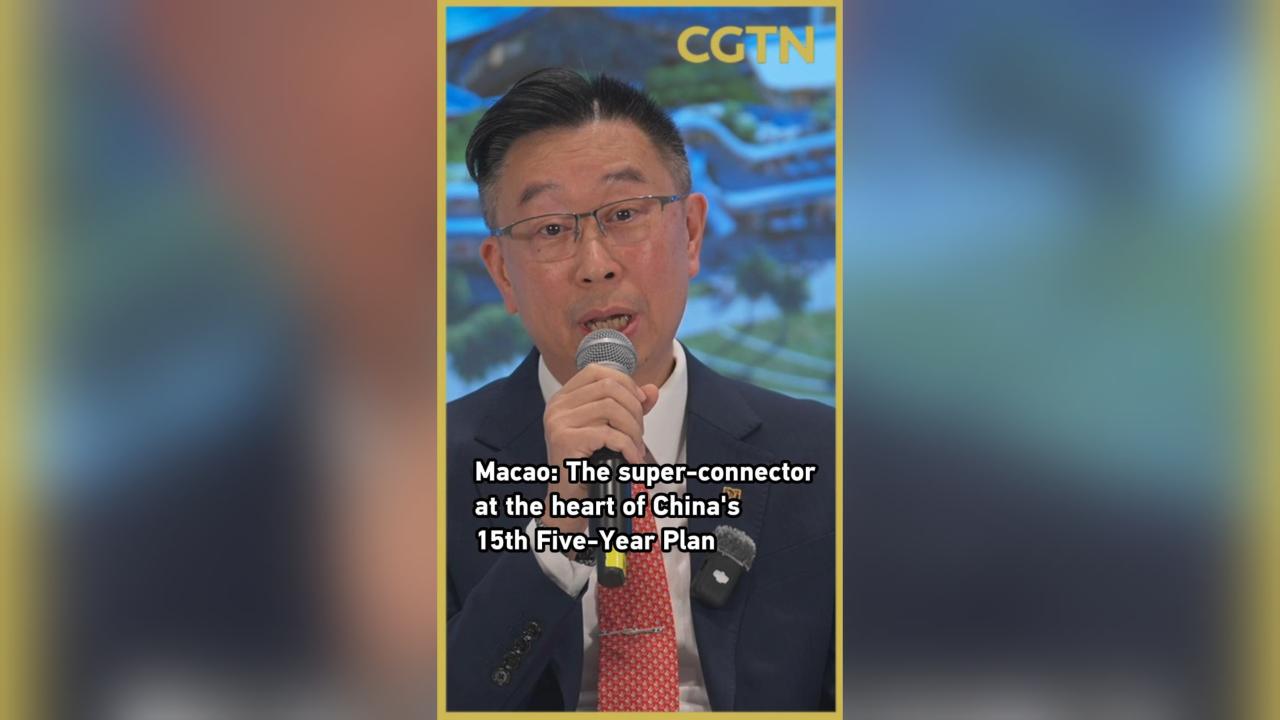
By continuing to browse our site you agree to our use of cookies, revised Privacy Policy and Terms of Use. You can change your cookie settings through your browser. China's 15th Five-Year Plan offers a global roadmap — and the Macao SAR is at the center. As a free port under "one country, two systems," Macao is bridging the 300M-strong Portuguese-speaking markets and reaching into Spanish-speaking countries. It helps overseas brands enter China and Chinese brands go global — backed by Macao's financial, legal and service strengths. This is Macao stepping up as the ultimate super-connector.

US-Iran peace deal rattles China’s energy strategy, geopolitics
Business

US-Iran peace deal rattles China’s energy strategy, geopolitics

Support us A 'teapot' refiner in China Photo: Baidu.com Beijing officially welcomed the United States-Iran peace deal announced over the weekend, hoping the reopening of the Strait of Hormuz will ease a months-long oil supply disruption that has rattled China’s fuel markets and battered its refining sector. However, the unofficial response, from the Chinese commentariat, is not so uniformly positive. Chinese commentators do say approvingly that the reopening of the Strait of Hormuz should allow Beijing to replenish its strategic crude reserves and benefit from softening oil prices, with some sanctioned “teapot” refiners potentially finding relief in the diplomatic thaw. However, with Western governments unfreezing Iranian assets and allowing Tehran to legally sell crude, China will lose the discounts it enjoyed by importing Iranian oil through a shadow fleet that bypassed sanctions. “International oil prices will likely fall after the US-Iran reconciliation, which is a double-edged sword for China,” a Sichuan-based columnist using the pseudonym Fanyuzhi says. “In the short term, lower oil prices will reduce logistics costs and ease inflation.

BizDataDive: China’s growth story in 105 years
Business

BizDataDive: China’s growth story in 105 years

By continuing to browse our site you agree to our use of cookies, revised Privacy Policy and Terms of Use. You can change your cookie settings through your browser. China's GDP has expanded more than 2,000 times (unadjusted) since 1952. Meanwhile, incomes have risen significantly and urbanization has reshaped everyday life. Swipe through to discover the numbers behind China's growth and transformation, as CGTN launches a series of data-driven posters charting 105 years of rapid economic change across the country, to mark the 105th anniversary of the founding of the Communist Party of China.

China’s market regulator summons Walmart China over food safety issues
Business

China’s market regulator summons Walmart China over food safety issues

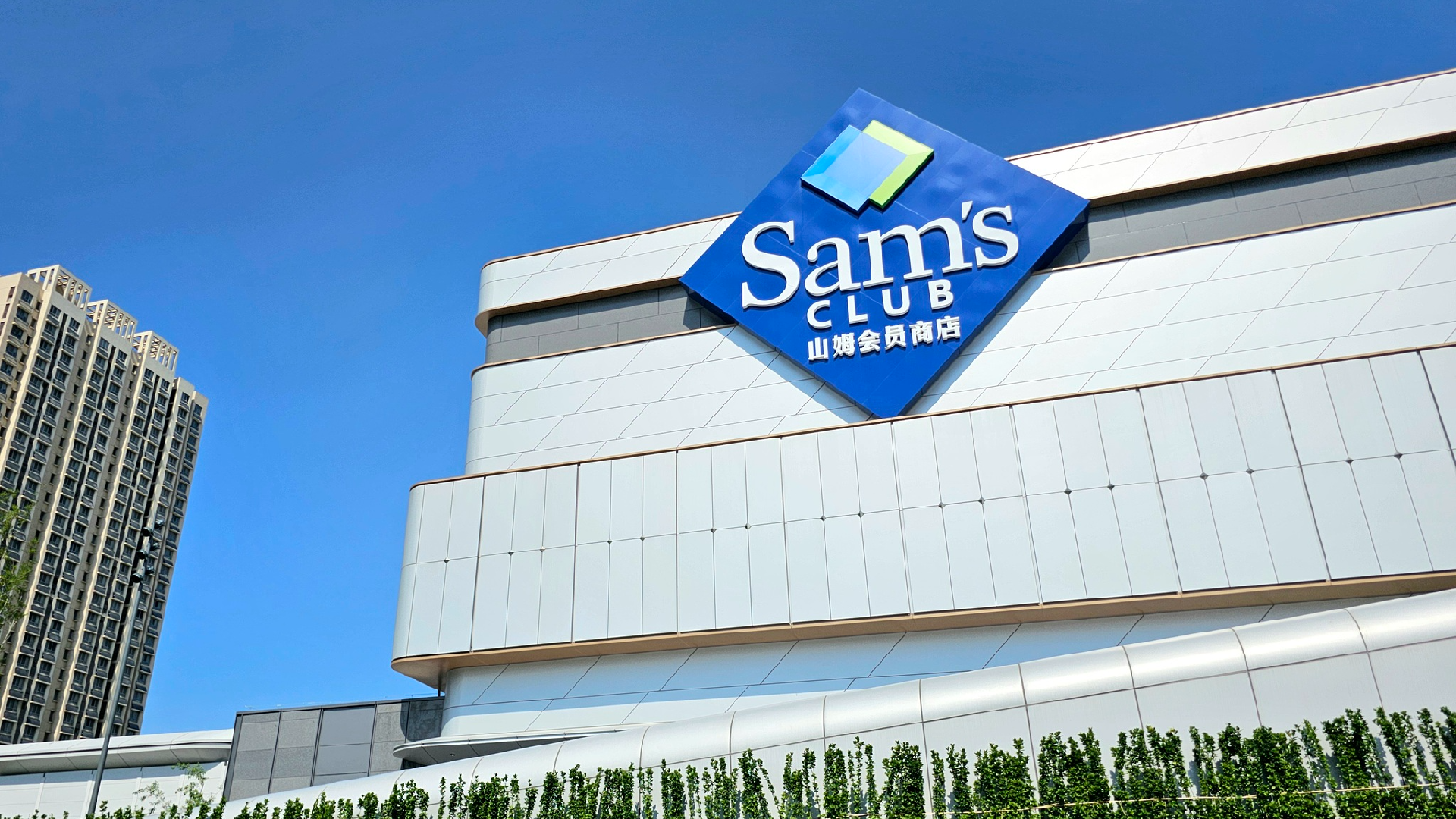
By continuing to browse our site you agree to our use of cookies, revised Privacy Policy and Terms of Use. You can change your cookie settings through your browser. China's top market regulator has held talks with Walmart China regarding food safety problems found in Sam's Club's brick-and-mortar stores and online shops, the regulator said on Monday. The State Administration for Market Regulation recently summoned officials of Walmart (China) Investment Co., Ltd., the headquarters of Sam's Club in China, for regulatory talks in accordance with the law, a statement released by the administration noted. The administration urged the company to conduct food business activities in strict accordance with Chinese laws and regulations. It also required the company to strengthen food safety awareness, strictly fulfill its primary responsibility for food safety, shoulder its corporate social responsibility, prevent food safety risks across the entire chain and effectively safeguard public safety. Walmart China said in a statement to multiple Chinese media outlets that it "fully acknowledged, deeply reflected on, and sincerely accepted" the concerns and rectification requirements raised by regulators during the regulatory interview.

Yiwu’s World Cup role reflects evolution of Chinese manufacturing
Business

Yiwu’s World Cup role reflects evolution of Chinese manufacturing

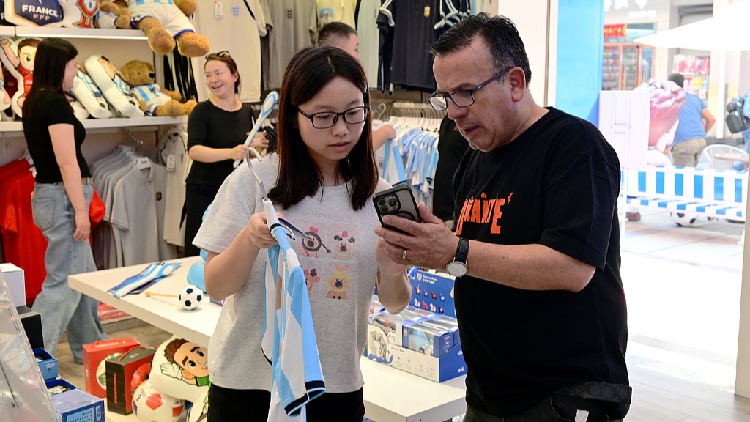
By continuing to browse our site you agree to our use of cookies, revised Privacy Policy and Terms of Use. You can change your cookie settings through your browser. A foreign businessman purchases officially licensed football-themed apparel at Yiwu International Trade City, Jinhua, Zhejiang Province, China, June 10, 2026. /VCG Known as the "world's supermarket", Yiwu, a small city in China's Zhejiang Province, supplies an estimated 2.1 million kinds of goods to 233 countries and regions. The world's largest wholesale market for small commodities, which is also well known for its large market share of global Christmas decorations, has recently kicked into World Cup mode. Nearly 70% of the production of World Cup-related merchandise is located in Yiwu, according to data from the Yiwu Sports Goods Association. This shift comes even as the excitement for this particular edition of the World Cup is being shaped more and more by commercial and economic calculations. Many companies moved early to apply for design patents and secure official IP licenses from national teams and football clubs, in a bid to compete on more than just price.

Two Chinas at North America’s World Cup
Business

Two Chinas at North America’s World Cup

Support us China isn't competing in the 2026 World Cup, but its presence will be felt throughout the event. Image: X North America’s World Cup summer has begun, and China is once again outside the tournament rather than inside it. That fact is familiar. But it should not be flattened into the usual joke about a country of 1.4 billion people failing to find eleven footballers. China did not vanish at the first hurdle. It narrowly reached the third round of Asian qualifying in 2024, preserving hopes of returning to the finals for the first time since 2002. But the expanded 48-team format, and Asia’s wider doorway into the tournament, still were not enough. China’s campaign ended before the finals, leaving the same uncomfortable conclusion: vast population, wealth, infrastructure and sporting ambition have not yet produced a reliable World Cup team. The more interesting point is that there are really two Chinas at this World Cup, and only one of them is missing. The absent China is obvious. It is the men’s national team, whose only World Cup appearance remains the goalless group-stage exit of 2002. The other China is everywhere.

The China collapse that just never arrives
Business

The China collapse that just never arrives

Support us China's economy isn't on the verge of collapse. Image: X Screengrab China has been on the verge of collapse for more than 20 years. In 2001, lawyer and commentator Gordon Chang published “The Coming Collapse of China.” The book famously predicted that China’s economic model would fail within a decade. The decade passed. The prediction was revised, republished and absorbed into a durable genre that has survived every missed deadline. The crisis, by Chang’s and others’ readings, was always near. Consider two other prominent figures on opposite ends of the China collapse spectrum. Nouriel Roubini earned the nickname “Dr. Doom” even before predicting the 2008 global financial crisis. In 2011, he warned that China faced a meaningful probability of a hard landing. He pointed to its runaway debt, over-investment and infrastructure projects disconnected from real demand. The crash, he suggested, would come after 2013. By 2015, as the hard-landing consensus reached its peak, Roubini reassessed the evidence. He rejected the collapse scenario and argued instead for a “bumpy landing” — growth slowing, but without systemic failure. The prediction changed because the evidence changed. Peter Zeihan took a different angle.

Beijing reins in Alibaba, JD.com over destructive 618 price cuts
Business

Beijing reins in Alibaba, JD.com over destructive 618 price cuts

Support us JD.com's "618" festival is one of China's two major annual online shopping events. Photo: Baidu Shares in China’s biggest e-commerce companies fell on Thursday after Beijing’s market regulator summoned five of the country’s largest online shopping platforms over deceptive promotional practices ahead of the annual “618” (June 18) shopping festival. Alibaba’s Hong Kong-listed shares dropped 5.4% to HK$107.40 (US$13.8) while JD.com fell 2.9% to HK$108.9. Nasdaq-listed shares of PDD Holdings Inc, which operates the international shopping app Temu, also declined in early US trading. The Beijing Municipal Administration for Market Regulation accused Taobao, JD.com, Pinduoduo, Douyin and Xiaohongshu of violations including false promotional claims, non-transparent business practices and failure to properly disclose sellers’ information. The action came days before the “618” shopping festival, one of China’s biggest annual retail events, as Beijing pushes a broader campaign to stamp out what it calls “rat race” competition among e-commerce platforms.

China’s HQ-16F primed for Taiwan war far beyond the Strait
Business

China’s HQ-16F primed for Taiwan war far beyond the Strait

Support us China's HQ-16F missile defense system signals Beijing's concern of a wider Taiwan war. Image: X Screengrab China’s deployment of the HQ-16F missile opposite Taiwan reflects Beijing’s growing concern that future wars may be fought not just across the Strait, but deep inside the mainland itself. This month, the South China Morning Post (SCMP) reported that China has deployed a sophisticated new medium-range surface-to-air missile (SAM) system, believed to be the HQ-16F, to frontline military units stationed directly opposite Taiwan. Chinese state broadcaster CCTV aired footage on Friday (June 5) documenting the first live-fire and operational assessment of the weapon by the 73rd Group Army. The strategic unit, headquartered in Xiamen, Fujian province, traveled thousands of kilometers to the northwestern Gobi Desert to conduct drills, during which a mobile-launched missile reportedly successfully intercepted an incoming target 50 kilometers away. Designed to enhance the People’s Liberation Army (PLA) Eastern Theater Command’s capabilities, the wingless, high-efficiency missile employs four tail fins, an integrated motor and advanced thrust vectoring to engage highly evasive, low-altitude or supersonic threats.

Xi closes the door after promising US CEOs to open wider
Business

Xi closes the door after promising US CEOs to open wider

Support us Donald Trump and his entourage of US corporate titans during his trip to Beijing last month. Image: YouTube Screengrab TOKYO — The billionaire CEOs who accompanied US President Donald Trump to Beijing last month are probably feeling some whiplash. Some of that disorientation comes from Trump himself — a president who built two campaigns on confronting China and has since recast himself as an open admirer of Xi Jinping, lurching between hard and soft postures with little warning. But the sharper sting is how quickly Xi’s promises have curdled. His assurances to Trump’s business entourage — that China would “open wider” and offer American firms “broader prospects” — already sound like dispatches from a different era. What was meant to inspire Apple’s Tim Cook, Tesla’s Elon Musk, Nvidia’s Jensen Huang and the other US corporate titans now looks like a head fake. The reality is China is now imposing tighter controls on cross-border capital, a walled-off AI sector and shrinking transparency. That is, less openness, not more, as Xi promised his American guests. No wonder China’s markets are being left in the dust.

Along the river, before the fall: China pre-Renaissance city life
Business

Along the river, before the fall: China pre-Renaissance city life

Support us A detail from the Qingming Scroll showing river traffic beneath the Rainbow Bridge, traditionally attributed to Zhang Zeduan, Northern Song dynasty. Photo: National Palace Museum, Taipei A boat is about to hit the bridge. That is where Zhang Zeduan’s Along the River During the Qingming Festival begins to reveal its secret. Beneath the great arched bridge, boatmen shout, ropes tighten, a mast is being lowered, and a heavy river vessel struggles through a crowded waterway. Above them, people lean over the railings. On the banks, shopkeepers, porters, travelers, monks, doctors, fortune-tellers, laborers and children press into the scene. At first glance, the scroll appears to be a celebration of prosperity. Look longer, and it becomes something more unsettling: a portrait of a city so advanced that every part of it depends on everything else not failing. The painting, now in the Palace Museum in Beijing, is usually attributed to Zhang Zeduan of the Northern Song dynasty.

A credible and safe path to Chinese financial liberalization
Business

A credible and safe path to Chinese financial liberalization

Support us China faces a capital account dilemma. Image: Twitter China’s financial policymakers face a genuine dilemma. On one side, the country intends to gain deeper access to global capital markets, internationalize the renminbi and build a world-class market infrastructure that inspires global investors’ confidence and trust. On the other hand, financial liberalization has repeatedly triggered instability in other emerging economies — currency crises, capital flight and loss of monetary policy independence. To date, China has watched those episodes carefully from a position of controlled caution. It’s an approach that protected its economy during the critical early years of its economic rise. The conventional policy debate offers two options: open faster and accept the risks, or stay cautious and accept the constraints. Both sides are missing the more important question: not how open China’s capital account should be, but how the system governing capital flows should be designed. Brazil is the instructive counterexample. Brazil has one of the world’s most open capital accounts. In theory, that should mean efficient capital allocation and deep integration with global markets.