Tencent Music reports Q1 2026 revenue up 7.3% as non-membership music services rise 28%
Technology

Tencent Music reports Q1 2026 revenue up 7.3% as non-membership music services rise 28%

Every Wednesday and Friday, TechNode’s Briefing newsletter delivers a roundup of the most important news in China tech, straight to your inbox. Your support helps TechNode continue to provide credible, on-the-ground journalism and industry insights about the Chinese tech industry. Tencent Music Entertainment Group reported unaudited first-quarter 2026 revenue of RMB7.90 billion ($1.15 billion), up 7.3% year-over-year. Non-IFRS net profit attributable to equity holders rose 7.0% to RMB2.27 billion ($330 million). Music-related services revenue increased 12.2% to RMB6.51 billion ($944 million). Within that, membership services revenue rose 6.6% to RMB4.57 billion, while non-membership music services revenue jumped 28.0% to RMB1.94 billion, helped by offline performances and advertising. The company said growth in the quarter was supported by stronger music IP monetization, including digital albums, concerts, merchandise, and offline events. Tencent Music also highlighted continued expansion of SVIP and fan membership products, deeper traffic conversion through Weixin Video Account, and broader use of AI in recommendations, music creation, and legacy catalog promotion. [TechNode reporting]
Trump’s China visit opens door to ‘casual’ networking between business chiefs
Industry

Trump’s China visit opens door to ‘casual’ networking between business chiefs

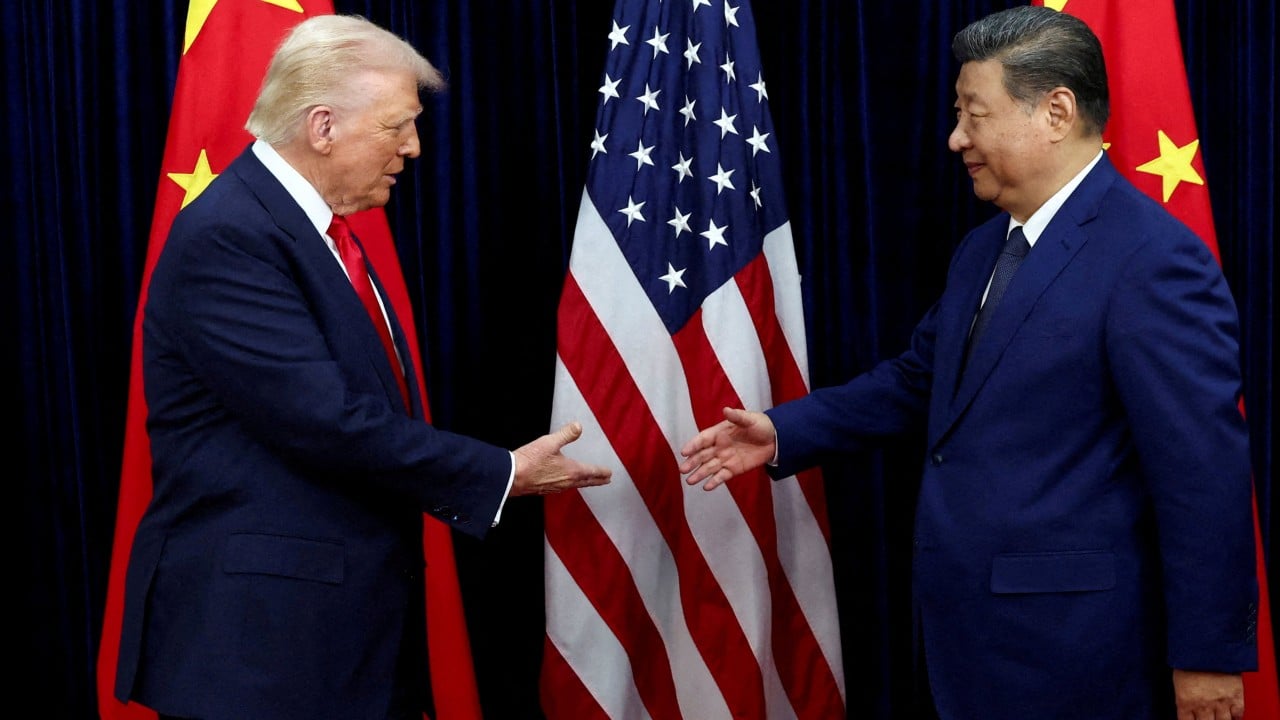
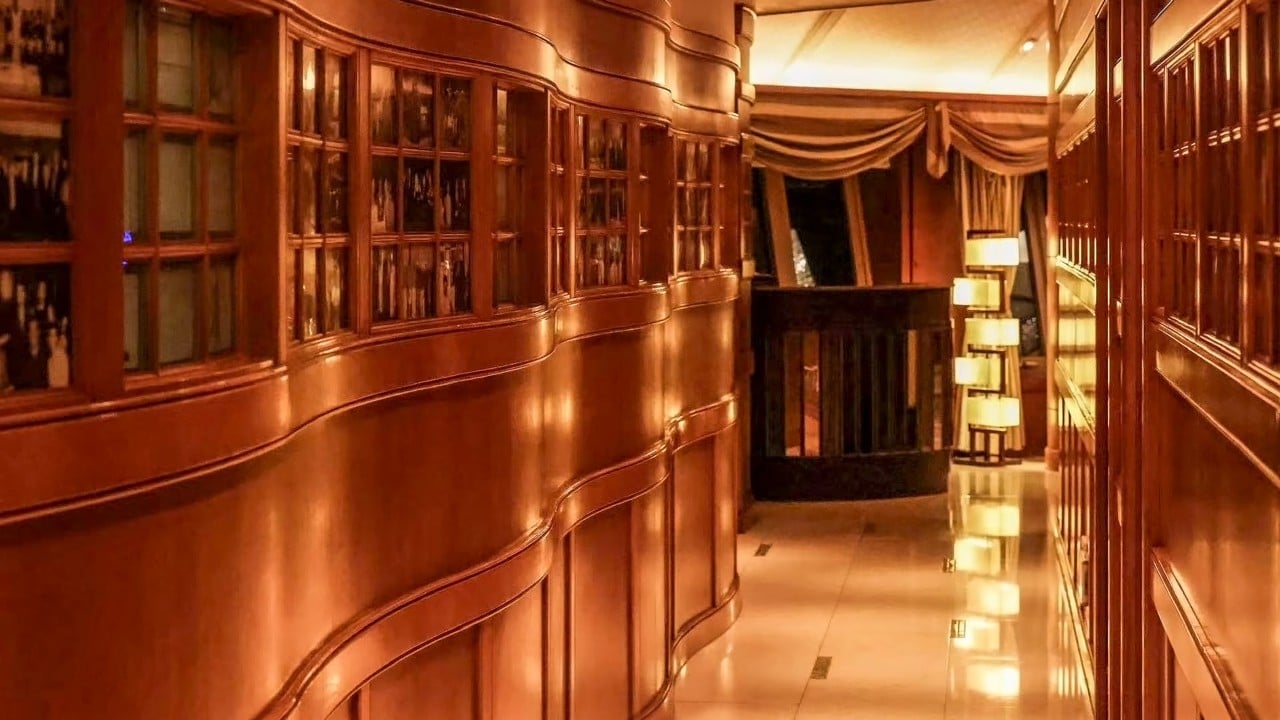
US business leaders accompanying President Donald Trump on his state visit to Beijing will be given the opportunity to mingle with their Chinese counterparts at an exclusive international business club, according to sources. On Monday, the White House released a list naming dozens of business chiefs accompanying Trump, including high-profile figures such as Tesla chief executive Elon Musk and Apple’s Tim Cook. Two sources familiar with the arrangement said the Capital Club Beijing had been...

China’s Hengrui seals US$15.2 billion deal with US pharmaceutical giant BMS
Industry

China’s Hengrui seals US$15.2 billion deal with US pharmaceutical giant BMS

Company’s shares jump in Hong Kong and Shenzhen after tie-up that bolsters China’s growing drug innovation profile Jiangsu Hengrui Pharmaceutical, China’s largest drug company by market capitalisation, has signed a global collaboration and licensing agreement with US pharmaceutical giant Bristol Myers Squibb (BMS) worth up to US$15.2 billion. Hengrui’s Hong Kong-traded shares climbed 5.3 per cent to HK$69.55 on Tuesday, while its Shenzhen stock rose 4.84 per cent to 56.11 yuan. The collaboration covers four oncology and haematology programmes originating from Hengrui, four immunology assets from BMS, and another five novel programmes to be jointly developed using Hengrui’s discovery platforms. All 13 programmes are at the preclinical stage, according to a filing with the Hong Kong stock exchange. BMS has agreed to pay Hengrui up to US$950 million in near-term consideration, including an upfront payment of US$600 million. The overall deal value could reach about US$15.2 billion if all development, regulatory and commercial milestones are met and options on the co-discovery projects are exercised. Hengrui will also be entitled to tiered royalties on sales of partnered products outside mainland China, Hong Kong and Macau.

Trump rejects ‘garbage’ Iran peace plan before heading to China
Industry

Trump rejects ‘garbage’ Iran peace plan before heading to China

US President Donald Trump said a month-long ceasefire with Iran was on “massive life support” as he rejected Tehran’s response to a peace proposal. The Iranian reply was a “piece of garbage”, Trump told reporters in the White House on Monday. “I didn’t even finish reading it.” The comments helped to push the price of Brent crude oil above US$106 a barrel on Tuesday. Trump is expected to discuss the war with Chinese President Xi Jinping in a Beijing summit on Thursday, as Iran’s 10-week shutdown...

China’s ‘dark factory’ more than doubles production efficiency for J-20 jets
Industry

China’s ‘dark factory’ more than doubles production efficiency for J-20 jets

The plant producing fifth-generation warplanes is designed to operate with little to no human involvement China has more than doubled the production efficiency of stealth fighter components in a “dark factory”, where autonomous vehicles and AI-driven machinery operate nearly 24 hours a day. The process once required employees to monitor its round-the-clock operations, but the plant can now produce the “skeleton” of an aircraft in near darkness, according to the official Science and Technology Daily. Dark factories are facilities designed to operate with little to no human intervention, thereby removing the need for lighting, cutting energy consumption and operational costs. Standing as a symbol of Beijing’s military modernisation, the fifth-generation J-20 jet designed by the Chengdu Aircraft Corporation, a subsidiary of the state-owned Aviation Industry Corporation of China, was declared combat-ready in 2018. Mass production of the fighters began two years later. The J-20 contained thousands of unique components, Song Ge, head of the Chengdu factory’s digital manufacturing centre, told Science and Technology Daily.

Hong Kong, mainland China spur surge in Asia-Pacific commercial property deals
Markets

Hong Kong, mainland China spur surge in Asia-Pacific commercial property deals

Office and retail recovery gains traction in first quarter, as Hong Kong transactions jump 367 per cent and mainland China tops the market The Asia-Pacific region’s commercial property investments surged in the first quarter, according to data tracked by analysts, as early signs of recovery in office and retail segments across Hong Kong and mainland China boosted deal volumes. Hong Kong contributed US$1.8 billion, a 367 per cent surge, the second-biggest improvement after Singapore’s 439 per cent increase, according to the data and analytics firm. The mainland was the top market, cornering US$13.4 billion, a 55 per cent rise. In the previous quarter, Japan was the top market, accounting for US$10.1 billion out of the US$47.6 billion total. The mainland was the second-largest market with US$8.2 billion. Knight Frank estimated Asia-Pacific investment activity at US$64.6 billion, rising 13 per cent quarter-on-quarter and 65 per cent year-on-year, the strongest quarterly performance since late 2021. “Asia-Pacific’s real estate recovery has gained real breadth in the first quarter and Hong Kong was one of the key markets behind the growth in deal activity,” said Benjamin Chow, head of private assets research for Asia at MSCI.

Real-life Transformers: China’s Unitree debuts ‘mecha’ robot that shifts from 2 legs to 4
Innovation

Real-life Transformers: China’s Unitree debuts ‘mecha’ robot that shifts from 2 legs to 4

The GD01 expands the Hangzhou-based company’s portfolio at a time when Chinese manufacturers are significantly outstripping their US rivals Bridging the gap between science fiction and reality, a Chinese robotics firm on Tuesday unveiled a manned “mecha” capable of transitioning between bipedal walking and four-legged mode. Developed by Unitree Robotics, the GD01 – resembling an Autobot from a Transformers movie – is a high-strength alloy machine designed for civilian transport. It weighs 500kg with a pilot on board – roughly the weight of a grand piano – and carries a starting price of 3.9 million yuan (US$573,674), according to the company. A demonstration video shows the GD01 – carrying a pilot in its torso-mounted cockpit – walking like a humanoid robot and knocking over a brick wall with its hand. The machine then reconfigures its chassis, shifting into a four-legged crawl. Unitree described the robot as the world’s first mass-produced “transformable mecha”. The GD01 expands the Hangzhou-based company’s portfolio at a time when Chinese manufacturers are significantly outstripping their US rivals, helped by lower production costs and faster manufacturing scale-up.

Emerging markets rebound on inflows as Xi-Trump talks eyed for momentum
Markets

Emerging markets rebound on inflows as Xi-Trump talks eyed for momentum

Mainland China, Hong Kong stock markets may benefit from Xi-Trump meeting as renewed interest in AI shows investors keen to re-engage, analysts say Global funds came back to emerging markets in April with an inflow of US$58.3 billion, which is expected to continue in coming months amid the recovery from the previous geopolitical panic. According to a report by the Institute of International Finance (IIF), the April non-resident portfolio growth in emerging countries – varying from China to Brazil – rebounded sharply, reversing the outflow of US$66.2 billion in March and US$42.2 billion in April last year. The swing indicated that investors were willing to re-engage quickly once the initial geopolitical panic faded and primary market windows reopened, said Jonathan Fortun, senior economist at the IIF, in a note on Monday. The capital inflow in April was recorded in both stocks and credit. IIF recorded an influx of US$6.4 billion in equity markets and US$51.9 billion from debts, versus an outflow of US$65.5 billion and US$700 million last month respectively.

Why is Beijing on a stronger footing to discuss Taiwan with Trump this time?
Industry

Why is Beijing on a stronger footing to discuss Taiwan with Trump this time?

Beijing is now on a stronger footing on the Taiwan issue in talks with Donald Trump than it was during his first presidential term, according to a leading mainland analyst. Wu Yongping, dean of the Institute for Taiwan Studies at Tsinghua University in Beijing, said the issue would “definitely” be discussed when Trump meets his Chinese counterpart Xi Jinping this week. He said in an interview that Beijing would welcome any statements opposing Taiwan independence but he believed the space for...

SMIC secures approval for $5.9 billion acquisition in China’s largest domestic wafer foundry M&A
Technology

SMIC secures approval for $5.9 billion acquisition in China’s largest domestic wafer foundry M&A

Every Wednesday and Friday, TechNode’s Briefing newsletter delivers a roundup of the most important news in China tech, straight to your inbox. Your support helps TechNode continue to provide credible, on-the-ground journalism and industry insights about the Chinese tech industry. On Monday, Semiconductor Manufacturing International Corporation (SMIC) announced that its share issuance and asset acquisition plan had been reviewed and approved by the M&A (Mergers and Acquisitions) Review Committee of the Shanghai Stock Exchange. The committee determined that the transaction meets regulatory requirements for restructuring and information disclosure. In a filing disclosed in late 2025, SMIC outlined its plan to issue shares to five shareholders of SMIC North, including the China Integrated Circuit Industry Investment Fund (Big Fund), to acquire their 49.00% equity stake in the subsidiary. The transaction is valued at RMB 40.601 billion ($5.9 billion), marking the largest merger and acquisition deal in China’s wafer foundry industry to date. SMIC North, a key controlled subsidiary of SMIC, provides 12-inch wafer fabrication services across multiple process technology platforms, along with related supporting services.

Kuaishou shares soar as Kling AI eyes US$20 billion valuation in potential spin-off
Innovation

Kuaishou shares soar as Kling AI eyes US$20 billion valuation in potential spin-off

The Chinese short-video platform’s shares jumped as much as 10 per cent amid US$20 billion valuation of spin-off, Tencent investor talks Kuaishou Technology’s shares jumped as much as 10 per cent on Tuesday morning after reports that the Chinese short-video platform was raising new funding for its Kling AI unit at a valuation of US$20 billion. In response to the financing and listing reports, Kuaishou said on Tuesday that the company is “assessing a proposal to restructure” Kling AI that could involve external funding. However, the proposal is still in the preliminary stage, according to an announcement filed to the Hong Kong stock exchange. Kling AI’s monetisation has been gathering pace as its ARR reached US$300 million in January, and the company expected the service’s revenue to “more than double” in 2026, according to Kuaishou co-founder and CEO Cheng Yixiao in an earnings call in March.

Rise of Anthropic’s Mythos spurs Japan to bolster cybersecurity on infrastructure
Economy

Rise of Anthropic’s Mythos spurs Japan to bolster cybersecurity on infrastructure

Prime minister to order new high-level effort to find vulnerabilities Prime Minister Sanae Takaichi will call for a government-wide effort to identify risks in Japan's cyberdefenses. (Photo by Ken Suzuki) TOKYO -- Prime Minister Sanae Takaichi will on Tuesday call for a cabinet-level effort to find cybersecurity weaknesses in Japan's infrastructure and reinforce them against the risk of such powerful new artificial intelligence tools as Anthropic's Mythos.