Could Roman concrete have clues on how Pyramid of Giza was built – and saved?
Source: SCMP — China News
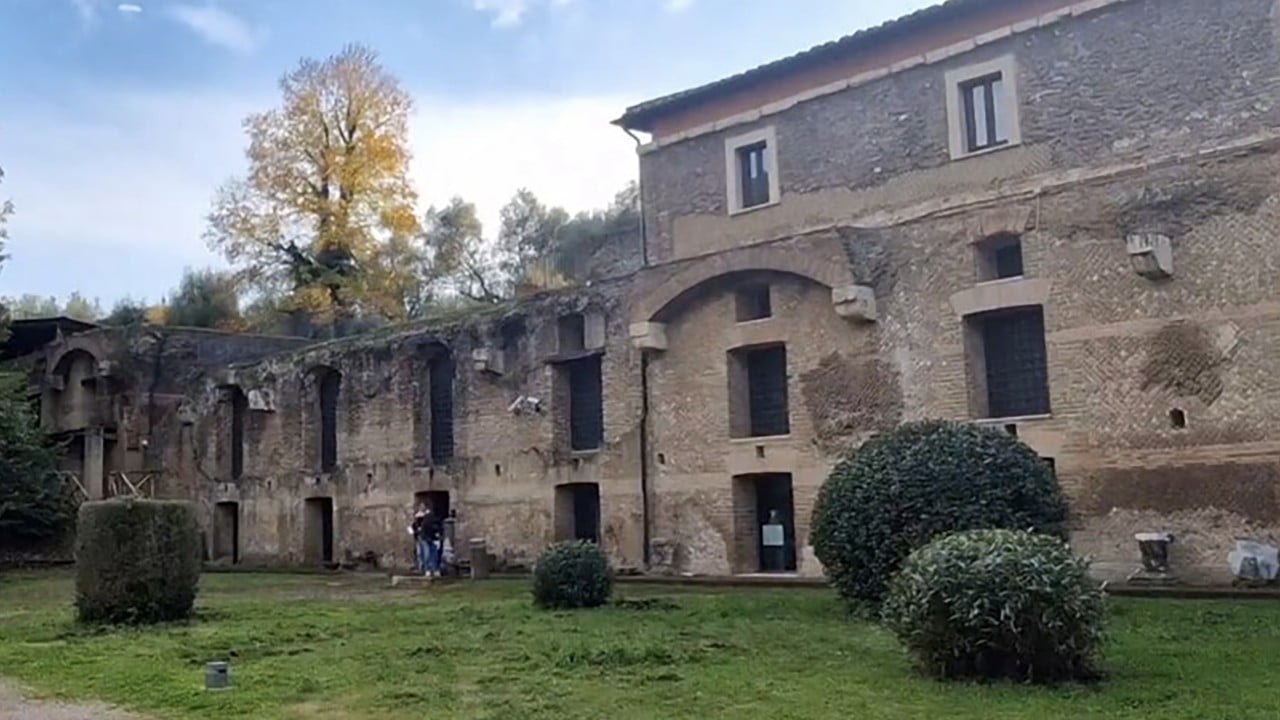
Insights into how the ancient concrete grows denser could help create a low-carbon modern version and explain how the Great Pyramid endured An alternative scientific theory suggests the blocks might have been cast from an early form of concrete, but that idea has long faced a critical question: how could such an artificial material survive for more than 4,500 years, while some modern buildings could suffer wear and damage in merely a few decades? Now, a new study on nearly 2,000-year-old Roman concrete may provide a materials-science clue that breathes new life into the concrete hypothesis. Published in the peer-reviewed academic journal Science Advances in July, the research reveals that ancient Roman concrete not only resists decay but actually grows stronger over centuries through a self-healing process. A team led by Zhu Xiaohong of Beijing University of Technology, with collaborators from the University of California, Berkeley, the University of Michigan, Lawrence Berkeley National Laboratory and the University of Illinois Urbana-Champaign, analysed concrete taken from a communal latrine at Hadrian’s Villa in Tivoli, Italy.
Comments
İlk yorumu siz yazın!